
Others like the power of awareness Features >>
The Art Of War For Spiritual Battle

The Power To Change The World
-160.webp)
The Power Of Your Words: How God Can Bless Your Life Through The Words You Speak

The God Of Daniel
-160.webp)
The Law Of Recognition (The Laws Of Life Series)

The Power Of Your Mind

The Person And Work Of The Holy Spirit

The Price Of Greatness
The Code Of The Holy Spirit

There Were Two Trees In The Garden
About the Book
"The Power of Awareness" by Neville Goddard explores the concept of how our awareness and imagination can shape our reality. Goddard teaches readers how to use their thoughts and beliefs to manifest their desires and live a fulfilling life. The book emphasizes the importance of taking responsibility for our thoughts and emotions in order to create positive change in our lives.
Gregory Thaumaturgus
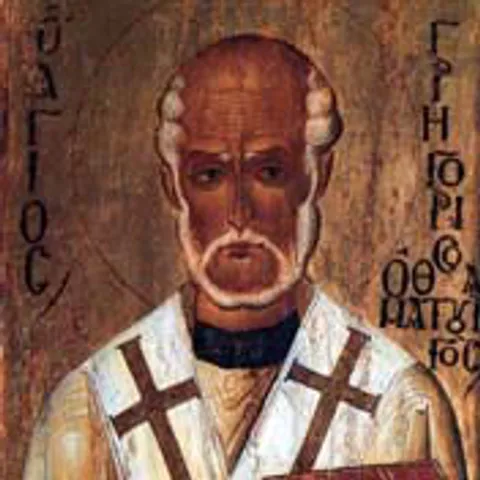 Gregory the Wonderworker’s Early life
Gregory was born in a Pontus, a region on the southern coast of the Black Sea, located in the modern-day eastern Black Sea Region of Turkey, around 212-13. His was a wealthy home and his parents named him Theodore (Gift of God) despite their pagan beliefs. When he was 14 years old his father died and soon after, he and his brother, Athenodorus, were anxious to study law at Beirut, Lebanon, then one of the four of five famous schools in the Hellenic world.
Influence of Origen
However, on the way, they first had to escort their sister to rejoin her husband, who was a government official assigned to Caesarea in Palestine (modern Haifa, Israel). When they arrived they learned that the celebrated scholar Origen, head of the catechetical school of Alexandria, lived there.
Inquisitiveness led them to hear and speak with the Origen and his irresistible charm quickly won their hearts. They soon dropped their desires for a life in Roman law, became Christian believers and pupils of Origen, learning philosophy and theology, for somewhere between five and eight years. Origen also baptised Gregory.
Pastor (then Bishop) of Neoceasarea
Gregory returned to his native Pontus with the intention of practicing oratory, but also to write a book proving the truth of Christianity, revealing his evangelistic heart. But his plans were disrupted when locals noticed his passion for Christ and his spiritual maturity. There were just seventeen Christians in Neoceasarea when Gregory arrived and this small group persuaded him to lead them as their bishop. (‘bishop’ simply meant a local overseer). At the time, Neocaesarea was a wicked, idolatrous province.
Signs of the Spirit
By his saintly life, his direct and lively preaching, helping the needy and settling quarrels and complaints, Gregory began to see many converts to Christ. But it was the signs and wonders that particularly attracted people to Christ.
En route to Neocaesarea from Amasea, Gregory expelled demons from a pagan temple, its priest converted to Christ immediately.
Once, when he was conversing with philosophers and teachers in the city square, a notorious harlot came up to him and demanded payment for the sin he had supposedly committed with her. At first Gregory gently remonstrated with her, saying that she perhaps mistook him for someone else.
But the loose woman would not be silenced. He then asked a friend to give her the money. Just as the woman took the unjust payment, she immediately fell to the ground in a demonic fit, and the fraud became evident. Gregory prayed over her, and the devil left her. This was the beginning of Gregory’s miracles. It was at this time he became known as ‘Gregory Thaumaturgus,’ ‘Gregory the Miracle Worker’ (or Wonderworker).
At one point Gregory wanted to flee from the worldly affairs into which influential townsmen persistently sought to push him. He went into the desert, where by fasting and prayer he developed an intimacy with God and received gifts of knowledge, wisdom and prophecy. He loved life in the wilderness and wanted to remain in solitude with God until the end of his days, but the Lord willed otherwise.
His theological contribution
Though he was primarily an evangelist and pastor, Gregory also had a deep theological understanding.
His principal work ‘The Exposition of Faith’, was a theological apology for Trinitarian belief. It incorporated his doctrinal instructions to new believers, expressed his arguments against heretical groups and was widely influential amongst leaders in the Patristic period: Basil the Great, Gregory the Theologian, and Gregory of Nyssa (The Cappadocian Fathers). It was the forerunner of the Nicene Creed that was to appear in the early 4th century.
In summary
He gave himself to the task of the complete conversion of the population of his diocese. The transformation in Neocaesarea was astonishing. Persuasive preaching, numerous healings and miraculous signs had a powerful effect. Such was his success that it was said that when Gregory became bishop (c 240) he found only seventeen Christians in his diocese; when he died only seventeen remained pagan (Latourette 1953:76).
Basil the Great’s Testimony
Basil the Great (330-379, Bishop of Caesarea, in his work ‘On the Spirit’ wrote the following account of Gregory the wonder-worker.
“But where shall I rank the great Gregory, and the words uttered by him? Shall we not place among Apostles and Prophets a man who walked by the same Spirit as they; who never through all his days diverged from the footprints of the saints; who maintained, as long as he lived, the exact principles of evangelical citizenship?
I am sure that we shall do the truth a wrong if we refuse to number that soul with the people of God, shining as it did like a beacon in the Church of God: for by the fellow-working of the Spirit the power which he had over demons was tremendous, and so gifted was he with the grace of the word ‘for obedience to the faith among. . .the nations.’ that, although only seventeen Christians were handed over to him, he brought the whole people alike in town and country through knowledge to God.
He too by Christ’s mighty name commanded even rivers to change their course, and caused a lake, which afforded a ground of quarrel to some covetous brethren, to dry up. Moreover, his predictions of things to come were such as in no wise to fall short of those of the great prophets. To recount all his wonderful works in detail would be too long a task. By the superabundance of gifts, wrought in him by the Spirit, in all power and in signs and in marvels, he was styled a second Moses by the very enemies of the Church.
Thus, in all that he through grace accomplished, alike by word and deed, a light seemed ever to be shining, token of the heavenly power from the unseen which followed him. To this day he is a great object of admiration to the people of his own neighborhood, and his memory, established in the churches ever fresh and green, is not dulled by length of time. (Schaff and Wace nd., Series 2. 8:46-47).
“Gregory was a great and conspicuous lamp, illuminating the church of God.” —Basil the Great.
Gregory the Wonderworker’s Early life
Gregory was born in a Pontus, a region on the southern coast of the Black Sea, located in the modern-day eastern Black Sea Region of Turkey, around 212-13. His was a wealthy home and his parents named him Theodore (Gift of God) despite their pagan beliefs. When he was 14 years old his father died and soon after, he and his brother, Athenodorus, were anxious to study law at Beirut, Lebanon, then one of the four of five famous schools in the Hellenic world.
Influence of Origen
However, on the way, they first had to escort their sister to rejoin her husband, who was a government official assigned to Caesarea in Palestine (modern Haifa, Israel). When they arrived they learned that the celebrated scholar Origen, head of the catechetical school of Alexandria, lived there.
Inquisitiveness led them to hear and speak with the Origen and his irresistible charm quickly won their hearts. They soon dropped their desires for a life in Roman law, became Christian believers and pupils of Origen, learning philosophy and theology, for somewhere between five and eight years. Origen also baptised Gregory.
Pastor (then Bishop) of Neoceasarea
Gregory returned to his native Pontus with the intention of practicing oratory, but also to write a book proving the truth of Christianity, revealing his evangelistic heart. But his plans were disrupted when locals noticed his passion for Christ and his spiritual maturity. There were just seventeen Christians in Neoceasarea when Gregory arrived and this small group persuaded him to lead them as their bishop. (‘bishop’ simply meant a local overseer). At the time, Neocaesarea was a wicked, idolatrous province.
Signs of the Spirit
By his saintly life, his direct and lively preaching, helping the needy and settling quarrels and complaints, Gregory began to see many converts to Christ. But it was the signs and wonders that particularly attracted people to Christ.
En route to Neocaesarea from Amasea, Gregory expelled demons from a pagan temple, its priest converted to Christ immediately.
Once, when he was conversing with philosophers and teachers in the city square, a notorious harlot came up to him and demanded payment for the sin he had supposedly committed with her. At first Gregory gently remonstrated with her, saying that she perhaps mistook him for someone else.
But the loose woman would not be silenced. He then asked a friend to give her the money. Just as the woman took the unjust payment, she immediately fell to the ground in a demonic fit, and the fraud became evident. Gregory prayed over her, and the devil left her. This was the beginning of Gregory’s miracles. It was at this time he became known as ‘Gregory Thaumaturgus,’ ‘Gregory the Miracle Worker’ (or Wonderworker).
At one point Gregory wanted to flee from the worldly affairs into which influential townsmen persistently sought to push him. He went into the desert, where by fasting and prayer he developed an intimacy with God and received gifts of knowledge, wisdom and prophecy. He loved life in the wilderness and wanted to remain in solitude with God until the end of his days, but the Lord willed otherwise.
His theological contribution
Though he was primarily an evangelist and pastor, Gregory also had a deep theological understanding.
His principal work ‘The Exposition of Faith’, was a theological apology for Trinitarian belief. It incorporated his doctrinal instructions to new believers, expressed his arguments against heretical groups and was widely influential amongst leaders in the Patristic period: Basil the Great, Gregory the Theologian, and Gregory of Nyssa (The Cappadocian Fathers). It was the forerunner of the Nicene Creed that was to appear in the early 4th century.
In summary
He gave himself to the task of the complete conversion of the population of his diocese. The transformation in Neocaesarea was astonishing. Persuasive preaching, numerous healings and miraculous signs had a powerful effect. Such was his success that it was said that when Gregory became bishop (c 240) he found only seventeen Christians in his diocese; when he died only seventeen remained pagan (Latourette 1953:76).
Basil the Great’s Testimony
Basil the Great (330-379, Bishop of Caesarea, in his work ‘On the Spirit’ wrote the following account of Gregory the wonder-worker.
“But where shall I rank the great Gregory, and the words uttered by him? Shall we not place among Apostles and Prophets a man who walked by the same Spirit as they; who never through all his days diverged from the footprints of the saints; who maintained, as long as he lived, the exact principles of evangelical citizenship?
I am sure that we shall do the truth a wrong if we refuse to number that soul with the people of God, shining as it did like a beacon in the Church of God: for by the fellow-working of the Spirit the power which he had over demons was tremendous, and so gifted was he with the grace of the word ‘for obedience to the faith among. . .the nations.’ that, although only seventeen Christians were handed over to him, he brought the whole people alike in town and country through knowledge to God.
He too by Christ’s mighty name commanded even rivers to change their course, and caused a lake, which afforded a ground of quarrel to some covetous brethren, to dry up. Moreover, his predictions of things to come were such as in no wise to fall short of those of the great prophets. To recount all his wonderful works in detail would be too long a task. By the superabundance of gifts, wrought in him by the Spirit, in all power and in signs and in marvels, he was styled a second Moses by the very enemies of the Church.
Thus, in all that he through grace accomplished, alike by word and deed, a light seemed ever to be shining, token of the heavenly power from the unseen which followed him. To this day he is a great object of admiration to the people of his own neighborhood, and his memory, established in the churches ever fresh and green, is not dulled by length of time. (Schaff and Wace nd., Series 2. 8:46-47).
“Gregory was a great and conspicuous lamp, illuminating the church of God.” —Basil the Great.
There Is a Name
In a world of tolerance and pluralism, few truth claims taste as sour as this one: Jesus is the only way to God. Or as the apostle Peter so boldly says, There is salvation in no one else, for there is no other name given under heaven by which we must be saved. (Acts 4:12) Just one name for eight billion people? Just one Savior for almost seven thousand people groups? Just one heavenward path for men and women, young and old, urban and rural, Asian and American and African and European? Peter, apparently, felt unashamed of the claim. “Let it be known to all of you,” he began (Acts 4:10). But what Peter proclaimed, many of us whisper, especially among those who take offense. “No other name” may sound fine in small group, but our voices can crack at a neighbor’s kitchen table. Embarrassment, not boldness, might mark even the lovers of Jesus’s name. “Into this world of curse and sin, where half our house hangs over the cliff edge of judgment, God has given a name.” Perhaps, then, we need help feeling the wonder that there is any name at all. Into this world of curse and sin, where half our house hangs over the cliff edge of judgment, God has given a name. World with No Name By all just reckonings, we ought to live in a world with no name. We ought to walk east of Eden, with no promise of a coming son. We ought to toil under Pharaoh, with no outstretched arm to rescue. We ought to tremble before Goliath, with no David to sling his stones. We ought to hang our harps in Babylon, with no hope of a future song. On our own, of course, we struggle to consent to such dismal oughts. We feel, even if we do not speak, not that we ought to perish, but that God ought to save. We sense that heaven, not hell, is humanity’s default destination. We talk of a hundred paths up the mountain because we assume, deep down, that most (if not all) deserve to reach the top. Yet we feel, sense, and assume like this only when we feel, sense, and assume that our sin is smaller than God says. To those with slight views of sin, little could be more offensive than there being only one name. But for those who, like Job (Job 42:6), or Isaiah (Isaiah 6:5), or Peter (Luke 5:8), or John (Revelation 1:17), have found themselves thrust into the presence of the Holy One, little could be more wonderfully surprising. Why should God send a sunrise to pierce our chosen darkness? Why should the Father rise and race to meet his wayward son? Why should Christ become our Hosea to redeem us from the brothel? Why should heaven’s blood be shed to win back heaven’s haters? Why should Jesus give his name to rescue crucifiers? Only because the reckonings of heaven reach beyond mere justice. There Is a Name Now, hear again the words that so often offend or embarrass: There is salvation in no one else, for there is no other name under heaven given among men by which we must be saved. (Acts 4:12) The exclusivity of Jesus Christ does indeed sit at the center of Peter’s words, like a stone of stumbling or a rock of offense (Acts 4:11; Romans 9:33). Yet strewn around that stone are jewels so beautiful that Peter’s claim, so far from offending or embarrassing, ought to break the hearts of sinners and unloose the tongues of saints. NAME GIVEN There is . . . [a] name . . . given. When the Son of God was born in Bethlehem, he was born into a world without a saving name. No name among Greece’s wise philosophers could save. No name in Rome’s expansive pantheon could save. Israel, of course, had long taken refuge in the name of Yahweh (Exodus 34:6–7). Yet even Yahweh waited for the day when he would give his name in a new way — and through it, a salvation far beyond the Jews’ imagination (Jeremiah 23:5–6; Joel 2:32). Then on that lonely night, the God of heaven gave a name to lost and dying sinners. Unto us was born that day in the city of David a Savior, named Jesus Christ the Lord (Luke 2:11). Take heart, exiles of Eden. Have courage, slaves of Pharaoh. Lift up your heads, soldiers of Israel. Play your harps, prisoners of Babylon. Your God has come, and he has given you a name. UNDER HEAVEN There is . . . [a] name under heaven given among men. God could have given this name to the Caesars and Herods of the world. He could have handed it to the wise and powerful. Or most likely of all, he could have entrusted it to the Jews alone. Instead, he gave a name under (all) heaven, among (all) men. “Jesus’s name will meet the eastern sunrise. Jesus’s name will watch the western sunset.” Wherever men and women live under heaven, however far the image of God has wandered, there this name must go. It must run beyond Jerusalem; it must reach past Judea; it must fly outside Samaria to find the ends of the earth (Acts 1:8). As the psalmist sings, “From the rising of the sun to its setting, the name of the Lord is to be praised!” (Psalm 113:3). So it is and will be in Jesus. His name will meet the eastern sunrise. His name will watch the western sunset. And everywhere in between, all people “will be blessed in him, all nations call him blessed” (Psalm 72:17). FOR SALVATION There is . . . [a] name under heaven given among men by which we must be saved. God has given a name. This name is for everyone under heaven. And here is God’s purpose, God’s desire, in giving that universal name: my people must be saved (Acts 2:21). God saw fit to wrap salvation in the syllables of this name. “You shall call his name Jesus,” the angel told Mary, “for he will save his people from their sins” (Matthew 1:21). “God sees,” “God sympathizes,” “God strengthens” — any of these names would have been wonderful. But Jesus, “God saves” — or more literally, “Yahweh saves”? No wonder Mary marveled (Luke 1:46–55). God did not send this name into the world to condemn the world, but in order that the world might be saved through it (John 3:17). What a Glorious Name So then, in Jesus, we hear the only name that saves. We can, if we want, nurture offense or embarrassment about God’s giving only one name. Or we can thank God for that name, treasure that name, and join God himself in spreading that name wherever it is not sung. If we do, we join a mission that cannot fail. Hear God Almighty take up the longing of Psalm 113:3 and turn it into a prophetic promise, sealed twice over: From the rising of the sun to its setting my name will be great among the nations, and in every place incense will be offered to my name, and a pure offering. For my name will be great among the nations, says the Lord of hosts. (Malachi 1:11) His name will be great: in Zambia and New Zealand, in India and Iceland, in China and Colombia, and in the darkened streets of our own cities. And to that end, God has made us stewards of his sacred name. In Christ, we can shine the light that splits the darkness (Luke 1:78–79), lower the hand that lifts the fallen (Psalm 40:2), raise the snake that heals the bitten (John 3:14–15), and say the name that saves the sinner. There is no other name given among men by which we must be saved. And oh what a glorious name it is. Article by Scott Hubbard