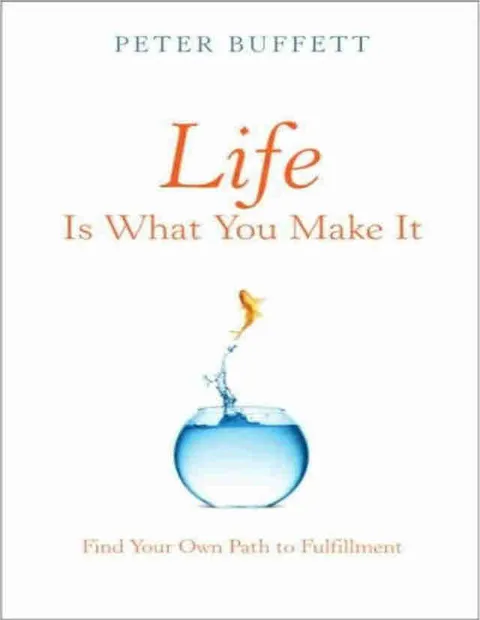

Others like life - is what you make it Features >>


About the Book
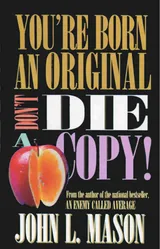
"Life Is What You Make It" by Peter Buffett explores the concept of finding true fulfillment and purpose in life through making conscious choices and taking responsibility for our own happiness. The book offers practical advice on how to cultivate a fulfilling life by aligning our actions with our values, passions, and strengths. Buffett emphasizes the importance of authenticity, self-awareness, and gratitude in creating a meaningful and joyful existence.
Gordon Lindsay
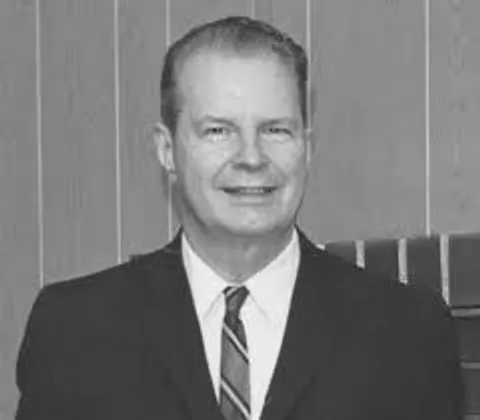 Gordon Lindsay’s Early life
Gordon Lindsay’s parents were members of J. A. Dowie’s Zion City, Illinois when he was born. The city’s financial difficulties forced the family west in 1904, where they temporarily joined another Christian-based community led by Finis Yoakum at Pisgah Grande, California. When similar problems emerged the family moved to Oregon after only a few months. From here the family moved to Portland, Oregon where Lindsay attended high school and was converted during a Charles F. Parham evangelistic campaign.
During his youth he came under the influence of John G. Lake, former resident of Zion City, missionary to South Africa, and founder of the Divine Healing missions in Spokane, Washington, and Portland, Oregon in 1920. Lindsay joined the healing and evangelistic campaigns of Lake, traveling throughout California and the southern states.
Lindsay began his own ministry in California as pastor of small churches in Avenal and San Fernando and for the next eighteen years, he travelled acros s the country holding revivals in full gospel churches. This period of travel prepared him as perhaps no other man in the nation to establish communication among a variety of Pentecostals.
When World War II began, Lindsay felt compelled to give up his evangelistic ministry because its rigorous lifestyle was taking its toll on his young family. He accepted a call to pastor a church in Ashland, Oregon.
William Branham enters Gordon Lindsay’s life
By 1947 he had witnessed the extraordinary ministry of William Branham and responded to the invitation to become Branham’s manager. His managerial skills were soon obvious in the Branham campaigns, and in April 1948, he furthered the cause of the of the revival when he produced the first issue of The Voice of Healing, specifically to promote Branham’s ministry. To Lindsay’s great surprise Branham announced that he “would not continue on the field more than a few weeks more.”
At great financial cost Lindsay decided to continue the publication of the new magazine in cooperation with his long-time friends, Jack Moore and his talented daughter Anna Jeanne Moore. He broadened the scope of the magazine by including more of the lesser known healing evangelists who were beginning to hold campaigns and were drawing large audiences.
One such evangelist was William Freeman who had been holding meetings in small churches. Lindsay visited one of his campaigns and immediately felt it was the will of God to team up with him and organise a series of meetings through 1948. The Voice of Healing featured the miracles of the Freeman campaigns.
Voice of Healing Conventions
By March 1949 The Voice of Healing circulation had grown to nearly 30,000 per month and had clearly become the voice of the healing movement. It’s pages successfully spread the message of the Salvation-Deliverance-Healing revival across the world.
In December 1949, Lindsay arranged the first convention of healing revivalists in Dallas, Texas. The assembly was addressed by Branham, Lindsay, Moore, old-timers such as F. F. Bosworth and Raymond T. Richey, and a number of rising revivalists including O. L. Jaggers, Gayle Jackson, Velmer Gardner, and Clifton Erickson. This historic conference symbolized the vitality and cohesion of the revival.
The following year, the convention, now about 1,000 strong, met in Kansas City, with virtually every important revivalist in the nation, with the notable exceptions of William Branham and Oral Roberts. Lindsay exercised great skill and wisdom exposing several points of danger and tension in the movement proposed guidelines for the future. Lindsay understood the fears of the older Pentecostal denominations and leaders and tried his utmost to deal with the offending issues.
In an article announcing “the purpose, plan and policy of the Voice of Healing Convention,” he denounced “free-lancers who violently and indiscriminately attack organization in general,” and he urged avoidance of “novel prophetic interpretations, dogmatic doctrinal assertions, sectarian predilections, theological hair-splitting.”
The Voice of Healing Association
The 1950 meeting made the Voice of Healing convention into a loose association of healing revivalists. The evangelists officially associated with The Voice of Healing magazine held “family meetings” at the conventions, at the same time maintaining their desire to “prove to the world that those associated with The Voice of Healing have no intention to organize another movement.” Through the decade the Voice of Healing conventions were showcases for healing revivalism.
The conference programs were workshops on the problems of healing evangelists. Typical topics were “prayer and fasting,” “preparation for a campaign,” “the follow-up work after a campaign,” “the system of cards for the prayer tent and the healing line” and the delicate issue of finances. As the association grew in importance in the 1950s, the program was frequently headed by Roberts or Branham; though every new revivalist aspired to be a speaker on the program.
The Voice of Healing family of evangelists flowered in the early 1950s. Lindsay continued to publicize Branham’s work, although he was not formally associated with the organization; the nucleus of the fellowship was an influential clique which included O. L. Jaggers, William Freeman, Jack Coe, T. L. Osborn, A. A. Allen, and Velmer Gardner.
Gradually major ministries began their own magazines and had no further need for Voice of Healing promotion. Nevertheless, by 1954 the “associate editors and evangelists” listed in The Voice of Healing numbered nearly fifty.
Though Lindsay became personally involved with healing evangelism from 1949, especially with other revivalists such as T. L. Osborn, he confined his best work to organization and management of the Voice of Healing magazine. By 1956 the expenses of the Voice of Healing were running $1,000 a day. In addition to the national and regional conventions sponsored by his organization, Lindsay also began to sponsor missions and a radio program.
“Lindsay was more than an advisor during the first decade of the healing revival; he was much like the director of an unruly orchestra. He tried desperately to control the proliferation of ministries in an effort to keep the revival respectable. He repeatedly advised, “It is better for one to go slow. Get your ministry on a solid foundation. . . . By all means avoid Hollywood press agent stuff.”
Many of the new leaders of the early 1950s owed their early success to the literary support of Gordon Lindsay through the Voice of Healing, but by 1958, many of the revivalists believed that Lindsay’s work was over.
An evolving ministry
Lindsay’s efforts to consolidate and coordinate the healing movement and its ministries became an impossible task. The increasing independence of ministries and the burgeoning charismatic movement caused Lindsay to reconsider his goals. He took the example of T. L. Osborn and concentrated on missionary endeavours. He remained the historian and theologian of the healing movement but began to produce teaching and evangelistic materials which were sent across the world.
The Voice of Healing ultimately became Christ for the Nations. Native church programs, literature, teaching tapes and funds were distributed to hundreds of locations. The organization had changed from one of healing revivalists into an important missionary society.
His ministry was always to those involved in the healing revival, independents and mainline Pentecostals, but the new charismatics – Lutherans, Methodists and Baptists – became his new audience. His encouragement of, and involvement with, the Full Gospel Businessmen’s Fellowship was designed to provide teaching and wisdom for charismatic leaders, many of whom held Lindsay in high regard.
His death on April 1st 1971
Suddenly, on April 1, 1973, Gordon Lindsay died. His wife, Freda, stepped into the breach and was able to stabilize and advance the ministry of Christ for the Nations. Lindsay’s death brought unparalleled financial support paying off all debts and expanding most of its programs.
David Harrel summarises the life of Gordon Lindsay perfectly: ‘The death of Gordon Lindsay closed a major chapter in the charismatic revival. No single man knew the revival and its leaders so well. No man understood its origins, its changes, and its diversity as did Lindsay. A shrewd manager and financier, Lindsay had been as nearly the coordinator of the healing revival as any man could be.
When the revival began to wane, Lindsay was faced with a crisis more severe than those of most of the evangelists themselves. Never a dynamic preacher, he found himself virtually abandoned by his most successful protégés. But Lindsay proved able to adapt. Always a balanced person, Lindsay built a balanced and enduring ministry.’
Tony Cauchi
Gordon Lindsay’s Early life
Gordon Lindsay’s parents were members of J. A. Dowie’s Zion City, Illinois when he was born. The city’s financial difficulties forced the family west in 1904, where they temporarily joined another Christian-based community led by Finis Yoakum at Pisgah Grande, California. When similar problems emerged the family moved to Oregon after only a few months. From here the family moved to Portland, Oregon where Lindsay attended high school and was converted during a Charles F. Parham evangelistic campaign.
During his youth he came under the influence of John G. Lake, former resident of Zion City, missionary to South Africa, and founder of the Divine Healing missions in Spokane, Washington, and Portland, Oregon in 1920. Lindsay joined the healing and evangelistic campaigns of Lake, traveling throughout California and the southern states.
Lindsay began his own ministry in California as pastor of small churches in Avenal and San Fernando and for the next eighteen years, he travelled acros s the country holding revivals in full gospel churches. This period of travel prepared him as perhaps no other man in the nation to establish communication among a variety of Pentecostals.
When World War II began, Lindsay felt compelled to give up his evangelistic ministry because its rigorous lifestyle was taking its toll on his young family. He accepted a call to pastor a church in Ashland, Oregon.
William Branham enters Gordon Lindsay’s life
By 1947 he had witnessed the extraordinary ministry of William Branham and responded to the invitation to become Branham’s manager. His managerial skills were soon obvious in the Branham campaigns, and in April 1948, he furthered the cause of the of the revival when he produced the first issue of The Voice of Healing, specifically to promote Branham’s ministry. To Lindsay’s great surprise Branham announced that he “would not continue on the field more than a few weeks more.”
At great financial cost Lindsay decided to continue the publication of the new magazine in cooperation with his long-time friends, Jack Moore and his talented daughter Anna Jeanne Moore. He broadened the scope of the magazine by including more of the lesser known healing evangelists who were beginning to hold campaigns and were drawing large audiences.
One such evangelist was William Freeman who had been holding meetings in small churches. Lindsay visited one of his campaigns and immediately felt it was the will of God to team up with him and organise a series of meetings through 1948. The Voice of Healing featured the miracles of the Freeman campaigns.
Voice of Healing Conventions
By March 1949 The Voice of Healing circulation had grown to nearly 30,000 per month and had clearly become the voice of the healing movement. It’s pages successfully spread the message of the Salvation-Deliverance-Healing revival across the world.
In December 1949, Lindsay arranged the first convention of healing revivalists in Dallas, Texas. The assembly was addressed by Branham, Lindsay, Moore, old-timers such as F. F. Bosworth and Raymond T. Richey, and a number of rising revivalists including O. L. Jaggers, Gayle Jackson, Velmer Gardner, and Clifton Erickson. This historic conference symbolized the vitality and cohesion of the revival.
The following year, the convention, now about 1,000 strong, met in Kansas City, with virtually every important revivalist in the nation, with the notable exceptions of William Branham and Oral Roberts. Lindsay exercised great skill and wisdom exposing several points of danger and tension in the movement proposed guidelines for the future. Lindsay understood the fears of the older Pentecostal denominations and leaders and tried his utmost to deal with the offending issues.
In an article announcing “the purpose, plan and policy of the Voice of Healing Convention,” he denounced “free-lancers who violently and indiscriminately attack organization in general,” and he urged avoidance of “novel prophetic interpretations, dogmatic doctrinal assertions, sectarian predilections, theological hair-splitting.”
The Voice of Healing Association
The 1950 meeting made the Voice of Healing convention into a loose association of healing revivalists. The evangelists officially associated with The Voice of Healing magazine held “family meetings” at the conventions, at the same time maintaining their desire to “prove to the world that those associated with The Voice of Healing have no intention to organize another movement.” Through the decade the Voice of Healing conventions were showcases for healing revivalism.
The conference programs were workshops on the problems of healing evangelists. Typical topics were “prayer and fasting,” “preparation for a campaign,” “the follow-up work after a campaign,” “the system of cards for the prayer tent and the healing line” and the delicate issue of finances. As the association grew in importance in the 1950s, the program was frequently headed by Roberts or Branham; though every new revivalist aspired to be a speaker on the program.
The Voice of Healing family of evangelists flowered in the early 1950s. Lindsay continued to publicize Branham’s work, although he was not formally associated with the organization; the nucleus of the fellowship was an influential clique which included O. L. Jaggers, William Freeman, Jack Coe, T. L. Osborn, A. A. Allen, and Velmer Gardner.
Gradually major ministries began their own magazines and had no further need for Voice of Healing promotion. Nevertheless, by 1954 the “associate editors and evangelists” listed in The Voice of Healing numbered nearly fifty.
Though Lindsay became personally involved with healing evangelism from 1949, especially with other revivalists such as T. L. Osborn, he confined his best work to organization and management of the Voice of Healing magazine. By 1956 the expenses of the Voice of Healing were running $1,000 a day. In addition to the national and regional conventions sponsored by his organization, Lindsay also began to sponsor missions and a radio program.
“Lindsay was more than an advisor during the first decade of the healing revival; he was much like the director of an unruly orchestra. He tried desperately to control the proliferation of ministries in an effort to keep the revival respectable. He repeatedly advised, “It is better for one to go slow. Get your ministry on a solid foundation. . . . By all means avoid Hollywood press agent stuff.”
Many of the new leaders of the early 1950s owed their early success to the literary support of Gordon Lindsay through the Voice of Healing, but by 1958, many of the revivalists believed that Lindsay’s work was over.
An evolving ministry
Lindsay’s efforts to consolidate and coordinate the healing movement and its ministries became an impossible task. The increasing independence of ministries and the burgeoning charismatic movement caused Lindsay to reconsider his goals. He took the example of T. L. Osborn and concentrated on missionary endeavours. He remained the historian and theologian of the healing movement but began to produce teaching and evangelistic materials which were sent across the world.
The Voice of Healing ultimately became Christ for the Nations. Native church programs, literature, teaching tapes and funds were distributed to hundreds of locations. The organization had changed from one of healing revivalists into an important missionary society.
His ministry was always to those involved in the healing revival, independents and mainline Pentecostals, but the new charismatics – Lutherans, Methodists and Baptists – became his new audience. His encouragement of, and involvement with, the Full Gospel Businessmen’s Fellowship was designed to provide teaching and wisdom for charismatic leaders, many of whom held Lindsay in high regard.
His death on April 1st 1971
Suddenly, on April 1, 1973, Gordon Lindsay died. His wife, Freda, stepped into the breach and was able to stabilize and advance the ministry of Christ for the Nations. Lindsay’s death brought unparalleled financial support paying off all debts and expanding most of its programs.
David Harrel summarises the life of Gordon Lindsay perfectly: ‘The death of Gordon Lindsay closed a major chapter in the charismatic revival. No single man knew the revival and its leaders so well. No man understood its origins, its changes, and its diversity as did Lindsay. A shrewd manager and financier, Lindsay had been as nearly the coordinator of the healing revival as any man could be.
When the revival began to wane, Lindsay was faced with a crisis more severe than those of most of the evangelists themselves. Never a dynamic preacher, he found himself virtually abandoned by his most successful protégés. But Lindsay proved able to adapt. Always a balanced person, Lindsay built a balanced and enduring ministry.’
Tony Cauchi
The Lost Giant Among Giants - Lessons from Harold John Ockenga
In September of 1966, John Piper was a junior at Wheaton College, studying for a career in medicine. In those days, Wheaton began its fall semesters with “Spiritual Emphasis Week.” Piper could not attend the sessions in person because he was sick with mononucleosis and was quarantined in the health center. However, a local radio station carried the sermons, so he listened while in quarantine. The preacher that week was Harold John Ockenga. Listening to Ockenga’s sermons changed Piper’s trajectory. He has referred to his time in quarantine as some of the “most crucial” weeks of his life. Why? Because this is when he sensed a strong call and desire to the ministry of the word. Piper remembers Ockenga’s preaching as the primary instrument God used that week to birth a sense of “calling” to preach — a calling still undimmed. By the end of that week, Piper’s heart was exploding with a desire to “handle the word of God the way [Ockenga] was handling it.” Soon after, Piper switched from pre-med. After graduating from Wheaton College, he went on to study at Fuller Theological Seminary, the school cofounded by Ockenga. Piper is not the only prominent evangelical leader to have been greatly influenced by Harold Ockenga’s ministry. The famous evangelist Billy Graham once said, “I never met a man among evangelicals who could compare to the mighty intellect and spiritual development of Harold John Ockenga” (Awakening the Evangelical Mind, 66). Ockenga pastored in Boston for more than thirty years. He wrote a dozen books and countless articles. He was the driving force behind the resurgence of evangelical scholarship in the mid-twentieth century, he cofounded two seminaries (Fuller and Gordon-Conwell), and he was a close friend and mentor to several prominent evangelical leaders, including Graham and theologian Carl F.H. Henry. Harold Ockenga may not be a household name today, but it would not be a stretch to put Ockenga among the most influential pastors of the twentieth century. Early Life and Formation Ockenga was born in 1905 in Chicago. From a young age, he demonstrated a sharp mind, great oratory, and natural leadership skills. He professed faith at age 11 but had a life-transforming moment toward the ministry at a conference at age 17. Ockenga had originally planned to attend the University of Chicago to pursue law, but this conference experience led him toward theological studies at Taylor University in Indiana. While at Taylor, he joined the traveling ministry team, which gave him the opportunity to preach more than four hundred times before graduating. It proved to be valuable experience. After graduating from Taylor in 1927, Ockenga attended Princeton Theological Seminary to study under great scholars such as R.D. Wilson, Cornelius Van Til, and J. Gresham Machen. When Ockenga enrolled at Princeton, the institution was in the middle of a controversy that had been going on for nearly a decade between Modernists and Fundamentalists. The Modernists embraced an ideology with roots in the Enlightenment and the liberal theologians of the 1800s. Many questioned the veracity of Scripture, claiming that Christians ought to revise doctrine in the light of modern science. The Fundamentalists, in contrast, were committed to Christian orthodoxy, the authority and infallibility of the Bible, the divinity of Christ, and the priority of evangelism. The battle raged at Princeton throughout the 1920s. Of all the older theological schools and seminaries, Princeton was the only one that still taught orthodoxy. Unfortunately, the Modernists eventually gained control. Ockenga had a front-row seat to a watershed moment in American Christian history. This crucible experience shaped him. In 1929, Machen and a group of scholars left Princeton to launch Westminster Theological Seminary in Philadelphia. Ockenga left Princeton to attend the upstart Westminster and became Machen’s foremost protégé. After graduating from Westminster, Ockenga briefly pastored in New Jersey before moving to Pittsburgh to serve as an assistant pastor for several years. While there, he earned his PhD from the University of Pittsburgh and met his wife, Audrey. Preaching at Park Street Church Ockenga became the pastor of the historic Park Street Church in 1936. Dr. A.Z. Conrad, the former pastor at Park Street, had been a prominent preacher with a successful radio ministry. These were big shoes for Ockenga to fill, but he was up to the task. Biographer Harold Lindsell commented that, immediately upon arriving at Park Street Church, Ockenga established himself as a “preacher’s preacher” (Park Street Prophet, 75). Ockenga continued, and even expanded, Conrad’s radio programming. People from all over New England and even parts of Canada tuned in regularly to hear Ockenga’s powerful expository sermons. His popularity grew as Park Street Church grew — in both numbers and influence. By the mid-1940s, the church had more than two thousand members, supported a horde of missionaries, and had become the most influential church in the region. Ockenga’s ministry was dynamic. He was a faithful and brilliant Bible expositor who engaged in theology, cultural commentary, church history, philosophy, and pulpit evangelism. He was unafraid to publicly rebuke false doctrines and to denounce political ideologies that he believed would impede human flourishing. When describing Ockenga’s preaching, author Owen Strachan says Ockenga preached “that old-style Calvinism; he expounded the glories of aesthetic culture; [and] he threw down the political gauntlet” (Awakening the Evangelical Mind, 63). Ockenga was, as Lindsell stated, “one of the finest preachers and staunchest defenders of the faith this country has ever known” (Park Street Prophet, 11). Birth of Neo-Evangelicalism By the time Ockenga had entered pastoral ministry in the 1930s, most denominational institutions, seminaries, and publishing houses across America were dominated by theological liberals — greatly impeding the propagation of genuine gospel work. Evangelicalism seemed under duress. But in the 1940s, a new brand of evangelicalism was born — a brand that would intentionally engage the academy, that would seek to influence the most influential institutions of culture, and that would cooperate across denominational lines for gospel work. This new brand of evangelicalism — later called “neo-evangelicalism” — was first primarily promoted through the formation of the National Association of Evangelicals (NAE) in 1942. At the gathering where the NAE was formed, Ockenga lamented, “Evangelical Christianity has suffered nothing but a series of defeats for decades.” But Ockenga believed that they could “affect the whole future course of evangelical Christianity in America” if they were willing to rethink their approach to culture and ministry. Ockenga began the charge by serving as the NAE’s first president for three years. He was neo-evangelicalism’s most ardent proponent. He crisscrossed the country, promoting and facilitating dozens of initiatives. Strachan writes, “No figure did more than Ockenga to run, establish, and invigorate the premier institutions of the movement” (Awakening the Evangelical Mind, 23) Theological Scholarship Matters What are some takeaways from Ockenga’s ministry for us today? One of the greatest lessons we learn from Ockenga is that evangelical intellectualism and quality theological training matter deeply. Theologian Al Mohler has written that Ockenga, along with fellow evangelical leader Carl Henry, diagnosed the “conservative Protestant intellectual withdrawal” from the “intellectual life of the nation” as being the primary reason for the collapse of conservative Protestantism in America (Awakening the Evangelical Mind, 14). Evangelicals lost their influence as they retreated from the academic spheres. Ockenga’s first academic initiative was the creation of Boston School of the Bible, which offered classes for laypeople in church history, doctrine, evangelism, missions, and apologetics. The school drew hundreds of students from around the region, including many students from liberal churches. While this looked to many to be a success, it didn’t quite accomplish what Ockenga really wanted — to train church leaders and would-be scholars to engage the institutions of cultural influence. Both Ockenga and Henry believed that Christianity was faltering culturally, not because of a “lack of evangelistic fervor,” as Mohler says, but because of “the absence of intellectual vigor.” This inspired Ockenga to pioneer and host the Plymouth Scholars’ Conferences. These conferences, held every other year, were designed as places where evangelicals could engage with trends and thoughts from the world of academia for the advancement of evangelical scholarship. These conferences were the forerunners of the Evangelical Theological Society, established in 1949. Ockenga also promoted evangelical scholarship by teaming up with radio evangelist Charles Fuller to launch Fuller Theological Seminary in California. Ockenga served as the school’s first president remotely while still pastoring in Boston. The final formal academic initiative of Ockenga’s life came after he retired from pastoring in 1969. Ockenga became the president of Gordon College and Divinity School. He led Gordon’s Divinity School to merge with Conwell School of Theology to form a new seminary. Ockenga spent a decade as the president of Gordon-Conwell. Friendships Matter Another lesson we learn from the life of Harold Ockenga is the importance of friendships in ministry. Whether it’s Calvin and Bucer, Whitefield and Edwards, or even Jonathan and David from the Old Testament, we realize that friendships matter. Ockenga’s friendships with Carl Henry and Billy Graham served as the foundation for many projects. In 1950, Ockenga invited Graham to speak at a youth rally. This event sparked a revival in Boston and a series of subsequent revivals in New England. This amplified Graham’s influence throughout the region. It also solidified a friendship between Ockenga and Graham that would last a lifetime. Ockenga would later serve as one of the directors for the Billy Graham Evangelistic Association and was one of Graham’s closest confidants. Over the course of their lives, Graham and Ockenga, along with Henry, worked together on various ministry initiatives. One of the most notable is Christianity Today. Ockenga served as a contributor, editor, and chairman of the board for the publication for 25 years. Another significant ministry that resulted from Ockenga and Graham’s friendship was the formation of the World Evangelical Fellowship. Both men were passionate about missions. The World Evangelical Fellowship allowed indigenous groups in 21 countries around the globe to cooperate in missions in order to accomplish what Ockenga labeled the “task that had too long been left undone” (The Surprising Work of God, 217). Investing in the Next Generation Last, Ockenga modeled how to leave a lasting legacy. He believed a commitment to mentoring the next generation was essential. Pastor Larry Osborne has written about the importance of investing in “young eagles” — that is, the leaders of the next generation of the church. Ockenga modeled this beautifully. One author observed a time when Ockenga (in his mid-forties) was at an event with an entourage of young men in their twenties and early thirties. He was frequently flanked by young men he was guiding. Due to Ockenga’s presence in Boston, he was well-placed to befriend and mentor many brilliant young minds. Men like Edward Carnell, Wayne Grudem, Kenneth Kantzer, George Eldon Ladd, John Gerstner, Samuel Schultz, Merrill Tenney, Roger Nicole, Gleason Archer, and J. Harold Greenlee were all profoundly influenced by Ockenga while they lived in Boston. These men would go on to become respected evangelical scholars, theologians, and leaders. Giant Among Giants Ockenga’s preaching, leadership, scholarship, and entrepreneurship were outstanding. Few evangelical leaders in the twentieth century were influential as Ockenga. Yet in his final moments on earth, we observe this influential preacher’s humility. When Ockenga was dying of cancer, the elders from Park Street Church came to visit him. One of them said, “Just think of all the things that God has done through you. He allowed you to minister to millions of people, be president of Fuller Theological Seminary and Gordon-Conwell Theological Seminary, be one of the founders of the NAE and the whole evangelical movement, and be one of the people who helped give Billy Graham his start” (Surprising Work, 224). Ockenga didn’t seem impressed with his own resume. Then another elder quietly said, “Well, Harold, I suggest that when you see the Master, just say, ‘God, be merciful to me a sinner.’” Tears flowed down Ockenga’s cheeks. Harold John Ockenga, the man some called the Park Street Prophet, died on February 8, 1985. At the funeral, Billy Graham honored him with these words: “He was a giant among giants. Nobody outside of my family influenced me more than he did. I never made a major decision without first calling and asking his advice and counsel.” Article by Kenneth E. Ortiz