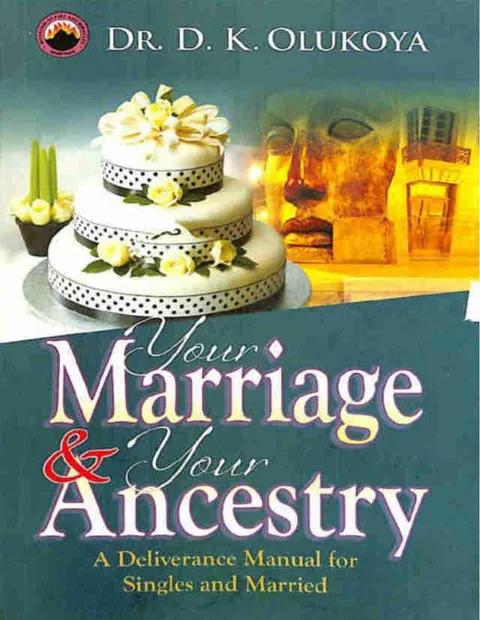

Others like your marriage and your ancestry Features >>

A Marriage Without Regrets
The Marriage Builder
Marriage As A Covenant Part 1
Healing Your Marriage When Trust Is Broken

The Parent You Want To Be
-160.webp)
Marriage Matters (Extraordinary Change Through Ordinary Moments)
%20by%20Derek%20Prince-160.webp)
Marriage Covenant: The Biblical Secret For A Love That Lasts

Marriage On The Rock - God's Design For Your Dream Marriage
The Christian Parenting Handbook

Pathway To Christian Marriage
About the Book
"Your Marriage and Your Ancestry" by D. K. Olukoya delves into the impact that ancestral ties can have on marriage and relationships. The book explores how unresolved issues from past generations can affect current marriages, and offers guidance on how to break free from negative ancestral patterns and create a healthy, fulfilling marriage. It emphasizes the importance of understanding and addressing ancestral influences in order to build a strong and successful marriage.
Susannah Spurgeon

How I Approach God When Feeling Rotten
A vague bad feeling that you are a crummy person is not the same as conviction for sin. Feeling rotten is not the same as repentance. This morning I began to pray, and felt unworthy to be talking to the Creator of the universe. It was a vague sense of unworthiness. So I told him so. Now what? Nothing changed until I began to get specific about my sins. Crummy feelings can be useful if they lead to conviction for sins. Vague feelings of being a bad person are not very helpful. The fog of unworthiness needs to take shape into clear dark pillars of disobedience. Then you can point to them and repent and ask for forgiveness and take aim to blow them up. So I began to call to mind the commands I frequently break. These are the ones that came to mind. Love God with all our heart, soul, mind and strength. Not 95%, 100%. (Matthew 22:37) Love your neighbor as you love yourself. Be as eager for things to go well for him as you are for things to go well for you. (Matthew 22:39) Do all things without grumbling. No grumbling—inside or outside. (Philippians 2:14) Cast all your anxieties on him—so you are not being weighed down by it anymore. (1 Peter 5:7) Only say things that give grace to others—especially those closest to you. (Ephesians 4:29) Redeem the time. Don’t fritter or dawdle. (Ephesians 5:16) Set your mind on things that are above. Connect all your thoughts to Christ. (Colossians 3:2) Do not return evil for evil—like when your wife or daughter says something you don’t like. (1 Thessalonians 5:15) Rejoice always, and again I say rejoice. Always. If sorrowful, keep rejoicing. (Philippians 4:4; 2 Corinthians 6:10) Give thanks in all circumstances. All. All. All. (1 Thessalonians 5:18) So much for any pretensions to great holiness! I’m undone. But now it is specific. I look it in the eye. I’m not whining about feeling crummy. I’m apologizing to Christ for not keeping all that he commanded. I’m broken and I’m angry at my sin. I want to kill it, not me. I’m not suicidal. I’m a sin hater and a sin murderer (“Put to death what is earthly in you” Colossians 3:5. “Put to death the deeds of the body” Romans 8:13.) In this conflict, I hear the promise, “If we confess our sins, he is faithful and just to forgive us our sins and to cleanse us from all unrighteousness” (1John 1:9). Peace rises. Prayer feels possible and right and powerful again. Article by John Piper Founder & Teacher, desiringGod.org