
Others like your marriage and your ancestry Features >>

A Marriage Without Regrets

The Marriage Builder

Marriage As A Covenant Part 1

Healing Your Marriage When Trust Is Broken

The Parent You Want To Be
-160.webp)
Marriage Matters (Extraordinary Change Through Ordinary Moments)
%20by%20Derek%20Prince-160.webp)
Marriage Covenant: The Biblical Secret For A Love That Lasts

Marriage On The Rock - God's Design For Your Dream Marriage

The Christian Parenting Handbook

Pathway To Christian Marriage
About the Book
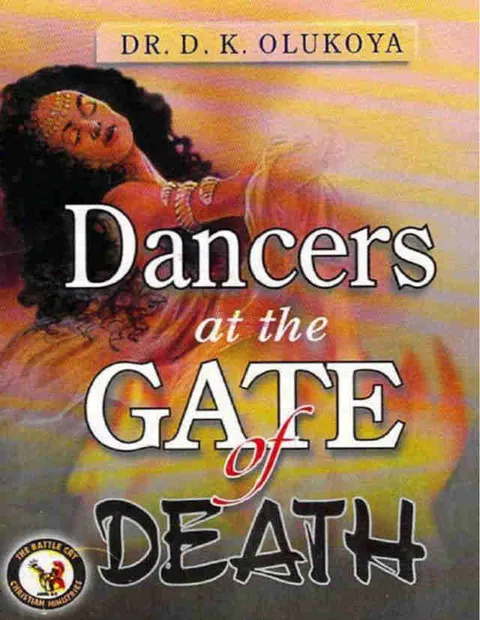
"Your Marriage and Your Ancestry" by D. K. Olukoya delves into the impact that ancestral ties can have on marriage and relationships. The book explores how unresolved issues from past generations can affect current marriages, and offers guidance on how to break free from negative ancestral patterns and create a healthy, fulfilling marriage. It emphasizes the importance of understanding and addressing ancestral influences in order to build a strong and successful marriage.
Rich Mullins
 Born Richard Wayne Mullins on October 21, 1955, in Richmond, IN; died on September 19, 1997, in La Salle County, IL; son of John and Neva Mullins. Education: Attended Friends University, Wichita, KS, late 1980s.
The talents of Contemporary Christian singer/songwriter Rich Mullins and his work with the group Zion were first noticed by Christian music superstar Amy Grant. The inclusion of his song "Sing Your Praise to the Lord" on Grant's Age to Age album in 1982 soon lead to deals with Reunion Records and the start of a successful career as a songwriter and singer. With nearly ten albums and numerous Contemporary Christian hit songs to his credit, Mullins's career was cut short by an automobile accident that took his life on September 19, 1997, in Illinois.
Raised near Richmond, Indiana, Mullins began writing songs in his head as he drove a tractor over the fields of his family's farm. He taught himself to play the piano at age four and soon mastered a number of other instruments as well, including the guitar and hammered dulcimer. Long before his birth, however, factors over which he had no control were beginning to shape the world in which he would grow up. In Rich Mullins: An Arrow Pointing to Heaven by James Bryan Smith, the singer tells of some family history and how it came to affect his life: "My dad grew up back and forth between Kentucky and Virginia because his father was a coal miner. And when my dad was 14 my grandpa came home and told my grandma to load up the truck 'cause they were gonna move.... And my grandpa said, 'Well, Rose, we're going to Detroit.' And she said, 'Why in the world are we going to Detroit?' And he said, 'Because I don't want my boys to grow up to be coal miners.' And so they got as far as Indiana and ran out of gas--and that's how I got here."
As a boy, Mullins was known as Wayne, his middle name. Although he went by Richard when he went off to college and shortened that to Rich when he launched his music career, he preferred to be known as Wayne by his family. Mullins was particularly close to his mother, Neva, who was raised a Quaker. He admits, however, to having been somewhat embarrassed by his father, who was raised in the heart of Appalachia, "which is a very polite way to say that he was a hillbilly," Mullins told Smith. Mullins said that it was not until he was nearing the end of high school that he began to understand the true meaning of the biblical injunction to "honor thy father and mother." In Smith's book Mullins is quoted: "[I]f you cannot honor your father and mother, then you can't honor anybody. Until you come to terms with your heritage, you'll never be at peace with yourself. That was a real breakthrough moment for me. So, what I needed to do was come to understand the Appalachian life, so that I could know more about my father, who had been a stranger to me all my life."
In 1974, after finishing high school, Mullins attended Cincinnati Bible College in Ohio, working as a youth minister in a local church. A couple of years into college, he formed a band of his own. The band only stayed together for about a year, and during that time it performed Christian music at schools and colleges throughout the Cincinnati area. In the late 1970s Mullins left college to work with Zion Ministries and perform with their band, aptly named Zion. In the summer of 1981 a copy of an album recorded by Zion--made up mostly of songs written by Mullins--found its way to Christian singer Amy Grant. The up-and-coming Grant and her managers were impressed by Mullins's "Sing Your Praise to the Lord" and decided to include it on Grant's next album, Age to Age, released in 1982. Mike Blanton, an adviser to Grant and founder of Reunion Records, signed Mullins to his first publishing deal as well as his first artist deal.
Mullins's first album for Reunion, self-titled, was released in 1986 and includes such songs as "Place to Stand," "Elijah," and "Few Good Men." He followed that in 1987 with Pictures in the Sky, which includes "When You Love," "Be with You," and "Verge of a Miracle." Winds of Heaven, Stuff of Earth, Mullins's third album for Reunion, was released in 1989 and features "Awesome God," "Other Side of the World," and "If I Stand." Also hitting music stores in 1989 was Never Picture Perfect, which includes the singles "I Will Sing," "While the Nations Rage," and "First Family."
In 1988 Mullins moved to Wichita, Kansas, to study music education at Friends University, a nondenominational Christian institution. While studying at Friends, he continued to record and perform whenever he could. In 1991 and 1992, he released two volumes of a compilation entitled World As Best As I Remember It. After completing his studies at Friends, Mullins joined a Compassion International mission to the vast Navajo Reservation in Arizona to teach music to the local children and spread the Christian gospel to whomever he could reach. As part of his work in the Navajo Nation, he formed a music club for some of the younger residents. In May of 1995, he moved to the Navajo Nation, settling into a trailer adjacent to the reservation. He lived there with fellow musician Mitch McVicker, and the two were involved in a project to collect musical instruments for the children of the reservation.
Throughout his career, Mullins has been nominated a total of 12 times for Dove Awards, presented each year to the best in Contemporary Christian music. He never received the award, but close friend Doris Howard told Release magazine that he probably didn't mind. "Nashville didn't own Rich, but then, he cared nothing for the things of this world."
On September 19, 1997, the Jeep in which Mullins and McVicker were traveling from Chicago to Wichita overturned on Interstate 39 in La Salle County, Illinois. Both men were thrown onto the road from their vehicle. A tractor trailer following close behind swerved to miss the Jeep but instead hit Rich, killing him instantly. McVicker, though injured critically, recovered.
Rich Mullins's Career
Joined Christian group Zion, late 1970s; released self-titled album for Reunion Records, 1986; recorded total of nine albums of Christian music for Reunion, 1986-96; wrote several Contemporary Christian hits, including "Awesome God" and "Sing Your Praise to the Lord"; studied music education, devoted time to relief efforts among Navajo Indians of the Southwest, mid-1990s.
Born Richard Wayne Mullins on October 21, 1955, in Richmond, IN; died on September 19, 1997, in La Salle County, IL; son of John and Neva Mullins. Education: Attended Friends University, Wichita, KS, late 1980s.
The talents of Contemporary Christian singer/songwriter Rich Mullins and his work with the group Zion were first noticed by Christian music superstar Amy Grant. The inclusion of his song "Sing Your Praise to the Lord" on Grant's Age to Age album in 1982 soon lead to deals with Reunion Records and the start of a successful career as a songwriter and singer. With nearly ten albums and numerous Contemporary Christian hit songs to his credit, Mullins's career was cut short by an automobile accident that took his life on September 19, 1997, in Illinois.
Raised near Richmond, Indiana, Mullins began writing songs in his head as he drove a tractor over the fields of his family's farm. He taught himself to play the piano at age four and soon mastered a number of other instruments as well, including the guitar and hammered dulcimer. Long before his birth, however, factors over which he had no control were beginning to shape the world in which he would grow up. In Rich Mullins: An Arrow Pointing to Heaven by James Bryan Smith, the singer tells of some family history and how it came to affect his life: "My dad grew up back and forth between Kentucky and Virginia because his father was a coal miner. And when my dad was 14 my grandpa came home and told my grandma to load up the truck 'cause they were gonna move.... And my grandpa said, 'Well, Rose, we're going to Detroit.' And she said, 'Why in the world are we going to Detroit?' And he said, 'Because I don't want my boys to grow up to be coal miners.' And so they got as far as Indiana and ran out of gas--and that's how I got here."
As a boy, Mullins was known as Wayne, his middle name. Although he went by Richard when he went off to college and shortened that to Rich when he launched his music career, he preferred to be known as Wayne by his family. Mullins was particularly close to his mother, Neva, who was raised a Quaker. He admits, however, to having been somewhat embarrassed by his father, who was raised in the heart of Appalachia, "which is a very polite way to say that he was a hillbilly," Mullins told Smith. Mullins said that it was not until he was nearing the end of high school that he began to understand the true meaning of the biblical injunction to "honor thy father and mother." In Smith's book Mullins is quoted: "[I]f you cannot honor your father and mother, then you can't honor anybody. Until you come to terms with your heritage, you'll never be at peace with yourself. That was a real breakthrough moment for me. So, what I needed to do was come to understand the Appalachian life, so that I could know more about my father, who had been a stranger to me all my life."
In 1974, after finishing high school, Mullins attended Cincinnati Bible College in Ohio, working as a youth minister in a local church. A couple of years into college, he formed a band of his own. The band only stayed together for about a year, and during that time it performed Christian music at schools and colleges throughout the Cincinnati area. In the late 1970s Mullins left college to work with Zion Ministries and perform with their band, aptly named Zion. In the summer of 1981 a copy of an album recorded by Zion--made up mostly of songs written by Mullins--found its way to Christian singer Amy Grant. The up-and-coming Grant and her managers were impressed by Mullins's "Sing Your Praise to the Lord" and decided to include it on Grant's next album, Age to Age, released in 1982. Mike Blanton, an adviser to Grant and founder of Reunion Records, signed Mullins to his first publishing deal as well as his first artist deal.
Mullins's first album for Reunion, self-titled, was released in 1986 and includes such songs as "Place to Stand," "Elijah," and "Few Good Men." He followed that in 1987 with Pictures in the Sky, which includes "When You Love," "Be with You," and "Verge of a Miracle." Winds of Heaven, Stuff of Earth, Mullins's third album for Reunion, was released in 1989 and features "Awesome God," "Other Side of the World," and "If I Stand." Also hitting music stores in 1989 was Never Picture Perfect, which includes the singles "I Will Sing," "While the Nations Rage," and "First Family."
In 1988 Mullins moved to Wichita, Kansas, to study music education at Friends University, a nondenominational Christian institution. While studying at Friends, he continued to record and perform whenever he could. In 1991 and 1992, he released two volumes of a compilation entitled World As Best As I Remember It. After completing his studies at Friends, Mullins joined a Compassion International mission to the vast Navajo Reservation in Arizona to teach music to the local children and spread the Christian gospel to whomever he could reach. As part of his work in the Navajo Nation, he formed a music club for some of the younger residents. In May of 1995, he moved to the Navajo Nation, settling into a trailer adjacent to the reservation. He lived there with fellow musician Mitch McVicker, and the two were involved in a project to collect musical instruments for the children of the reservation.
Throughout his career, Mullins has been nominated a total of 12 times for Dove Awards, presented each year to the best in Contemporary Christian music. He never received the award, but close friend Doris Howard told Release magazine that he probably didn't mind. "Nashville didn't own Rich, but then, he cared nothing for the things of this world."
On September 19, 1997, the Jeep in which Mullins and McVicker were traveling from Chicago to Wichita overturned on Interstate 39 in La Salle County, Illinois. Both men were thrown onto the road from their vehicle. A tractor trailer following close behind swerved to miss the Jeep but instead hit Rich, killing him instantly. McVicker, though injured critically, recovered.
Rich Mullins's Career
Joined Christian group Zion, late 1970s; released self-titled album for Reunion Records, 1986; recorded total of nine albums of Christian music for Reunion, 1986-96; wrote several Contemporary Christian hits, including "Awesome God" and "Sing Your Praise to the Lord"; studied music education, devoted time to relief efforts among Navajo Indians of the Southwest, mid-1990s.
the most wonderful books on earth
As many begin a new year of Bible reading, we would do well to remember one of the chief dangers: searching the Scriptures, and missing the Savior. Recall Jesus’s words to the Jewish leaders of John 5, those most devoted of Bible readers: You search the Scriptures because you think that in them you have eternal life; and it is they that bear witness about me, yet you refuse to come to me that you may have life. (John 5:39–40) Amazingly, it is possible to know your Bible and not know your God. It is possible to study the word and neglect the Word. It is possible to search the Scriptures and miss the Savior. How can we guard ourselves from such a deadly yet subtle danger? Ultimately, we need the Holy Spirit to breathe Christ into the dry bones of our devotions. We need him to come, morning by morning, and turn our living room or desk into a Mount of Transfiguration. And so, we pray. But alongside prayer, we can also resolve to keep one goal of Bible reading high above the rest: Catch as much of Jesus as you can. Know and enjoy him. See and savor him. Study and love him. And to that end, let me offer a modest proposal for your consideration: as you read the Bible this year, plant your soul especially in the Gospels. Keep a Foot in the Four I am not proposing that you read only the Gospels this year, but that you consider finding some special way to plant (and keep) your soul in them. You could, for example, use the one-year Discipleship Journal Bible Reading Plan, which includes a Gospel reading for every day. Or you could memorize an extended portion of the Gospels, like the Sermon on the Mount (Matthew 5–7) or the Upper Room Discourse (John 13–17). Or you could read and reread one of the Gospels, perhaps with journal and commentary in hand. This proposal will not fit every reader. Some, perhaps, have spent most of their Christian life in the Gospels, and this may be the year to wander with Moses in the wilderness, or hear what Ezekiel has to say, or trace the logic of Romans. But I suspect many, like myself, would benefit from the counsel of J.I. Packer and J.C. Ryle. First, hear Packer: We could . . . correct woolliness of view as to what Christian commitment involves, by stressing the need for constant meditation on the four Gospels, over and above the rest of our Bible reading; for Gospel study enables us both to keep our Lord in clear view and to hold before our minds the relational frame of discipleship to him. “We should never let ourselves forget,” Packer continues, “that the four Gospels are, as has often and rightly been said, the most wonderful books on earth” ( Keep in Step with the Spirit , 61). Now listen to Ryle: It would be well if professing Christians in modern days studied the four Gospels more than they do. No doubt all Scripture is profitable. It is not wise to exalt one part of the Bible at the expense of another. But I think it should be good for some who are very familiar with the Epistles, if they knew a little more about Matthew, Mark, Luke, and John. ( Holiness , 247) Neither Packer nor Ryle sought to create red-letter Christians, who treat the words of Jesus as more inspired than the rest of Scripture. All the Bible is God-breathed, and the Son of God speaks as fully in the black syllables as he does in the red. Why then would whole-Bible lovers like these two men counsel Christians to give themselves to the Gospels? Consider four reasons. The Gospels give glory a texture. Matthew, Mark, Luke, and John could have given us a summary of Jesus’s life, death, and resurrection in their own words. Instead, the Gospels take us among the twelve, where we see and hear Jesus for ourselves. Why? John tells us: “The Word became flesh and dwelt among us, and we have seen his glory, glory as of the only Son from the Father, full of grace and truth” (John 1:14). For John and the other disciples, the glory of Christ was not a vague or summarized or paraphrased glory; it was a particular glory, a textured glory, a glory they had “seen and heard” (1 John 1:3) in the specific words, deeds, joys, heartaches, and sufferings of the Word made flesh. And by Gospel’s end, they want us to join them in saying, “We have seen his glory” (John 20:30–31). “Sinners and strugglers like us need more than general notions of Jesus in our most desperate moments.” Sinners and strugglers like us need more than general notions of Jesus in our most desperate moments; we need his particular glories. The fearful soul needs more than to remember that Jesus gives peace — it needs to hear him say in the upper room, “Let not your hearts be troubled” (John 14:1). The oppressed mind needs more than a vague idea of Jesus’s power over darkness — it needs to watch him send demons fleeing (Mark 1:25–26). The guilty heart needs more than to say, “Jesus forgives” — it needs to feel Calvary shake under the force of “It is finished” (John 19:30). Sin is not vague. Sorrow is not vague. Satan is not vague. Therefore, we cannot allow Christ to be. The Gospels shatter false Christs. Ever since the real Jesus ascended, we have been in danger of embracing “another Jesus” (2 Corinthians 11:4) — or at least a distorted Jesus. Some do so deliberately, in search of a more convenient Messiah. Many, however, just struggle to faithfully uphold what Jonathan Edwards calls the “diverse excellencies” of Jesus Christ, the lamblike Lion and lionlike Lamb ( Seeing and Savoring Jesus Christ , 29). We understand lions, and we understand lambs, but what do we make of a Lion-Lamb? Imagine yourself in Peter’s shoes. Just when you think you’ve discovered Jesus’s tenderness, he goes and calls someone a dog (Matthew 15:25–26). Just when you imagine you’ve grasped his toughness, he takes the children in his arms (Mark 10:16). Just when you pride yourself for seeing him clearly, he turns and says, “Get behind me, Satan!” (Mark 8:33). And just when you’re sure you’ve failed beyond forgiveness, he meets you with threefold mercy (John 21:15–19). “We need our vision of Jesus regularly shattered — or at least refined — by the real, unexpected Jesus of the Gospels.” “My idea of God is not a divine idea,” C.S. Lewis writes. “It has to be shattered time after time” ( A Grief Observed , 66). So too with every one of us. We tend to remake the full, surprising, perfect humanity of Jesus in the image of our partial, predictable, distorted humanity. So, like Peter, we need our vision of Jesus regularly shattered — or at least refined — by the real, unexpected Jesus of the Gospels. The Gospels make Bible reading Personal. When we talk of “personal Bible study,” we may say more than we mean. The best Bible study is indeed Personal — centered on the Person of Jesus Christ. His presence rustles through every page of Scripture, Old Testament or New. All the prophets foretell him; all the apostles preach him. And the Gospel writers in particular display him. Yet how easily Bible reading becomes an abstract, impersonal affair — even, at times, when we are reading about Christ . To know Christ doctrinally and theologically is not necessarily to know him personally. To follow old-covenant shadows to their substance is not necessarily to follow him . To grasp the logic of redemption is not necessarily to grasp his love. To be sure, we cannot commune with Christ without knowing something about him. But we can certainly know much about Christ without communing with him. “It is well to be acquainted with the doctrines and principles of Christianity. It is better to be acquainted with Christ himself,” Ryle writes ( Holiness , 247). And nowhere does the Bible acquaint us with Christ the Person better than in the Gospels. Matthew, Mark, Luke, and John especially are written for those who, like the visitors in John 12, come to Scripture saying, “Sir, we wish to see Jesus” (John 12:21). The Gospels are bigger than they look. The four Gospels are relatively small compared to most of the books on our shelves. If we wanted, we could read through each in a single sitting. But like the Narnian stable in The Last Battle , the inside of the Gospels is bigger than the outside. Between their covers lies an infinite glory — a Jesus whose riches are not metaphorically but literally “unsearchable” (Ephesians 3:8). We will never catch all there is to know and love about Jesus, but we can catch something more next year. So come again and walk with him on the waters. Come and watch a few loaves feed five thousand. Come and sing with Zechariah, rise with Lazarus, and walk with the women to the empty tomb. Come and remember why the Gospels are indeed “the most wonderful books on earth” — because they give us the most wonderful Person.