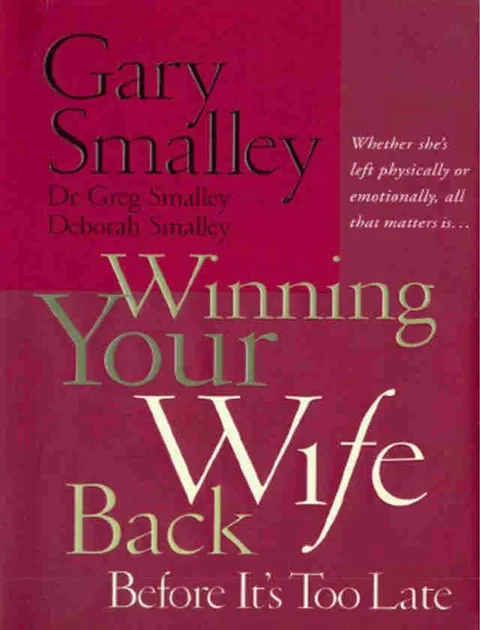

Others like winning your wife Features >>
Winning Your Husband
Healing Your Marriage When Trust Is Broken
-160.webp)
Family Life (A Simple Guide To The Biblical Family)

Finding Home - An Imperfect Path To Faith And Family
Paul, Women And Wives: Marriage And Women’s Ministry In The Letters Of Paul
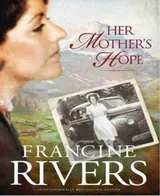
Her Mother's Hope
The Story Of Marriage
Counselling Recipes

Love Like You've Never Been Hurt
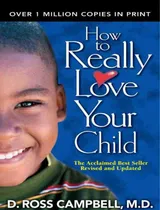
How To Really Love Your Child
About the Book
"Winning Your Wife" by Gary Smalley explores ways to improve communication, intimacy, and overall satisfaction in marriage. Smalley offers practical advice and strategies for husbands to strengthen their relationship with their wives, leading to a more fulfilling and successful marriage.
John and Betty Stam
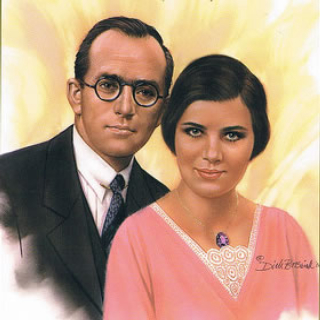 The year 1934. Americans John and Betty Stam were serving as missionaries in China. One morning Betty was bathing her three-month-old daughter Helen Priscilla Stam when Tsingteh's city magistrate appeared. Communist forces were near, he warned, and urged the Stams to flee.
So John Stam went out to investigate the situation for himself. He received conflicting reports. Taking no chances, he arranged for Betty and the baby to be escorted away to safety if need be. But before the Stams could make their break, the Communists were inside the city. By little-known paths, they had streamed over the mountains behind government troops. Now gun shots sounded in the streets as looting began. The enemy beat on the Stams' own gate.
A faithful cook and maid at the mission station had stayed behind. The Stams knelt with them in prayer. But the invaders were pounding at the door. John opened it and spoke courteously to the four leaders who entered, asking them if they were hungry. Betty brought them tea and cakes. The courtesy meant nothing. They demanded all the money the Stams had, and John handed it over. As the men bound him, he pleaded for the safety of his wife and child. The Communists left Betty and Helen behind as they led John off to their headquarters.
Before long, they reappeared, demanding mother and child. The maid and cook pleaded to be allowed to accompany Betty.
"No," barked the captors, and threatened to shoot.
"It is better for you to stay here," Betty whispered. "If anything happens to us, look after the baby."
[When we consecrate ourselves to God, we think we are making a great sacrifice, and doing lots for Him, when really we are only letting go some little, bitsie trinkets we have been grabbing, and when our hands are empty, He fills them full of His treasures. --Betty Stam]
Betty was led to her husband's side. Little Helen needed some things and John was allowed to return home under guard to fetch them. But everything had been stolen. That night John was allowed to write a letter to mission authorities. "My wife, baby and myself are today in the hands of the Communists in the city of Tsingteh. Their demand is twenty thousand dollars for our release. . . . We were too late. The Lord bless and guide you. As for us, may God be glorified, whether by life or by death."
Prisoners in the local jail were released to make room for the Stams. Frightened by rifle fire, the baby cried out. One of the Reds said, "Let's kill the baby. It is in our way." A bystander asked, "Why kill her? What harm has she done?"
"Are you a Christian?" shouted one of the guards.
The man said he was not; he was one of the prisoners just released.
"Will you die for this foreign baby?" they asked. As Betty hugged Helen to her chest, the man was hacked to pieces before her eyes.
Terror in the Streets
The next morning their captors led the Stams toward Miaosheo, twelve miles distant. John carried little Helen, but Betty, who was not physically strong, owing to a youthful bout with inflammatory rheumatitis was allowed to ride a horse part of the way. Terror reigned in the streets of Miaosheo. Under guard, the foreign family was hustled into the postmaster's shop.
"Where are you going?" asked the postmaster, who recognized them from their previous visits to his town. "We do not know where they are going, but we are going to heaven," answered John. He left a letter with the postmaster. "I tried to persuade them to let my wife and baby go back from Tsingteh with a letter to you, but they would not let her. . . ."
That night the three were held in the house of a wealthy man who had fled. They were guarded by soldiers. John was tied to a post all that cold night, but Betty was allowed enough freedom to tend the baby. As it turned out, she did more than that.
Execution
The next morning the young couple were led through town without the baby. Their hands were tightly bound, and they were stripped of their outer garments as if they were common criminals. John walked barefoot. He had given his socks to Betty. The soldiers jeered and called the town’s folk to come see the execution. The terrified people obeyed.
On the way to the execution, a medicine-seller, considered a lukewarm Christian at best, stepped from the crowd and pleaded for the lives of the two foreigners. The Reds angrily ordered him back. The man would not be stilled. His house was searched, a Bible and hymnbook found, and he, too was dragged away to die as a hated Christian.
John pleaded for the man’s life. The Red leader sharply ordered him to kneel. As John was speaking softly, the Red leader swung his sword through the missionary’s throat so that his head was severed from his body. Betty did not scream. She quivered and fell bound beside her husband’s body. As she knelt there, the same sword ended her life with a single blow.
Betty
Betty Scott was born in the United States but reared in China as the daughter of missionaries. She came to the United States and attended Wilson College in Pennsylvania. Betty prepared to follow in her parents’ footsteps and work in China or wherever else the Lord directed her.
But China it proved to be. At a prayer meeting for China, she met John Stam and a friendship developed that ripened into love. Painfully they recognized that marriage was not yet possible. “The China Inland Mission has appealed for men, single men, to work in sections where it would be impossible to take a woman until more settled work has commenced,” wrote John. He committed the matter to the Lord, whose work, he felt, must come before any human affection. At any rate, Betty would be leaving for China before him, to work in an entirely different region, and so they must be separated anyhow. As a matter of fact, John had not yet even been accepted by the China Inland Mission whereas Betty had. They parted after a long tender day, sharing their faith, picnicking, talking, and praying.
Betty sailed while John continued his studies. On July 1, 1932, John, too, was accepted for service in China. Now at least he could head toward the same continent as Betty. He sailed for Shanghai.
Meanwhile, Betty found her plans thwarted. A senior missionary had been captured by the Communists in the region where she was to have worked. The mission directors decided to keep her in a temporary station, and later ill-health brought her to Shanghai. Thus without any choice on her part, she was in Shanghai when John landed in China. Immediately they became engaged and a year later were married, long before they expected it. In October, 1934 Helen Priscilla was born to them. What would become of her now that her parents John and Betty were dead?
In the Hills
For two days, local Christians huddled in hiding in the hills around Miaosheo. Among them was a Chinese evangelist named Mr. Lo. Through informants, he learned that the Communists had captured two foreigners. At first he did not realize that these were John and Betty Stam, with whom he had worked, but as he received more details, he put two and two together. As soon as government troops entered the valley and it was safe to venture forth, Mr. Lo hurried to town. His questions met with silence. Everyone was fearful that spies might report anyone who said too much.
An old woman whispered to Pastor Lo that there was a baby left behind. She nodded in the direction of the house where John and Betty had been chained their last night on earth. Pastor Lo hurried to the site and found room after room trashed by the bandits. Then he heard a muffled cry. Tucked by her mother in a little sleeping bag, Helen was warm and alive, although hungry after her two day fast.
The kindly pastor took the child in his arms and carried her to his wife. With the help of a local Christian family, he wrapped the bodies that still lay upon the hillside and placed them into coffins. To the crowd that gathered he explained that the missionaries had only come to tell them how they might find forgiveness of sin in Christ. Leaving others to bury the dead, he hurried home. Somehow Helen had to be gotten to safety.
Pastor Lo's own son, a boy of four, was desperately ill -- semi-conscious after days of exposure. Pastor Lo had to find a way to carry the children a hundred miles through mountains infested by bandits and Communists. Brave men were found willing to help bear the children to safety, but there was no money to pay them for their efforts. Lo had been robbed of everything he had.
From Beyond the Grave
But from beyond the grave, Betty provided. Tucked in Helen's sleeping bag were a change of clothes and some diapers. Pinned between these articles of clothing were two five dollar bills. It made the difference.
Placing the children in rice baskets slung from the two ends of a bamboo pole, the group departed quietly, taking turns carrying the precious cargo over their shoulders. Mrs. Lo was able to find Chinese mothers along the way to nurse Helen. On foot, they came safely through their perils. Lo's own boy recovered consciousness suddenly and sat up, singing a hymn.
Eight days after the Stams fell into Communist hands, another missionary in a nearby city heard a rap at his door. He opened it and a Chinese woman, stained with travel, entered the house, bearing a bundle in her arms. "This is all we have left," she said brokenly.
The missionary took the bundle and turned back the blanket to uncover the sleeping face of Helen Priscilla Stam. Many kind hands had labored to preserve the infant girl, but none kinder than Betty who had spared no effort for her baby even as she herself faced degradation and death.
Kathleen White has written an excellent and very readable biography John and Betty Stam, available from Bethany House Publishers (1988). She reports that Betty's alma mater, Wilson College in Pennsylvania, took over baby Helen's support and covered the costs of her college education. She added: "Helen is living in this country (USA) with her husband and family but does not wish her identity and whereabouts to be made known."
Resources:
Huizenga, Lee S. John and Betty Stam; Martyrs. Zondervan, 1935.
Pollock, John. Victims of the Long March and Other Stories. Waco, Texas.: Word Publishing, 1970.
Taylor, Mrs. Howard. The Triumph of John and Betty Stam. China Inland Mission, 1935.
The year 1934. Americans John and Betty Stam were serving as missionaries in China. One morning Betty was bathing her three-month-old daughter Helen Priscilla Stam when Tsingteh's city magistrate appeared. Communist forces were near, he warned, and urged the Stams to flee.
So John Stam went out to investigate the situation for himself. He received conflicting reports. Taking no chances, he arranged for Betty and the baby to be escorted away to safety if need be. But before the Stams could make their break, the Communists were inside the city. By little-known paths, they had streamed over the mountains behind government troops. Now gun shots sounded in the streets as looting began. The enemy beat on the Stams' own gate.
A faithful cook and maid at the mission station had stayed behind. The Stams knelt with them in prayer. But the invaders were pounding at the door. John opened it and spoke courteously to the four leaders who entered, asking them if they were hungry. Betty brought them tea and cakes. The courtesy meant nothing. They demanded all the money the Stams had, and John handed it over. As the men bound him, he pleaded for the safety of his wife and child. The Communists left Betty and Helen behind as they led John off to their headquarters.
Before long, they reappeared, demanding mother and child. The maid and cook pleaded to be allowed to accompany Betty.
"No," barked the captors, and threatened to shoot.
"It is better for you to stay here," Betty whispered. "If anything happens to us, look after the baby."
[When we consecrate ourselves to God, we think we are making a great sacrifice, and doing lots for Him, when really we are only letting go some little, bitsie trinkets we have been grabbing, and when our hands are empty, He fills them full of His treasures. --Betty Stam]
Betty was led to her husband's side. Little Helen needed some things and John was allowed to return home under guard to fetch them. But everything had been stolen. That night John was allowed to write a letter to mission authorities. "My wife, baby and myself are today in the hands of the Communists in the city of Tsingteh. Their demand is twenty thousand dollars for our release. . . . We were too late. The Lord bless and guide you. As for us, may God be glorified, whether by life or by death."
Prisoners in the local jail were released to make room for the Stams. Frightened by rifle fire, the baby cried out. One of the Reds said, "Let's kill the baby. It is in our way." A bystander asked, "Why kill her? What harm has she done?"
"Are you a Christian?" shouted one of the guards.
The man said he was not; he was one of the prisoners just released.
"Will you die for this foreign baby?" they asked. As Betty hugged Helen to her chest, the man was hacked to pieces before her eyes.
Terror in the Streets
The next morning their captors led the Stams toward Miaosheo, twelve miles distant. John carried little Helen, but Betty, who was not physically strong, owing to a youthful bout with inflammatory rheumatitis was allowed to ride a horse part of the way. Terror reigned in the streets of Miaosheo. Under guard, the foreign family was hustled into the postmaster's shop.
"Where are you going?" asked the postmaster, who recognized them from their previous visits to his town. "We do not know where they are going, but we are going to heaven," answered John. He left a letter with the postmaster. "I tried to persuade them to let my wife and baby go back from Tsingteh with a letter to you, but they would not let her. . . ."
That night the three were held in the house of a wealthy man who had fled. They were guarded by soldiers. John was tied to a post all that cold night, but Betty was allowed enough freedom to tend the baby. As it turned out, she did more than that.
Execution
The next morning the young couple were led through town without the baby. Their hands were tightly bound, and they were stripped of their outer garments as if they were common criminals. John walked barefoot. He had given his socks to Betty. The soldiers jeered and called the town’s folk to come see the execution. The terrified people obeyed.
On the way to the execution, a medicine-seller, considered a lukewarm Christian at best, stepped from the crowd and pleaded for the lives of the two foreigners. The Reds angrily ordered him back. The man would not be stilled. His house was searched, a Bible and hymnbook found, and he, too was dragged away to die as a hated Christian.
John pleaded for the man’s life. The Red leader sharply ordered him to kneel. As John was speaking softly, the Red leader swung his sword through the missionary’s throat so that his head was severed from his body. Betty did not scream. She quivered and fell bound beside her husband’s body. As she knelt there, the same sword ended her life with a single blow.
Betty
Betty Scott was born in the United States but reared in China as the daughter of missionaries. She came to the United States and attended Wilson College in Pennsylvania. Betty prepared to follow in her parents’ footsteps and work in China or wherever else the Lord directed her.
But China it proved to be. At a prayer meeting for China, she met John Stam and a friendship developed that ripened into love. Painfully they recognized that marriage was not yet possible. “The China Inland Mission has appealed for men, single men, to work in sections where it would be impossible to take a woman until more settled work has commenced,” wrote John. He committed the matter to the Lord, whose work, he felt, must come before any human affection. At any rate, Betty would be leaving for China before him, to work in an entirely different region, and so they must be separated anyhow. As a matter of fact, John had not yet even been accepted by the China Inland Mission whereas Betty had. They parted after a long tender day, sharing their faith, picnicking, talking, and praying.
Betty sailed while John continued his studies. On July 1, 1932, John, too, was accepted for service in China. Now at least he could head toward the same continent as Betty. He sailed for Shanghai.
Meanwhile, Betty found her plans thwarted. A senior missionary had been captured by the Communists in the region where she was to have worked. The mission directors decided to keep her in a temporary station, and later ill-health brought her to Shanghai. Thus without any choice on her part, she was in Shanghai when John landed in China. Immediately they became engaged and a year later were married, long before they expected it. In October, 1934 Helen Priscilla was born to them. What would become of her now that her parents John and Betty were dead?
In the Hills
For two days, local Christians huddled in hiding in the hills around Miaosheo. Among them was a Chinese evangelist named Mr. Lo. Through informants, he learned that the Communists had captured two foreigners. At first he did not realize that these were John and Betty Stam, with whom he had worked, but as he received more details, he put two and two together. As soon as government troops entered the valley and it was safe to venture forth, Mr. Lo hurried to town. His questions met with silence. Everyone was fearful that spies might report anyone who said too much.
An old woman whispered to Pastor Lo that there was a baby left behind. She nodded in the direction of the house where John and Betty had been chained their last night on earth. Pastor Lo hurried to the site and found room after room trashed by the bandits. Then he heard a muffled cry. Tucked by her mother in a little sleeping bag, Helen was warm and alive, although hungry after her two day fast.
The kindly pastor took the child in his arms and carried her to his wife. With the help of a local Christian family, he wrapped the bodies that still lay upon the hillside and placed them into coffins. To the crowd that gathered he explained that the missionaries had only come to tell them how they might find forgiveness of sin in Christ. Leaving others to bury the dead, he hurried home. Somehow Helen had to be gotten to safety.
Pastor Lo's own son, a boy of four, was desperately ill -- semi-conscious after days of exposure. Pastor Lo had to find a way to carry the children a hundred miles through mountains infested by bandits and Communists. Brave men were found willing to help bear the children to safety, but there was no money to pay them for their efforts. Lo had been robbed of everything he had.
From Beyond the Grave
But from beyond the grave, Betty provided. Tucked in Helen's sleeping bag were a change of clothes and some diapers. Pinned between these articles of clothing were two five dollar bills. It made the difference.
Placing the children in rice baskets slung from the two ends of a bamboo pole, the group departed quietly, taking turns carrying the precious cargo over their shoulders. Mrs. Lo was able to find Chinese mothers along the way to nurse Helen. On foot, they came safely through their perils. Lo's own boy recovered consciousness suddenly and sat up, singing a hymn.
Eight days after the Stams fell into Communist hands, another missionary in a nearby city heard a rap at his door. He opened it and a Chinese woman, stained with travel, entered the house, bearing a bundle in her arms. "This is all we have left," she said brokenly.
The missionary took the bundle and turned back the blanket to uncover the sleeping face of Helen Priscilla Stam. Many kind hands had labored to preserve the infant girl, but none kinder than Betty who had spared no effort for her baby even as she herself faced degradation and death.
Kathleen White has written an excellent and very readable biography John and Betty Stam, available from Bethany House Publishers (1988). She reports that Betty's alma mater, Wilson College in Pennsylvania, took over baby Helen's support and covered the costs of her college education. She added: "Helen is living in this country (USA) with her husband and family but does not wish her identity and whereabouts to be made known."
Resources:
Huizenga, Lee S. John and Betty Stam; Martyrs. Zondervan, 1935.
Pollock, John. Victims of the Long March and Other Stories. Waco, Texas.: Word Publishing, 1970.
Taylor, Mrs. Howard. The Triumph of John and Betty Stam. China Inland Mission, 1935.
take time to be unproductive - how busyness can waste a life
Søren Kierkegaard, a nineteenth-century Danish theologian and social critic, once wrote in his journal, “The result of busyness is that an individual is very seldom permitted to form a heart.” We sense in our souls he is right. Unrelenting busyness — running here and there, late and in haste, always with more to do than we have time for — stifles the life of the heart. Yet I fear that many in the church, especially those of us in various forms of leadership, often pursue that very busyness. We occasionally warn others about burnout and stress, but we are constantly in motion, endlessly feeling harassed by all that clamors to be done and feeling guilty for projects we haven’t completed. And we frequently pass that stress on to others, in subtle but destructive ways — we are busy, so we can act like everyone else should be busy. If they are not, we can treat them as lazy or negligent. But is our problem primarily that we are not more productive, or is it that we have allowed unrealistic expectations to distort our vision of faithfulness? While it’s very likely that we could become better organized and more efficient, pursuing those efforts may feed and hide the true problem rather than helping it. What if the heart of our trouble is not time management, but something else? What if the goal of Christian life isn’t merely to get more done? And if that’s true, why do many of us feel a need to fill every moment either with items we can check off a to-do list or with mindless distraction? Binge-watching television and hours spent on social media may be more symptoms than causes of our problems, signs of a deeper malady. What if God doesn’t expect us to be productive every moment? What if growing comfortable with slowness, with quiet, with not filling every moment can help reconnect us to God, others, and even with our own humanity? That’s at least worth thinking about. Unexamined Expectations While it was Ben Franklin, and not the apostle Paul, who observed that “time is money,” we Americans have baptized that sentiment — not to derive financial benefit from every moment, but because somehow we have the idea that every minute should yield positive measurable results. Don’t just sit around; do something! Of course, diligence, a good work ethic, and innovation typically do make life better for ourselves and others. Sometimes, however, a genuine good can become a horrible master, and when productivity and efficiency become our highest goals, our world and our lives suffer. That’s because God’s highest value is not productivity and efficiency, but love (Matthew 22:37–39; 1 Corinthians 16:14). This sounds too abstract, so let’s turn to more direct questions about our own lives. What do you think God expects of you in any given day? If you are like me, this question can reveal some painful disconnects in our perception of God and the faithful life. I recently spoke with a pastor in the Midwest who told me that, when he was in college, he got so excited about the idea that he should “make every minute count” and “redeem the time” that he and his friends mapped out how they could live on four hours of sleep a night; this way, they could “do so much more for Christ.” Twenty years later, this once strong and zealous servant of Christ was physically, emotionally, psychologically, and relationally broken. His faith, his family, and his ministry were all on the brink of collapse. He certainly wouldn’t trace all of his problems to his early zeal and oversized projects, but he does see how that pattern distorted his life, increasing his expectations not just for how much he should do in a day, but for how much he should accomplish in his life. We may easily dismiss his crazy idea of four hours of sleep per night, but my guess is many of us are living with similar assumptions, and it is hurting us. One sign that unhealthy expectations are running our lives is a constant background frustration in our souls, hiding behind our smiling faces. We are exhausted by the kids, by the church, by the spouse, by the endless demands. We have no margin in life, so when someone says the wrong thing, or a child doesn’t move fast enough, or a neighbor needs help, this anger tries to burst through our kindness. People are keeping us from doing what we need to do! Efficiency and productivity have replaced love as our highest value. Gift of Slow Maybe in order not to waste our lives, you and I need to learn the benefit of “wasting” some time. Let me explain. What we think of as boredom or unproductive time can be a great gift. In the spaces opened by moments of slowness, if we don’t immediately fill them with more tasks or distractions, surprising things often happen: our bodies breathe and relax a bit, our imaginations open up, and our hearts can consider all manner of ideas. We have space to evaluate how we spoke to a colleague that morning or notice a young parent struggling with a child. Only by slowing down, and not immediately filling the space, do we start to sense God’s presence and the complexities of the world — including both its beauties and problems, our wonder and fears. We miss the world when we are constantly busy. Thus Kierkegaard’s insight: the result of busyness is that we are seldom able to form a heart. Compassion, thoughtfulness, repentance, hope, and love all grow in the soil of reflection. And healthy reflection rarely occurs when we don’t slow down. “Compassion, thoughtfulness, repentance, hope, and love all grow in the soil of reflection.” Busyness also stunts our growth. Creativity and wisdom require our internal freedom to reflect, wrestle, and sit with challenges. There is a reason that walks and showers are often places of great insight: the distractions are minimal, so the mind and heart can wonder. Such periods of slowness also enrich our communion with God if we take time for mental, emotional, and even physical engagement that the overly busy life excludes. Life improves if we carve out extended times for solitude and silence. These practices have historically been used and recommended by Christians who saw that busyness made it harder to be present with God and with others. These times of silence and solitude can be difficult, especially at first. But until we grow in our ability to be alone with God — and alone with ourselves — we will have difficulty recognizing the Spirit’s presence in our day. Forming Our Hearts Another reason we like to be busy is that we often don’t like ourselves. Slowing down and creating space for quiet often faces us with matters we prefer to ignore, whether painful memories from our past, undesirable traits in our personality, or actions we wish we hadn’t taken. Busyness can be a way to avoid confronting our sin. It can also be our way of avoiding the wish that we were someone else, or had a different set of abilities or background or temperament. Busyness that enables avoidance can stunt our growth. Busyness makes self-knowledge very difficult. “We miss the world when we are constantly busy.” Rather than being honest with God and ourselves about our hurts, sins, motivations, and disappointments, we dull our sensitivity with busyness. It takes courage to let moments remain unoccupied, but when we are willing to enter open spaces with an open heart, God can bring serious healing and growth. We also gain more courage to enter such spaces when we live in a community of faith that is safe and loving, where others don’t panic or shut down in the face of our pain and shortcomings. When others are comfortable with quiet, mystery, and unfinished work, secure enough in Christ to endure messy situations, that also frees us to face this season in which God is still bringing to completion that which he began (Philippians 1:6): God is comfortable with process, too. We learn to avoid endless busyness when embracing slowness becomes not merely a personal value, but that of our community. Learning to go slower and maybe even “waste” more time together opens up fresh spaces to grow in our awareness of God’s presence and work. We start to become people who can, in the slowness, pray without ceasing (1 Thessalonians 5:17), often without realizing that is what’s happening. Slowing down — not filling every moment with distractions, dropping the compulsion to squeeze productivity out of every moment — allows us to hear God and others. It gives our imagination and creativity oxygen to breathe, and we start to develop a heart. It opens up the path of love. So go ahead, “waste” some time, because this may keep you from wasting your life.