

Others like winning your husband Features >>

Winning Your Wife

Shaping Your Child's Spiritual Future

52 Things Husbands Need From Their Wives
Healing Your Marriage When Trust Is Broken

Loving Your Spouse When You Feel Like Walking Away

Love — The Secret To Your Success
Growing A Godly Marriage

The Covenant Connector

The Five Languages Of Apology

Raising Kingdom Kids
About the Book
"Winning Your Husband" by Gary Smalley outlines practical strategies and insights for wives to strengthen their marriages and improve communication with their husbands. The book offers advice on building trust, resolving conflicts, and creating a more fulfilling and loving relationship with your spouse.
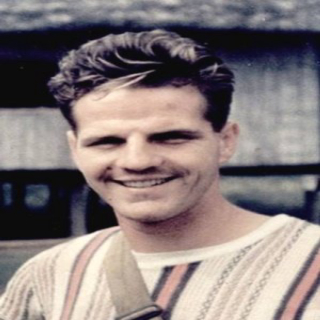
Jim Elliot
 EARLY LIFE
Jim Elliot began his life in Portland, Oregon in the USA. His mother, Clara, was a chiropractor and his father, Fred, was a minister. They married and settled in Seattle, WA where they welcomed their first son, Robert in 1921.
Later they relocated the family to Portland where Herbert arrived in 1924, Jim in 1927, and Jane in 1932.
Jim knew Christ from an early age and was never afraid to speak about Him to his friends. At age six Jim told his mother, “Now, mama, the Lord Jesus can come whenever He wants. He could take our whole family because I’m saved now, and Jane is too young to know Him yet.”
THE YEARS THAT CEMENTED HIS DESIRE TO SERVE THE LORD IN MISSIONS
Jim entered Benson Polytechnic High School in 1941. He carried a small Bible with him and, an excellent speaker; he was often found speaking out for Christ. He and his friends were not afraid to step out and find adventure. One thing Jim didn’t have time for in those early years were girls. He was once quoted as telling a friend, “Domesticated males aren’t much use for adventure.”
In 1945 Jim traveled to Wheaton, IL to attend Wheaton College. His main goal while there was to devote himself to God. He recognized the importance of discipline in pursuing this goal. He would start each morning with prayer and Bible study. In his journal he wrote, “None of it gets to be ‘old stuff’ for it is Christ in print, the Living Word. We wouldn’t think of rising in the morning without a face-wash, but we often neglect the purgative cleansing of the Word of the Lord. It wakes us up to our responsibility.”
Jim’s desire to serve God by taking His gospel to unreached people of the world began to grow while at Wheaton. The summer of 1947 found him in Mexico and that time influenced his decision to minister in Central America after he finished college.
Jim met Elisabeth Howard during his third year at Wheaton. He did ask her for a date which she accepted and then later cancelled. They spent the next years as friends and after she finished at Wheaton they continued to correspond. As they came to know each other there was an attraction, but Jim felt he needed to unencumbered by worldly concerns in order to devote himself completely to God.
In addition to his hope to one day travel to a foreign country to share Christ with the unchurched of the world, he also felt the need to share with people in the United States. On Sundays while at Wheaton he would often ride the train into Chicago and talk to people in the train station about Christ. He often felt ineffective in his work as the times of knowingly leading people to Christ were few. He once wrote, “No fruit yet. Why is that I’m so unproductive? I cannot recall leading more than one or two into the kingdom. Surely this is not the manifestation of the power of the Resurrection. I feel as Rachel, ‘Give me children, or else I die.’”
After college with no clear answer as to working for the Lord in a foreign country, Jim returned home to Portland. He continued his disciplined Bible study as well as correspondence with Elisabeth Howard whom he called Betty.
They both felt a strong attraction to each other during this time, but also felt that the Lord may have been calling them to be unmarried as they served Him.
In June of 1950 he travelled to Oklahoma to attend the Summer Institute of Linguistics. There he learned how to study unwritten languages. He was able to work with a missionary to the Quichuas of the Ecuadorian jungle. Because of these lessons he began to pray for guidance about going to Ecuador and later felt compelled to answer the call there.
Elisabeth Elliot wrote in Shadow of the Almighty:
“The breadth of Jim’s vision is suggested in this entry from the journal:
August 9. “God just now gave me faith to ask for another young man to go, perhaps not this fall, but soon, to join the ranks in the lowlands of eastern Ecuador. There we must learn: 1) Spanish and Quichua, 2) each other, 3) the jungle and independence, and 4) God and God’s way of approach to the highland Quichua. From thence, by His great hand, we must move to the Ecuadorian highlands with several young Indians each, and begin work among the 800,000 highlanders. If God tarries, the natives must be taught to spread southward with the message of the reigning Christ, establishing New Testament groups as they go. Thence the Word must go south into Peru and Bolivia. The Quichuas must be reached for God! Enough for policy. Now for prayer and practice.
THE ECUADOR YEARS
In February 1952 Jim finally left America to travel to Ecuador with Pete Fleming. In May Elisabeth moved to Quito and though they didn’t feel the need to get engaged she and Jim did begin a courtship.
In August Jim left Elisabeth in Quito and travelled with Pete to Shell Mera. At the Mission Aviation Fellowship headquarters in Shell Mera, Jim and Pete learned more about the Acua Indians, a people group that was largely unreached and very savage.
Leaving Shell Mera, Pete and Jim moved on to Shandia where Jim was captivated by the Quichua. He felt very strongly that this was exactly where God intended for him to work to spread the Gospel.
While Jim was in Shandia, Elisabeth was working to learn more about the Colorado Indians near Santa Domingo. In January of 1953 he went to Quito and she met him there and they were finally engaged. They married in October of that year and their only child Valerie was born in 1955.
They settled in Shandia and continued their work with the Quichua Indians. It was Jim’s desire to be able to reach the Waodoni tribe that lived deep in the jungles and had little contact with the outside world. A Waodoni woman who had left the tribe was taken in by the missionaries and helped them to learn the language.
Jim, along with Pete, Ed McCully, Roger Youderian, and their pilot Nate Saint began to search by plane in hopes of finding a way to contact the Waodoni. The found a sandbar in the middle of the Curaray River that worked as a landing strip for the plane and it was there that they first made contact with the Waodoni. They were elated to be able to finally be able to attempt to share the love of Christ with this people group.
After their first meeting, one of the tribe, a man they called George lied to the tribe about the men’s intentions. This lie led the Waodoni warriors to plan an attack for when the missionaries returned. The men did return on January 8, 1956 and were surprised by ten members of the tribe who massacred the missionaries.
Jim’s short life that was filled with the desire to share God’s love can be summed up by a quote that is attributed to him. “He is no fool who gives that which he cannot keep, to gain what he cannot lose.”
EARLY LIFE
Jim Elliot began his life in Portland, Oregon in the USA. His mother, Clara, was a chiropractor and his father, Fred, was a minister. They married and settled in Seattle, WA where they welcomed their first son, Robert in 1921.
Later they relocated the family to Portland where Herbert arrived in 1924, Jim in 1927, and Jane in 1932.
Jim knew Christ from an early age and was never afraid to speak about Him to his friends. At age six Jim told his mother, “Now, mama, the Lord Jesus can come whenever He wants. He could take our whole family because I’m saved now, and Jane is too young to know Him yet.”
THE YEARS THAT CEMENTED HIS DESIRE TO SERVE THE LORD IN MISSIONS
Jim entered Benson Polytechnic High School in 1941. He carried a small Bible with him and, an excellent speaker; he was often found speaking out for Christ. He and his friends were not afraid to step out and find adventure. One thing Jim didn’t have time for in those early years were girls. He was once quoted as telling a friend, “Domesticated males aren’t much use for adventure.”
In 1945 Jim traveled to Wheaton, IL to attend Wheaton College. His main goal while there was to devote himself to God. He recognized the importance of discipline in pursuing this goal. He would start each morning with prayer and Bible study. In his journal he wrote, “None of it gets to be ‘old stuff’ for it is Christ in print, the Living Word. We wouldn’t think of rising in the morning without a face-wash, but we often neglect the purgative cleansing of the Word of the Lord. It wakes us up to our responsibility.”
Jim’s desire to serve God by taking His gospel to unreached people of the world began to grow while at Wheaton. The summer of 1947 found him in Mexico and that time influenced his decision to minister in Central America after he finished college.
Jim met Elisabeth Howard during his third year at Wheaton. He did ask her for a date which she accepted and then later cancelled. They spent the next years as friends and after she finished at Wheaton they continued to correspond. As they came to know each other there was an attraction, but Jim felt he needed to unencumbered by worldly concerns in order to devote himself completely to God.
In addition to his hope to one day travel to a foreign country to share Christ with the unchurched of the world, he also felt the need to share with people in the United States. On Sundays while at Wheaton he would often ride the train into Chicago and talk to people in the train station about Christ. He often felt ineffective in his work as the times of knowingly leading people to Christ were few. He once wrote, “No fruit yet. Why is that I’m so unproductive? I cannot recall leading more than one or two into the kingdom. Surely this is not the manifestation of the power of the Resurrection. I feel as Rachel, ‘Give me children, or else I die.’”
After college with no clear answer as to working for the Lord in a foreign country, Jim returned home to Portland. He continued his disciplined Bible study as well as correspondence with Elisabeth Howard whom he called Betty.
They both felt a strong attraction to each other during this time, but also felt that the Lord may have been calling them to be unmarried as they served Him.
In June of 1950 he travelled to Oklahoma to attend the Summer Institute of Linguistics. There he learned how to study unwritten languages. He was able to work with a missionary to the Quichuas of the Ecuadorian jungle. Because of these lessons he began to pray for guidance about going to Ecuador and later felt compelled to answer the call there.
Elisabeth Elliot wrote in Shadow of the Almighty:
“The breadth of Jim’s vision is suggested in this entry from the journal:
August 9. “God just now gave me faith to ask for another young man to go, perhaps not this fall, but soon, to join the ranks in the lowlands of eastern Ecuador. There we must learn: 1) Spanish and Quichua, 2) each other, 3) the jungle and independence, and 4) God and God’s way of approach to the highland Quichua. From thence, by His great hand, we must move to the Ecuadorian highlands with several young Indians each, and begin work among the 800,000 highlanders. If God tarries, the natives must be taught to spread southward with the message of the reigning Christ, establishing New Testament groups as they go. Thence the Word must go south into Peru and Bolivia. The Quichuas must be reached for God! Enough for policy. Now for prayer and practice.
THE ECUADOR YEARS
In February 1952 Jim finally left America to travel to Ecuador with Pete Fleming. In May Elisabeth moved to Quito and though they didn’t feel the need to get engaged she and Jim did begin a courtship.
In August Jim left Elisabeth in Quito and travelled with Pete to Shell Mera. At the Mission Aviation Fellowship headquarters in Shell Mera, Jim and Pete learned more about the Acua Indians, a people group that was largely unreached and very savage.
Leaving Shell Mera, Pete and Jim moved on to Shandia where Jim was captivated by the Quichua. He felt very strongly that this was exactly where God intended for him to work to spread the Gospel.
While Jim was in Shandia, Elisabeth was working to learn more about the Colorado Indians near Santa Domingo. In January of 1953 he went to Quito and she met him there and they were finally engaged. They married in October of that year and their only child Valerie was born in 1955.
They settled in Shandia and continued their work with the Quichua Indians. It was Jim’s desire to be able to reach the Waodoni tribe that lived deep in the jungles and had little contact with the outside world. A Waodoni woman who had left the tribe was taken in by the missionaries and helped them to learn the language.
Jim, along with Pete, Ed McCully, Roger Youderian, and their pilot Nate Saint began to search by plane in hopes of finding a way to contact the Waodoni. The found a sandbar in the middle of the Curaray River that worked as a landing strip for the plane and it was there that they first made contact with the Waodoni. They were elated to be able to finally be able to attempt to share the love of Christ with this people group.
After their first meeting, one of the tribe, a man they called George lied to the tribe about the men’s intentions. This lie led the Waodoni warriors to plan an attack for when the missionaries returned. The men did return on January 8, 1956 and were surprised by ten members of the tribe who massacred the missionaries.
Jim’s short life that was filled with the desire to share God’s love can be summed up by a quote that is attributed to him. “He is no fool who gives that which he cannot keep, to gain what he cannot lose.”
Friend, You Can Be Ready to Die
Years ago I read somewhere that, during the Victorian era, people talked often about death, and sex was the taboo subject. By now we have flipped it. We talk freely about sex, and death is the taboo subject. To me, what’s odd is this: even Christians shy away from talking about death. For crying out loud, we’re going to heaven! Why should we fear anything ? Our Lord died and rose again — for us. Yes, the blunt truth can seem intimidating. Here it is: We don’t need to go looking for it. Sooner or later, something bad will come find us and take us out. But why not accept that, and prepare for it, and rejoice our way through it? Thanks to the risen Jesus, death is no longer a crisis. It is now our release. So, Death, you sorry loser, we will outlive you by an eternity. We will even dance on your grave, when “death shall be no more” (Revelation 21:4). But for now, among the many ways to prepare for death — like buying life insurance, making a proper will, and so forth — here are two truths that can help you prevail when your moment comes. Both insights come from an obscure passage near the end of Deuteronomy. Your Final Obedience First, your death will be your final act of obedience in this world below. Near the end of his earthly life, Moses received a surprising command from God: Go up this mountain . . . and view the land of Canaan, which I am giving to the people of Israel for a possession. And die on the mountain which you go up . . . (Deuteronomy 32:49–50) Moses obeyed the command, by God’s grace. His death, therefore, was not his pathetic, crushing defeat; it was his final, climactic act of obedience. As you can see in the verse, it was even what we call a mountaintop experience. “Your death will be your final act of obedience in this world below.” Sadly, our deaths are usually painful and humiliating. But that’s obvious. Down beneath the surface appearances, the profound reality is this: your death too will be an act of obedience, for you too are God’s servant, like Moses. The Bible says about us all, “ Precious in the sight of the Lord is the death of his saints” (Psalm 116:15). He will not throw you away like a crumpled-up piece of trash. He will receive you as his treasured friend. Your death might be messy here on earth, but it will not be disgusting to God above. It will be, to him, “precious” — that is, valued and honored. It will be you obeying the One who said, “Follow me” (Matthew 4:19). You followed him with a first step, and you will follow him with a last step. And when you’re thinking about it, don’t worry about failing him at that final moment. He who commands you will also carry you. Given the grandeur of a Christian’s death, I have to admit that I have never seen a Christian funeral do justice to the magnitude of the moment. We try, but our services fall short. Only by faith, looking beyond our poor efforts at doing honor, can we truly savor the wonder of a Christian’s crowning glory. Even still, let’s make every Christian funeral as meaningful as it can be by believing and declaring the truth. A blood-bought sinner has just stepped on Satan’s neck and leapt up into eternal happiness, by God’s grace and for his glory. The day of your funeral, this uncomprehending world will stumble along in its oblivious way. But your believing family and friends will understand what’s really going on. And they will rejoice. This being so, why not look forward to dying? Paul was so eager for his day of release, he honestly couldn’t decide whether he’d rather keep serving Jesus here or die and go be with Jesus there: “What shall I choose? I do not know! I am torn between the two” (Philippians 1:22–23 NIV). When our work here is finally complete, why stay one moment longer? Of course, just as God decides our birthday (which we do know), so God also decides our deathday (which we do not know). Let’s bow to his schedule. But right now, by faith, let’s also start sitting on the edge of our seats in eager anticipation. And when he does give the command, “Die,” we then can say, “Yes, Lord! At long last!” And we will die. He will help us obey him even then — especially then. Your Happy Meeting Second, your death will be your happy meeting with the saints in that world above. Not only did God command Moses to die, but he also deepened and enriched Moses’s expectations of his death: Die on the mountain which you go up, and be gathered to your people, as Aaron your brother died in Mount Hor and was gathered to his people. (Deuteronomy 32:50) To be with our Lord in heaven above is the ultimate human experience. But he himself includes in that sacred privilege “the communion of saints,” to quote the Apostles’ Creed. When you die, like Moses, you will be gathered to your people — all the believers in Jesus who have gone before you into the presence of God. Heaven will not be solitary you with Jesus alone. It will be you with countless others, surrounding his throne of grace, all of you glorifying and enjoying him together with explosive enthusiasm (Revelation 7:9–10). Right now, in this world, we are “the church militant,” to use the traditional wording. But even now, we are one with “the church triumphant” above. And when we die, we finally enter into the full experience of the blood-bought communion of saints. Think about it. No church splits, no broken relationships, not even chilly aloofness. We all will be united before Christ in a celebration of his salvation too joyous for any petty smallness to sneak into our hearts. You will like everyone there, and everyone there will like you too. You will be included. You will be understood. You will be safe. No one will kick you out, no one will bully you, no one will slander you — not in the presence of the King. And you will never again, even once, even a little, disappoint anyone else or hurt their feelings or let them down. You will be magnificent, like everyone around you, for Jesus will put his glory upon us all. Facing Death with Calm Confidence Even now, by God’s grace, we have come to the heavenly Jerusalem, and to innumerable angels in festal gathering, and to the assembly of the firstborn who are enrolled in heaven, and to God, the judge of all, and to the spirits of the righteous made perfect, and to Jesus, the mediator of a new covenant. (Hebrews 12:22–24) “Why should we, citizens of the heavenly city, ever fear anything about earthly death?” They all are there, right at this very moment, in the invisible realm. It’s only an inch away. And the instant after your last breath in this dark world, you will awaken to that bright world above, where you will be welcomed in and rejoiced over. Saint Augustine might smile and nod with deep dignity. Martin Luther might give you a warm bear hug. Elisabeth Elliot might gently shake your hand. And maybe for the first time ever, you’ll discover how good it feels to really belong . Here’s my point. Why should we, citizens of the heavenly city, ever fear anything about earthly death? By faith in God’s promises in the gospel, let’s get ready now so that we face it then with calm confidence — and even with bold defiance.