
Others like total life prosperity Features >>





-160.webp)




About the Book
In "Total Life Prosperity," Creflo Dollar discusses the concept of prosperity from a holistic perspective, covering not just financial wealth but also spiritual, mental, relational, and physical well-being. He emphasizes the importance of aligning one's thoughts, beliefs, and actions with God's principles to achieve true prosperity in all areas of life. Through practical advice and biblical teachings, Dollar provides a roadmap for readers to experience abundance and fulfillment in every aspect of their lives.
John Alexander Dowie
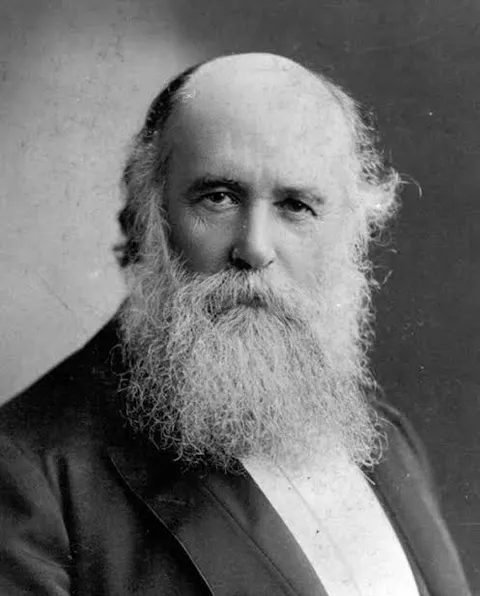 By John Alexander Dowie (1847 – 1907)
I sat in my study in the parsonage of the Congregational Church at Newtown, a suburb of the beautiful city of Sydney, Australia. My heart was very heavy, for I had visited the sick and dying beds of more than thirty of my flock, and I had cast the dust to its kindred dust into more than forty graves within a few weeks. Where, oh where, was He Who used to heal His suffering children? No prayer for healing seemed to reach His ear, and yet I knew His hand had not been shortened. Still it did not save from death even those for whom there was so much in life to live for God and others. Strong men, fathers, good citizens, and more than all, true Christians sickened with a putrid fever, suffered nameless agonies, passed into delirium, sometimes with convulsions, and then died.
Oh, what aching voids were left in many a widowed or orphaned heart. There were many homes where, one by one, the little children, the youths and the maidens lay stricken, and after a hard struggle with the foul disease, they too, lay cold and dead. It seemed sometimes as if I could almost hear the triumphant mockery of evil ringing in my ear whilst I spoke to the bereaved ones the words of Christian hope and consolation. Disease, the foul offspring of its father, Satan, and its mother Sin, was defiling and destroying the earthly temples of God’s children and there was no deliverance.
There I sat with sorrow-bowed head for my afflicted people, until the bitter tears came to relieve my burning heart. Then I prayed for some message, and oh, how I longed to hear some words from Him Who wept and sorrowed for the suffering long ago, a Man of Sorrows and Sympathies. The words of the Holy Ghost inspired In Acts 10:38, stood before me all radiant with light, revealing Satan as the Defiler, and Christ as the Healer. My tears were wiped away, my heart strong, I saw the way of healing, and the door thereto was opened wide, so I said, “God help me now to preach the Word to all the dying around, and tell them how Satan still defiles, and Jesus still delivers, for He is just the same today.”
A loud ring and several raps at the outer door, a rush of feet, and there at my door stood two panting messengers who said, “Oh, come at once, Mary is dying; come and pray. “With just a feeling as a shepherd has who hears that his sheep are being torn from the fold by a cruel wolf, I rushed from my house, ran without my hat down the street, and entered the room of the dying maiden. There she lay groaning and grinding her clenched teeth in the agony of the conflict with the destroyer. The white froth, mingled with her blood, oozing from her pale and distorted mouth. I looked at her and then my anger burned. “Oh,” I thought, “for some sharp sword of heavenly temper keen to slay this cruel foe who is strangling that lovely maiden like an invisible serpent, tightening his deadly coils for a final victory.”
In a strange way, It came to pass; I found the sword I needed was in my hands, and in my hand I hold it still and never will I lay It down. The doctor, a good Christian man, was quietly walking up and down the room, sharing the mother’s pain and grief. Presently he stood at my side and said, “Sir, are not God’s ways mysterious?” Instantly the sword was flashed in my hand, the Spirit’s sword, the Word of God. “God’s way?!” I said, pointing to the scene of conflict, “How dare you call that God’s way of bringing His children home from earth to Heaven? No sir, that is the devil’s work and it is time we called on Him Who came to destroy the work of the devil, to slay that deadly foul destroyer, and to save this child. Can you pray, Doctor, can you pray the prayer of faith that saves the sick?” At once, offended at my words, my friend was changed, and saying,” You are too much excited, sir, it is best to say ‘God’s will be done,’” and he left the room.
Excited?! The word was quite inadequate for I was almost frenzied with divinely imparted anger and hatred of that foul destroyer, disease, which was doing Satan’s will. “It is not so,” I exclaimed, “no will of God sends such cruelty, and I shall never say ‘God’s will be done’ to Satan’s works, which God’s own Son came to destroy, and this is one of them.” Oh, how the Word of God was burning in my heart: “Jesus of Nazareth went about doing good, and healing all that were oppressed of the devil; for God was with Him.” And was not God with me? And was not Jesus there and all His promises true? I felt that it was even so, and turning to the mother I inquired,” Why did you send for me?” To which she answered, “Do pray, oh pray for her that God may raise her up.” So we prayed.
What did I say? It may be that I cannot recall the words without mistake, but words are in themselves of small importance. The prayer of faith may be a voiceless prayer, a simple heartfelt look of confidence into the face of Christ. At such moment, words are few, but they mean much, for God is looking at the heart. Still, I can remember much of that prayer unto this day, and asking God to aid, I will attempt to recall it. I cried, “Our Father, help! and Holy Spirit, teach me how to pray. Plead Thou for us, oh, Jesus, Savior, Healer, Friend, our Advocate with God the Father. Hear and heal, Eternal One! From all disease and death, deliver this sweet child of yours. I rest upon the Word. We claim the promise now. The Word is true, ‘I am the Lord that heals thee.’ Then heal her now. The Word is true, ‘I am the Lord, I change not.’ Unchanging God, then prove Yourself the healer now. The Word is true. ‘These signs shall follow them that believe in My Name, they shall lay hands on the sick, and they shall recover.’ And I believe and I lay hands in Jesus’ Name on her and claim this promise now. Your Word is true. ‘The prayer of faith shall save the sick. Trusting in You alone. I cry. Oh, save her now, for Jesus’ sake. Amen!”
Then, the maid lay in sleep so deep and sweet that the mother asked in a low whisper, “Is she dead?” “No,” I answered, in a whisper lower still. “Mary will live; the fever is gone. She is perfectly well and sleeping as an infant sleeps.” I was smoothing the long dark hair from her now peaceful brow, and feeling the steady pulsation of her heart and cool moist hands. I saw that Christ had heard, and that once more, as long ago in Peter’s house, “He touched her and the fever left her.” Turning to the nurse, I said, “Get me at once, please, a cup of cocoa and several slices of bread and butter.” Beside the sleeping maid we sat quietly and almost silently until the nurse returned, and then I bent over her and snapping my fingers called, “Mary!”
Instantly she woke, smiled and said, “Oh, sir, when did you come? I have slept so long;” then stretching her arms out to meet her mother’s embrace, she said, “Mother, I feel so well.” “And hungry, too?” I asked, pouring some of the cocoa in a saucer and offering it to her when cooled by my breath. “Yes, hungry too,” she answered with a little laugh, and drank and ate again, and yet again until all was gone. In a few minutes, she fell asleep, breathing easily and softly. Quietly thanking God. We left her bed and went to the next room where her brother and sister also lay sick of the same fever. With these two, we prayed and they were healed too. The following day all three were well and in a week or so they brought me a little letter and a gift of gold, two sleeve links with my monogram, which I wore for many years. As I went away from the home where Christ as the Healer had been victorious, I could not but have somewhat in my heart of the triumphant song that rang through Heaven, and yet I was not a little amazed at my own strange doings, and still more at my discovery that He is just the same today.
Excerpt from the Sermons of John Alexander Dowie Champions of Faith by Gordon Lindsay
By John Alexander Dowie (1847 – 1907)
I sat in my study in the parsonage of the Congregational Church at Newtown, a suburb of the beautiful city of Sydney, Australia. My heart was very heavy, for I had visited the sick and dying beds of more than thirty of my flock, and I had cast the dust to its kindred dust into more than forty graves within a few weeks. Where, oh where, was He Who used to heal His suffering children? No prayer for healing seemed to reach His ear, and yet I knew His hand had not been shortened. Still it did not save from death even those for whom there was so much in life to live for God and others. Strong men, fathers, good citizens, and more than all, true Christians sickened with a putrid fever, suffered nameless agonies, passed into delirium, sometimes with convulsions, and then died.
Oh, what aching voids were left in many a widowed or orphaned heart. There were many homes where, one by one, the little children, the youths and the maidens lay stricken, and after a hard struggle with the foul disease, they too, lay cold and dead. It seemed sometimes as if I could almost hear the triumphant mockery of evil ringing in my ear whilst I spoke to the bereaved ones the words of Christian hope and consolation. Disease, the foul offspring of its father, Satan, and its mother Sin, was defiling and destroying the earthly temples of God’s children and there was no deliverance.
There I sat with sorrow-bowed head for my afflicted people, until the bitter tears came to relieve my burning heart. Then I prayed for some message, and oh, how I longed to hear some words from Him Who wept and sorrowed for the suffering long ago, a Man of Sorrows and Sympathies. The words of the Holy Ghost inspired In Acts 10:38, stood before me all radiant with light, revealing Satan as the Defiler, and Christ as the Healer. My tears were wiped away, my heart strong, I saw the way of healing, and the door thereto was opened wide, so I said, “God help me now to preach the Word to all the dying around, and tell them how Satan still defiles, and Jesus still delivers, for He is just the same today.”
A loud ring and several raps at the outer door, a rush of feet, and there at my door stood two panting messengers who said, “Oh, come at once, Mary is dying; come and pray. “With just a feeling as a shepherd has who hears that his sheep are being torn from the fold by a cruel wolf, I rushed from my house, ran without my hat down the street, and entered the room of the dying maiden. There she lay groaning and grinding her clenched teeth in the agony of the conflict with the destroyer. The white froth, mingled with her blood, oozing from her pale and distorted mouth. I looked at her and then my anger burned. “Oh,” I thought, “for some sharp sword of heavenly temper keen to slay this cruel foe who is strangling that lovely maiden like an invisible serpent, tightening his deadly coils for a final victory.”
In a strange way, It came to pass; I found the sword I needed was in my hands, and in my hand I hold it still and never will I lay It down. The doctor, a good Christian man, was quietly walking up and down the room, sharing the mother’s pain and grief. Presently he stood at my side and said, “Sir, are not God’s ways mysterious?” Instantly the sword was flashed in my hand, the Spirit’s sword, the Word of God. “God’s way?!” I said, pointing to the scene of conflict, “How dare you call that God’s way of bringing His children home from earth to Heaven? No sir, that is the devil’s work and it is time we called on Him Who came to destroy the work of the devil, to slay that deadly foul destroyer, and to save this child. Can you pray, Doctor, can you pray the prayer of faith that saves the sick?” At once, offended at my words, my friend was changed, and saying,” You are too much excited, sir, it is best to say ‘God’s will be done,’” and he left the room.
Excited?! The word was quite inadequate for I was almost frenzied with divinely imparted anger and hatred of that foul destroyer, disease, which was doing Satan’s will. “It is not so,” I exclaimed, “no will of God sends such cruelty, and I shall never say ‘God’s will be done’ to Satan’s works, which God’s own Son came to destroy, and this is one of them.” Oh, how the Word of God was burning in my heart: “Jesus of Nazareth went about doing good, and healing all that were oppressed of the devil; for God was with Him.” And was not God with me? And was not Jesus there and all His promises true? I felt that it was even so, and turning to the mother I inquired,” Why did you send for me?” To which she answered, “Do pray, oh pray for her that God may raise her up.” So we prayed.
What did I say? It may be that I cannot recall the words without mistake, but words are in themselves of small importance. The prayer of faith may be a voiceless prayer, a simple heartfelt look of confidence into the face of Christ. At such moment, words are few, but they mean much, for God is looking at the heart. Still, I can remember much of that prayer unto this day, and asking God to aid, I will attempt to recall it. I cried, “Our Father, help! and Holy Spirit, teach me how to pray. Plead Thou for us, oh, Jesus, Savior, Healer, Friend, our Advocate with God the Father. Hear and heal, Eternal One! From all disease and death, deliver this sweet child of yours. I rest upon the Word. We claim the promise now. The Word is true, ‘I am the Lord that heals thee.’ Then heal her now. The Word is true, ‘I am the Lord, I change not.’ Unchanging God, then prove Yourself the healer now. The Word is true. ‘These signs shall follow them that believe in My Name, they shall lay hands on the sick, and they shall recover.’ And I believe and I lay hands in Jesus’ Name on her and claim this promise now. Your Word is true. ‘The prayer of faith shall save the sick. Trusting in You alone. I cry. Oh, save her now, for Jesus’ sake. Amen!”
Then, the maid lay in sleep so deep and sweet that the mother asked in a low whisper, “Is she dead?” “No,” I answered, in a whisper lower still. “Mary will live; the fever is gone. She is perfectly well and sleeping as an infant sleeps.” I was smoothing the long dark hair from her now peaceful brow, and feeling the steady pulsation of her heart and cool moist hands. I saw that Christ had heard, and that once more, as long ago in Peter’s house, “He touched her and the fever left her.” Turning to the nurse, I said, “Get me at once, please, a cup of cocoa and several slices of bread and butter.” Beside the sleeping maid we sat quietly and almost silently until the nurse returned, and then I bent over her and snapping my fingers called, “Mary!”
Instantly she woke, smiled and said, “Oh, sir, when did you come? I have slept so long;” then stretching her arms out to meet her mother’s embrace, she said, “Mother, I feel so well.” “And hungry, too?” I asked, pouring some of the cocoa in a saucer and offering it to her when cooled by my breath. “Yes, hungry too,” she answered with a little laugh, and drank and ate again, and yet again until all was gone. In a few minutes, she fell asleep, breathing easily and softly. Quietly thanking God. We left her bed and went to the next room where her brother and sister also lay sick of the same fever. With these two, we prayed and they were healed too. The following day all three were well and in a week or so they brought me a little letter and a gift of gold, two sleeve links with my monogram, which I wore for many years. As I went away from the home where Christ as the Healer had been victorious, I could not but have somewhat in my heart of the triumphant song that rang through Heaven, and yet I was not a little amazed at my own strange doings, and still more at my discovery that He is just the same today.
Excerpt from the Sermons of John Alexander Dowie Champions of Faith by Gordon Lindsay
Though Dead, He Still Speaks - How Satan Remembers C.S. Lewis
The scene is in hell at the annual dinner of the Tempters’ Training College for young devils. The principal, Dr. Snufftub, has just proposed a toast to the health of the guests. Grimgod, a very experienced devil, who is the guest of honor, rises to reply: Headmaster, favorite Decadents, Ghouls, Fiends, and Imps, to my Intolerable Tempters, Ghastly Graduates, and Gentledevils: Gladly do I assume my place in our great tradition to charge our recent graduates towards highest malevolence, mischief, and devilry. I could begin my remarks by dribbling on about how honored I am to have been invited — but you, my lowly esteemed guests, are not humans to be flattered, and I, not a man to feign humility. I tell you plainly: I both deserve and expected to address you this evening. If but for that incompetent Dr. Slubgob — whose faults and failings (and finish) you are all keenly aware — I would have said my piece centuries ago. You would search in vain to find one more suitable in all of Satandom to enflame you in such crucial times as ours. Now that I have your attention, let me direct it to the point of my address: As the tide begins to turn decisively in our favor, we must not let the enemy regain his footing. To initiate a final push, to rally the closing campaign, we must do what young devils tend to relax: We must sever the humans from voices of the past. Now is the time to dispel the great cloud of witnesses, silence those terrible men and women who, though they died, still speak — should they continue to make fools of us? In the name of all that is unholy, they will not! Some of you — and this to your disgrace — do not mind old books lying peacefully upon nightstands. Some of these (and check the registry to recall which ones) cast light upon our shadows, point out ancient traps, inform them of our designs, and thus threaten to rouse this otherwise slumbering generation — but there they lie, tolerated. Many of you are too young to have grown already so careless. As we feast in celebration, I for one agitate to hear their voices sound disgracefully, mockingly outside of our gates. Can you not hear them? For every scrap of the damned that lies upon your plate, for every bite that inspires your snorts and howls, awaken to the fact that negligence in this matter allows the dead to steal meat from our bellies and drink from our cups. Gnash your teeth to realize that they caused us — during this past shortage — to sup on the relatives of most in this room. Their shrieks of protest, still fresh in my mind, commission us all to exorcise these voices from the earth. Should our war efforts continue to be frustrated by ghosts? Appraise one such a phantom — whose birthday happens to fall on this very day — that Irksome Irishman whose very name has become a curse: C.S. Lewis. Stories of Aslan First recall, with trembling voice, that embarrassment, Soretongue, who lost the patient after so many decades in his grasp. A blunder, young Graduates, that few listening to my voice could hope to surpass. His influence took a staunch atheist, a reviler of the faith, and turned him into one of these haunting voices of which I now warn you. Consider the error in full. Consider what this Lewis became. For one thing, this man — unlike so many of their drab ministers and colorless academics whose work we most heartily support — made ghastly impressions upon even our most prized possessions: the children. Through that otherwise terribly useful faculty, the imagination, he corrupted boys and girls across the globe with stories containing the Enemy’s horrible Echo scribbled across their pages. In a make-believe world, with a make-believe lion, and all sorts of other bumbling characters, he captured more than their attention. Can you believe that after losing the man, this dimwitted Tempter actually laughed over Clive’s shoulder as he wrote? “Pure rubbish,” I believe he called it. He could not discern the Enemy’s propaganda smuggled into fictional stories featuring the children, princes, rats, dragons, magical kingdoms, white witches, curses, and fauns. “As threatening to our designs as an old, blind, toothless tiger,” Soretongue reported. But this seducer beckoned into Narnia to show them earth. He introduced Edmund, Lucy, Peter, Eustace, Reepicheep to introduce them to themselves. He told of Aslan — and excuse me for my exasperation — to bring them to that nasty Uncreated One of Judah. He discovered how to preach sermons to children, and Soretongue smiled at it. The Enemy plundered our keepsake through the back of a wardrobe. Wicked Leaks In another turn, that logic, which we knew those many years only as an ally, betrayed us in the end. With each passing essay, with each published book, with each responded letter, radio broadcast, and sermon, he toured them up the mountain to look above to the Enemy and then below upon the labyrinths we so carefully devised for their destruction. Soretongue grossly underestimated the danger of this topographer in our war efforts. Our twisted and turned paths, knotted by delicious deceits and half-truths, began to be spoiled by his mapping out our temptations and pits. Our smoke of relativism, atheism, materialism — and our other favorite isms — availed minimally against this crow who made his nest above the fog. In the last, you might have thought, after Soretongue was through with him, that this fattened pig turned wizard to have broken so many of our spells of worldliness. So often did he — with great exaggeration and deceit, to be sure — appeal to that other world beyond, that many of our enticements fell useless against the bewitched souls of his hearers. His many embellishments about the “weight of glory” and other such nonsense, gross as such slobber stands to us, moved countless humans to take seriously the Enemy’s lies about such things as eternal life. He, pirating the Enemy’s horrible Book, talked often and much of holidays at sea, the country beyond, about the scent, the sight, the longing for a land that they were “made for” — a home standing just over the hill, just around the bend. And something called Joy with a capital J. He fooled the vermin, with pretty colors and poetic potpourri, that the Enemy’s torture and death somehow ensured that his followers — who also take up their own crosses and endure their own sufferings after him — might be the better off in the end. May it never be! Should not the mere existence of our established kingdom below expose the slight of hand? If heaven was as the Enemy so shamelessly boasts it is, why should a host of us so violently leave? But Lewis, with his wand in hand doodling fictions, compelled the swine towards the true ruin we so narrowly escaped. They will find him out eventually. Yet, though they will be sorely and deliciously disappointed at the road’s end, we will still remain the hungrier for it. Silence the Skunks But, enough of the man. I do not mean to honor the vermin by speaking too much of him. The point is this: Do not let the message of the departed saints survive. Should we, of all beings, not know how to silence the dead? Cut out the tongues of the mischief-makers. Six feet below is too shallow — dig deeper. A toast, then. You have studied. You have hungered. You have tempted, watched, and waited for this day. Each of you has, with the indispensable help of your more fiendish advisor, damned one human soul. The dish prepared so perversely before you contains remnants of your spoil — the lion’s share going, of course, to your mentor. May it be the beginning of uninterrupted success — for you know what awaits any alternative. Raise your glasses. To a future brim-filled with courage, cruelty, and conviction. To the setting of sun and the fleeing of the light. To the return of the age of devils. To the silencing of the skunks — to one we mock, “Happy birthday!” Onward and downward! Article by Greg Morse