
Others like the seven pillars of wisdom Features >>
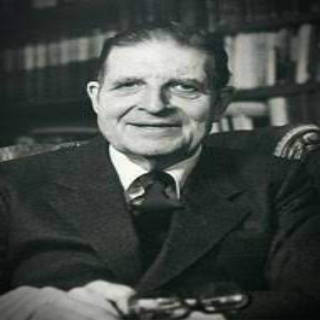
Henry Martyn
Martyn was born in Truro, England, where his father worked as head clerk of a merchant house. After attending Truro Grammar School, he proceeded to Cambridge to read mathematics. Influenced by his younger sister, and by Charles Simeon, he soon professed evangelical faith. He graduated (as Senior Wrangler) in 1801, also earning the Smith’s Prize. In 1802 he became a fellow of St. John’s. Admiration for David Brainerd persuaded him to abandon legal ambitions for missionary service.
A curacy with Simeon at Holy Trinity Church, Cambridge, followed. Changed personal circumstances made missionary service impossible for him, so instead, he accepted a chaplain’s commission with the East India Company. During the 305-day voyage to Calcutta, he studied Urdu and Bengali. Until he was posted inland, he assisted the Serampore Baptists in Bible translation work. He was chaplain from 1806 to 1809 at Dinapore and from 1809 to 1810 at Cawnpore. In both places, his refusal to regard Indians as inferior and his respect for India culture annoyed and alienated many of his peers. Encouraged by fellow evangelicals, he took as his main task Bible translation. With the assistance of munshis (translators), he produced Urdu, Arabic, and Persian versions of Scripture, thus focusing on Muslim languages. Confessing that ignorance of Islam handicapped his ability to communicate the gospel, he also “read everything [he] could pick up about Mohammadans.”
Late in 1810, suffering from consumption, Martyn took a leave of absence to travel through Iran, to test his Persian translation, and to benefit from a drier climate. He hoped eventually to return to England to persuade a childhood sweetheart, who had refused an earlier request, to marry him. In Iran, he thoroughly revised his Persian translation of the New Testament, which, with the help of Sir Gore Ouseley (1779-1844), was presented to the shah. Reluctantly, Martyn also agreed to exchange tracts with the Muslim ulema (religious scholars), later published as his Controversial Tracts on Christianity and Mohammedanism (1824). Martyn died at Tocat at age 31, cared for and buried by Armenians, whose ancient church he had long admired. Martyn’s ecumenical openness, his desire to implant the gospel in Indian culture, and his concern for spiritual exchange with Muslims have often been obscured by his reluctant use of polemic. Nevertheless, his legacy inspired later missionaries, such as Thomas Valpy French and Temple Gairdner toward a more irenic approach to Muslims and to Islam.
Clinton Bennett, “Martyn, Henry,” in Biographical Dictionary of Christian Missions, ed. Gerald H. Anderson (New York: Macmillan Reference USA, 1998), 438-39.
This article is reprinted from Biographical Dictionary of Christian Missions, Macmillan Reference USA, copyright © 1998 Gerald H. Anderson, by permission of Macmillan Reference USA, New York, NY. All rights reserved.
God Answers Better Than We Ask
A godly king, backed into a deadly corner, teaches us a liberating truth about prayer. In one of the great tragedies in all of Scripture, David’s son Absalom has exploited his father’s love and conspired against him. Now the rebellion has grown strong, and David is left with no option but to flee Jerusalem in hopes of living to fight another day (2 Samuel 15:14). “Prayer is for turning the tide, for changing the seeming course of history.” As he retreats, weeping as he goes, barefoot, with his head covered in shame, it gets worse. He learns that his most prized advisor, Ahithophel — whose counsel “was as if one consulted the word of God” (2 Samuel 16:23) — has joined Absalom (2 Samuel 15:12). Yet in this most desperate of moments, when David could have crumbled, or wallowed in self-pity, his reflex is Godward. He breathes up a prayer: O Lord, please turn the counsel of Ahithophel into foolishness. (2 Samuel 15:31) Unlikely Plea Admittedly, the prayer seems utterly unlikely, if not impossible, humanly speaking. None was wiser than Ahithophel. One might as well ask for the sun to stand still as to pray for Ahithophel’s wise counsel to turn into folly. Yet these are the very moments for which God has given us prayer. He opens his ear to his people. Not for calling down more comforts for an already cushy existence, but precisely for the times when life and death are at stake. Prayer is not an exercise in naming ahead of time what already seems to be the natural course of action. Prayer is not for making an educated guess out loud to God about what seems to be unfolding already. And it’s certainly not for advising God as to how things should go, as if he needed a counselor (Romans 11:33–34). Rather, prayer is for turning the tide, for changing the seeming course of history. Prayer is for desperate times and dire moments, when we’re backed in a corner — when humanly speaking, the desired outcome, and what seems to be our last chance, is painfully unlikely to unfold, and we need God. We need him to intervene. Without the interruptive fingers of Providence reaching down into the details to disturb what seems to be, from our vantage, the natural course of action, we are doomed. But if he is God, and if he is listening, and if he acts, then we have a fighting chance. Cause and effect do not carry the day. God does. So, David prays. God Does the Unthinkable No sooner has David prayed than Hushai the Archite, who is loyal to David, meets him with torn coat and dirt on his head in mourning (2 Samuel 15:32). David has prayed for Ahithophel’s counsel to turn sour, but now David also acts in faith. He sends Hushai to feign fealty to Absalom, serve as a spy, and perhaps even “defeat for me the counsel of Ahithophel” (2 Samuel 15:34). “Prayer is for desperate times and dire moments, when we’re backed in a corner.” Hushai goes, and like Ahithophel, is received into Absalom’s conspiracy. One of the first orders of business is whether to chase David down and overtake him as he retreats. Ahithophel speaks first: “Pursue David tonight . . . while he is weary and discouraged” (2 Samuel 17:1–2). Per normal, this is wise counsel. “And the advice seemed right in the eyes of Absalom and all the elders of Israel” (2 Samuel 17:4). The great sage has spoken, and this looks like a done deal. And such will spell the end of David — were it not for Hushai, who then speaks. “This time the counsel that Ahithophel has given is not good,” says the mole (2 Samuel 17:7). He then paints David not as the weak and discouraged man that he is, but as mighty, enraged, and expert in war. And God does the unthinkable: he turns the hearts of Absalom and all the men of Israel to say, “The counsel of Hushai the Archite is better than the counsel of Ahithophel.” What? This is a stunning turn of events. An impossibility, apart from God. Only God himself can turn the hearts like this. And so, 2 Samuel 17:14 adds the explanation, “For the Lord had ordained to defeat the good counsel of Ahithophel, so that the Lord might bring harm upon Absalom.” No one could have seen this coming. Even David did not at the time of his prayer. Hushai’s deceptive word carries the day, the dominoes begin to fall, and it soon means the end of Absalom, and salvation for David. He Answers Better Than We Ask So, God answered David’s prayer. Or did he? Remember how the king had prayed: “O Lord, please turn the counsel of Ahithophel into foolishness” (2 Samuel 15:31). God had not answered that prayer. In fact, 2 Samuel 17:14 confirms that Ahithophel had given “good counsel.” Yet we find no lament from David that God didn’t answer his prayer. No complaints that the Lord hid his face, or that his ears were stopped, or that he could not see. No mourning. No frustration. No wallowing. David prayed one seemingly impossible prayer, took a modest step in faith, and trusted God to work salvation for him. And David had no sour grapes that God didn’t answer his prayer precisely as he asked. In fact, David delighted to pray to, and to praise, a God who makes a habit of answering better than we ask. No Scriptwriter Could Guess In his commentary on 2 Samuel, Dale Ralph Davis observes, No sooner does [David] pray than Yahweh begins to answer his prayer — and that in a way no scriptwriter could have guessed. Our prayers deal with the what; God’s answers deal with the what and the how and the when. And how the how can surprise us! (160) Our God delights to free us from being the author of our own stories of salvation. When we pray, it is not our job to foresee how God might bring out the rescue and lay out the details for him, even as often as it is our instinct to do precisely this. Most of us fathers would be a little annoyed, if not greatly, if our children not only asked for things but also insisted on laying out exactly how we should go about fulfilling their request. It is a father’s joy to surprise his children with the means, if not with the end. “Our God delights to free us from being the author of our own stories of salvation.” Fortunately, even as we try to counsel him, our Father in heaven is patient. He endures our folly. And he also wants to free us from feeling we need to give him directions. Not only can we not give him directions, but we can trust that his heart is far greater for the holy outcomes we want than our hearts are. And his ways of answering our prayers, according to his good pleasure, are more stunning than we can dream. He loves to answer better than we ask. Not Precisely but Substantially For those who have walked with this God for even a modest measure of time, we have seen him answer far better than we’ve asked. Which, alongside his Father’s heart (Luke 11:11–12) and the gift of his Spirit (Romans 8:26–27), gives us great incentive to pray, and keep praying. In other words, our human instincts, our ignorance, and our inability to counsel him are no disincentives to pray, but rather good reason to keep asking of him who knows how to give better than we know to ask. He knows. “Your Father knows” (Luke 12:30). We do not. “We do not know what to pray for as we ought” (Romans 8:26). His judgments are unsearchable; his ways, inscrutable (Romans 11:33) — which is all the more reason to ask him. Already Answered When Paul celebrates “him who is able to do far more abundantly than all that we ask or think” (Ephesians 3:20), he is no mindless optimist. He’s not asking us to groundlessly expect “the best is yet to come” without solid proof in the past and present. And Paul has provided it, rooting his doxology in the gospel he just rehearsed. We were dead in sins, and God made us alive together with Christ. We were separated and alienated, without hope, and God brought us near by the blood of Christ. In the gospel, our God has already answered better than we could have asked. Christ came, he died, he rose — and though we often don’t know precisely how to pray, we do know that our Father loves to hear our requests, and outdo them. Article by David Mathis