
Others like the spirit of python Features >>

The School Of The Seers

The Power Of Your Mind

The Skills Of A Shepherd

The Sins Of The Mouth
-160.webp)
School Of The Presence: Walking In Power, Intimacy, And Authority On Earth As It Is In Heaven
The Price Of Greatness

The Spirit Controlled Life
The Spirit Within & The Spirit Upon
The Pursuit Of Holiness
-160.webp)
The Gift Of Prophecy
About the Book
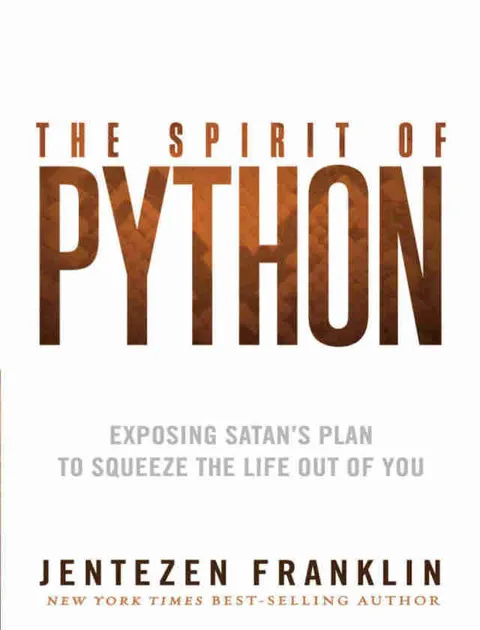
"The Spirit of Python" by Jentezen Franklin is a powerful and insightful book that explores the ways in which the spirit of python can deceive and suffocate believers in their spiritual walk. The author offers practical strategies and guidance for recognizing and defeating this spirit, helping readers break free from its grip and live victoriously in Christ. Through biblical teachings and personal anecdotes, Franklin emphasizes the importance of prayer, fasting, and spiritual warfare in overcoming the attacks of the enemy. This book serves as a valuable resource for Christians seeking to deepen their faith and overcome spiritual obstacles.
Charles Finney
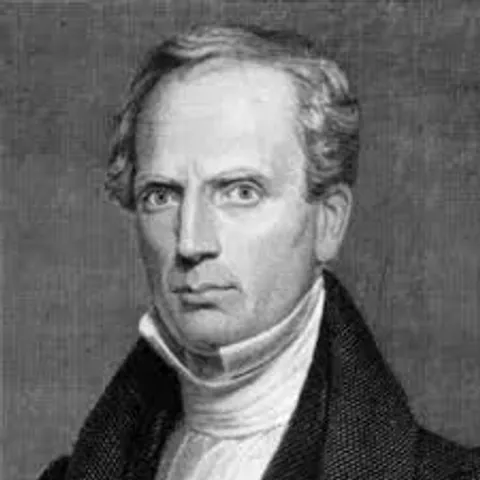 Childhood and Teen years
Charles Grandison Finney was born the year after Wesley died on 29th August, 1792 in Warren, Connecticut. In 1794 his family moved to New York state, eventually settling at Henderson, near Lake Ontario. Although he received only a brief formal education he decided to study law and joined the practice of a local lawyer, Benjamin Wright. He was also very musical, played the cello and directed the choir at the local Presbyterian Church pastured by Rev. George Gale.
His conversion
His conversion on October 10th 1821 reads like something out of the book of Acts. Smitten with conviction from Bible reading he decided to ‘settle the question of my soul’s salvation at once, that if it were possible, I would make my peace with God.’ (Autobiography)
This conviction increased to an unbearable level over the next couple of days and came to an head when he was suddenly confronted with an ‘inward voice.’ He was inwardly questioned about his spiritual condition and finally received revelation about the finished work of Christ and his own need to give up his sins and submit to Christ’s righteousness.
As he sought God in a nearby wood he was overwhelmed with an acute sense of his own wickedness and pride but finally submitted his life to Christ. Back at work that afternoon he was filled with a profound sense of tenderness, sweetness and peace. When work was over and he bade his employer goodnight, he then experienced a mighty baptism in the Holy Spirit, which was recorded as vividly as the day he experienced it, though it was penned some fifty years later.
The next morning Finney announced to a customer that he was leaving his law studies to become a preacher of the Gospel.
Charles Finney licensed to preach
He was licensed to preach in 1823 and ordained as an evangelist in 1824. His penetrating preaching was quite different from many local ministers and included an obvious attempt to break away from the traditional and, as he saw it, dead, orthodox Calvinism. He married to Lydia Andrews in October 1824 and was also joined by Daniel Nash (1774-1831), known popularly as ‘Father Nash.’ Undoubtedly Nash’s special ministry of prayer played a great part in Finney’s growing success as an evangelist.
Things really took off when he preached in his old church, where Rev. Gale still ministered. Numerous converts and critics followed! Similar results were experienced in nearby towns of Rome and Utica. Soon newspapers were reporting his campaigns and he began drawing large crowds with dramatic responses.
Soon he was preaching in the largest cities of the north with phenomenal results. Campaign after campaign secured thousands of converts.
The high point of Finney’s revival career was reached at Rochester, New York, during his 1830-1 meetings. Shopkeepers closed their businesses and the whole city seemed to centre on the revivalist. Responding to his irresistible logic and passionate arguments many of his converts were lawyers, merchants and those from a higher income and professional status.
His Preaching
Finney openly preached a modified Calvinism, influenced with his own theology of conversion and used what were perceived to be ‘revivalistic techniques.’
These ‘means’ included the use of the anxious bench (a special place for those under conviction), protracted meetings, women allowed to pray in mixed meetings, publicly naming those present resisting God in meetings and the hurried admission of new converts into church membership. Opponents viewed his preaching of the law as ‘scare tactics’ and his persuasive appeals for sinners to come to Christ for salvation were seen as over-emphasising the responsibility of men and ignoring the sovereignty of God.
His theology and practise soon became known as the ‘New Measures’ and attracted many opponents from the Old School Presbyterians led by Asahel Nettleton (himself no stranger to true revival and , the revivalistic Congregationalists headed by Lyman Beecher.
Pastor at Chatham Street Chapel
Finney accepted an appointment as pastor of Chatham Street Chapel in New York City in 1832 where he remained until 1837. It was during this time that he delivered a series of sermons published in 1835 as ‘Lectures on Revivals of Religion.’ Here he clearly stated his views regarding revivals being products of the correct use of human means. Such was the controversy that he left the Presbyterian denomination and joined the Congregationalists in 1836.
Oberlin College
The next year he became professor of theology at Oberlin College (Ohio) where he taught until his death. He was President here from 1851 until 1866, but still continued regular revival meetings in urban settings (twice in England, 1848, 1851) until 1860. During his stay at Oberlin he produced his, Lectures to Professing Christians (1836), Sermons on Important Subjects (1839) and his famous Memoirs.
The Father of Modern Revivalism
There is no doubt that Charles Grandison Finney well-deserves the title ‘The Father of Modern Revivalism.’ He was an evangelistic pioneer whose model was followed by a long line of revivalists from D. L. Moody to Billy Graham. His writing have made a massive impact on the entire evangelical world and particularly the ‘Lectures on Revivals’ which has, arguably, ignited more fires of revival than any other single piece literature in evangelical history.
This ‘Prince of Revivalists’ passed away peacefully at Oberlin on Sunday, 16th August, 1875 aged almost 83 years.
Bibliography: I Will Pour Out My Spirit, R. E. Davies, 1997; Ed: A. Scott Moreau, Baker Evangelical Dictionary of World Missions, 2000; Dictionary of Evangelical Biography 1730-1860, Vol. 1, 1995.
Tony Cauchi
Childhood and Teen years
Charles Grandison Finney was born the year after Wesley died on 29th August, 1792 in Warren, Connecticut. In 1794 his family moved to New York state, eventually settling at Henderson, near Lake Ontario. Although he received only a brief formal education he decided to study law and joined the practice of a local lawyer, Benjamin Wright. He was also very musical, played the cello and directed the choir at the local Presbyterian Church pastured by Rev. George Gale.
His conversion
His conversion on October 10th 1821 reads like something out of the book of Acts. Smitten with conviction from Bible reading he decided to ‘settle the question of my soul’s salvation at once, that if it were possible, I would make my peace with God.’ (Autobiography)
This conviction increased to an unbearable level over the next couple of days and came to an head when he was suddenly confronted with an ‘inward voice.’ He was inwardly questioned about his spiritual condition and finally received revelation about the finished work of Christ and his own need to give up his sins and submit to Christ’s righteousness.
As he sought God in a nearby wood he was overwhelmed with an acute sense of his own wickedness and pride but finally submitted his life to Christ. Back at work that afternoon he was filled with a profound sense of tenderness, sweetness and peace. When work was over and he bade his employer goodnight, he then experienced a mighty baptism in the Holy Spirit, which was recorded as vividly as the day he experienced it, though it was penned some fifty years later.
The next morning Finney announced to a customer that he was leaving his law studies to become a preacher of the Gospel.
Charles Finney licensed to preach
He was licensed to preach in 1823 and ordained as an evangelist in 1824. His penetrating preaching was quite different from many local ministers and included an obvious attempt to break away from the traditional and, as he saw it, dead, orthodox Calvinism. He married to Lydia Andrews in October 1824 and was also joined by Daniel Nash (1774-1831), known popularly as ‘Father Nash.’ Undoubtedly Nash’s special ministry of prayer played a great part in Finney’s growing success as an evangelist.
Things really took off when he preached in his old church, where Rev. Gale still ministered. Numerous converts and critics followed! Similar results were experienced in nearby towns of Rome and Utica. Soon newspapers were reporting his campaigns and he began drawing large crowds with dramatic responses.
Soon he was preaching in the largest cities of the north with phenomenal results. Campaign after campaign secured thousands of converts.
The high point of Finney’s revival career was reached at Rochester, New York, during his 1830-1 meetings. Shopkeepers closed their businesses and the whole city seemed to centre on the revivalist. Responding to his irresistible logic and passionate arguments many of his converts were lawyers, merchants and those from a higher income and professional status.
His Preaching
Finney openly preached a modified Calvinism, influenced with his own theology of conversion and used what were perceived to be ‘revivalistic techniques.’
These ‘means’ included the use of the anxious bench (a special place for those under conviction), protracted meetings, women allowed to pray in mixed meetings, publicly naming those present resisting God in meetings and the hurried admission of new converts into church membership. Opponents viewed his preaching of the law as ‘scare tactics’ and his persuasive appeals for sinners to come to Christ for salvation were seen as over-emphasising the responsibility of men and ignoring the sovereignty of God.
His theology and practise soon became known as the ‘New Measures’ and attracted many opponents from the Old School Presbyterians led by Asahel Nettleton (himself no stranger to true revival and , the revivalistic Congregationalists headed by Lyman Beecher.
Pastor at Chatham Street Chapel
Finney accepted an appointment as pastor of Chatham Street Chapel in New York City in 1832 where he remained until 1837. It was during this time that he delivered a series of sermons published in 1835 as ‘Lectures on Revivals of Religion.’ Here he clearly stated his views regarding revivals being products of the correct use of human means. Such was the controversy that he left the Presbyterian denomination and joined the Congregationalists in 1836.
Oberlin College
The next year he became professor of theology at Oberlin College (Ohio) where he taught until his death. He was President here from 1851 until 1866, but still continued regular revival meetings in urban settings (twice in England, 1848, 1851) until 1860. During his stay at Oberlin he produced his, Lectures to Professing Christians (1836), Sermons on Important Subjects (1839) and his famous Memoirs.
The Father of Modern Revivalism
There is no doubt that Charles Grandison Finney well-deserves the title ‘The Father of Modern Revivalism.’ He was an evangelistic pioneer whose model was followed by a long line of revivalists from D. L. Moody to Billy Graham. His writing have made a massive impact on the entire evangelical world and particularly the ‘Lectures on Revivals’ which has, arguably, ignited more fires of revival than any other single piece literature in evangelical history.
This ‘Prince of Revivalists’ passed away peacefully at Oberlin on Sunday, 16th August, 1875 aged almost 83 years.
Bibliography: I Will Pour Out My Spirit, R. E. Davies, 1997; Ed: A. Scott Moreau, Baker Evangelical Dictionary of World Missions, 2000; Dictionary of Evangelical Biography 1730-1860, Vol. 1, 1995.
Tony Cauchi
The Hill We All Must Die On
The doctrine of penal substitution is under attack today — and that’s an understatement. From voices outside of evangelical theology to those within, the historic Reformation view of the cross is claimed to be a “modern” invention from the cultural West. Others criticize the doctrine as sanctioning violence, privileging divine retributive justice over God’s love, condoning a form of divine child abuse, reducing Scripture’s polychrome presentation of the cross to a lifeless monochrome, being too “legal” in orientation, and so on. All of these charges are not new. All of them have been argued since the end of the 16th century, and all of them are false. Yet such charges reflect the corrosive effects of false ideas on theology and a failure to account for how the Bible, on its own terms, interprets the cross. Given the limitations of this article, I cannot fully respond to these charges. Instead, I will briefly state four truths that unpack the biblical-theological rationale of penal substitution. In so doing, my goal is to explain why penal substitution should be embraced as God’s good news for sinners. Four Questions to Get Right It is only in viewing Christ as our penal substitute that we truly understand the depth of God’s holy love for us, the horrendous nature of our sin before God, and the glory of our substitute — Jesus Christ our Lord — whose obedient life and penal death achieved our right standing before God and the full forgiveness of our sins. Let us now turn to these truths that are crucial to affirm and that lead us to glory in our Lord Jesus Christ as our penal substitute. 1. Who Is God? First, we must get right who God is as our triune Creator-Covenant Lord. Mark it well: debates over the nature of the atonement are first and foremost doctrine of God debates. If our view of God is sub-biblical, we will never get the cross right. From the opening verses of Scripture, God is presented as eternal, a se (life from himself), holy love, righteous, and good — the triune God who is complete in himself and who needs nothing from us (Genesis 1–2; Psalm 50:12–14; Isaiah 6:1–3; Acts 17:24–25; Revelation 4:8–11). One crucial implication of this description is that God, in his very nature, is the moral standard of the universe. This is why we must not think of God’s law as something external to him that he may relax at will. Instead, the triune God of Scripture is the law; his will and nature determine what is right and wrong. This view of God is often forgotten in today’s discussion of the atonement. Following the “New Perspective on Paul,” some argue that God’s justice/righteousness is only “God’s covenant faithfulness,” that is, God remaining true to his promises. No doubt this is true. However, what this view fails to see is that “righteousness-justice-holiness” is first tied to God’s nature as God. That is why, in light of sin, God, who is the law, cannot overlook our sin. God’s holy justice demands that he not only punish all sin, but also, if he graciously chooses to justify the ungodly (Romans 4:5), he must do so by fully satisfying his own righteous, holy moral demand. Thus, given our sin and God’s gracious choice to redeem us, the question that emerges across redemptive history is this: How will God demonstrate his holy justice and covenant love and remain true to himself? The answer is only found in the Father’s gift of his Son, Jesus’s obedient life and substitutionary death, that results in our justification before God in Christ (Romans 3:21–26). 2. Who Is Man? Second, we must get right who humans are as God’s image-sons created to be in covenant relationship with God. Specifically, we must grasp who Adam is, not only as a historic person, but also as the covenant representative/head of the human race (Romans 5:12–21; 1 Corinthians 15:21–22). Why is this significant? Because in creation, our triune Creator-Covenant God sets the conditions of the covenant and rightly demands from Adam (and all of us) total trust, love, and obedience — a truth reflected in God’s first command. But the flip side is also true: If there is covenant disobedience, given who God is, there is also his holy judgment against our sin that results in the penalty of physical and spiritual death (Genesis 2:15–17; cf. Romans 6:23). 3. How Can God Justify Sinners? Third, we must get right the serious problem of our sin before God. Sadly, Adam did not love God with full covenant devotion. Instead, he disobeyed God, thus bringing sin, death, and God’s curse into the world. In the Bible’s storyline, Adam’s sin changes everything! From Genesis 3 forward, “in Adam,” the entire human race becomes guilty, corrupted, condemned, and under the judicial sentence of death (Genesis 3; Romans 5:12–21; Ephesians 2:1–3). If God is going to redeem, which he has graciously promised to do (Genesis 3:15), how is he going to do it? Remember, given who God is in all of his moral perfection, and given that he is the standard of holy justice who will not deny himself, how will God declare sinners justified before him apart from the full satisfaction of his moral demand? God must punish sin and execute perfect justice because he is holy, just, and good. He cannot overlook our sin nor relax the demands of his justice, and in truth, thankfully so! But to justify us, our sin must be fully atoned. How, then, can God punish our sin, satisfy his own righteous demand, and justify sinners? Add to this point: To undo, reverse, and pay for Adam’s sin, we need someone who will come from the human race and identify with us (Genesis 3:15), render our required covenantal obedience, and pay the penalty for our sin. We need someone who will become our covenant representative and substitute, and by his obedient life and penal death secure our justification before God. And wonder of wonders, Scripture gloriously announces that there is one man — and only one — who can do this for us, namely our Lord Jesus Christ (Hebrews 2:5–18). 4. Who Is Jesus? Fourth, we must get right who Jesus is, what he does for us, and that he alone can redeem, reconcile, and justify us before God. Who is the Jesus of the Bible? In short, he is God the Son incarnate, the second person of the triune Godhead. He is no abused child or some third-party individual who stands independent of God. We cannot think of his atoning work apart from thinking of the entire triune God accomplishing our salvation. Furthermore, as the eternal Son, eternally loved of his Father and the Spirit, in God’s plan, he voluntarily took on the role of becoming our Redeemer. And in his incarnation, he identified with us in order to represent us before God (Hebrews 5:1). In his obedient human life, Jesus, as the Mediator of the new covenant, obeyed for us as our legal covenant representative. In his obedient death, Jesus, as the divine Son, satisfied his own righteous demand against us by bearing the penalty of our sin as our substitute (Romans 5:18–19; Philippians 2:6–11; Hebrews 5:1–10). And in doing all of this, the Father’s love was revealed in Jesus’s penal substitution because of who Jesus is as the Son incarnate, the Last Adam, and the only Mediator of God’s people (Romans 5:8–11). Don’t Get Bored with the Gospel The truth of the matter is this: penal substitution is not a view to be replaced by something “better” or dismissed as a relic of the past. There is no greater news than this: Christ Jesus, as the divine Son incarnate, perfectly meets our need before God by his obedient life and substitutionary death. In Christ the triune love of God is gloriously revealed because in Christ we receive the gift of righteousness which is now ours by faith in him. In union with his people, Christ, as our new covenant head, obeys in our place, dies our death, and satisfies divine justice, which is evidenced in his glorious resurrection. As a result, by faith alone, in Christ alone, his righteousness is ours — now and forever (Romans 8:1; 2 Corinthians 5:21; Galatians 3:13). By faith-union in Christ, we stand complete: justified before God by the forgiveness of our sins and clothed in his righteousness (Romans 4:1–8; 5:1–2). Following the Bible’s teaching on this matter, may we learn anew to say with Paul, “For I decided to know nothing . . . except Jesus Christ and him crucified” (1 Corinthians 2:2). “Thanks be to God for his inexpressible gift!” (2 Corinthians 9:15). Article by Stephen Wellum