
Others like the spirit of python Features >>
The School Of The Seers
The Power Of Your Mind
The Skills Of A Shepherd
The Sins Of The Mouth
-160.webp)
School Of The Presence: Walking In Power, Intimacy, And Authority On Earth As It Is In Heaven
The Price Of Greatness
The Spirit Controlled Life
The Spirit Within & The Spirit Upon
The Pursuit Of Holiness
-160.webp)
The Gift Of Prophecy
About the Book
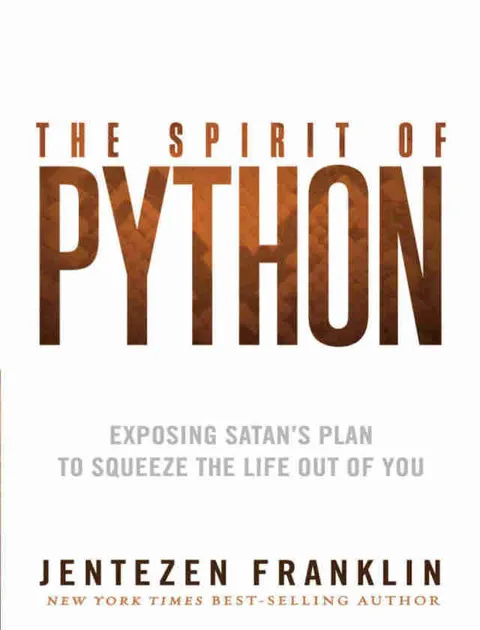
"The Spirit of Python" by Jentezen Franklin is a powerful and insightful book that explores the ways in which the spirit of python can deceive and suffocate believers in their spiritual walk. The author offers practical strategies and guidance for recognizing and defeating this spirit, helping readers break free from its grip and live victoriously in Christ. Through biblical teachings and personal anecdotes, Franklin emphasizes the importance of prayer, fasting, and spiritual warfare in overcoming the attacks of the enemy. This book serves as a valuable resource for Christians seeking to deepen their faith and overcome spiritual obstacles.
C.S. Lewis
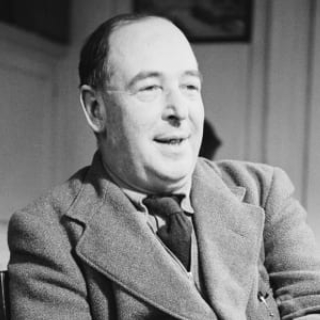 C.S. Lewis was a prolific Irish writer and scholar best known for his 'Chronicles of Narnia' fantasy series and his pro-Christian texts.
Who Was C.S. Lewis?
Writer and scholar C.S. Lewis taught at Oxford University and became a renowned Christian apologist writer, using logic and philosophy to support the tenets of his faith. He is also known throughout the world as the author of The Chronicles of Narnia fantasy series, which have been adapted into various films for the big and small screens.
Early Life
Clive Staples Lewis was born in Belfast, Ireland, on November 29, 1898, to Flora August Hamilton Lewis and Albert J. Lewis. As a toddler, Clive declared that his name was Jack, which is what he was called by family and friends. He was close to his older brother Warren and the two spent much time together as children.
Lewis was enraptured by fantastic animals and tales of gallantry, and hence the brothers created the imaginary land of Boxen, complete with an intricate history that served them for years. Lewis' mother died when he was 10, and he went on to receive his pre-college education at boarding schools and from a tutor. During WWI, he served with the British army and was sent home after being wounded by shrapnel. He then chose to live as a surrogate son with Janie Moore, the mother of a friend of Lewis' who was killed in the war.
Teaching Career at Oxford and Wartime Broadcasts
Lewis graduated from Oxford University with a focus on literature and classic philosophy, and in 1925 he was awarded a fellowship teaching position at Magdalen College, which was part of the university. There, he also joined the group known as The Inklings, an informal collective of writers and intellectuals who counted among their members Lewis' brother Warren and J.R.R. Tolkien. It was through conversations with group members that Lewis found himself re-embracing Christianity after having become disillusioned with the faith as a youth. He would go on to become renowned for his rich apologist texts, in which he explained his spiritual beliefs via platforms of logic and philosophy.
Lewis began publishing work including Spirits in Bondage in 1919 and the satirical Dymer in 1926. After penning other titles — including The Allegory of Love (1936), for which he won the Hawthornden Prize — he released in 1938 his first sci-fi work, Out of the Silent Planet, the first of a space trilogy which dealt sub-textually with concepts of sin and desire. Later, during WWII, Lewis gave highly popular radio broadcasts on Christianity which won many converts; his speeches were collected in the work Mere Christianity.
Books and Film Legacy
Lewis was a prolific author of fiction and nonfiction who wrote dozens of books over the course of his career. His faith-based arguments as seen in texts like The Great Divorce (1946) and Miracles (1947) are held in high regard by many theologians, scholars and general readers. His satirical fiction novel The Screwtape Letters (1942) is also a beloved classic. Lewis also continued his love affair with classic mythology and narratives during his later years: His book Till We Have Faces: A Myth Retold (1956) featured the story of Psyche and Cupid. He also penned an autobiography, Surprised by Joy: The Shape of My Early Life (1955).
Lewis' landmark series, The Chronicles of Narnia, has seen a number of on-screen iterations, including a cartoon version of The Lion, The Witch and the Wardrobe that was released in 1979 and a 1989 film series. Additionally, in 2005, a big-screen adaptation of The Lion, The Witch and the Wardrobe hit movie theaters, starring Tilda Swinton as the witch Jadis and Liam Neeson as the voice of Aslan. Two more Narnia films were brought to theaters as well: Prince Caspian (2008) and The Voyage of the Dawn Treader (2010). A movie version of The Silver Chair was slated to hit theaters in the near future, with filming starting in the winter of 2018.
Lewis' relationship with his wife, Joy, has also been depicted in Shadowlands, presented as a play and two films; one of the film versions was directed by Richard Attenborough and starred Anthony Hopkins as Lewis.
'The Chronicles of Narnia'
During the 1940s, Lewis began writing the seven books that would comprise The Chronicles of Narnia children's series, with The Lion, The Witch and the Wardrobe (1950) being the first release. The story focused on four siblings who, during wartime, walk through an armoire to enter the magical world of Narnia, a land resplendent with mythical creatures and talking animals. Throughout the series, a variety of Biblical themes are presented; one prominent character is Aslan, a lion and the ruler of Narnia, who has been interpreted as a Jesus Christ figure. (Lewis would assert that his Narnia stories weren't a direct allegory to the real world.)
Though the book received some negative reviews, it was generally well-received by readers, and the series retained its international popularity over the following decades.
Marriage
In 1954, Lewis joined the faculty of Cambridge University as a literature professor, and in 1956 he married an American English teacher, Joy Gresham, with whom he had been in correspondence. Lewis was full of happiness during the years of their marriage, though Gresham died of cancer in 1960. Lewis grieved deeply for his wife and shared his thoughts in the book A Grief Observed, using a pen name.
Death
In 1963, Lewis resigned from his Cambridge position after experiencing heart trouble. He died on November 22, 1963, in Headington, Oxford.
C.S. Lewis was a prolific Irish writer and scholar best known for his 'Chronicles of Narnia' fantasy series and his pro-Christian texts.
Who Was C.S. Lewis?
Writer and scholar C.S. Lewis taught at Oxford University and became a renowned Christian apologist writer, using logic and philosophy to support the tenets of his faith. He is also known throughout the world as the author of The Chronicles of Narnia fantasy series, which have been adapted into various films for the big and small screens.
Early Life
Clive Staples Lewis was born in Belfast, Ireland, on November 29, 1898, to Flora August Hamilton Lewis and Albert J. Lewis. As a toddler, Clive declared that his name was Jack, which is what he was called by family and friends. He was close to his older brother Warren and the two spent much time together as children.
Lewis was enraptured by fantastic animals and tales of gallantry, and hence the brothers created the imaginary land of Boxen, complete with an intricate history that served them for years. Lewis' mother died when he was 10, and he went on to receive his pre-college education at boarding schools and from a tutor. During WWI, he served with the British army and was sent home after being wounded by shrapnel. He then chose to live as a surrogate son with Janie Moore, the mother of a friend of Lewis' who was killed in the war.
Teaching Career at Oxford and Wartime Broadcasts
Lewis graduated from Oxford University with a focus on literature and classic philosophy, and in 1925 he was awarded a fellowship teaching position at Magdalen College, which was part of the university. There, he also joined the group known as The Inklings, an informal collective of writers and intellectuals who counted among their members Lewis' brother Warren and J.R.R. Tolkien. It was through conversations with group members that Lewis found himself re-embracing Christianity after having become disillusioned with the faith as a youth. He would go on to become renowned for his rich apologist texts, in which he explained his spiritual beliefs via platforms of logic and philosophy.
Lewis began publishing work including Spirits in Bondage in 1919 and the satirical Dymer in 1926. After penning other titles — including The Allegory of Love (1936), for which he won the Hawthornden Prize — he released in 1938 his first sci-fi work, Out of the Silent Planet, the first of a space trilogy which dealt sub-textually with concepts of sin and desire. Later, during WWII, Lewis gave highly popular radio broadcasts on Christianity which won many converts; his speeches were collected in the work Mere Christianity.
Books and Film Legacy
Lewis was a prolific author of fiction and nonfiction who wrote dozens of books over the course of his career. His faith-based arguments as seen in texts like The Great Divorce (1946) and Miracles (1947) are held in high regard by many theologians, scholars and general readers. His satirical fiction novel The Screwtape Letters (1942) is also a beloved classic. Lewis also continued his love affair with classic mythology and narratives during his later years: His book Till We Have Faces: A Myth Retold (1956) featured the story of Psyche and Cupid. He also penned an autobiography, Surprised by Joy: The Shape of My Early Life (1955).
Lewis' landmark series, The Chronicles of Narnia, has seen a number of on-screen iterations, including a cartoon version of The Lion, The Witch and the Wardrobe that was released in 1979 and a 1989 film series. Additionally, in 2005, a big-screen adaptation of The Lion, The Witch and the Wardrobe hit movie theaters, starring Tilda Swinton as the witch Jadis and Liam Neeson as the voice of Aslan. Two more Narnia films were brought to theaters as well: Prince Caspian (2008) and The Voyage of the Dawn Treader (2010). A movie version of The Silver Chair was slated to hit theaters in the near future, with filming starting in the winter of 2018.
Lewis' relationship with his wife, Joy, has also been depicted in Shadowlands, presented as a play and two films; one of the film versions was directed by Richard Attenborough and starred Anthony Hopkins as Lewis.
'The Chronicles of Narnia'
During the 1940s, Lewis began writing the seven books that would comprise The Chronicles of Narnia children's series, with The Lion, The Witch and the Wardrobe (1950) being the first release. The story focused on four siblings who, during wartime, walk through an armoire to enter the magical world of Narnia, a land resplendent with mythical creatures and talking animals. Throughout the series, a variety of Biblical themes are presented; one prominent character is Aslan, a lion and the ruler of Narnia, who has been interpreted as a Jesus Christ figure. (Lewis would assert that his Narnia stories weren't a direct allegory to the real world.)
Though the book received some negative reviews, it was generally well-received by readers, and the series retained its international popularity over the following decades.
Marriage
In 1954, Lewis joined the faculty of Cambridge University as a literature professor, and in 1956 he married an American English teacher, Joy Gresham, with whom he had been in correspondence. Lewis was full of happiness during the years of their marriage, though Gresham died of cancer in 1960. Lewis grieved deeply for his wife and shared his thoughts in the book A Grief Observed, using a pen name.
Death
In 1963, Lewis resigned from his Cambridge position after experiencing heart trouble. He died on November 22, 1963, in Headington, Oxford.
His Delight Is Not in Your Strength
We discover where we really find our strength not when we feel strong, but when we feel weak. Exhaustion and frustration have a way of blowing away the fog, revealing what’s really happening inside of us: Have we been leaning on God for all that we need, or have we made his help, his strength, his guidance a kind of last resort? Many of us are more self-reliant than we would admit, and self-reliance is far more dangerous than it sounds. The widespread delusion, especially among more secular people, is that I can do anything, if I am willing to work hard. I am stronger than I think, strong enough to do anything I want to do in the world. The reality, however, is that the vast majority of us are weaker than we realize — and yet love to think ourselves strong. And that false sense of strength not only intensifies our arrogance and our ineffectiveness, but it also offends our God. His delight is not in the strength of the horse, nor his pleasure in the legs of a man, but the Lord takes pleasure in those who fear him, in those who hope in his steadfast love. (Psalm 147:10–11) Our delight is often in the strength of our legs — our work ethic, our perseverance, our cleverness, our strategies. And that temptation touches every part of life — at work, in ministry, at home — because every part of life in a fallen world requires strength. But God is not pleased by all that we can do — unless we do all that we do in his strength, and not our own. Rejoice in All He Can Do One way to combat a sinful sense of self-sufficiency is to meditate on all that only God can do — all that he can do, that we cannot. Psalm 147 models how to expose and unravel the lies of pride with the strength and authority of God. The psalm says that God alone places each cloud in the sky (Psalm 147:8). He chooses when, where, and how much rain will fall, and he tends every millimeter of every blade of grass. God alone crafts every snowflake that falls, fashions every inch of frost, and decides just how cold it will be (Psalm 147:16–17). Every aspect of our winters is scripted and conducted by him, including precisely when they end (Psalm 147:18). God alone feeds the elephants, the sharks, the squirrels, and even the ants (Psalm 147:9). When newborn birds whimper in hunger, he hears each faint cry. God alone can count every star in the universe (Psalm 147:4) — and not only count them, but decide their number and give them each a name. God alone heals the wounds of the brokenhearted (Psalm 147:3). Very few are ever tempted to think we ourselves could bring rain, make snow, or count the stars, but we might be tempted to think we could heal a broken heart. We might imagine we could compensate for someone’s loss, or talk someone out of despair, or save someone’s marriage. But Psalm 147 says that God is the healing one. God alone makes peace (Psalm 147:14). We cannot achieve real peace — in families or friendships, in a church or a nation — unless God quiets the conflict and awakens harmony. If we think we can achieve peace without God, we have not understood peace, or God. “Great is our Lord, and abundant in power; his understanding is beyond measure” (Psalm 147:5). Our power is small and often failing, but his power is abundant and never exhausted. Our understanding is extremely limited and often flawed, but his understanding is universal and inscrutable. Why would we ever rely on ourselves? Embrace How Little You Can Do Yet we do rely on ourselves. We slip into habits of living, and working, and serving that don’t require him, and sometimes that barely even acknowledge him. Jeremiah’s warning is as sobering in our day as it was in his: “Thus says the Lord: ‘Cursed is the man who trusts in man and makes flesh his strength, whose heart turns away from the Lord’” (Jeremiah 17:5). The man who deep down trusts in himself cannot help but slowly walk away from God. We fight sinful self-sufficiency by glorying in all that God can do, and we fight by learning to embrace just how little we can do apart from him. Jesus says to his disciples, “I am the vine; you are the branches. Whoever abides in me and I in him, he it is that bears much fruit, for apart from me you can do nothing” (John 15:5). Many of us can recite the phrase, and still quietly suspect that he’s really exaggerating. We know we can do something on our own. And if we won’t admit it, our prayer lives betray us. The humble are strong precisely because they know how weak they truly are — and how strong God will be for them. They sing, “My flesh and my heart may fail, but God is the strength of my heart and my portion forever” (Psalm 73:26). They exhort one another, “Finally, be strong in the Lord and in the strength of his might” (Ephesians 6:10). They serve “by the strength that God supplies — in order that in everything God may be glorified through Jesus Christ” (1 Peter 4:11). The humble have experienced what Isaiah promised: “He gives power to the faint, and to him who has no might he increases strength. . . . They who wait for the Lord shall renew their strength; they shall mount up with wings like eagles; they shall run and not be weary; they shall walk and not faint” (Isaiah 40:29–31). By embracing their weakness, they found vast reservoirs of strength, strength enough to run and even fly. Weakness Welcomes Strength The apostle Paul knew how weak he was and where to find true strength. When he pleaded with God to remove the thorn that plagued him, God said, “My grace is sufficient for you, for my power is made perfect in weakness” (2 Corinthians 12:9). Why would God, in infinite, fatherly love for Paul, not spare him the pain and inconvenience of this weakness? Because our weakness welcomes the gracious strength and intervention of God. Weakness welcomes grace. When we feel strong, we are not prone to rely on the grace and strength of God. We often begin to experience, and even enjoy, the delusion that we are strong. We forget God, and our need for him. But when we feel our weakness, we more fully experience reality — and we remember our tremendous, continual need for him. The intensity of our thorns unearths the depths of his grace and mercy. Without them, we would only play in the wading pools of grace, instead of exploring the endless storehouses God fills and keeps for us. As Paul says earlier in the same letter, “We have this treasure in jars of clay, to show that the surpassing power belongs to God and not to us” (2 Corinthians 4:7). If you look strong in your own strength, very few will wonder how you are so strong. But if people watch you walk through intense or persistent weakness and adversity, with strength and faith and even joy, then God will look unmistakably strong in you. So, to the extent that you are weak, to that extent will you magnify the awesome height of his power and love. We Have Done Nothing We often learn to rely on our own strength because we want the recognition and respect of others. We want to be known as strong, not utterly weak; as independent, not deeply dependent; as self-sufficient, not uncomfortably needy. We want to be the achievers and creators, the healers and the heroes. But as J.I. Packer says, If we think of ourselves or others as achievers, creators, reformers, innovators, movers and shakers, healers, educators, benefactors of society in any way at all, we are at the deepest level kidding ourselves. We have nothing and have never had anything that we have not received, nor have we done anything good apart from God who did it through us. (Praying, 147) The happiest, strongest, most meaningfully productive people have embraced, and even rejoiced, in that reality: We have done nothing good apart from God who did it through us. “Blessed are those whose strength is in you, in whose heart are the highways to Zion” (Psalm 84:5). They have been liberated from self-sufficiency, and now run, work, create, and serve in the happy fields of their utter dependence on God. Article by Marshall Segal