


-160.webp)

%20Karen%20Kingsbury-160.webp)

About the Book
"The Holy War" by John Bunyan is an allegorical novel that tells the story of the city of Mansoul, which is captured by the devil and his army, led by Diabolus. The city is eventually redeemed by the powerful King Shaddai and His representative Prince Emmanuel, who lead a war to reclaim Mansoul from evil. The book explores themes of sin, redemption, and spiritual warfare, using vivid imagery and allegorical characters to illustrate these concepts.
Richard Wurmbrand
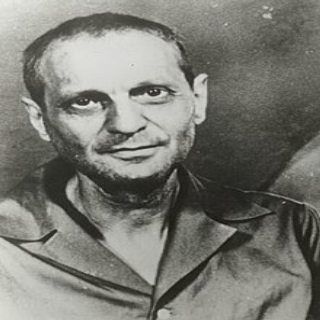 Richard Wurmbrand (1909 – 2001) was born in 1909 in Bucharist in the country of Romania. He was the youngest of four boys born in a Jewish family. He lived with his family in Istanbul for a short time. When he was 9, his father died and the Wurmbrands returned to Romania when he was 15.
He was sent to study Marxism in Moscow. When he returned, he was already a Comintern Agent. A Comintern Agent was a member of the Communist International Organisation which intended to fight:
Like other Romanian Communists, he was arrested and released several times.
He married Sabina Oster on 26th October 1936. Wurmbrand and his wife went to live in an isolated village high in the mountains of Romania. But, as a athiest there was no peace to be found in his heart. So one day, when his heart was in a state of turmoil he cried out:
“God, if perchance you exist, it is Your duty to reveal yourself to me.”
Shorthly after he prayed that prayer, he met a German carpenter in his village who gave him a bible. The carpenter and his wife had been praying earnestly that God would bring a Jew to his village, because the carpenter wanted to bring a Jew to Christ, because Jesus was a Jew. So the carpenter gave him a Bible to read. Wurmbrand said, when he opened that Bible he could not stop weeping. He had read the Bible before but it had meant nothing to him. This time when he opened the Bible he could barely read it because of the copious amount of tears that filled his eyes. Sometime later he found out the carpenter and his wife had been praying earnestly for him. Wurnbrand said that every word that he read were like flames of love burning in his heart. He realized for the first ime in his life that there was a God of love who loved him, even though he had beeen living a bad life and had nurtured a hated towards the concept of a ‘loving’ God.
The Power of Intercessory Prayer
But now for the first time he knew that Jesus had suffered at the cross of Calvary for his sins and he was loved and accepted of God. Richard and his wife became believers in Jesus the Messiah. All the hatred that he had formerly held toward God was washed away under the blood of Christ and Richard and his wife Sabrina were born of the Spirit. That is the power of intercessory prayer!
Richard prepared himself for the ministry. He was ordained as an Anglican minister in 1938 at the start of world war 2. Both Richard and his wife were arrested several times. They were beaten and hauled before a Nazi court. They suffered under the Nazi regime throughout world war 2. But Richard said, it was only a taste of what was to come.
Russian Troups Enter Romania
Towards the end of world war 2, Richard Wurmbrand became a Lutheran and he pastored a Lutheran church in Romania. But, the same year, 1 million Russian troups entered and occupied the entire territory of Romania.
Within a very short space of time the Communists took over Romania. The reign of terror began. Out of fear 4,000 priests, pastors & ministers became Communists overnight. They confessed their allegience and loyalty to the new Communist Government because they all feared for their survival.
Romania’s Resistance
Harsh persecutions of any enemies of the Communist government started with the Soviet occupation in 1945. The Soviet army behaved as an occupation force (although theoretically it was an ally against Nazi Germany), and could arrest virtually anyone at will. Shortly after Soviet occupation, ethnic Germans (who were Romanian citizens and had been living as a community in Romania for 800 years) were deported to the Donbas coal mines. Despite the King’s protest, who pointed out that this was against international law, an estimated 70,000 men and women were forced to leave their homes, starting in January 1945, before the war had even ended. They were loaded in cattle cars and put to work in the Soviet mines for up to ten years as “reparations”, where about one in five died from disease, accidents and malnutrition.
Once the Communist government became more entrenched, the number of arrests increased. All strata of society were involved, but particularly targeted were the pre-war elites, such as intellectuals, clerics, teachers, former politicians (even if they had left-leaning views) and anybody who could potentially form the nucleus of anti-Communist resistance. The existing prisons were filled with political prisoners, and a new system of forced labor camps and prisons was created, modeled after the Soviet Gulag. Some of the most notorious prisons included Sighet, Gherla, Piteşti and Aiud, and forced labor camps were set up at lead mines and in the Danube Delta.
Underground Church
Richard and his wife knew that Christianity and Communism were totally opposed to each other. They knew that a true follower of Christ cannot compromise. So they created an “Underground Church” movement to preach the pure gospel of Christ and to reach out to the unsaved people of Romania and secondly to reach out secretly to the Russian soldiers. They secretly printed thousands of Bibles and Christian literature and distributed it to the Russian soldiers. Many of the Russian soldiers were convicted and they gave their life to Christ.
So the underground church grew. But, in 1948 the Secret Police arrested Wurmbrand and he was placed in solitary confinement for 3 years. He was then transferred to a group cell for the next five years. Whilst in prison he continued to win the other prisoners to Christ. After 8 years in prison he was released and he immediately resumed his work with the undergound church. A few years later, 1959, he was arrested again and was sentenced to 25 years in prison. However, after spending 5 years in prison an organisation called the Christian Alliance negotiated with the Communist Government and they managed to secure his release for a fee of $10,000. They quickly got Richard Wurmbrand out of Romania and took him to England, then to the USA.
In 1966, Richard was called to Washington DC to give his testimony before the United States Senate. He took off his shirt to show the Senate the scars and the wounds that he received whilst he served time in prison under the Communist Government in Romania.
The newspapers throughout the USA, Europe and Asia carried his story all across the world. Christian leaders called him the “Voice of the Underground Church.”
In 1967, with a $100 old typewriter and 500 names and addresses, Richard Wurmbrand published the first issue of THE VOICE OF THE MARTYRS newsletter. This newsletter was dedicated to communicating the testimonies and trails facing our brothers and sisters in restricted nations worldwide. Richard wrote:
“The message I bring from the Underground Church is:
“Don’t abandon us!”
“Don’t forget us!”
“Don’t write us off!”
“Give us the tools we need! We will pay the price for using them!”
“This is the message I have been charged to deliver to the free church.”
Richard Wurmbrand and his wife travelled throughout the world to establish a network of over 30 offices. Their primary aim was to call Christians to shoulder their responsibility and to demonstrate the real substance of their faith by supporting their brothers and sisters in Christ who are being persecuted in heathen lands.
The VOICE OF THE MARTYRS newsletter continues to inform, and lead to action, Christians throughout the free world of the plight of those who suffer for their faith in Jesus Christ. Throughout their network of offices around the world, the newsletter is published in over 30 different languages. To this cause, VOICE OF THE MARTYRS presses on, serving in nearly 40 countries around the world where our brothers and sisters are systematically persecuted.
The writer of the Book of Hebrews brings a convicting word to the Christian church:
” Remember them that are in bonds, as bound with them; and them that suffer adversity, as being yourselves also in the body.”
(Hebrews 13:3)
We have a responsibility to those who suffer for their faith in Christ.
Today, there is an estimated 200 million Christians in heathen nations who are suffering persecution for their faith in Christ.
Richard Wurmbrand (1909 – 2001) was born in 1909 in Bucharist in the country of Romania. He was the youngest of four boys born in a Jewish family. He lived with his family in Istanbul for a short time. When he was 9, his father died and the Wurmbrands returned to Romania when he was 15.
He was sent to study Marxism in Moscow. When he returned, he was already a Comintern Agent. A Comintern Agent was a member of the Communist International Organisation which intended to fight:
Like other Romanian Communists, he was arrested and released several times.
He married Sabina Oster on 26th October 1936. Wurmbrand and his wife went to live in an isolated village high in the mountains of Romania. But, as a athiest there was no peace to be found in his heart. So one day, when his heart was in a state of turmoil he cried out:
“God, if perchance you exist, it is Your duty to reveal yourself to me.”
Shorthly after he prayed that prayer, he met a German carpenter in his village who gave him a bible. The carpenter and his wife had been praying earnestly that God would bring a Jew to his village, because the carpenter wanted to bring a Jew to Christ, because Jesus was a Jew. So the carpenter gave him a Bible to read. Wurmbrand said, when he opened that Bible he could not stop weeping. He had read the Bible before but it had meant nothing to him. This time when he opened the Bible he could barely read it because of the copious amount of tears that filled his eyes. Sometime later he found out the carpenter and his wife had been praying earnestly for him. Wurnbrand said that every word that he read were like flames of love burning in his heart. He realized for the first ime in his life that there was a God of love who loved him, even though he had beeen living a bad life and had nurtured a hated towards the concept of a ‘loving’ God.
The Power of Intercessory Prayer
But now for the first time he knew that Jesus had suffered at the cross of Calvary for his sins and he was loved and accepted of God. Richard and his wife became believers in Jesus the Messiah. All the hatred that he had formerly held toward God was washed away under the blood of Christ and Richard and his wife Sabrina were born of the Spirit. That is the power of intercessory prayer!
Richard prepared himself for the ministry. He was ordained as an Anglican minister in 1938 at the start of world war 2. Both Richard and his wife were arrested several times. They were beaten and hauled before a Nazi court. They suffered under the Nazi regime throughout world war 2. But Richard said, it was only a taste of what was to come.
Russian Troups Enter Romania
Towards the end of world war 2, Richard Wurmbrand became a Lutheran and he pastored a Lutheran church in Romania. But, the same year, 1 million Russian troups entered and occupied the entire territory of Romania.
Within a very short space of time the Communists took over Romania. The reign of terror began. Out of fear 4,000 priests, pastors & ministers became Communists overnight. They confessed their allegience and loyalty to the new Communist Government because they all feared for their survival.
Romania’s Resistance
Harsh persecutions of any enemies of the Communist government started with the Soviet occupation in 1945. The Soviet army behaved as an occupation force (although theoretically it was an ally against Nazi Germany), and could arrest virtually anyone at will. Shortly after Soviet occupation, ethnic Germans (who were Romanian citizens and had been living as a community in Romania for 800 years) were deported to the Donbas coal mines. Despite the King’s protest, who pointed out that this was against international law, an estimated 70,000 men and women were forced to leave their homes, starting in January 1945, before the war had even ended. They were loaded in cattle cars and put to work in the Soviet mines for up to ten years as “reparations”, where about one in five died from disease, accidents and malnutrition.
Once the Communist government became more entrenched, the number of arrests increased. All strata of society were involved, but particularly targeted were the pre-war elites, such as intellectuals, clerics, teachers, former politicians (even if they had left-leaning views) and anybody who could potentially form the nucleus of anti-Communist resistance. The existing prisons were filled with political prisoners, and a new system of forced labor camps and prisons was created, modeled after the Soviet Gulag. Some of the most notorious prisons included Sighet, Gherla, Piteşti and Aiud, and forced labor camps were set up at lead mines and in the Danube Delta.
Underground Church
Richard and his wife knew that Christianity and Communism were totally opposed to each other. They knew that a true follower of Christ cannot compromise. So they created an “Underground Church” movement to preach the pure gospel of Christ and to reach out to the unsaved people of Romania and secondly to reach out secretly to the Russian soldiers. They secretly printed thousands of Bibles and Christian literature and distributed it to the Russian soldiers. Many of the Russian soldiers were convicted and they gave their life to Christ.
So the underground church grew. But, in 1948 the Secret Police arrested Wurmbrand and he was placed in solitary confinement for 3 years. He was then transferred to a group cell for the next five years. Whilst in prison he continued to win the other prisoners to Christ. After 8 years in prison he was released and he immediately resumed his work with the undergound church. A few years later, 1959, he was arrested again and was sentenced to 25 years in prison. However, after spending 5 years in prison an organisation called the Christian Alliance negotiated with the Communist Government and they managed to secure his release for a fee of $10,000. They quickly got Richard Wurmbrand out of Romania and took him to England, then to the USA.
In 1966, Richard was called to Washington DC to give his testimony before the United States Senate. He took off his shirt to show the Senate the scars and the wounds that he received whilst he served time in prison under the Communist Government in Romania.
The newspapers throughout the USA, Europe and Asia carried his story all across the world. Christian leaders called him the “Voice of the Underground Church.”
In 1967, with a $100 old typewriter and 500 names and addresses, Richard Wurmbrand published the first issue of THE VOICE OF THE MARTYRS newsletter. This newsletter was dedicated to communicating the testimonies and trails facing our brothers and sisters in restricted nations worldwide. Richard wrote:
“The message I bring from the Underground Church is:
“Don’t abandon us!”
“Don’t forget us!”
“Don’t write us off!”
“Give us the tools we need! We will pay the price for using them!”
“This is the message I have been charged to deliver to the free church.”
Richard Wurmbrand and his wife travelled throughout the world to establish a network of over 30 offices. Their primary aim was to call Christians to shoulder their responsibility and to demonstrate the real substance of their faith by supporting their brothers and sisters in Christ who are being persecuted in heathen lands.
The VOICE OF THE MARTYRS newsletter continues to inform, and lead to action, Christians throughout the free world of the plight of those who suffer for their faith in Jesus Christ. Throughout their network of offices around the world, the newsletter is published in over 30 different languages. To this cause, VOICE OF THE MARTYRS presses on, serving in nearly 40 countries around the world where our brothers and sisters are systematically persecuted.
The writer of the Book of Hebrews brings a convicting word to the Christian church:
” Remember them that are in bonds, as bound with them; and them that suffer adversity, as being yourselves also in the body.”
(Hebrews 13:3)
We have a responsibility to those who suffer for their faith in Christ.
Today, there is an estimated 200 million Christians in heathen nations who are suffering persecution for their faith in Christ.
The Dying World Outside My Window
“What a mystery,” wrote Horatius Bonar, “the soul and eternity of one man depends upon the voice of another.” What a mystery, I then thought, that I do not speak more. I gazed out of my window. Three houses stood across the street. Of two, I had to ask myself, Who lives there? What were they doing as I read and prayed? Although I had not yet met them, I knew much about them. They — whoever they were — like me, had been born in sin. They, like me, had souls. They, like me, careened irreversibly towards eternity. They, like me, were tempted to ruin their souls, blinded and energized to do so by unseen spiritual forces. And they, like me, lived deceitfully mundane lives upon a thread floating between heaven and hell, now and forever. As I looked at the homes which sheltered eternal beings, I realized that my voice had not yet traveled across the street. Even though I knew news that they desperately need to hear and a “him” that they were made for (Colossians 1:16), my voice had not bothered to make its way to speak to them, befriend them, and share with them the most necessary message to ever grace human ears: the gospel of Jesus Christ. What a mystery, that the soul and eternity of one man depends on the voice of another — and that the voice upon which souls depend would be so terribly silent and unconcerned. To the Highways and Hedges It is not an overstatement that souls depend upon us to speak. How will they believe if they never hear (Romans 10:14)? “It is not an overstatement that the world depends upon the church to speak.” Each one of us has a part to play; each has work of the ministry to accomplish (Ephesians 4:11–12). Standing far below the electing love of God, you and I muster our courage to knock on doors, to invite neighbors for dinner, to reason with them about God, sin, and Jesus Christ — his cross and resurrection. We all have people to tell the bad news of their condemned standing before a holy God, and the good news of amazing grace that God, in the gospel of his Son, is reconciling sinners to himself. What kind of man — and I stare at him in the mirror more often than I like — could so calmly smile and wave, laugh and chitchat with his dying neighbor, and yet rarely get around to opening my mouth to witness to the authority, love, and mercy of Jesus Christ? Devils wink as sinners perish. Demons dance as the lost submerge undisturbed. Saints, as we see them in Scripture and church history, do not join them, masking their indifference with tutored speech about God’s sovereignty to excuse inactivity. They weep, they fast, they pray. They walk across the street, they share their very lives and this great news, this only news of reconciliation with God. They speak the name — the only name given under heaven — by which we must be saved. As ambassadors of Christ, they implore the lost, “Be reconciled to God!” (2 Corinthians 5:20). They happily go to the highways and hedges of this fallen world, and compel them to come into the Master’s great banquet (Luke 14:23). When you look out your window, when you scroll through your text conversations, when you sit down at the dinner table, or enjoy laughter with friends, do they know? Have they heard? What else should we discuss if not this? But oh, how much do we discuss instead of this. Beyond Personality Types Some do not speak because you are not as profitably given to the verbal exercise as your extroverted brothers and sisters. What comes fluently, naturally, effortlessly for others requires great toil and courage for you. For whatever reason, speaking to strangers is very uncomfortable — your throat clenches in protest, you become short of breath, you grow very self-conscious. Perhaps you replay embarrassing moments early in life, when you seemed to speak English as a second language. Thus, this part of our Christian calling, speaking the good news to others, comes to you with dense clouds and a darkness to be felt. Though you are not the mouth of the Body, your voice — and perhaps especially your voice — is needed, my brother or sister. Your words, rarer and thus less inflated, can do what those whose words are voluminous cannot do as easily: come with weight. We need your testimony to the steadfast love of God. Consider less what your sweaty hands and rapid pulse has to say about you, or how Myers-Briggs describes you. Let God dictate who you are and how you see yourself. Who You Are Who are you? You are a chosen race, a royal priesthood, a holy nation, a people for his own possession, that you may proclaim the excellencies of him who called you out of darkness into his marvelous light. Once you were not a people, but now you are God’s people; once you had not received mercy, but now you have received mercy. (1 Peter 2:9–10) Once you were less than nothing. A child of Satan, a spiritual harlot, a rebel defying the living God. You wallowed in the blood of your fallen father, Adam, without hope and without God in the world. But he, being rich in mercy, because of the great love with which he loved you — a love unsought, unreturned, undeserved — made you alive together with Christ. And this excellent Christ, not considering his equality with God something to be grasped, became poor so that you might be rich — died so that you might live (2 Corinthians 8:9). “Have we forgotten the wonder and privilege of bringing the power of God for salvation to lost souls?” And he made us a people — his people. And he gives us a voice, a purpose: to proclaim his excellencies. We, so seemingly unimpressive and nonthreateningly normal — saints with normal jobs in normal neighborhoods — carry the spectacular message next door and across the street: Christ has died for the forgiveness of sins for all who repent and believe the gospel. This gold lies in jars of clay. We must let it out. We must speak, and go on speaking. It depends not on what our strengths are nor on what personalities we possess — it matters who Christ has made us to be. And he has made us his chosen race, his royal priesthood, his holy nation of people who are satisfied in his excellencies — and can’t stop talking about them. Any Sweeter Work? Have I, have you, have we, forgotten the wonder and privilege of bringing the power of God for salvation to lost souls? Do we now count it a burden? Spurgeon asks each one of us, [We who are] sent on so sweet a service as the proclaiming of the gospel, how can we tarry? What, to tell the poor criminal shut up in the dungeon of despair that there is liberty, to tell the condemned that there is pardon, to tell the dying that there is life in a look at the crucified One — do you find this hard? Do you call this toil? Should it not be the sweetest feature of your life that you have such blessed work as this to do? To speak of him and live lives of love that do not blaspheme his holy name — do we not feel that this is a very small response to such a great salvation? Jesus was slaughtered in the garbage heap outside the camp so that we might go out to him and “continually offer up a sacrifice of praise to God, that is, the fruit of lips that acknowledge his name” (Hebrews 13:15). “What a mystery,” wrote Horatius Bonar, “the soul and eternity of one man depends upon the voice of another.” What a mystery indeed. Let’s not deprive our neighbors of ours this year, but resolve to send out our voices as light into the darkness, proclaiming the excellencies of Jesus Christ. Article by Greg Morse Staff writer, desiringGod.org