




About the Book
"The Holy War" by John Bunyan is an allegorical novel that tells the story of the city of Mansoul, which is captured by the devil and his army, led by Diabolus. The city is eventually redeemed by the powerful King Shaddai and His representative Prince Emmanuel, who lead a war to reclaim Mansoul from evil. The book explores themes of sin, redemption, and spiritual warfare, using vivid imagery and allegorical characters to illustrate these concepts.
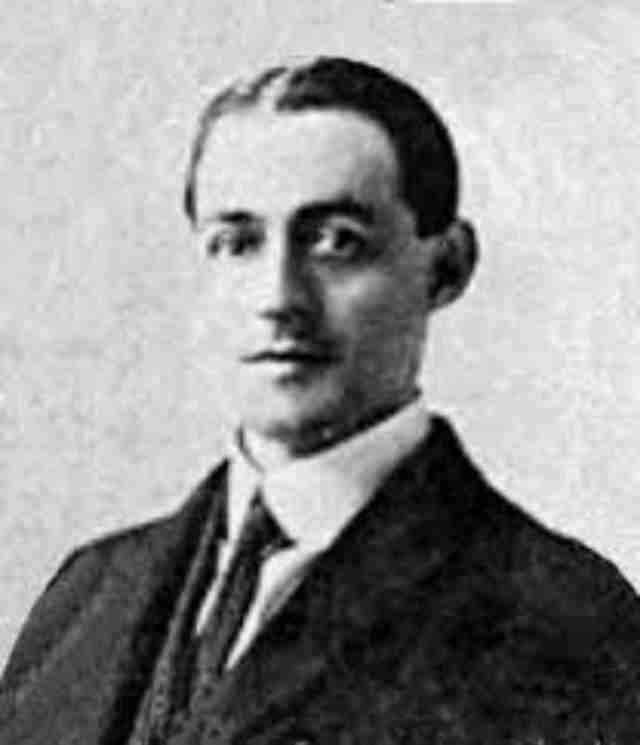
Jonathan Edwards
Jonathan Edwards (1703-1758), colonial New England minister and missionary, was one of the greatest preachers and theologians in American history.
At the close of the 17th century, the science of Isaac Newton and the philosophy of John Locke had significantly changed man's view of his relationship to God. Man's natural ability to discover the laws of creation seemed to demonstrate that supernatural revelation was not a necessary prelude to understanding creation and the creator. God was no longer mysterious; He had endowed men with the power to comprehend His nature and with a will free to choose between good and evil.
It was Jonathan Edwards's genius that he could make full use of Locke's philosophy and Newton's discoveries to reinterpret man's relationship to God in such a way that the experience of supernatural grace became available to people living in an intellectual and cultural climate very different from that of 17th-century England. In so doing, Edwards helped transmit to later generations the richest aspect of American Puritanism: the individual heart's experience of spiritual and emotional rebirth. Further, by his leadership in the religious revivals of the early 18th century, Edwards helped make the experience an integral part of American life for his own time and for the following century.
Jonathan Edwards was born on Oct. 5, 1703, in East Windsor, Conn., where his father was a minister. Jonathan's grandfather was pastor to the church in Northampton, Mass. Jonathan was the only boy in the family; he had 10 sisters. He graduated from Yale College in 1720, staying on there as a theology student until 1722, when, though not yet 19 years old, he was called as minister to a church in New York. Edwards served there for 8 months. In 1723, though called to a church in Connecticut, he decided to try teaching. He taught at Yale from 1724 to 1726.
Early Writings
At an early age Edwards showed a talent for science. At Yale he studied Newton's new science and read Locke with more interest "than the most greedy miser" gathering up "handfuls of silver and gold, from some newly discovered treasure." During these years he also began recording his meditations on the Bible and his observations of the natural world. Edward's central purpose was not to become a scientist but to lead a life of intense holiness.
Edwards's "Personal Narrative" (written ca. 1740) and his letters and diaries show a young man whose religious experience was of great power and beauty. As Edwards tells it, after several "seasons of awakenings," at the age of 17 he had a profound religious experience in which "there came into my mind so sweet a sense of the glorious majesty and grace of God, that I know not how to express. I seemed to see them both in a sweet conjunction; majesty and meekness joined together; it was a sweet, and gentle, and holy majesty; and also a majestic meekness; an awful sweetness; a high, and great, and holy gentleness." Adapting Locke's philosophy to his own purposes, Edwards interpreted the "sweet" sense of God's majesty and grace as a sixth and new sense, created supernaturally by the Holy Spirit. As he wrote later in A Treatise of Religious Affections (1746), the new sense is not "a new faculty of understanding, but it is a new foundation laid in the nature of the soul, for a new kind of exercises of the same faculty of understanding."
Edwards's perception of ultimate reality as supernatural is further evidenced in his statement that "the world is … an ideal one." He wrote in his youthful "Notes on the Mind": "The secret lies here: That, which truly is the Substance of all Bodies, is the infinitely exact, and precise, and perfectly stable Idea, in God's mind, together with his stable Will, that the same shall gradually be communicated to us, and to other minds, according to certain fixed and exact Methods and Laws."
In 1726 Edwards was called from Yale to the Northampton church to assist his grandfather; when his grandfather died in 1729, Edwards became pastor of the church. In 1727 he married the beautiful and remarkable Sarah Pier-repont of New Haven.
Early Revivals
Religious revivals had been spreading through New England for 100 years. In his youth Edwards had seen "awakenings" of his father's congregation, and his grandfather's revivals had made his Northampton church second only to Boston. In early New England Congregationalism, church membership had been open only to those who could give public profession of their experience of grace. The Halfway Covenant of 1662 modified this policy, but when Edwards's grandfather allowed all to partake of the Sacraments (including those who could not give profession of conversion), he greatly increased the number of communicants at the Lord's Supper.
Edwards's first revival took place in 1734-1735. Beginning as prayer meetings among the young in Northampton, the revivals soon spread to other towns, and Edwards's reputation as a preacher of extraordinary power grew. Standing before his congregation in his ministerial robe, he was an imposing figure, 6 feet tall, with a high forehead and intense eyes. A contemporary wrote that Edwards had "the power of presenting an important Truth before an audience, with overwhelming weight of argument, and with such intenseness of feeling, that the whole soul of the speaker is thrown into every part of the conception and delivery… Mr. Edwards was the most eloquent man I ever heard speak."
Edwards endeavored to convey as directly as possible the meaning of Christ's Crucifixion and Resurrection. His words, he hoped, would lead his listeners to a conviction of their sinful state and then through the infusion of divine grace to a profound experience of joy, freedom, and beauty. Edwards's A Faithful Narrative of the Surprising Work of God in the Conversion of Many Hundred Souls in Northampton, and the Neighboring Towns and Villages (1737) relates the history of the 1734-1735 revival and includes careful analyses of the conversions of a 4-year old child and an adolescent girl.
Edwards's preaching and writings about the nature and process of the religious experience created powerful enemies. In western Massachusetts the opposition to Edwards was led by his relatives Israel and Solomon Williams, who maintained that a man's assurance of salvation does not lie in a direct and overpowering experience of the infusion of grace and that he may judge himself saved when he obeys the biblical injunctions to lead a virtuous life. Edwards too believed that a Christian expresses the new life within him in virtuous behavior, but he denied that a man is in a state of salvation simply because he behaves virtuously. For him, good works without the experience of grace brought neither freedom nor joy.
In 1739 Edwards preached sermons on the history of redemption. He clearly thought the biblical promises of Christ's kingdom on earth would be fulfilled soon. His interest in the history of redemption is further evidenced in the many notes he made on the prophecies he found in the Bible and in natural events.
Great Awakening
In 1740 the arrival in America of George Whitefield, the famous English revivalist, touched off the Great Awakening. Revivals now swept through the Colonies, and thousands of people experienced the infusion of grace. The emotional intensity of the revivals soon brought attacks from ministers who believed that Whitefield, Edwards, and other "evangelical" preachers were stirring up religious fanaticism. The most famous attack was made by Charles Chauncy in Seasonable Thoughts on the State of Religion in New England (1743).
Edwards defended the Great Awakening in several books. He acknowledged that there had been emotional excesses, but on the whole he believed the revivals were remarkable outpourings of the Holy Spirit. His works of defense include The Distinguishing Marks of a Work of the Spirit of God (1741), Some Thoughts Concerning the Present Revival of Religion in New England (1742), and A Treatise Concerning Religious Affections (1746), the last a classic in religious psychology. He also wrote a biography of his daughter's fiancé the Native American missionary David Brainer.
The Great Awakening intensified Edward's expectations of Christ's kingdom. With English and Scottish ministers, he began a Concert of United Prayer for the Coming of Christ's Kingdom. To engage people in the concert, he wrote An Humble Attempt to Promote Visible Union of God's People in Extraordinary Prayer for the Revival of Religion (1747).
Edward's Dismissal
The troubles that culminated in Edwards's dismissal from Northampton began in the 1740s. Considerable opposition to Edwards had remained from his revivals. Animosity between him and members of his congregation was increased by an embarrassing salary dispute and an incident in 1744 when Edwards discovered that some children had been secretly reading a book on midwifery. Many children of influential families were implicated; Edwards's reading of their names publicly from the pulpit was resented. But the most important factor in Edwards's dismissal was his decision, announced in 1748, that henceforth only those who publicly professed their conversion experience would be admitted to the Lord's Supper. His decision reversed his grandfather's policy, which Edwards himself had been following for 20 years.
Edwards was denied the privilege of explaining his views from the pulpit, and his written defense, An Humble Inquiry into the Rules of the Word of God, Concerning the Qualifications Requisite to a Complete Standing and Full Communion with the Visible Christian Church (1749), went largely unread. After a bitter struggle, the church voted 200 to 23 against Edwards, and on July 1, 1750, he preached his farewell sermon.
Late Works
In August 1751 Edwards and his large family went to Stockbridge, Mass., where he had been called as pastor to the church and missionary to the Native Americans. As a missionary, he defended the Native Americans against the greed and mismanagement of a local merchant. These struggles consumed much of his time, but he still managed to write extensively. Among the most important works are A Careful and Strict Enquiry into the Modern Prevailing Notions of That Freedom of Will … (1754) and The Great Christian Doctrine of Original Sin Defended (1758). In the first, he asserted that a man has freedom to choose but freedom of choice is not the same as freedom of will. The power which decides what a man will choose—his willing—is in the hands of God and beyond his personal control. In Original Sin Edwards maintained that all men live in the same unregenerate state as Adam after the fall.
Two other works show that Edwards had not become embittered by his dismissal. In The Nature of True Virtue (1756) he defines virtue as benevolence to "being" in general. Concerning the End for Which God Created the World (1756) is a prose poem, a praise to God Who is love, and Whose universe is the expression of God's desire to glorify Himself.
In January 1758 Edwards became president of the College of New Jersey (now Princeton). Two months later he died of fever resulting from a smallpox inoculation. He was buried in Princeton.
Though Dead, He Still Speaks - How Satan Remembers C.S. Lewis
The scene is in hell at the annual dinner of the Tempters’ Training College for young devils. The principal, Dr. Snufftub, has just proposed a toast to the health of the guests. Grimgod, a very experienced devil, who is the guest of honor, rises to reply: Headmaster, favorite Decadents, Ghouls, Fiends, and Imps, to my Intolerable Tempters, Ghastly Graduates, and Gentledevils: Gladly do I assume my place in our great tradition to charge our recent graduates towards highest malevolence, mischief, and devilry. I could begin my remarks by dribbling on about how honored I am to have been invited — but you, my lowly esteemed guests, are not humans to be flattered, and I, not a man to feign humility. I tell you plainly: I both deserve and expected to address you this evening. If but for that incompetent Dr. Slubgob — whose faults and failings (and finish) you are all keenly aware — I would have said my piece centuries ago. You would search in vain to find one more suitable in all of Satandom to enflame you in such crucial times as ours. Now that I have your attention, let me direct it to the point of my address: As the tide begins to turn decisively in our favor, we must not let the enemy regain his footing. To initiate a final push, to rally the closing campaign, we must do what young devils tend to relax: We must sever the humans from voices of the past. Now is the time to dispel the great cloud of witnesses, silence those terrible men and women who, though they died, still speak — should they continue to make fools of us? In the name of all that is unholy, they will not! Some of you — and this to your disgrace — do not mind old books lying peacefully upon nightstands. Some of these (and check the registry to recall which ones) cast light upon our shadows, point out ancient traps, inform them of our designs, and thus threaten to rouse this otherwise slumbering generation — but there they lie, tolerated. Many of you are too young to have grown already so careless. As we feast in celebration, I for one agitate to hear their voices sound disgracefully, mockingly outside of our gates. Can you not hear them? For every scrap of the damned that lies upon your plate, for every bite that inspires your snorts and howls, awaken to the fact that negligence in this matter allows the dead to steal meat from our bellies and drink from our cups. Gnash your teeth to realize that they caused us — during this past shortage — to sup on the relatives of most in this room. Their shrieks of protest, still fresh in my mind, commission us all to exorcise these voices from the earth. Should our war efforts continue to be frustrated by ghosts? Appraise one such a phantom — whose birthday happens to fall on this very day — that Irksome Irishman whose very name has become a curse: C.S. Lewis. Stories of Aslan First recall, with trembling voice, that embarrassment, Soretongue, who lost the patient after so many decades in his grasp. A blunder, young Graduates, that few listening to my voice could hope to surpass. His influence took a staunch atheist, a reviler of the faith, and turned him into one of these haunting voices of which I now warn you. Consider the error in full. Consider what this Lewis became. For one thing, this man — unlike so many of their drab ministers and colorless academics whose work we most heartily support — made ghastly impressions upon even our most prized possessions: the children. Through that otherwise terribly useful faculty, the imagination, he corrupted boys and girls across the globe with stories containing the Enemy’s horrible Echo scribbled across their pages. In a make-believe world, with a make-believe lion, and all sorts of other bumbling characters, he captured more than their attention. Can you believe that after losing the man, this dimwitted Tempter actually laughed over Clive’s shoulder as he wrote? “Pure rubbish,” I believe he called it. He could not discern the Enemy’s propaganda smuggled into fictional stories featuring the children, princes, rats, dragons, magical kingdoms, white witches, curses, and fauns. “As threatening to our designs as an old, blind, toothless tiger,” Soretongue reported. But this seducer beckoned into Narnia to show them earth. He introduced Edmund, Lucy, Peter, Eustace, Reepicheep to introduce them to themselves. He told of Aslan — and excuse me for my exasperation — to bring them to that nasty Uncreated One of Judah. He discovered how to preach sermons to children, and Soretongue smiled at it. The Enemy plundered our keepsake through the back of a wardrobe. Wicked Leaks In another turn, that logic, which we knew those many years only as an ally, betrayed us in the end. With each passing essay, with each published book, with each responded letter, radio broadcast, and sermon, he toured them up the mountain to look above to the Enemy and then below upon the labyrinths we so carefully devised for their destruction. Soretongue grossly underestimated the danger of this topographer in our war efforts. Our twisted and turned paths, knotted by delicious deceits and half-truths, began to be spoiled by his mapping out our temptations and pits. Our smoke of relativism, atheism, materialism — and our other favorite isms — availed minimally against this crow who made his nest above the fog. In the last, you might have thought, after Soretongue was through with him, that this fattened pig turned wizard to have broken so many of our spells of worldliness. So often did he — with great exaggeration and deceit, to be sure — appeal to that other world beyond, that many of our enticements fell useless against the bewitched souls of his hearers. His many embellishments about the “weight of glory” and other such nonsense, gross as such slobber stands to us, moved countless humans to take seriously the Enemy’s lies about such things as eternal life. He, pirating the Enemy’s horrible Book, talked often and much of holidays at sea, the country beyond, about the scent, the sight, the longing for a land that they were “made for” — a home standing just over the hill, just around the bend. And something called Joy with a capital J. He fooled the vermin, with pretty colors and poetic potpourri, that the Enemy’s torture and death somehow ensured that his followers — who also take up their own crosses and endure their own sufferings after him — might be the better off in the end. May it never be! Should not the mere existence of our established kingdom below expose the slight of hand? If heaven was as the Enemy so shamelessly boasts it is, why should a host of us so violently leave? But Lewis, with his wand in hand doodling fictions, compelled the swine towards the true ruin we so narrowly escaped. They will find him out eventually. Yet, though they will be sorely and deliciously disappointed at the road’s end, we will still remain the hungrier for it. Silence the Skunks But, enough of the man. I do not mean to honor the vermin by speaking too much of him. The point is this: Do not let the message of the departed saints survive. Should we, of all beings, not know how to silence the dead? Cut out the tongues of the mischief-makers. Six feet below is too shallow — dig deeper. A toast, then. You have studied. You have hungered. You have tempted, watched, and waited for this day. Each of you has, with the indispensable help of your more fiendish advisor, damned one human soul. The dish prepared so perversely before you contains remnants of your spoil — the lion’s share going, of course, to your mentor. May it be the beginning of uninterrupted success — for you know what awaits any alternative. Raise your glasses. To a future brim-filled with courage, cruelty, and conviction. To the setting of sun and the fleeing of the light. To the return of the age of devils. To the silencing of the skunks — to one we mock, “Happy birthday!” Onward and downward! Article by Greg Morse