
Others like seed of wisdom Features >>
.mobi-160.webp)
The 3 Most Important Things In Your Life
-160.webp)
Finding Your Purpose In Life (Why Am I Here)

The Assignment Vol 3: The Trials And The Triumphs

The Assignment Vol I: The Dream And The Destimy
The Assignment Vol 2: The Anointing And The Adversity
The Assignment Vol 4: The Pain And The Passion
Wisdom From Myles Munroe

The Wisdom Of Making Right Choices
The End Of Me
Awakening Mystical Consciousness
About the Book
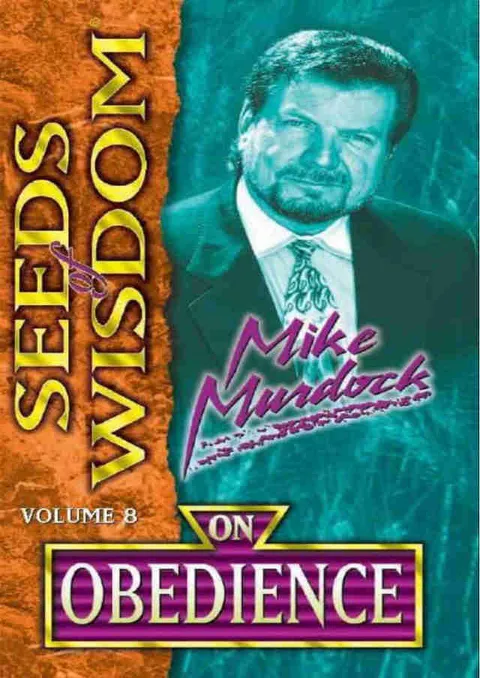
"Seed Of Wisdom" by Mike Murdock is a book that explores the concept of sowing seeds of kindness, generosity, and love in order to reap the rewards of a fulfilled and abundant life. The author emphasizes the importance of cultivating positive traits and behaviors in order to achieve success and happiness in all areas of life. Through personal anecdotes and biblical teachings, Murdock encourages readers to invest in their personal growth and relationships through the planting of "seeds" of wisdom.
John Alexander Dowie
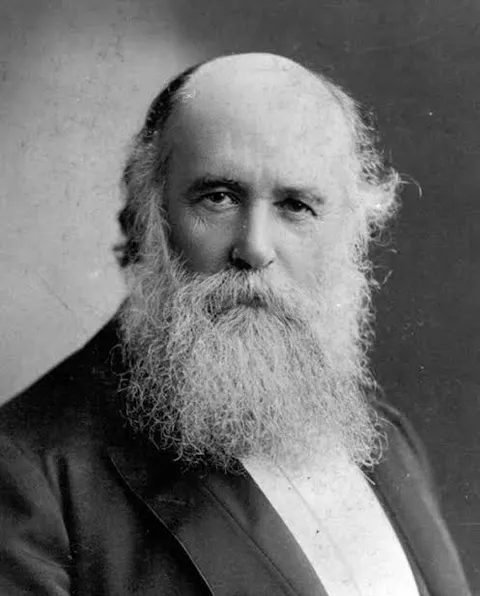 By John Alexander Dowie (1847 – 1907)
I sat in my study in the parsonage of the Congregational Church at Newtown, a suburb of the beautiful city of Sydney, Australia. My heart was very heavy, for I had visited the sick and dying beds of more than thirty of my flock, and I had cast the dust to its kindred dust into more than forty graves within a few weeks. Where, oh where, was He Who used to heal His suffering children? No prayer for healing seemed to reach His ear, and yet I knew His hand had not been shortened. Still it did not save from death even those for whom there was so much in life to live for God and others. Strong men, fathers, good citizens, and more than all, true Christians sickened with a putrid fever, suffered nameless agonies, passed into delirium, sometimes with convulsions, and then died.
Oh, what aching voids were left in many a widowed or orphaned heart. There were many homes where, one by one, the little children, the youths and the maidens lay stricken, and after a hard struggle with the foul disease, they too, lay cold and dead. It seemed sometimes as if I could almost hear the triumphant mockery of evil ringing in my ear whilst I spoke to the bereaved ones the words of Christian hope and consolation. Disease, the foul offspring of its father, Satan, and its mother Sin, was defiling and destroying the earthly temples of God’s children and there was no deliverance.
There I sat with sorrow-bowed head for my afflicted people, until the bitter tears came to relieve my burning heart. Then I prayed for some message, and oh, how I longed to hear some words from Him Who wept and sorrowed for the suffering long ago, a Man of Sorrows and Sympathies. The words of the Holy Ghost inspired In Acts 10:38, stood before me all radiant with light, revealing Satan as the Defiler, and Christ as the Healer. My tears were wiped away, my heart strong, I saw the way of healing, and the door thereto was opened wide, so I said, “God help me now to preach the Word to all the dying around, and tell them how Satan still defiles, and Jesus still delivers, for He is just the same today.”
A loud ring and several raps at the outer door, a rush of feet, and there at my door stood two panting messengers who said, “Oh, come at once, Mary is dying; come and pray. “With just a feeling as a shepherd has who hears that his sheep are being torn from the fold by a cruel wolf, I rushed from my house, ran without my hat down the street, and entered the room of the dying maiden. There she lay groaning and grinding her clenched teeth in the agony of the conflict with the destroyer. The white froth, mingled with her blood, oozing from her pale and distorted mouth. I looked at her and then my anger burned. “Oh,” I thought, “for some sharp sword of heavenly temper keen to slay this cruel foe who is strangling that lovely maiden like an invisible serpent, tightening his deadly coils for a final victory.”
In a strange way, It came to pass; I found the sword I needed was in my hands, and in my hand I hold it still and never will I lay It down. The doctor, a good Christian man, was quietly walking up and down the room, sharing the mother’s pain and grief. Presently he stood at my side and said, “Sir, are not God’s ways mysterious?” Instantly the sword was flashed in my hand, the Spirit’s sword, the Word of God. “God’s way?!” I said, pointing to the scene of conflict, “How dare you call that God’s way of bringing His children home from earth to Heaven? No sir, that is the devil’s work and it is time we called on Him Who came to destroy the work of the devil, to slay that deadly foul destroyer, and to save this child. Can you pray, Doctor, can you pray the prayer of faith that saves the sick?” At once, offended at my words, my friend was changed, and saying,” You are too much excited, sir, it is best to say ‘God’s will be done,’” and he left the room.
Excited?! The word was quite inadequate for I was almost frenzied with divinely imparted anger and hatred of that foul destroyer, disease, which was doing Satan’s will. “It is not so,” I exclaimed, “no will of God sends such cruelty, and I shall never say ‘God’s will be done’ to Satan’s works, which God’s own Son came to destroy, and this is one of them.” Oh, how the Word of God was burning in my heart: “Jesus of Nazareth went about doing good, and healing all that were oppressed of the devil; for God was with Him.” And was not God with me? And was not Jesus there and all His promises true? I felt that it was even so, and turning to the mother I inquired,” Why did you send for me?” To which she answered, “Do pray, oh pray for her that God may raise her up.” So we prayed.
What did I say? It may be that I cannot recall the words without mistake, but words are in themselves of small importance. The prayer of faith may be a voiceless prayer, a simple heartfelt look of confidence into the face of Christ. At such moment, words are few, but they mean much, for God is looking at the heart. Still, I can remember much of that prayer unto this day, and asking God to aid, I will attempt to recall it. I cried, “Our Father, help! and Holy Spirit, teach me how to pray. Plead Thou for us, oh, Jesus, Savior, Healer, Friend, our Advocate with God the Father. Hear and heal, Eternal One! From all disease and death, deliver this sweet child of yours. I rest upon the Word. We claim the promise now. The Word is true, ‘I am the Lord that heals thee.’ Then heal her now. The Word is true, ‘I am the Lord, I change not.’ Unchanging God, then prove Yourself the healer now. The Word is true. ‘These signs shall follow them that believe in My Name, they shall lay hands on the sick, and they shall recover.’ And I believe and I lay hands in Jesus’ Name on her and claim this promise now. Your Word is true. ‘The prayer of faith shall save the sick. Trusting in You alone. I cry. Oh, save her now, for Jesus’ sake. Amen!”
Then, the maid lay in sleep so deep and sweet that the mother asked in a low whisper, “Is she dead?” “No,” I answered, in a whisper lower still. “Mary will live; the fever is gone. She is perfectly well and sleeping as an infant sleeps.” I was smoothing the long dark hair from her now peaceful brow, and feeling the steady pulsation of her heart and cool moist hands. I saw that Christ had heard, and that once more, as long ago in Peter’s house, “He touched her and the fever left her.” Turning to the nurse, I said, “Get me at once, please, a cup of cocoa and several slices of bread and butter.” Beside the sleeping maid we sat quietly and almost silently until the nurse returned, and then I bent over her and snapping my fingers called, “Mary!”
Instantly she woke, smiled and said, “Oh, sir, when did you come? I have slept so long;” then stretching her arms out to meet her mother’s embrace, she said, “Mother, I feel so well.” “And hungry, too?” I asked, pouring some of the cocoa in a saucer and offering it to her when cooled by my breath. “Yes, hungry too,” she answered with a little laugh, and drank and ate again, and yet again until all was gone. In a few minutes, she fell asleep, breathing easily and softly. Quietly thanking God. We left her bed and went to the next room where her brother and sister also lay sick of the same fever. With these two, we prayed and they were healed too. The following day all three were well and in a week or so they brought me a little letter and a gift of gold, two sleeve links with my monogram, which I wore for many years. As I went away from the home where Christ as the Healer had been victorious, I could not but have somewhat in my heart of the triumphant song that rang through Heaven, and yet I was not a little amazed at my own strange doings, and still more at my discovery that He is just the same today.
Excerpt from the Sermons of John Alexander Dowie Champions of Faith by Gordon Lindsay
By John Alexander Dowie (1847 – 1907)
I sat in my study in the parsonage of the Congregational Church at Newtown, a suburb of the beautiful city of Sydney, Australia. My heart was very heavy, for I had visited the sick and dying beds of more than thirty of my flock, and I had cast the dust to its kindred dust into more than forty graves within a few weeks. Where, oh where, was He Who used to heal His suffering children? No prayer for healing seemed to reach His ear, and yet I knew His hand had not been shortened. Still it did not save from death even those for whom there was so much in life to live for God and others. Strong men, fathers, good citizens, and more than all, true Christians sickened with a putrid fever, suffered nameless agonies, passed into delirium, sometimes with convulsions, and then died.
Oh, what aching voids were left in many a widowed or orphaned heart. There were many homes where, one by one, the little children, the youths and the maidens lay stricken, and after a hard struggle with the foul disease, they too, lay cold and dead. It seemed sometimes as if I could almost hear the triumphant mockery of evil ringing in my ear whilst I spoke to the bereaved ones the words of Christian hope and consolation. Disease, the foul offspring of its father, Satan, and its mother Sin, was defiling and destroying the earthly temples of God’s children and there was no deliverance.
There I sat with sorrow-bowed head for my afflicted people, until the bitter tears came to relieve my burning heart. Then I prayed for some message, and oh, how I longed to hear some words from Him Who wept and sorrowed for the suffering long ago, a Man of Sorrows and Sympathies. The words of the Holy Ghost inspired In Acts 10:38, stood before me all radiant with light, revealing Satan as the Defiler, and Christ as the Healer. My tears were wiped away, my heart strong, I saw the way of healing, and the door thereto was opened wide, so I said, “God help me now to preach the Word to all the dying around, and tell them how Satan still defiles, and Jesus still delivers, for He is just the same today.”
A loud ring and several raps at the outer door, a rush of feet, and there at my door stood two panting messengers who said, “Oh, come at once, Mary is dying; come and pray. “With just a feeling as a shepherd has who hears that his sheep are being torn from the fold by a cruel wolf, I rushed from my house, ran without my hat down the street, and entered the room of the dying maiden. There she lay groaning and grinding her clenched teeth in the agony of the conflict with the destroyer. The white froth, mingled with her blood, oozing from her pale and distorted mouth. I looked at her and then my anger burned. “Oh,” I thought, “for some sharp sword of heavenly temper keen to slay this cruel foe who is strangling that lovely maiden like an invisible serpent, tightening his deadly coils for a final victory.”
In a strange way, It came to pass; I found the sword I needed was in my hands, and in my hand I hold it still and never will I lay It down. The doctor, a good Christian man, was quietly walking up and down the room, sharing the mother’s pain and grief. Presently he stood at my side and said, “Sir, are not God’s ways mysterious?” Instantly the sword was flashed in my hand, the Spirit’s sword, the Word of God. “God’s way?!” I said, pointing to the scene of conflict, “How dare you call that God’s way of bringing His children home from earth to Heaven? No sir, that is the devil’s work and it is time we called on Him Who came to destroy the work of the devil, to slay that deadly foul destroyer, and to save this child. Can you pray, Doctor, can you pray the prayer of faith that saves the sick?” At once, offended at my words, my friend was changed, and saying,” You are too much excited, sir, it is best to say ‘God’s will be done,’” and he left the room.
Excited?! The word was quite inadequate for I was almost frenzied with divinely imparted anger and hatred of that foul destroyer, disease, which was doing Satan’s will. “It is not so,” I exclaimed, “no will of God sends such cruelty, and I shall never say ‘God’s will be done’ to Satan’s works, which God’s own Son came to destroy, and this is one of them.” Oh, how the Word of God was burning in my heart: “Jesus of Nazareth went about doing good, and healing all that were oppressed of the devil; for God was with Him.” And was not God with me? And was not Jesus there and all His promises true? I felt that it was even so, and turning to the mother I inquired,” Why did you send for me?” To which she answered, “Do pray, oh pray for her that God may raise her up.” So we prayed.
What did I say? It may be that I cannot recall the words without mistake, but words are in themselves of small importance. The prayer of faith may be a voiceless prayer, a simple heartfelt look of confidence into the face of Christ. At such moment, words are few, but they mean much, for God is looking at the heart. Still, I can remember much of that prayer unto this day, and asking God to aid, I will attempt to recall it. I cried, “Our Father, help! and Holy Spirit, teach me how to pray. Plead Thou for us, oh, Jesus, Savior, Healer, Friend, our Advocate with God the Father. Hear and heal, Eternal One! From all disease and death, deliver this sweet child of yours. I rest upon the Word. We claim the promise now. The Word is true, ‘I am the Lord that heals thee.’ Then heal her now. The Word is true, ‘I am the Lord, I change not.’ Unchanging God, then prove Yourself the healer now. The Word is true. ‘These signs shall follow them that believe in My Name, they shall lay hands on the sick, and they shall recover.’ And I believe and I lay hands in Jesus’ Name on her and claim this promise now. Your Word is true. ‘The prayer of faith shall save the sick. Trusting in You alone. I cry. Oh, save her now, for Jesus’ sake. Amen!”
Then, the maid lay in sleep so deep and sweet that the mother asked in a low whisper, “Is she dead?” “No,” I answered, in a whisper lower still. “Mary will live; the fever is gone. She is perfectly well and sleeping as an infant sleeps.” I was smoothing the long dark hair from her now peaceful brow, and feeling the steady pulsation of her heart and cool moist hands. I saw that Christ had heard, and that once more, as long ago in Peter’s house, “He touched her and the fever left her.” Turning to the nurse, I said, “Get me at once, please, a cup of cocoa and several slices of bread and butter.” Beside the sleeping maid we sat quietly and almost silently until the nurse returned, and then I bent over her and snapping my fingers called, “Mary!”
Instantly she woke, smiled and said, “Oh, sir, when did you come? I have slept so long;” then stretching her arms out to meet her mother’s embrace, she said, “Mother, I feel so well.” “And hungry, too?” I asked, pouring some of the cocoa in a saucer and offering it to her when cooled by my breath. “Yes, hungry too,” she answered with a little laugh, and drank and ate again, and yet again until all was gone. In a few minutes, she fell asleep, breathing easily and softly. Quietly thanking God. We left her bed and went to the next room where her brother and sister also lay sick of the same fever. With these two, we prayed and they were healed too. The following day all three were well and in a week or so they brought me a little letter and a gift of gold, two sleeve links with my monogram, which I wore for many years. As I went away from the home where Christ as the Healer had been victorious, I could not but have somewhat in my heart of the triumphant song that rang through Heaven, and yet I was not a little amazed at my own strange doings, and still more at my discovery that He is just the same today.
Excerpt from the Sermons of John Alexander Dowie Champions of Faith by Gordon Lindsay
Our Lives in His
Does our right standing before God depend on our becoming more like Jesus, or does our becoming more like Jesus flow from our right standing before God? I first began wrestling with that question twenty years ago as a college student. The Bible uses a variety of terms for what God has done for us in Christ — salvation, regeneration, justification, sanctification, adoption, election, redemption, glorification. The question I struggled to answer was, How do all of these terms relate to one another? More specifically and personally, when and how and in what sequence will they happen for me? Historically, my question was about the relationship between justification (being declared righteous before God) and sanctification (the ongoing progressive work by which we are conformed to the image of Jesus). Did justification precede and give rise to sanctification? Or was justification in some way based upon my sanctification? Resurrection and Redemption Romans 8:29–30 often sets the tone for the debate: For those whom [God] foreknew he also predestined to be conformed to the image of his Son, in order that he might be the firstborn among many brothers. And those whom he predestined he also called, and those whom he called he also justified, and those whom he justified he also glorified. Here we have a basic order: foreknown, predestined, called, justified, glorified. The question was how the rest of the saving realities — saved, redeemed, adopted, and sanctified — fit into the picture. As I wrestled, I came across a book that proved to be a watershed for me: Resurrection and Redemption by Richard Gaffin, a longtime professor at Westminster Theological Seminary. The book is small — around 150 pages — but packs a theological punch. The basic thesis of the book has been profoundly helpful to me in thinking through how to bring the various biblical threads together on all that God has done for us in Christ. We Will Be Raised The book begins with the claim that the unity of the resurrection of Christ and the resurrection of believers runs through the New Testament, citing texts like these: 1 Corinthians 15:20: “Christ has been raised from the dead, the firstfruits of those who have fallen asleep.” Colossians 1:18: “[Christ] is the head of the body, the church. He is the beginning, the firstborn from the dead, that in everything he might be preeminent.” 1 Corinthians 15:16–18: “If the dead are not raised, not even Christ has been raised. And if Christ has not been raised, your faith is futile and you are still in your sins. Then those also who have fallen asleep in Christ have perished.” 2 Corinthians 4:14: “[We know] that he who raised the Lord Jesus will raise us also with Jesus.” Each of these passages expresses the reality that the resurrection of Christ is both unique and necessarily connected to our future resurrection. He is the firstfruits, the firstborn from the dead. He is the pioneer, the inaugurator, the forerunner who leads the way. We Have Been Raised This unity, however, is not merely a connection between Christ’s past resurrection and our future resurrection. The New Testament also stresses that we have already been, in some sense, raised with Christ. Ephesians 2:5–6: “Even when we were dead in our trespasses, [God] made us alive together with Christ — by grace you have been saved — and raised us up with him and seated us with him in the heavenly places in Christ Jesus.” Colossians 2:12–13: “. . . having been buried with him in baptism, in which you were also raised with him through faith in the powerful working of God, who raised him from the dead. And you, who were dead in your trespasses and the uncircumcision of your flesh, God made alive together with him, having forgiven us all our trespasses.” Romans 6:3–4: “Do you not know that all of us who have been baptized into Christ Jesus were baptized into his death? We were buried therefore with him by baptism into death, in order that, just as Christ was raised from the dead by the glory of the Father, we too might walk in newness of life.” These passages teach that we are united to Christ not only in his resurrection, but in the whole of his life and death as well. We have died with Christ. We have been crucified with Christ. We have been raised with Christ. We have been seated with Christ. From passages like these, Gaffin draws the conclusion that this existential union with Christ is the most basic element of Paul’s teaching on salvation. Inner Man and Outer Man The personal and existential union between us and Christ is intertwined with being chosen in Christ before the foundation of the world as well as being in some sense “in Christ” when he was crucified, buried, and raised in the first century. In other words, while we can distinguish between redemption planned (in eternity past), redemption accomplished (in history two thousand years ago), and redemption applied (in our own individual lives), we can never separate them, since all of them take place “in Christ.” Gaffin draws attention to the already-not-yet dimension of redemption applied. In particular, the resurrection of Jesus has been refracted in the experience of the believer. We have already been raised with Christ (Ephesians 2:5), but we have not yet been raised with Christ (1 Corinthians 15:12–20). Gaffin uses Paul’s distinction between the inner man and the outer man to make this point. We have been raised in the inner man, while we await the resurrection of the outer man — that is, the resurrection of the body at Christ’s second coming. Paul makes this point explicitly in 2 Corinthians 4:16: “Though our outer self is wasting away, our inner self is being renewed day by day.” What then does this have to do with the order of salvation and the various terms used to describe what God has done for us in Christ? Let me attempt to express the lessons in my own words. Five Glimpses of One Reality When God saves us, the fundamental thing he does is unite us to Christ by faith. “When God saves us, the fundamental thing he does is unite us to Christ by faith.” Union with the crucified and risen Lord Jesus is what salvation fundamentally is. But in order to help us understand the wonder and glory of our union with Christ, God gives us multiple word pictures or metaphors to reveal the significance of what Christ has done for us. Each of these word pictures or images enables us to comprehend the incomprehensible fact of our union with the Lord Jesus. We can unpack union with Christ in terms of a law court, in which words like guilt and condemnation, righteousness and justification figure prominently. We can unpack union with Christ using imagery from the temple, in which holiness and impurity, sanctification and cleansing are used. We can unpack union with Christ using familial imagery, with the language of new birth and adoption taking center stage. We can unpack union with Christ using the image of slavery and redemption, with mentions of bondage and captivity, of purchasing and freedom. We can unpack union with Christ with the language of salvation and deliverance, of danger and rescue by a Savior. Rather than trying to put the different terms into the exact sequence, we can instead see them as multiple ways that God has chosen to reveal the greatness and glory of what he has done for us. Five Already-Not-Yet Pictures More than that, because of the already-not-yet dimension of our salvation, we can see that each of these word pictures contains three distinct phases: a definitive positional phase, an ongoing progressive phase, and a climactic final phase. If we run through the images again, we might say the following: In terms of the law court, we are guilty and stand condemned, but Christ lives, dies, and is raised on our behalf, and therefore God declares us righteous in him. This is definitive and has to do with a new position and legal status based on the finished work of Christ. As a result, we leave the courtroom and seek to live upright and godly lives, walking in righteousness before God, as we wait for the day when we are publicly vindicated as his people when he bodily raises us from the dead. In terms of the temple, God is holy and therefore cleanses the impure and sets apart the common for holy use. There is a decisive cleansing and sanctifying work when we trust in Christ (positional), and then the rest of our lives is an attempt to live holy lives, increasingly and progressively set apart from sin and evil, while we await our full and final cleansing in the new heavens and new earth. In terms of the family, God decisively causes us to be born again, and then we seek to walk faithfully as his children. Or alternatively, he adopts us into his family (that’s conversion), and we now walk as obedient sons, as we wait for the final declaration of our sonship and conformity to the image of his Son when we are glorified. In terms of slavery and redemption, we were enslaved to sin and death, and God decisively liberates us when he unites us to his Son. From then on, we seek to increasingly and progressively live as free men, since it is for freedom that Christ has set us free, as we wait for the redemption of our bodies on the last day. In terms of danger and rescue, God delivers us from the penalty of sin (death), and then throughout our lives increasingly rescues us from the power of sin, all in anticipation of the day when we’ll be completely delivered from the presence of sin in his eternal kingdom. For Me and Conforming Me Resurrection and Redemption proved to be a watershed for me because the book resolved the tension over whether my right standing with God (justification) depended on my increasing conformity to Jesus (progressive sanctification). “Justification is by faith alone, because faith unites me to Christ, who is my righteousness.” Gaffin assured me, with Scripture, that my position before God — whether we’re talking about the courtroom, the temple, or the family — was decisively and definitively settled, simply by trusting in Jesus. Justification is by faith alone, because faith unites me to Christ, who is my righteousness. The righteousness beneath my justification is not something worked in me by God, but something accomplished for me — outside of me — by Christ. Union with him — his life, death, and resurrection — puts me right with God, so that God is completely for me. Then, flowing from this new standing and position before God, God begins to progressively and increasingly conform me to the image of Jesus. The work is often slow, frequently painful. Sin remains, even if the wages of sin no longer hang over me. But my pursuit of holiness and obedience to God is rooted in the finished work of Jesus, both in history and in my life, and I hope for the coming day when God raises me from the dead and publicly displays what he has done for me and in me. Article by Joe Rigney