
Others like the richest man in babylon Features >>
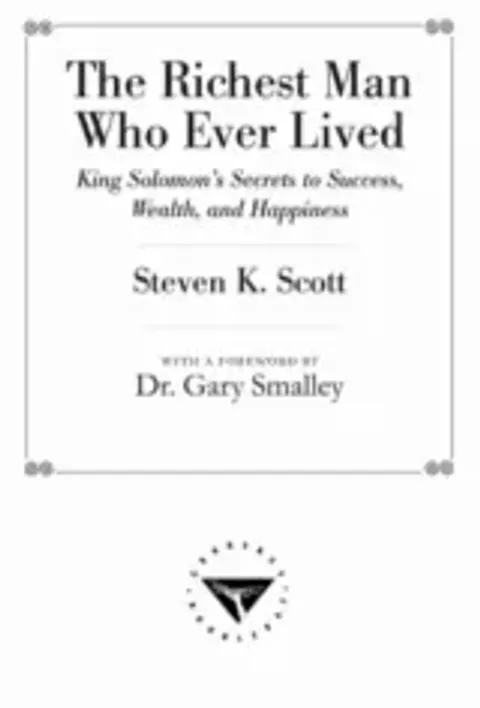
The Richest Man Who Ever Lived

Secrets Of The Richest Man Who Ever Lived

Are Tithes And Offerings The Same

God's Plan For Your Prosperity

Things That Are Better Than Money
The Covenant Of Wealth

Start Late, Finish Rich

The Last Great Wealth Transfer

Five Wealth Secrets
About the Book
"The Richest Man in Babylon" is a personal finance classic that offers timeless advice on how to build wealth and achieve financial success. Set in ancient Babylon, the book follows the story of Arkad, the richest man in the city, as he imparts his wisdom on the principles of saving, investing, and managing money to his friends. Through a series of parables and lessons, readers learn key financial principles such as living below your means, investing wisely, and setting financial goals. Overall, the book serves as a guide to achieving financial freedom and prosperity by following simple yet effective money management strategies.
Helen Roseveare
âIf Christ be God and died for me, then no sacrifice can be too great for me to make for him.â That was her missionâs motto. In 1953, Helen sailed for the Congo with hopes of serve Christ as a medical missionary with WEC (Worldwide Evangelization Crusade). For so many years sheâd dreamed of being a missionary. As a young girl, sheâd hear stories of her aunt and uncleâs experiences on the mission field, and now she was eager to have her own stories to tell.
In 1925, Helen Roseveare was born in England. Because education was a high priority for her father, Helen was sent to a prestigious all girls school when she was 12. After that, she went to Cambridge. It was during her time in college that she became a Christian, truly understanding the gospel for the first time. She left her Anglo-Catholic background and became an evangelical. Her focus was to finish her medical degree and prepare herself for the mission field.
After she became a doctor, Helen sailed to minister in the Congo. She was highly intelligent and efficient, but her role as a woman created struggles with her fellow missionaries and nationals. In that time period, single missionaries were seen as second-class citizens of the mission station. In the Congo, the medical needs were overwhelming. She couldnât just stand by and watch all the suffering around her. She was determined to make a difference. She dreamed of establishing a training center where nurses would be taught the Bible and basic medicine and then sent back to their villages to handle routine cases, teach preventive medicine, and serve as lay evangelists. She didnât have approval from her colleagues, who believed that medical training for nationals was not a valid use of time, evangelism and discipleship were more important.
Despite the conflict with them, after only two years after arriving in the Congo, she had build a combination hospital/ training center in Ibambi, and her first four students had passed their government medical exams. Her colleagues werenât as excited about her progress as she was. They felt that she was wasting time, so they decided that she would better serve the Congo by relocating in Nebobongo, living in an old leprosy camp that had become overgrown by the jungle. Helen argued that she must stay and continue the nursing training in Ibambi, but they insisted that she move. It was a major setback, but she went. Starting from scratch again, she built another hospital there and continued training African nurses. Still, she was strong-willed and seemed to be a threat to many of her male colleagues. In 1957, they decided to relocate John Harris, a young British doctor, and his wife to Nebobongo to make him Helenâs superior. Dr. Harris even took charge of leading the Bible class that sheâd taught. She was devastated. Sheâd been her own boss for too long, and although she tried to let go of control, she just couldnât. Everything that had been hers was now his. This resulted in tension between them, of course. Her independence was her greatest strength, but also a definite weakness. She did not know how to submit to imperfect leadership. In 1958, after over a year of struggling with who was in control in Nebobongo, Helen left for England for a furlough. She was disillusioned with missionary work and felt like she might not ever go back to the Congo.
Back in England, she really struggled with why she had all these issues between herself and the male leaders in the Congo. She began to convince herself that her problem was her singleness. What she needed was a doctor-husband to work with her and be on her side during the power struggles! She didnât think that was too much to ask. So, she asked God for a husband, and told Him that she wouldnât go back as a missionary until she was married. She met a young doctor and decided he would be the one. (She wasnât very patient in waiting on the Lordâs timing.) She bought new clothes, permed her hair, and resigned from the mission, all to try and win his love. He did care for her, but not enough to marry her. Helen was heartbroken, mostly because sheâd wasted so much time and money trying to force her plan into reality - without God.
Still single, Helen returned to the mission and left for Congo in 1960. It was a tense time for that country. They had been seeking independence for a long time, so a huge civil war was on the verge of beginning. Many missionaries left because the risk was so high. Helen had no plans of going home. She believed that God had truly called her back to Congo and that He would protect her if she stayed. She was joined by a few other single women, who made it difficult for the men, they didnât want to look like sissies. She was given charge of the medical base in Nebobongo because John Harris and his wife left on furlough. She had so many opportunities to minister in the midst of the turmoil. She was sure that God had her right where He wanted her to be. She continued to learn to see God in the details of her life, to trust him more fully. She had been coming closer to total trust in God all of her life, between bouts of depression, sometimes feeling that she was not really a Christian because she was capable of spells of anger and bitterness and other sins. âI was unable to reach the standard I myself had set, let alone Godâs. Try as I would, I met only frustration in this longing to achieve, to be worthy.â She came to recognize that hatred of sin is a gift of the Holy Spirit.
Rebels were gaining strength, and there were reports of missionaries being attacked. Helen endured a burglary and an attempted poisoning, but always in her mind the situation was improving. She felt that she had to stay, because there was so much need and so many people depending on her. On August 15, the rebels took control of Nebobongo, and Helen was in captivity for the next 5 months. On the night of October 29, Helen was overpowered by rebel soldiers in her little bungalow. She tried to escape, but they found her and dragged her to her feet, struck her over the head and shoulders, flung her to the ground, kicked her, struck her over and over again. She was pushed back into her house and raped brutally without mercy. Helen suffered more sexual brutality before her release. God used this in her life to minister to other single women missionaries who feared that theyâd lost their purity due to a rape and thus their salvation. Helen knew that her relationship with God had not been damaged. She had not failed God in any way because of the rapes. Finally, on December 31, 1964 she was rescued. Helen had a sense of joy and relief, but also a sense of deep sorrow as she heard of many of her friendsâ martyrdom.
Helen returned to Africa for the third time in March of 1966. She served for 7 more years, but it was full of turmoil and disappointment. The Congo had changed since the war. There was a new spirit of independence and nationalism. They no longer respected the doctor whoâd sacrificed so much for them. Helen left Africa in 1973 with a broken spirit. Her 20 years of service in Africa ended in defeat and discouragement.
When she got home, she went through a very, very lonely period in her life. She turned to God. He was all she had. Instead of bitterness there was a new spirit of humility and a new appreciation for what Jesus had done for her on the cross. God was molding her for her next ministry. She became an internationally acclaimed spokes-woman for Christian missions. Her candid honesty was refreshing in a profession known as one of super sainthood. Helen mobilized people by showing them that God used imperfect people with real struggles to be his ambassadors to the unreached world.
By Rebecca HIckman
SOURCES
Roseveare, Helen: Give Me This Mountain (1966)
Roseveare, Helen: He Gave Us a Valley (1976)
Tucker, Ruth A.: From Jerusalem to Irian Jaya
the friend we all need
âA friend loves at all times, and a brother is born for adversityâ (Proverbs 17:17). What a joy it is to have a friend, one we can confide and trust in, receive help and encouragement from, one who knows and loves us just as we are. To have a friend walk beside us in the darkest times is a great blessing. But friendship, like all things in this fallen world, is broken. Because of sin, we have conflicts with others. We seek our own way. We hurt and betray one another. We know what it is like to have a friend fail us and let us down. Weâve probably had friends betray our confidences with others. Perhaps weâve even had friends turn their backs and reject us. Certainly we know what itâs like when close friends from the past fade farther away through time and distance. Some of us may know the heartache of losing a friend through death. As a result, it can be easy to grow cynical about friendship. We can be distrusting and cautious. We might find relationships online or through social media to be more appealing than flesh and blood friendships. We may keep the relationships we do have at a distance, never trusting enough to share whatâs really going on in our heart. And some may give up on friendship altogether, preferring to handle life on our own. Yes, friendship is hard and sometimes even hurtful. But Jesus came to redeem and restore all things, including our relationships with one another. Our Perfect Friend Thereâs an old hymn titled that says, Jesus! What a Friend for sinners! Jesus! Lover of my soul; Friends may fail me, foes assail me, He, my Savior, makes me whole. Charles Spurgeon once said, âOh! To be able to say âChrist is my friend,â is one of the sweetest things in the world.â While Jesus was mocked for being a friend of sinners (Luke 7:34), those who have been rescued from sin through Jesusâs sacrifice on the cross know the sweet taste of singing the words, âJesus! What a friend for sinners!â Though our earthly friends may fail us and earthly foes assail us, Jesus stands by us, our perfect friend. His love for us is unconditional; itâs not based on who we are and what weâve done. His love is not fickle or temporary. He doesnât make promises and then fail to keep them. He wonât turn on us and reject us. Jesusâs love for us is eternal, extending all the way back in eternity past, before time even began (Ephesians 1:4â5). And nothing can separate us from his love (Romans 8:38â39). Even now, he is at work for us, interceding before the Father on our behalf: âConsequently, he is able to save to the uttermost those who draw near to God through him, since he always lives to make intercession for themâ (Hebrews 7:25). As our friend, Jesus not only wants the best for us, but he knows what is best for us and ensures that only the best ever happens to us. He works out all the details of our life for our good and his glory. He comforts us, guides us, hears our every cry, knows what we need even before we do, and works in us at all times, transforming us into his own righteous image. He is the friend we never had, the friend we never deserved, the one friend we all need â our perfect friend. Our First Friend The friendships we have with other believers are rooted in our friendship with Christ. They blossom and bear fruit out of our relationship with him. In fact, our friendship with Jesus creates and shapes our friendships with others. Jesus describes himself as the vine and us as the branches, âAbide in me, and I in you. As the branch cannot bear fruit by itself, unless it abides in the vine, neither can you, unless you abide in me. I am the vine; you are the branches. Whoever abides in me and I in him, he it is that bears much fruit, for apart from me you can do nothing.â (John 15:4â5) Through faith in what Jesus did for us in his perfect life, sacrificial death, and triumphant resurrection, we are united to him. Through this union, we receive all the benefits of what he has done for us â justification, adoption, sanctification, glorification, and more. Just as a branch receives its life and sustenance from the vine, we too receive our spiritual life and health through our union with Christ. We grow and bear fruit from what he provides. One Friendship Shapes Every Friendship Every other friendship a Christian makes or maintains stems from this friendship. When we are adopted by the Father through Jesus, we are united to every other believer; they are our brothers and sisters in the Lord. Believers past, present, and even those yet to be born are our siblings in Christ. We are united to them just as the parts of a human body are connected to one another. In fact, we are so tightly woven together that when one part of the body hurts, we all hurt (1 Corinthians 12:26). We can only love one another because God loved us first (1 John 4:19). Biblical friendship begins with Christ and extends outward, not the other way around. His love flows into us, and out of that love, we love others. As we abide in him, we are fueled to love and serve our brothers and sisters. We receive the nourishment we need from Christ, and then share that spiritual nourishment with others. And because they are drinking from the same vine, they do the same for us. We all come to faith the same way, by grace through faith. Not one of us has it all together; we all rely upon the grace and favor of God. Because we know the mercy and forgiveness of Jesus, we can be patient and forbearing with one another (Ephesians 4:32). Jesusâs constant grace toward us when we sin and fail him enables us to forgive others when they fail or sin against us. Jesus is our first friend, creating and shaping our friendships with others. We love out of the overflow of his love for us. Jesus is also our perfect friend, the one who loves at all times. When friends fail us and let us down, we can continue to love them because we know we have been loved with a perfect and unfailing love. Because â as the old hymn says â Jesus is with us to the end.