







About the Book
"Five Wealth Secrets" by Craig Hill explores practical principles for achieving financial success, including the importance of generosity, stewardship, diligence, and investing in relationships. Hill shares personal anecdotes and biblical wisdom to help readers unlock their potential for wealth and prosperity.
Maria Woodworth-Etter
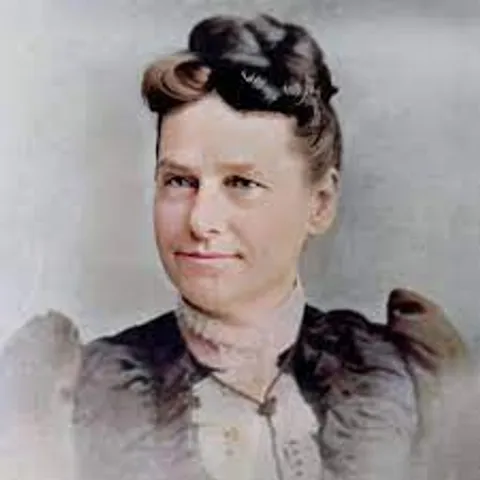 Maria Woodworth-Etter’s Early life
Maria’s early life was plagued with tragedies. Her father died of sunstroke when she was 11 years old leaving her mother with eight children to provide for. She married at 16 but fought a continual battle with ill-health, losing five of her six children. During her sickness she had visions of children in heaven and the lost suffering in hell.
She promised God, that if He would heal her, she would serve Him completely. She asked God for same apostolic power He gave the disciples and was gloriously baptized in the Holy Spirit. “It felt like liquid fire, and there were angels all around.”
The call to preach
Despite her personal struggles with ‘women in ministry’ and the prevailent hostile attitudes to female preachers, she felt compelled by God to accept the invitation to preach in the United Brethren in Christ (Friends) in 1876 and later associated with the Methodist Holiness church.
Evangelism with signs and wonders
Though simply evangelistic in the early days she was unusually successful and in 1885 supernatural signs began to accompany her ministry. Her ministry resurrected dead churches, brought salvation to thousands of unconverted and encouraged believers to seek a deeper walk with God.
She descibes one of her meetings
She described an 1883 meeting in Fairview, Ohio: “I felt impressed God was going to restore love and harmony in the church..… All present came to the altar, made a full consecration, and prayed for a baptism of the Holy Ghost and fire. That night it came. Fifteen same to the altar screaming for mercy.
Men and women fell and lay like dead. I felt it was the work of God, but did not know how to explain it or what to say. I was a little frightened . . . after lying for two hours all, one after another, sprang to their feet as quick as a flash with shining faces and shouted all over the house. I had never seen such bright conversions or such shouting….
The ministers and old saints wept and praised the Lord …..they said it was the Pentecost power, that the Lord was visiting them in great mercy and power …..(they) experienced visions of heaven and hell, collapsed on the floor as if they’d been shot or had died.” Subsequently, thousands were healed of a wide variety of sicknesses and diseases and many believers, even ministers, received mighty baptisms of the Holy Spirit. She soon became a national phenomenon.
1,000 seater tent
In 1889, she purchased a tent that could seat eight thousand people and set it up in Oakland, California. “The power of God was over all the congregation; and around in the city of Oakland. The Holy Ghost would fall on the people while we were preaching. The multitude would be held still, like as though death was in their midst.
Many of the most intelligent and best dressed men would fall back in their seats, with their hands held up to God. being held under the mighty power of God. Men and women fell, all over the tent, like trees in a storm; some would have visions of God. Most all of them came out shouting the praises of God.”
She declared that if 19th-century believers would meet God’s conditions, as the 120 did on the Day of Pentecost, they would have the same results. “A mighty revival would break out that would shake the world, and thousands of souls would be saved. The displays of God’s power on the Day of Pentecost were only a sample of what God designed should follow through the ages. Instead of looking back to Pentecost, let us always be expecting it to come, especially in these days.”
Her views of Pentecostalism
Initially she had grave concerns about the burgeoning Pentecostal movement, mainly because of some unbalanced teaching and reported extremism. Soon she came to believe it was an authentic move of the Holy Spirit and was enthusiastically welcomed within its ranks. She became both a model and a mentor for the fledgling movement. This association elicited another wave of revival between 1912 and her death in 1924 as she ministered throughout the country and her books were read across the world.
Etter Tabenacle
In 1918, she built Etter Tabernacle as her home church base and affiliated with the Assemblies of God. In her closing years she still ministered with a powerful anointing despite struggling with gastritis and dropsy. On occasion she would be carried to the podium, preach with extraordinary power, then be carried home again!
Her demise
Her health continued to decline and she died on September 16, 1924. She is buried in a grave in Indianapolis next to her daughter and son-in-law. Her inscription reads “Thou showest unto thousands lovingkindness.”
In conclusion
Without doubt Maria Woodworth-Etter was an amazing woman blessed with an astonishing ministry. Rev. Stanley Smith – one of the famous “Cambridge Seven” and for many years a worker with “The China Inland Mission” wrote this about her autobiography:
“I cannot let this opportunity go by without again bringing to the notice of my readers, ‘Acts of the Holy Ghost,’ or ‘Life and Experiences of Mrs. M. B. Woodworth-Etter.’ It is a book I value next to the Bible. In special seasons of waiting on God I have found it helpful to have the New Testament on one side of me and Mrs. Etter’s book on the other; this latter is a present-day record of ‘the Acts’ multiplied.
Mrs. Etter is a woman who has had a ministry of healing since 1885, her call as an evangelist being some years previous to this. I venture to think that this ministry is unparalleled in the history of the Church, for which I give all the glory to the Lord Jesus Christ, as Mrs. Etter would, I know, wish me to do. This ministry should be made known, for the glory of the Triune God and the good of believers.”
We agree and pray that such an anointing will rest upon God’s end-time people so that ‘this Gospel of the Kingdom will be preached in all the world before the end comes!’ Matthew 24:14
Tony Cauchi
Maria Woodworth-Etter’s Early life
Maria’s early life was plagued with tragedies. Her father died of sunstroke when she was 11 years old leaving her mother with eight children to provide for. She married at 16 but fought a continual battle with ill-health, losing five of her six children. During her sickness she had visions of children in heaven and the lost suffering in hell.
She promised God, that if He would heal her, she would serve Him completely. She asked God for same apostolic power He gave the disciples and was gloriously baptized in the Holy Spirit. “It felt like liquid fire, and there were angels all around.”
The call to preach
Despite her personal struggles with ‘women in ministry’ and the prevailent hostile attitudes to female preachers, she felt compelled by God to accept the invitation to preach in the United Brethren in Christ (Friends) in 1876 and later associated with the Methodist Holiness church.
Evangelism with signs and wonders
Though simply evangelistic in the early days she was unusually successful and in 1885 supernatural signs began to accompany her ministry. Her ministry resurrected dead churches, brought salvation to thousands of unconverted and encouraged believers to seek a deeper walk with God.
She descibes one of her meetings
She described an 1883 meeting in Fairview, Ohio: “I felt impressed God was going to restore love and harmony in the church..… All present came to the altar, made a full consecration, and prayed for a baptism of the Holy Ghost and fire. That night it came. Fifteen same to the altar screaming for mercy.
Men and women fell and lay like dead. I felt it was the work of God, but did not know how to explain it or what to say. I was a little frightened . . . after lying for two hours all, one after another, sprang to their feet as quick as a flash with shining faces and shouted all over the house. I had never seen such bright conversions or such shouting….
The ministers and old saints wept and praised the Lord …..they said it was the Pentecost power, that the Lord was visiting them in great mercy and power …..(they) experienced visions of heaven and hell, collapsed on the floor as if they’d been shot or had died.” Subsequently, thousands were healed of a wide variety of sicknesses and diseases and many believers, even ministers, received mighty baptisms of the Holy Spirit. She soon became a national phenomenon.
1,000 seater tent
In 1889, she purchased a tent that could seat eight thousand people and set it up in Oakland, California. “The power of God was over all the congregation; and around in the city of Oakland. The Holy Ghost would fall on the people while we were preaching. The multitude would be held still, like as though death was in their midst.
Many of the most intelligent and best dressed men would fall back in their seats, with their hands held up to God. being held under the mighty power of God. Men and women fell, all over the tent, like trees in a storm; some would have visions of God. Most all of them came out shouting the praises of God.”
She declared that if 19th-century believers would meet God’s conditions, as the 120 did on the Day of Pentecost, they would have the same results. “A mighty revival would break out that would shake the world, and thousands of souls would be saved. The displays of God’s power on the Day of Pentecost were only a sample of what God designed should follow through the ages. Instead of looking back to Pentecost, let us always be expecting it to come, especially in these days.”
Her views of Pentecostalism
Initially she had grave concerns about the burgeoning Pentecostal movement, mainly because of some unbalanced teaching and reported extremism. Soon she came to believe it was an authentic move of the Holy Spirit and was enthusiastically welcomed within its ranks. She became both a model and a mentor for the fledgling movement. This association elicited another wave of revival between 1912 and her death in 1924 as she ministered throughout the country and her books were read across the world.
Etter Tabenacle
In 1918, she built Etter Tabernacle as her home church base and affiliated with the Assemblies of God. In her closing years she still ministered with a powerful anointing despite struggling with gastritis and dropsy. On occasion she would be carried to the podium, preach with extraordinary power, then be carried home again!
Her demise
Her health continued to decline and she died on September 16, 1924. She is buried in a grave in Indianapolis next to her daughter and son-in-law. Her inscription reads “Thou showest unto thousands lovingkindness.”
In conclusion
Without doubt Maria Woodworth-Etter was an amazing woman blessed with an astonishing ministry. Rev. Stanley Smith – one of the famous “Cambridge Seven” and for many years a worker with “The China Inland Mission” wrote this about her autobiography:
“I cannot let this opportunity go by without again bringing to the notice of my readers, ‘Acts of the Holy Ghost,’ or ‘Life and Experiences of Mrs. M. B. Woodworth-Etter.’ It is a book I value next to the Bible. In special seasons of waiting on God I have found it helpful to have the New Testament on one side of me and Mrs. Etter’s book on the other; this latter is a present-day record of ‘the Acts’ multiplied.
Mrs. Etter is a woman who has had a ministry of healing since 1885, her call as an evangelist being some years previous to this. I venture to think that this ministry is unparalleled in the history of the Church, for which I give all the glory to the Lord Jesus Christ, as Mrs. Etter would, I know, wish me to do. This ministry should be made known, for the glory of the Triune God and the good of believers.”
We agree and pray that such an anointing will rest upon God’s end-time people so that ‘this Gospel of the Kingdom will be preached in all the world before the end comes!’ Matthew 24:14
Tony Cauchi
Did God Hear Me - Where Was He When My Sister Died
The ancient Hebrew songwriter of Psalm 116 sings with joy, I love the Lord, because he has heard my voice and my pleas for mercy. . . . The snares of death encompassed me; the pangs of Sheol laid hold on me; I suffered distress and anguish. Then I called on the name of the Lord: “O Lord, I pray, deliver my soul!” Gracious is the Lord, and righteous; our God is merciful. . . . For you have delivered my soul from death, my eyes from tears, my feet from stumbling. (Psalm 116:1–8) This is the collective testimony of God’s people — he loves us, and we love him. And because he loves us, our Savior has promised that when we pray for anything according to his will, he will answer us (John 14:13–14). In two previous articles, I wrote about how I prayed for my daughter’s life when she was diagnosed with a terminal form of cancer and how Jesus answered my prayer. In nothing short of a miracle, Jesus healed her and delivered me and my wife from inconsolable sorrows (Philippians 2:27). God is good, and he is merciful, and, yes, he hears our cries for help. Then March of this year happened. My sister was diagnosed with a terminal form of cancer. My family was still grieving her 40-year-old son who, just months earlier, died tragically and unexpectedly from a heart attack. The news of my sister’s cancer emotionally overwhelmed us. We prayed for a miracle. Trusting in her Lord with whether she lived or died, my sister breathed her last breath on June 3rd. My heart is broken, and I’m still grieving. There have been days when I didn’t think I would be able to get out of bed. Everything is harder. Writing an article about death is harder. “God hears the prayers of the righteous — and he is still righteous and good when he answers no.” After praying with me for my sister’s life and then mourning with me over her death, Desiring God gave me an opportunity to share from our mourning. So I want to try to comfort others with the comfort of God that I am seeking. I want to help Christians see how enduring suffering rests on an important truth. Our comfort comes from embracing the truth that God hears the prayers of the righteous — and that he is still righteous and good when he answers no. What We Don’t Understand Yet The Bible teaches that when God’s children are in despair, he wants us to pray, knowing that he will answer (1 Peter 5:7). But the Bible doesn’t promise to limit the infinite answers of God to our finite understandings. While God’s answers are always consistent with who he is (good, all-wise, righteous, and merciful), his thoughts and ways are incalculably higher than ours. So sometimes when we pray for God to keep us from the sorrows that fill this broken world, his perfect answer will be, “No, my grace is sufficient for you” (2 Corinthians 12:9). Consider the agony of seeing your miraculously born, perfectly just, and sinless son hanging from a wickedly unjust, cruel Roman cross. Mary didn’t knowingly pray for that. Wasn’t the horror of the cross crushing to her? Yet God ordained the cross, and for the joy set before him, Jesus willingly submitted to the Father and endured it. Before we see him on the cross, we see him alone in the garden. And there, we see him in agony, trembling and pleading with his Father three times to take his cup of wrath away (Matthew 26:39–44). Yes, God is good, and whenever he allows suffering, he has good purposes behind it, even when we don’t understand (Genesis 50:20). Jesus knew that and surrendered to his Father’s perfect will and drank the full cup of God’s wrath. He endured the greatest suffering of all, and by doing so, brought about the greatest good of all, redemption — the overthrow of death, sin, and all that is evil. The Real Problem with Death When we pray for our dying loved ones, what are we really asking for? Like Hezekiah, are we asking God to give them more years (2 Kings 20:1, 5–6)? God heard his prayers and saw his tears and extended his life by fifteen years. When we pray, and our loved ones are with us for another day, or month, or year, we should give thanks through tears. I treasured the three months that God gave us with my sister. She was able to say her final goodbyes, see her grandchildren, and express her unwavering faith in Jesus. She glorified God in her death (Philippians 1:20). However, we should also remember eternity in our prayers. In our pleading with God, we should first pray for our loved one’s salvation — that whether they live or die, they make their calling and election sure. For even if God extends their lives, what are years in light of eternity? All our lives are just a vapor. The real problem with death isn’t when we die . The real problem is that we will die . The sage of Ecclesiastes bluntly writes, “No man has power to retain the spirit, or power over the day of death” (Ecclesiastes 8:8). Jesus came for that reason. He came to abolish death and bring life and immortality to light (2 Timothy 1:10). Because the wages of sin is death, the Son of God became man, so that he could live a sinless life and then give that life as the payment for our sin (1 Peter 3:18). Prayer for Your Mourning Jesus’s resurrection validated his victory and authority over death. He is the resurrection and the life. Our loved ones who die in Christ go directly into his presence. We can comfort ourselves with that truth. No one has to mourn without hope when their loved ones die in Christ (1 Thessalonians 4:13–14). In the end, Christ will remove death from creation when he makes a new heaven and a new earth (1 Corinthians 15:26; Revelation 21:4). Until then, we do deeply mourn (Philippians 2:27), but because of Christ we have a balm to heal our broken hearts. In a confession of desperation, when facing an insurmountable enemy, Judah’s King Jehoshaphat cried out to the Lord, “We are powerless against this great horde that is coming against us. We do not know what to do, but our eyes are on you” (2 Chronicles 20:12). May I encourage you to make this your prayer as you mourn? “You won’t always understand why you suffer, but you must believe that God does.” Perhaps you have prayed and asked God to heal your loved one. Instead, you’ve been struck like Job by the cruelty of our mortal enemy — death (Job 1:4–5, 18–19). Your songs aren’t songs of joy. They are laments from a heart that is reeling from the jarring pain that comes with the death of a spouse, a child, a sibling, a best friend, or someone whom you’ve deeply loved. You won’t always understand why you suffer, but you must believe that God does. You can, therefore, pray and ask God to comfort you, knowing that he is good even when he ordains that you suffer. How I Comfort My Soul As you mourn, perhaps your prayer can sound like this: Jesus, I believe that you love me. You went to the cross for me and saved me. Fill my heart with the light of your love when the darkness of sorrow encompasses me. Jesus, you are the infinite, all-powerful Son of God, and you became man so that you could be my sympathetic High Priest, who feels all my weaknesses and pains (Hebrews 4:15). Help me to mourn. You know the pain of death. You wept over your friend Lazarus, and you mourned with his sisters. Remind me that you are bottling up every tear that falls from my eyes (Psalm 56:8). Jesus, you are not indifferent to death nor to my struggle with it. You hate death (John 11:33; Ezekiel 18:32) and came to put death to death. When you rose from the dead, you conquered death, and you shared your victory over death with all who believe in you. Comfort me with the reality that you are the resurrection and the life, and because of this, my believing loved one has eternal life in your presence. Lord, you appoint the day when everyone dies and stands before you in judgment (Hebrews 9:27). I can’t put people into heaven or hell. You are the judge of all the earth, and you always do what is right even when I can’t comprehend it (Genesis 18:25). You mourned over an unbelieving Israel (Matthew 23:37). Help me to know that you are good even when I mourn the death of unbelieving loved ones. Father, all good gifts come from you. Through my tears, I thank you for giving me my loved one, and for the time that you gave me as I mourn the years that I won’t have. This is how I am comforting my soul. I thank God for making my sister to be our family evangelist. She brought me to church when I was twenty. I heard the gospel, and God saved me. I thank God for giving her eternal life so that she never saw death (John 8:51). When she breathed her last breath here, she opened her eyes looking into the radiance of the glory that shines from his face. And I thank God for his word that teaches all of us that Jesus is the ultimate gift, and God is enough to satisfy our souls (Psalms 73:25–26). Until Christ comes or brings us home, I pray that God will comfort our hearts with these precious truths so that we can comfort others who are mourning.