
GIP Library icon

LOG IN TO REVIEW
About the Book


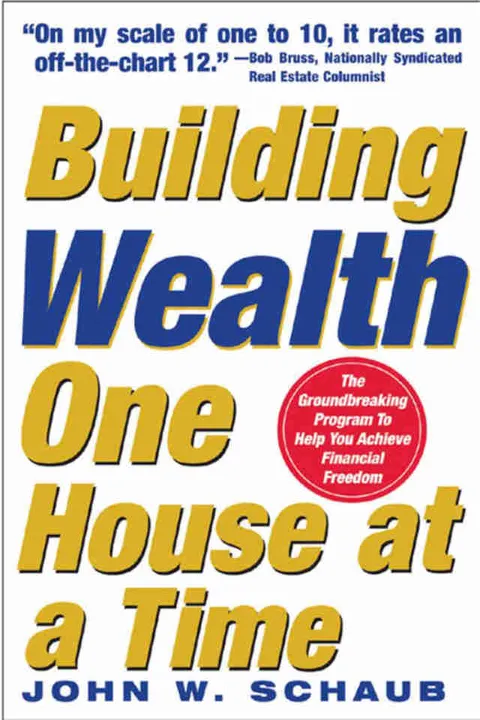
"Building Wealth One House at a Time" by John W. Schaub outlines a practical approach to real estate investment, emphasizing the importance of buying and holding rental properties for long-term wealth accumulation. The book provides strategies for finding profitable deals, managing rental properties effectively, and navigating financing options. Schaub shares his own experiences and insights to guide readers towards building a successful real estate portfolio one property at a time.

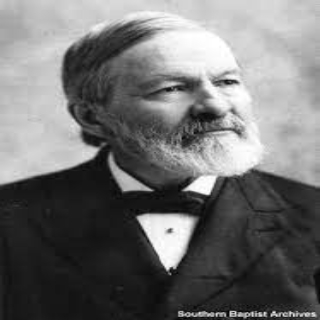
Fanny Crosby

Fanny Crosby "Oh, what a happy soul I am, / although I cannot see! / I am resolved that in this world / Contented I will be." Francis Jane Crosby wrote more than 9,000 hymns, some of which are among the most popular in every Christian denomination. She wrote so many that she was forced to use pen names lest the hymnals be filled with her name above all others. And, for most people, the most remarkable thing about her was that she had done so in spite of her blindness. "I think it is a great pity that the Master did not give you sight when he showered so many other gifts upon you," remarked one well-meaning preacher. Fanny Crosby responded at once, as she had heard such comments before. "Do you know that if at birth I had been able to make one petition, it would have been that I was born blind?" said the poet, who had been able to see only for her first six weeks of life. "Because when I get to heaven, the first face that shall ever gladden my sight will be that of my Savior." Blinded by a quack Born in Putnam County, New York, Crosby became ill within two months. Unfortunately, the family doctor was away, and another man—pretending to be a certified doctor—treated her by prescribing hot mustard poultices to be applied to her eyes. Her illness eventually relented, but the treatment left her blind. When the doctor was revealed to be a quack, he disappeared. A few months later, Crosby's father died. Her mother was forced to find work as a maid to support the family, and Fanny was mostly raised by her Christian grandmother. Her love of poetry began early—her first verse, written at age 8, echoed her lifelong refusal to feel sorry for herself: Oh, what a happy soul I am, although I cannot see! I am resolved that in this world Contented I will be. How many blessings I enjoy That other people don't, To weep and sigh because I'm blind I cannot, and I won't! While she enjoyed her poetry, she zealously memorized the Bible. Memorizing five chapters a week, even as a child she could recite the Pentateuch, the Gospels, Proverbs, the Song of Solomon, and many psalms chapter and verse. Her mother's hard work paid off. Shortly before her fifteenth birthday, Crosby was sent to the recently founded New York Institute for the Blind, which would be her home for 23 years: 12 as a student, 11 as a teacher. She initially indulged in her own poetry and was called upon to pen verses for various occasions. In time the principal asked her to avoid such "distractions" in favor of her general instruction. "We have no right to be vain in the presence of the Owner and Creator of all things," he said. It was the work of a traveling phrenologist (one who studies the shape and irregularities of the skull for insights into character and mental capacity) that changed the school's mind and again ignited her passion. Though his study is now the ridicule of science, the phrenologist's words were to prove prophetic: "Here is a poetess. Give her every possible encouragement. Read the best books to her and teach her the finest that is in poetry. You will hear from this young lady some day." Poetry for presidents It didn't take long. By age 23 Crosby was addressing Congress and making friendships with presidents. In fact, she knew all the chief executives of her lifetime, especially Grover Cleveland, who served as secretary for the Institute for the Blind before his election. Another member of the institute, former pupil Alexander van Alstine, married Crosby in 1858. Considered one of New York's best organists, he wrote the music to many of Crosby's hymns. Crosby herself put music to only a few of hers, though she played harp, piano, guitar, and other instruments. More often, musicians came to her for lyrics. For example, one day musician William Doane dropped by her home for a surprise visit, begging her to put some words to a tune he had recently written and which he was to perform at an upcoming Sunday School convention. The only problem was that his train to the convention was leaving in 35 minutes. He sat at the piano and played the tune. "Your music says, 'Safe in the Arms of Jesus,'" Crosby said, scribbling out the hymn's words immediately. "Read it on the train and hurry. You don't want to be late!" The hymn became one of Crosby's most famous. Though she was under contract to submit three hymns a week to her publisher and often wrote six or seven a day (for a dollar or two each), many became incredibly popular. When Dwight Moody and Ira Sankey began to use them in their crusades, they received even more attention. Among them are "Blessed Assurance," "All the Way My Savior Leads Me," "To God Be the Glory," "Pass Me Not, O Gentle Savior," "Safe in the Arms of Jesus," "Rescue the Perishing," and "Jesus Keep Me Near the Cross." She could write very complex hymns and compose music with a more classical structure (she could even improvise it), but she preferred to write simple, sentimental verses that could be used for evangelism. She continued to write her poetry up to her death, a month shy of her ninety-fifth birthday. "You will reach the river brink, some sweet day, bye and bye," was her last stanza.

the mouth of a godly man

What if men in the church are more immature and less equipped because we’ve been expecting too little of them? What if we have simply failed to call them to more than sexual purity online and basic spiritual disciplines? I want to be a part of raising up men who, instead of merely avoiding this or that sin, become a force for good — better, a force for  God . And I want to be that kind of man, the kind of man my son should imitate. When the apostle Paul wrote to a younger man, casting vision for what he might become in Christ, he charged him, “Let no one despise you for your youth, but set the believers an example in speech, in conduct, in love, in faith, in purity” (1 Timothy 4:12). In a previous article, I began recovering this simple but challenging framework as a paradigm for becoming a man of God. In this article, I want to narrow in on  speech . What does it mean, more practically, to set an example in what a man says (or doesn’t say)? What about our  words  sets us apart from other men? Words really do matter. Jesus himself says, “I tell you, on the day of judgment people will give account for every careless word they speak, for by your words you will be justified, and by your words you will be condemned” (Matthew 12:36–37).  Every careless word . Men of God learn to trade careless words for thoughtful ones. While many today speak, text, and tweet whatever they think or feel without a second thought, these men weigh the serious weight of what they say. They speak as if God is listening, because he is. And they know that what they  say  reveals who they  are  (Luke 6:45). They tremble over the consequences of sentences. They work to make their words a deeper and fuller well of grace. Seven Lessons for What We Say Wanting to set an example with our speech, what  kind  of example should we set? What does a man of God sound like in the wild? The letters of Paul say a great deal about what we say, distilled below into seven lessons (a list that is by no means comprehensive). Before we get into the seven, though, one verse in particular might serve as a worthy banner over the rest: Let your speech always be gracious, seasoned with salt, so that you may know how you ought to answer each person. (Colossians 4:6) If we want to set a good example in our speech, we should strive for our words to be a  grace  to others. Do our words consistently and effectively minister the grace of God to those who hear? Do they lead them to see and savor more of God? “Let no corrupting talk come out of your mouths,” Paul says elsewhere, “but only such as is good for building up, as fits the occasion,  that it may give grace to those who hear ” (Ephesians 4:29). To fill out that graciousness, though, Paul gives us a number of specific principles for guarding our mouths and serving others in all we say. 1. Tell the truth about God. The first and most important lesson for our speech, especially in the context of Paul’s two letters to Timothy, is that we speak what is true about God and his word. The clear and immediate context of 1 Timothy 4:12 is  teaching : Command and teach these things . Let no one despise you for your youth, but set the believers an example in speech, in conduct, in love, in faith, in purity. Until I come, devote yourself to  the public reading of Scripture, to exhortation, to teaching . (1 Timothy 4:11–13; see also Titus 2:7) Paul was writing to a young pastor, but this is not a word only for pastors (or aspiring pastors). Every man of God should aspire to know and teach what is true about God. What you believe and say about God is one of the most important things about you. Men who speak well in the world are men who first listen well to God in his word. “Men who speak well in the world are men who first listen well to God in his word.” Strive to know him as thoroughly and deeply as you can — to meditate on his law day and night (Psalm 1:1–2) — and to bear a faithful witness to others of who he really is. Day after day, arm yourself with “the sword of the Spirit, which is the word of God” (Ephesians 6:17). Prepare yourself to “make a defense to anyone who asks you for a reason for the hope that is in you” (1 Peter 3:15). And then boldly tell others what God has revealed to you. 2. Tell the truth about everything. Telling the truth about God, however, ultimately means telling the truth about  everything . Christian men are honest men — men of unquestionable integrity. That emphatically does  not  mean they are always right, but they are manifestly committed to being  true . Having put away falsehood, let each one of you speak the truth with his neighbor, for we are members one of another. (Ephesians 4:25; see also Colossians 3:9) Men of God do not fabricate or repeat lies, and they do not hide or obscure the truth. They take responsibility and accept the consequences, even when it costs them much. And being honest will cost us much. Typically, we lie to protect or serve ourselves (even if it’s serving ourselves by making someone else happy). Godly men know that honesty, however painful and costly in the moment, honors Christ and loves others. They know that peace and pleasure built on deceit are really treachery. They also know, and have tasted personally, the durable peace and pleasure of Spirit-filled integrity. 3. Build others up with your words. One thread in Paul’s letters proves to be an especially useful test for our speech:  Do I use my words to build others up?  The apostle writes, Speaking the truth in love , we are to grow up in every way into him who is the head, into Christ, from whom the whole body, joined and held together by every joint with which it is equipped, when each part is working properly, makes the body grow  so that it builds itself up in love . (Ephesians 4:15–16; see also 4:12) As you think about your conversations over the last week, do you see a pattern of building other believers up? Consider not just the absence of tearing others down — anger, cynicism, gossip, impatience, slander, and so on — but the presence of encouragement. And not just nice compliments, but real  encouragement  — words that build others’ faith and joy in God (Philippians 1:25). Building is hard work, and so  building  language is not always comfortable or easy to hear, but it is always constructive and hopeful. So, “strive to excel in building up the church” (1 Corinthians 14:12), especially in what you say. 4. Avoid all foolishness and filthiness. If we do not make a habit of building others up with our words, we may fall into tearing them down — discouraging, wounding, even corrupting them. Again, Ephesians 4:29: “ Let no corrupting talk come out of your mouths , but only such as is good for building up, as fits the occasion, that it may give grace to those who hear.” Some words build up, and others corrupt. So what kind of language corrupts? Paul gives the same charge in greater detail in Colossians 3:8: “Now you must put them all away: anger, wrath, malice, slander, and obscene talk from your mouth.” And in Ephesians 5:4: “Let there be no filthiness nor foolish talk nor crude joking, which are out of place.” Social media is overrun — like that overgrown, weed-infested yard down the street — with these word sins. If we live online long enough, our senses will be dulled and corruption will begin to feel normal, acceptable, even justified. It is not normal, and it does not please God. Setting a godly example in speech often begins with refusing to indulge these temptations — to cut out words that gratify our flesh at the expense of someone else. 5. Be unusually thankful. Setting an example begins with emptying our speech of corruption, and the best way to force corruption out is to fill our speech with something else. “Let there be no filthiness nor foolish talk nor crude joking, which are out of place,  but instead let there be thanksgiving ” (Ephesians 5:4). Do you want your words to radiate grace? Thank God often, and out loud, for everything. Make sure that everyone in your life knows that everything you have is a gift of God (James 1:17). Strive to be unusually, stubbornly, even a little socially awkwardly  thankful  (Colossians 2:7). How often do you meet someone who sounds like this? “Be filled with the Spirit, addressing one another in psalms and hymns and spiritual songs, singing and making melody to the Lord with your heart, giving thanks always and for everything to God the Father in the name of our Lord Jesus Christ” (Ephesians 5:18–20). How often have you tried to discipline your own mouth into grace-giving, joy-stirring streams like these? How much more often, like me, have you fallen out of thanksgiving into grumbling? “Sometimes faithfulness sounds like silence.” “Do all things without grumbling or disputing,” Paul says elsewhere, “that you may be blameless and innocent, children of God without blemish in the midst of a crooked and twisted generation,  among whom you shine as lights in the world ” (Philippians 2:14–15). This light shines in what we say (or don’t). Ask God to make you radiantly thankful. 6. Correct with gentleness. Men of God committed to building others up do not always affirm and applaud. They know that building requires vigilance and regular correction, that mistakes along the way can have devastating consequences later on. So, as we build the church, we can’t afford to allow sins, errors, and blind spots to go unchecked and unconfronted. To honor God in our speech, men of God  must  correct one another. And it is just as important  how  we correct one another. “Brothers, if anyone is caught in any transgression, you who are spiritual should restore him  in a spirit of gentleness ” (Galatians 6:1). “The Lord’s servant . . . [corrects] his opponents  with gentleness ” (2 Timothy 2:24–25). He could use his strength, like many other men, to be forceful, harsh, even brutal, but he chooses, instead, to be gentle — even when he has been sinned against. Instead of using his strength to overpower others, he uses his strength to restrain himself in love. He still confronts sin, but he does so with surprising patience and kindness. He knows that “a gentle tongue is a tree of life” (Proverbs 15:4). Part of pursuing godliness in speech and correcting with gentleness is being committed to making peace. “I appeal to you, brothers, by the name of our Lord Jesus Christ, that all of you agree, and that there be no divisions among you, but that you be united in the same mind and the same judgment” (1 Corinthians 1:10; see also Titus 3:2). “Blessed are the peacemakers,” Jesus promises, “for they shall be called sons of God” (Matthew 5:9). In the midst of correction and conflict, even when we have to say a hard word, we should be fighting for peace — not a cheap or superficial peace, but a deep, healthy, enduring peace in the Lord. 7. Leave behind boasting in self. Another dominant thread in the apostle’s letters seems to be all the more relevant today:  Those captured by grace leave behind all boasting in self. “God chose what is low and despised in the world . . . so that no human being might boast in the presence of God” (1 Corinthians 1:28–29). Men of God are known for building others up, and for being surprisingly quiet about their own abilities, achievements, and ministry. Good men don’t go around reminding people of how good they are. They live by the proverb, “Let another praise you, and not your own mouth” (Proverbs 27:2). Again, in our day, social media factors in significantly here. A social media profile gives us an opportunity to present ourselves however we want. And painfully few of us, when given the choice, show the world who we really are. We choose to highlight what we think makes us look good. We selectively post and comment based on what reflects well on us. In that way, social media easily becomes an education in self-boasting. We learn, through trial and error (and lots and lots of scrolling), what will win affirmation ( like ) and admiration ( follow ). “Let the one who boasts, boast in the Lord” (1 Corinthians 1:31; 2 Corinthians 10:17). Humble, faithful, joy-filled speech boasts less and less in self and more and more in God. Lord, Guard Our Mouths One lesson weaves in and out of the points above that’s worth calling out on its own. Godly men not only know what to say at certain times and in certain situations, but they also know when to say less, or nothing at all. Sometimes faithfulness sounds like silence. As Paul’s fellow apostle James writes, “Know this, my beloved brothers: let every person be quick to hear,  slow to speak , slow to anger” (James 1:19). Men who speak well are consistently slow to speak, especially in situations where most people would rush to say something. What makes a wise man slow to speak? He knows the amazing power of his words, for better or for worse. “How great a forest is set ablaze by such a small fire! And the tongue is a fire, a world of unrighteousness” (James 3:5–6). The wise feel the palpable danger in what they might say. They know how subtly sin creeps in and sets everything (and everyone) on fire. “When words are many, transgression is not lacking, but whoever restrains his lips is prudent” (Proverbs 10:19). Prudence makes friends with self-control, patience, and wise silence. Slowness to speak, however, does not make our speech godly. Yes, we resist saying too much too soon, but we also fill our mouths with words of grace — with honesty, with encouragement, with thankfulness, with whatever will build others up. We set a positive, proactive, gracious example, always asking God to watch over all we say. Set a guard, O Lord, over my mouth;      keep watch over the door of my lips! (Psalm 141:3)

Feedback
Suggestionsuggestion box
x