
The Miracle Of Debt Release Order Printed Copy
- Author: Dr. Creflo A. Dollar Jr
- Size: 1.1MB | 44 pages
- |
Others like the miracle of debt release Features >>







About the Book
"The Miracle of Debt Release" by Dr. Creflo A. Dollar Jr. offers practical advice and spiritual insights on managing and eliminating debt. The book provides step-by-step guidance on how to break free from financial bondage and create a path towards financial freedom and abundance. Dr. Dollar emphasizes the importance of faith, discipline, and wise money management practices in achieving debt release and a prosperous life.
Jim Elliot
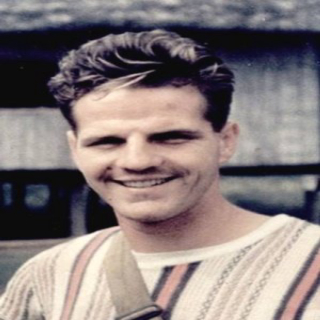 EARLY LIFE
Jim Elliot began his life in Portland, Oregon in the USA. His mother, Clara, was a chiropractor and his father, Fred, was a minister. They married and settled in Seattle, WA where they welcomed their first son, Robert in 1921.
Later they relocated the family to Portland where Herbert arrived in 1924, Jim in 1927, and Jane in 1932.
Jim knew Christ from an early age and was never afraid to speak about Him to his friends. At age six Jim told his mother, “Now, mama, the Lord Jesus can come whenever He wants. He could take our whole family because I’m saved now, and Jane is too young to know Him yet.”
THE YEARS THAT CEMENTED HIS DESIRE TO SERVE THE LORD IN MISSIONS
Jim entered Benson Polytechnic High School in 1941. He carried a small Bible with him and, an excellent speaker; he was often found speaking out for Christ. He and his friends were not afraid to step out and find adventure. One thing Jim didn’t have time for in those early years were girls. He was once quoted as telling a friend, “Domesticated males aren’t much use for adventure.”
In 1945 Jim traveled to Wheaton, IL to attend Wheaton College. His main goal while there was to devote himself to God. He recognized the importance of discipline in pursuing this goal. He would start each morning with prayer and Bible study. In his journal he wrote, “None of it gets to be ‘old stuff’ for it is Christ in print, the Living Word. We wouldn’t think of rising in the morning without a face-wash, but we often neglect the purgative cleansing of the Word of the Lord. It wakes us up to our responsibility.”
Jim’s desire to serve God by taking His gospel to unreached people of the world began to grow while at Wheaton. The summer of 1947 found him in Mexico and that time influenced his decision to minister in Central America after he finished college.
Jim met Elisabeth Howard during his third year at Wheaton. He did ask her for a date which she accepted and then later cancelled. They spent the next years as friends and after she finished at Wheaton they continued to correspond. As they came to know each other there was an attraction, but Jim felt he needed to unencumbered by worldly concerns in order to devote himself completely to God.
In addition to his hope to one day travel to a foreign country to share Christ with the unchurched of the world, he also felt the need to share with people in the United States. On Sundays while at Wheaton he would often ride the train into Chicago and talk to people in the train station about Christ. He often felt ineffective in his work as the times of knowingly leading people to Christ were few. He once wrote, “No fruit yet. Why is that I’m so unproductive? I cannot recall leading more than one or two into the kingdom. Surely this is not the manifestation of the power of the Resurrection. I feel as Rachel, ‘Give me children, or else I die.’”
After college with no clear answer as to working for the Lord in a foreign country, Jim returned home to Portland. He continued his disciplined Bible study as well as correspondence with Elisabeth Howard whom he called Betty.
They both felt a strong attraction to each other during this time, but also felt that the Lord may have been calling them to be unmarried as they served Him.
In June of 1950 he travelled to Oklahoma to attend the Summer Institute of Linguistics. There he learned how to study unwritten languages. He was able to work with a missionary to the Quichuas of the Ecuadorian jungle. Because of these lessons he began to pray for guidance about going to Ecuador and later felt compelled to answer the call there.
Elisabeth Elliot wrote in Shadow of the Almighty:
“The breadth of Jim’s vision is suggested in this entry from the journal:
August 9. “God just now gave me faith to ask for another young man to go, perhaps not this fall, but soon, to join the ranks in the lowlands of eastern Ecuador. There we must learn: 1) Spanish and Quichua, 2) each other, 3) the jungle and independence, and 4) God and God’s way of approach to the highland Quichua. From thence, by His great hand, we must move to the Ecuadorian highlands with several young Indians each, and begin work among the 800,000 highlanders. If God tarries, the natives must be taught to spread southward with the message of the reigning Christ, establishing New Testament groups as they go. Thence the Word must go south into Peru and Bolivia. The Quichuas must be reached for God! Enough for policy. Now for prayer and practice.
THE ECUADOR YEARS
In February 1952 Jim finally left America to travel to Ecuador with Pete Fleming. In May Elisabeth moved to Quito and though they didn’t feel the need to get engaged she and Jim did begin a courtship.
In August Jim left Elisabeth in Quito and travelled with Pete to Shell Mera. At the Mission Aviation Fellowship headquarters in Shell Mera, Jim and Pete learned more about the Acua Indians, a people group that was largely unreached and very savage.
Leaving Shell Mera, Pete and Jim moved on to Shandia where Jim was captivated by the Quichua. He felt very strongly that this was exactly where God intended for him to work to spread the Gospel.
While Jim was in Shandia, Elisabeth was working to learn more about the Colorado Indians near Santa Domingo. In January of 1953 he went to Quito and she met him there and they were finally engaged. They married in October of that year and their only child Valerie was born in 1955.
They settled in Shandia and continued their work with the Quichua Indians. It was Jim’s desire to be able to reach the Waodoni tribe that lived deep in the jungles and had little contact with the outside world. A Waodoni woman who had left the tribe was taken in by the missionaries and helped them to learn the language.
Jim, along with Pete, Ed McCully, Roger Youderian, and their pilot Nate Saint began to search by plane in hopes of finding a way to contact the Waodoni. The found a sandbar in the middle of the Curaray River that worked as a landing strip for the plane and it was there that they first made contact with the Waodoni. They were elated to be able to finally be able to attempt to share the love of Christ with this people group.
After their first meeting, one of the tribe, a man they called George lied to the tribe about the men’s intentions. This lie led the Waodoni warriors to plan an attack for when the missionaries returned. The men did return on January 8, 1956 and were surprised by ten members of the tribe who massacred the missionaries.
Jim’s short life that was filled with the desire to share God’s love can be summed up by a quote that is attributed to him. “He is no fool who gives that which he cannot keep, to gain what he cannot lose.”
EARLY LIFE
Jim Elliot began his life in Portland, Oregon in the USA. His mother, Clara, was a chiropractor and his father, Fred, was a minister. They married and settled in Seattle, WA where they welcomed their first son, Robert in 1921.
Later they relocated the family to Portland where Herbert arrived in 1924, Jim in 1927, and Jane in 1932.
Jim knew Christ from an early age and was never afraid to speak about Him to his friends. At age six Jim told his mother, “Now, mama, the Lord Jesus can come whenever He wants. He could take our whole family because I’m saved now, and Jane is too young to know Him yet.”
THE YEARS THAT CEMENTED HIS DESIRE TO SERVE THE LORD IN MISSIONS
Jim entered Benson Polytechnic High School in 1941. He carried a small Bible with him and, an excellent speaker; he was often found speaking out for Christ. He and his friends were not afraid to step out and find adventure. One thing Jim didn’t have time for in those early years were girls. He was once quoted as telling a friend, “Domesticated males aren’t much use for adventure.”
In 1945 Jim traveled to Wheaton, IL to attend Wheaton College. His main goal while there was to devote himself to God. He recognized the importance of discipline in pursuing this goal. He would start each morning with prayer and Bible study. In his journal he wrote, “None of it gets to be ‘old stuff’ for it is Christ in print, the Living Word. We wouldn’t think of rising in the morning without a face-wash, but we often neglect the purgative cleansing of the Word of the Lord. It wakes us up to our responsibility.”
Jim’s desire to serve God by taking His gospel to unreached people of the world began to grow while at Wheaton. The summer of 1947 found him in Mexico and that time influenced his decision to minister in Central America after he finished college.
Jim met Elisabeth Howard during his third year at Wheaton. He did ask her for a date which she accepted and then later cancelled. They spent the next years as friends and after she finished at Wheaton they continued to correspond. As they came to know each other there was an attraction, but Jim felt he needed to unencumbered by worldly concerns in order to devote himself completely to God.
In addition to his hope to one day travel to a foreign country to share Christ with the unchurched of the world, he also felt the need to share with people in the United States. On Sundays while at Wheaton he would often ride the train into Chicago and talk to people in the train station about Christ. He often felt ineffective in his work as the times of knowingly leading people to Christ were few. He once wrote, “No fruit yet. Why is that I’m so unproductive? I cannot recall leading more than one or two into the kingdom. Surely this is not the manifestation of the power of the Resurrection. I feel as Rachel, ‘Give me children, or else I die.’”
After college with no clear answer as to working for the Lord in a foreign country, Jim returned home to Portland. He continued his disciplined Bible study as well as correspondence with Elisabeth Howard whom he called Betty.
They both felt a strong attraction to each other during this time, but also felt that the Lord may have been calling them to be unmarried as they served Him.
In June of 1950 he travelled to Oklahoma to attend the Summer Institute of Linguistics. There he learned how to study unwritten languages. He was able to work with a missionary to the Quichuas of the Ecuadorian jungle. Because of these lessons he began to pray for guidance about going to Ecuador and later felt compelled to answer the call there.
Elisabeth Elliot wrote in Shadow of the Almighty:
“The breadth of Jim’s vision is suggested in this entry from the journal:
August 9. “God just now gave me faith to ask for another young man to go, perhaps not this fall, but soon, to join the ranks in the lowlands of eastern Ecuador. There we must learn: 1) Spanish and Quichua, 2) each other, 3) the jungle and independence, and 4) God and God’s way of approach to the highland Quichua. From thence, by His great hand, we must move to the Ecuadorian highlands with several young Indians each, and begin work among the 800,000 highlanders. If God tarries, the natives must be taught to spread southward with the message of the reigning Christ, establishing New Testament groups as they go. Thence the Word must go south into Peru and Bolivia. The Quichuas must be reached for God! Enough for policy. Now for prayer and practice.
THE ECUADOR YEARS
In February 1952 Jim finally left America to travel to Ecuador with Pete Fleming. In May Elisabeth moved to Quito and though they didn’t feel the need to get engaged she and Jim did begin a courtship.
In August Jim left Elisabeth in Quito and travelled with Pete to Shell Mera. At the Mission Aviation Fellowship headquarters in Shell Mera, Jim and Pete learned more about the Acua Indians, a people group that was largely unreached and very savage.
Leaving Shell Mera, Pete and Jim moved on to Shandia where Jim was captivated by the Quichua. He felt very strongly that this was exactly where God intended for him to work to spread the Gospel.
While Jim was in Shandia, Elisabeth was working to learn more about the Colorado Indians near Santa Domingo. In January of 1953 he went to Quito and she met him there and they were finally engaged. They married in October of that year and their only child Valerie was born in 1955.
They settled in Shandia and continued their work with the Quichua Indians. It was Jim’s desire to be able to reach the Waodoni tribe that lived deep in the jungles and had little contact with the outside world. A Waodoni woman who had left the tribe was taken in by the missionaries and helped them to learn the language.
Jim, along with Pete, Ed McCully, Roger Youderian, and their pilot Nate Saint began to search by plane in hopes of finding a way to contact the Waodoni. The found a sandbar in the middle of the Curaray River that worked as a landing strip for the plane and it was there that they first made contact with the Waodoni. They were elated to be able to finally be able to attempt to share the love of Christ with this people group.
After their first meeting, one of the tribe, a man they called George lied to the tribe about the men’s intentions. This lie led the Waodoni warriors to plan an attack for when the missionaries returned. The men did return on January 8, 1956 and were surprised by ten members of the tribe who massacred the missionaries.
Jim’s short life that was filled with the desire to share God’s love can be summed up by a quote that is attributed to him. “He is no fool who gives that which he cannot keep, to gain what he cannot lose.”
Souls Are Our Reward
Run the race. Fight the good fight. Finish strong. Obtain the prize. Many of the familiar catchphrases for Christian faithfulness and perseverance come from a couple memorable verses: Do you not know that in a race all the runners run, but only one receives the prize? So run that you may obtain it. Every athlete exercises self-control in all things. They do it to receive a perishable wreath, but we an imperishable. (1 Corinthians 9:24–25) When our faith begins to falter, or our spiritual disciplines wane, or our joy fades to a dim flicker, or our love grows cold, we need to be reminded to run. Even when it hurts, even when we want to give up, even when we’d rather do anything else. Any race with Jesus will be hard (Luke 9:23). Faith, hope, love, and joy may come freely by grace, but that does not mean they are always easy. The apostle Paul, knowing the costs and rigors of following Christ, reaches for this kind of rugged and strenuous imagery again and again (Philippians 3:12–14; 2 Timothy 4:7–8). What might surprise us — even those of us who have been running with Christ for decades now — is what race Paul really had in mind, at least in 1 Corinthians 9:24. When he held out that wreath of all wreaths, he had more in mind than our clinging to faith and persisting in private prayer. Run to Win The verses above come immediately after another familiar passage, which ends, I have become all things to all people, that by all means I might save some. I do it all for the sake of the gospel, that I may share with them in its blessings. Do you not know that in a race all the runners run, but only one receives the prize? So run that you may obtain it. (1 Corinthians 9:22–24) The race Paul was running (and calling us to run) was not merely about guarding the faith in our own hearts, but about pursuing that faith and joy in others. The race may look (very) different for us than it did for an unmarried apostle, but the race is still our race. Paul was running to win the lost, despite how much effort it required and how much it cost him. He was talking about aggressive mission, not merely secret devotion. And that race — becoming all things to all people that we might save some — can be even more demanding, confusing, and discouraging than nurturing our own relationship with God. Many more give up trying to win the lost than give up going to church or reading the Bible. “Winning souls fills and waters the soul like nothing else.” Paul knew that winning the lost often feels like the back half of a marathon in the heat of August. So, he reminded the church to keep running — not to lose heart or slow down, but to press through to the end. Keep taking risks and making sacrifices to share, keep enduring the inevitable rejection and hostility, and, above all, keep praying for the lost. Keep running. Four Reasons to Run Well The apostle knew how much resistance we face in evangelism. Remember that he was hunted by murderers, stoned by crowds, beaten with rods, and almost flogged to death for trying to win people to Jesus. More than almost anyone, he knew how many incentives there were not to go and make disciples. But he also knew there were even more incentives to choose faithfulness and embrace suffering along the dangerous roads of soul-winning. He shares at least four of those incentives right here in 1 Corinthians 9. NEW JOY Perhaps nothing drove the soul-winning apostle more than the thought of one more sinner, even just one, being brought from the horrors of death and judgment to the heights of life and joy in Christ (2 Corinthians 1:24). “I have become all things to all people, that by all means I might save some” (1 Corinthians 9:22). Some. Notice how modest he (even he!) is about his goals in evangelism. And yet notice how driven he is: all things to all people by all means. The threefold all expresses the precious worth of the some, the unparalleled reward of seeing someone finally stumble upon their Treasure hidden in a field (Matthew 13:44). Winning souls fills and waters the soul like nothing else. Jesus himself says, “I tell you, there is joy before the angels of God over one sinner who repents” (Luke 15:10). If even one conversion sets heaven afire with joy, should it not thrill and motivate us? SHARED JOY The joy of seeing someone saved, however, is heightened further by the joy of enjoying Jesus with them (2 Timothy 1:4). “I do it all for the sake of the gospel,” Paul continues, “that I may share with them in its blessings” (1 Corinthians 9:23; Philippians 1:25). This incentive is wired into the heart of God himself — Father, Son, and Holy Spirit forever loving, sharing, enjoying, creating, saving together. It’s wired into the creation, which waits to share in “the freedom of the glory” waiting for us (Romans 8:21). And it’s wired into any real joy in us, because real joy is never content just to have, but must give and share. As Jesus says, “It is more blessed to give than to receive” (Acts 20:35). Has anyone modeled the ecstasy of shared joy more than the church in Macedonia? “In a severe test of affliction, their abundance of joy and their extreme poverty have overflowed in a wealth of generosity on their part” (2 Corinthians 8:2). What does abundant joy look like, even in extreme poverty? It looks like sharing. IMPERISHABLE JOY The clearest incentive to run well here, though, is the imperishable wreath waiting at the finish line. “Every athlete exercises self-control in all things. They do it to receive a perishable wreath, but we an imperishable” (1 Corinthians 9:25). So, what is this wreath? While Paul does not mention wreaths anywhere else in his letters, he does tell us more about the prize he covets. “What is our hope or joy or crown of boasting before our Lord Jesus at his coming?” he asks the Thessalonians. “Is it not you? For you are our glory and joy” (1 Thessalonians 2:19–20). And to the church at Philippi: “My brothers, whom I love and long for, my joy and crown, stand firm thus in the Lord, my beloved” (Philippians 4:1). His crown, his prize, his wreath on the last day will not be something he owns or wears; it will be the lives he saved, the joy he shared, the souls he won. And that wreath, unlike any wages or reward we might receive on earth, will live and grow and bloom long into eternity. How many of us spend our best time and effort, year after year, pursuing wreaths that perish, while failing to run for that which lasts forever? ASSURED JOY The last incentive, unlike the others, comes as a warning: “I do not run aimlessly; I do not box as one beating the air. But I discipline my body and keep it under control, lest after preaching to others I myself should be disqualified” (1 Corinthians 9:26–27). Along with the stunning rewards — new joy, shared joy, imperishable joy — fear also inspired Paul to love and pursue the lost. What will happen to me if I fail to prove faithful? He wanted the depth of assurance that comes through faithfully fulfilling his mission. The apostle knew he, even he, would be disqualified if he disobeyed what Jesus had called him to do — if he gave up running. And he knew men, even in ministry, who had been disqualified. He describes such men twice, with one sobering thread between them. He warns, People will be lovers of self, lovers of money, proud, arrogant, abusive, disobedient to their parents, ungrateful, unholy, heartless, unappeasable, slanderous, without self-control, brutal, not loving good, treacherous, reckless, swollen with conceit, lovers of pleasure rather than lovers of God, having the appearance of godliness, but denying its power. . . . These men also oppose the truth, men corrupted in mind and disqualified regarding the faith. (2 Timothy 3:2–5, 8) What’s startling (and frightening) about these men is that they were lovers of self, lovers of money, proud, arrogant, and abusive, yet they still had the appearance of godliness. They looked faithful while secretly indulging sin at the expense of others. They looked like they were running well when they were really only running from God. “Many more give up trying to win the lost than give up going to church or reading the Bible.” Paul mentions similar men elsewhere, who are “insubordinate, empty talkers, and deceivers” (Titus 1:10). “They profess to know God,” he says, “but they deny him by their works. They are detestable, disobedient, unfit” — “disqualified” — “for any good work” (Titus 1:16). The tragic thread between the two passages is that some profess to know Jesus, and even learn to act like Christians, and yet fail to ever truly run — to truly repent, believe, and treasure Jesus, and then make him known to others. And if we live like them, neglecting or ignoring what Christ demands of us, we too will be disqualified. “So,” Paul says, “I do not run aimlessly; I do not box as one beating the air. But I discipline my body and keep it under control” (1 Corinthians 9:26–27). He did everything he could to avoid their awful fate. Fear was not his sole motivation, or even his greatest motivation, but he feared the horrible cost of unfaithfulness — of skipping the race and abandoning the lost. So, he disciplined himself to run hard, and long, and well. And he called us to run with him. Article by Marshall Segal Staff writer, desiringGod.org