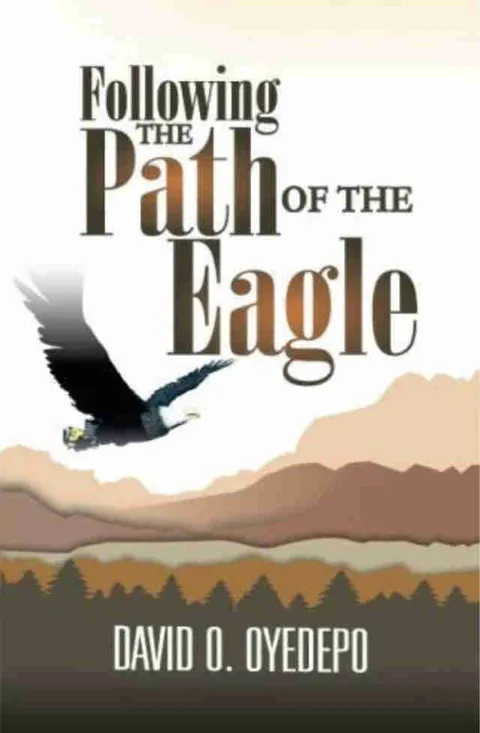

Others like following the path of the eagle Features >>
Hosting The Presence
Developing Faith For The Working Of Miracles
Christ The Sum Of All Spiritual Things
The Code Of The Holy Spirit
How To Know The Will Of God
Faith: Law Of The New Covenant
_by__A.B.%20Bruce_-160.webp)
Training Of The Twelve (Principles For Christian Leadership)
How To Know The Will Of God
Overcoming Evil In The Last Day
Latent Power Of The Soul
About the Book
"Following the Path of the Eagle" by David Oyedepo is a spiritual guide that explores the principles of successful living based on biblical teachings. The author encourages readers to seek God's guidance and follow His path to achieve their goals and fulfill their purpose in life. Through faith, prayer, and obedience to God's word, individuals can soar to great heights like an eagle.
Hannah More
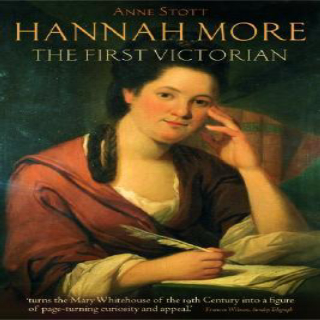 Beyond any doubt, Hannah More was the most influential female member of the Society for Effecting the Abolition of the African Slave Trade. She was educated at Bristol, an important slave-trading town, and began to publish her writing in the 1760s, while she was still a teenager. Her first play, The Inflexible Captive, was staged at Bath in 1775. Later in the 1770s, and for much of the 1780s, she spent time in London and made the acquaintance of many important political and society figures, including Samuel Johnson, Edmund Burke, and Elizabeth Montagu. Her play Percy was produced by David Garrick in 1777, and Fatal Falsehood was staged in 1779, but she came to regard the theatre as morally wrong, especially after the death of her mentors; Garrick and Johnson. She turned to religious writing, beginning with her Sacred Dramas in 1782. In 1784-5, she 'discovered' Ann Yearsley, the so-called 'poetical milkmaid of Bristol', whose poems More helped to publish, although the two later fell out.
In the 1780s, More widened her circle to include religious and philanthropic figures, including John Newton, Beilby Porteus and William Wilberforce. In the summer of 1786, she spent time with Sir Charles and Lady Margaret Middleton at the their home in Teston in Kent. Among their guests were the local vicar James Ramsay and a young Thomas Clarkson, both of whom were central to the early abolition campaign. More and Clarkson met again in Bristol in 1787, while he was on his fact-finding mission to the city, but they did not become close. However, in the same year More met Wilberforce, and their friendship was to become a deep and lasting one. More contributed much to the running of the newly-founded Abolition Society including, in February 1788, her publication of Slavery, a Poem which has been recognised as one of the more important slavery poems of the abolition period. Her relationship with members of the society, especially Wilberforce, was close. For example, she spent the summer of 1789 holidaying with Wilberforce in the Peak District - planning for the abolition campaign, at that time at its height, formed a great deal of their conversation.
By the mid-1790s, More had become closely involved with the 'Clapham Sect' of evangelical Christians, many of whom were involved in the abolition campaign. The group centred on Henry Thornton's home in Clapham and included Wilberforce, James Stephen, and Zachary Macaulay, among others. Throughout the 1790s, she wrote a number of religious tracts, known as the Cheap Repository Tracts, that eventually led to the formation of the Religious Tracts Society. Several of the Tracts oppose slavery and the slave trade, in particular, the poem The Sorrows of Yamba; or, The Negro Woman's Lamentation, which appeared in November 1795 and which was co-authored with Eaglesfield Smith. However, the tracts have also been noted for their encouragement of social quietism in an age of revolution. She continued to oppose slavery throughout her life, but at the time of the Abolition Bill of 1807, her health did not permit her to take as active a role in the movement as she had done in the late 1780s, although she maintained a correspondence with Wilberforce and others. In her later life, she dedicated much time to religious writing. Nevertheless, her most popular work was a novel, Coelebs in Search of a Wife, which appeared in two volumes in 1809 (and which ran to nine editions in 1809 alone). In the 1820s she grew gradually less well, and decreased - but did not entirely halt - the amount of writing she produced. On her death in 1833, she left more than £30,000 to charities and religious societies (equivalent to about £2,000,000 or $3,000,000 in 2004).
© Brycchan Carey 2004
Beyond any doubt, Hannah More was the most influential female member of the Society for Effecting the Abolition of the African Slave Trade. She was educated at Bristol, an important slave-trading town, and began to publish her writing in the 1760s, while she was still a teenager. Her first play, The Inflexible Captive, was staged at Bath in 1775. Later in the 1770s, and for much of the 1780s, she spent time in London and made the acquaintance of many important political and society figures, including Samuel Johnson, Edmund Burke, and Elizabeth Montagu. Her play Percy was produced by David Garrick in 1777, and Fatal Falsehood was staged in 1779, but she came to regard the theatre as morally wrong, especially after the death of her mentors; Garrick and Johnson. She turned to religious writing, beginning with her Sacred Dramas in 1782. In 1784-5, she 'discovered' Ann Yearsley, the so-called 'poetical milkmaid of Bristol', whose poems More helped to publish, although the two later fell out.
In the 1780s, More widened her circle to include religious and philanthropic figures, including John Newton, Beilby Porteus and William Wilberforce. In the summer of 1786, she spent time with Sir Charles and Lady Margaret Middleton at the their home in Teston in Kent. Among their guests were the local vicar James Ramsay and a young Thomas Clarkson, both of whom were central to the early abolition campaign. More and Clarkson met again in Bristol in 1787, while he was on his fact-finding mission to the city, but they did not become close. However, in the same year More met Wilberforce, and their friendship was to become a deep and lasting one. More contributed much to the running of the newly-founded Abolition Society including, in February 1788, her publication of Slavery, a Poem which has been recognised as one of the more important slavery poems of the abolition period. Her relationship with members of the society, especially Wilberforce, was close. For example, she spent the summer of 1789 holidaying with Wilberforce in the Peak District - planning for the abolition campaign, at that time at its height, formed a great deal of their conversation.
By the mid-1790s, More had become closely involved with the 'Clapham Sect' of evangelical Christians, many of whom were involved in the abolition campaign. The group centred on Henry Thornton's home in Clapham and included Wilberforce, James Stephen, and Zachary Macaulay, among others. Throughout the 1790s, she wrote a number of religious tracts, known as the Cheap Repository Tracts, that eventually led to the formation of the Religious Tracts Society. Several of the Tracts oppose slavery and the slave trade, in particular, the poem The Sorrows of Yamba; or, The Negro Woman's Lamentation, which appeared in November 1795 and which was co-authored with Eaglesfield Smith. However, the tracts have also been noted for their encouragement of social quietism in an age of revolution. She continued to oppose slavery throughout her life, but at the time of the Abolition Bill of 1807, her health did not permit her to take as active a role in the movement as she had done in the late 1780s, although she maintained a correspondence with Wilberforce and others. In her later life, she dedicated much time to religious writing. Nevertheless, her most popular work was a novel, Coelebs in Search of a Wife, which appeared in two volumes in 1809 (and which ran to nine editions in 1809 alone). In the 1820s she grew gradually less well, and decreased - but did not entirely halt - the amount of writing she produced. On her death in 1833, she left more than £30,000 to charities and religious societies (equivalent to about £2,000,000 or $3,000,000 in 2004).
© Brycchan Carey 2004
Meeting Christ in Aslan
Over the next five years, the seven installments of C.S. Lewis’s The Chronicles of Narniaseries will turn seventy. Generations of children have found delight in stepping through the wardrobe door to this mythical world, filled with magic, meaning, and a whole cast of fantastic characters. Still, in the end, the appeal of The Chronicles comes back to a single character. Aslan, the Great Lion, who calls the children into Narnia, plays the central role in each adventure. It’s not exactly correct to call Aslan an “allegory” of Jesus. Lewis might prefer that we instead think of Aslan as Christ transposed into a Narnian key, a Creator and Lord fit for a world primarily inhabited by talking animals. Throughout The Chronicles, Aslan often emphasizes that he really is a lion and not an illusion or symbol. “Touch me,” he tells one character in “The Horse and His Boy”. “Smell me. Here are my paws, here is my tail, these are my whiskers. I am a true Beast.” True to Lewis’s genius and his love of myth, Aslan’s purpose in calling children from our world into Narnia is the same as Lewis’s purpose in writing The Chronicles. Through the Great Lion, Lewis gives us a glimpse of the character of the Savior and King he called “myth become fact,” and whom Scripture calls “the Lion of Judah.” Two moments in the Narnia series are particular favorites of my colleague Shane Morris, and illustrate Aslan’s mission with particular clarity. One takes place during the third Chronicle (the fifth in publication order), “The Horse and His Boy.” Shasta, the main character, has ridden through the night and is lost in the mountains. Having grown up in a foreign country and just returned to Narnia, he doesn’t realize he is royalty. After running and riding for his life for so long, he’s tired and discouraged, and concludes that he must be the unluckiest boy alive. Suddenly, a great Voice confronts him out of the darkness, and asks to know his sorrows. A very frightened Shasta, not knowing what else to do, relays how he and his companions fled from their captors across the desert, how fear and danger have stalked them at every turn, and how he’s been threatened by at least four lions. “There was only one lion,” replies the Voice. “But he was swift of foot.” Aslan reveals that he was the lion, and that his intervention at these crucial moments saved the boy’s life, as well as the lives of his fellow travelers and his native kingdom. What Shasta saw as bad luck was Aslan’s providential paw guiding him through danger toward his rightful throne, and even introducing him to his future wife. The second scene takes place at the end of “The Voyage of the Dawn Treader.” Lucy, Edmund, and Eustace have just come to the edge of the world after months at sea. The rest of the characters have gone home or paddled into Aslan’s Country, and the three children are left alone. They encounter Aslan on a grassy shore, who’s taken the form of a lamb and invites them to breakfast. There, he tells the children that it’s time for them to go home and, for Edmund and Lucy, there will be no returning to Narnia. They don’t take the news well. “It isn’t Narnia, you know,” cries Lucy. “It’s you. We shan’t meet you there. And how are we to live, never meeting you?” “But you shall meet me, dear one,” Aslan replies. “But there I have another name. You must learn to know me by that name. This was the very reason why you were brought to Narnia, that by knowing me here for a little, you may know me better there.” Like Jesus revealing Himself to His disciples at the breaking of bread, here Lewis has Aslan shed the disguise to allow readers to fully recognize him. When Aslan reveals his role in Shasta’s story, it brings to mind how Jesus, on the road to Emmaus, revealed to His disciples everything concerning Himself in the Law and Prophets. It’s no wonder that, like those disciples, many who have met Aslan in The Chronicles of Narnia have also felt their hearts burning within them. Seventy years on, C.S. Lewis’s stories deserve every bit of their status as classics, filled as they are with spiritual treasures for young and old alike. But the lion’s share of the credit goes to Aslan. In him we meet a character too good to be just a story. And, like Lucy, we long to know his true name—not in spite of the mane and tail, but because of them. Publication date: October 20, 2021 John Stonestreet