
GIP Library icon

LOG IN TO REVIEW
About the Book


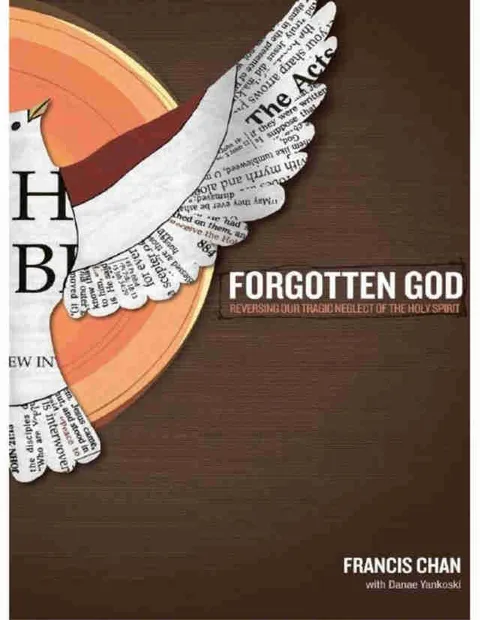
"Forgotten God" by Francis Chan explores the often-overlooked role of the Holy Spirit in the lives of believers. Chan challenges readers to reexamine their relationship with the Spirit and invites them to experience the power and presence of God in a deeper, more intimate way. The book encourages readers to be open to the leading of the Spirit and to live boldly and courageously in obedience to God's will.

Charles Colson

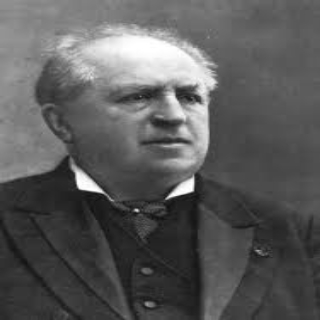
Charles Colson F Scott Fitzgerald once said: "There are no second acts in American lives." Charles Colson might have caused him to reconsider. In 1972, Colson, who has died aged 80, boasted to his colleagues in Richard Nixon's White House that he would "walk over my own grandmother" to get Nixon re-elected. His path led not over his grandmother, but through the Watergate scandal to prison, and then to a remarkable transformation into an evangelical Christian leader, bestselling writer and prison reformer. "Chuck" Colson called himself Nixon's "hatchet man", and it was in this role that he drew up the president's famous "enemies list". High on that list was Daniel Ellsberg, the US military analyst who leaked the Pentagon Papers to the New York Times in 1971. The papers were a series of secret reports commissioned by John F Kennedy's defence secretary Robert McNamara which contradicted the public policy statements of three American administrations over the Vietnam war. Nixon assigned Colson to discredit Ellsberg. Colson, armed with a budget of $250,000 from the Committee for the Re-Election of the President, had already hired his former college classmate E Howard Hunt to create the White House unit known as "the plumbers", as they were intended to stop embarrassing leaks. Hunt's team burgled the offices of Ellsberg's psychiatrist, and made plans to have Ellsberg beaten, while Colson leaked smears to the press. In early 1972, Colson got White House approval for a plan concocted by Hunt and G Gordon Liddy, another of the plumbers, to "gather intelligence" for the upcoming election. Hunt's burglars were caught by a sharp-eyed security guard inside the Democratic party's headquarters at the Watergate complex in Washington. An address book found on one of them led back to the White House, but the scandal failed to have an impact on the election, which Nixon won. Colson joked with Hunt that Watergate would be remembered as a brilliantly conceived escapade to "divert the Democrats' attention from the real issues, and therefore permit us to win a landslide we probably wouldn't have won otherwise". Without realising it, Colson had created the template which now dominates modern politics. But after the election, the Watergate investigations persisted. As Nixon's aides toppled one by one, Colson led the effort to smear those testifying, including another White House lawyer, John Dean, whose evidence against Nixon was particularly damning. Finally, Colson, too, resigned, in March 1973. A year later, he was indicted for his part in the cover-up. Facing an impeachment trial, Nixon resigned on 9 August 1974. Colson's religious conversion began while he was awaiting trial. Thomas Phillips, chairman of the defence contractor Raytheon, gave him a copy of CS Lewis's Mere Christianity, and he joined a congressional prayer group. When the 60 Minutes interviewer Mike Wallace challenged his sincerity, Colson decided to atone. Colson's lawyers negotiated a plea bargain of guilty to one count of obstruction of justice relating to the Ellsberg break-in. Sentenced in 1974 to one to three years, he served seven months in federal prison and was released in January 1975. Ellsberg himself said that he doubted the conversion, noting that Colson continued to deny more serious crimes. Colson was born in Boston. His father, Wendell, worked for the Securities and Exchange Commission. Colson attended Browne & Nichols, an elite school in Cambridge, Massachusetts, and then went to Brown University in Providence, Rhode Island, on a naval reserve programme. After graduation, he served in the marine corps, then became an aide to the Massachusetts senator Leverett Saltonstall. Through Saltonstall, he met Nixon, then US vice-president, and in his own words, instantly became "a Nixon fanatic". After getting his law degree from George Washington University, he worked on Saltonstall's successful 1960 re-election campaign, before founding a law firm which became influential. In 1964 he wrote a memo to Nixon, who had lost the California gubernatorial election, outlining his plan to return Nixon to prominence; and in 1968 he joined Nixon's campaign. Nixon won the presidency in 1969 and appointed Colson his special counsel. In prison, Colson embraced born-again Christianity. In his biography Charles W Colson: A Life Redeemed (2005), the former Tory cabinet minister Jonathan Aitken says that Colson "transferred his huge drive, intellect, and maniacal energy from the service of Richard Nixon to the service of Jesus Christ". After prison, Colson wrote a bestselling memoir, Born Again (1976), which was filmed in 1978. He also founded a series of non-profit organisations, such as Prison Fellowship Ministries, which aimed to convert the convicted. Colson wrote more than 30 books, channelling the royalties into his ministries, to which he also donated the $1.1m Templeton prize, for promoting religion, which he won in 1993. In 2000, the Florida governor Jeb Bush reinstated Colson's voting rights (in that state, a convicted felon may not vote), saying: "I think it's time to move on. I know him, he's a great guy." In 2002 Colson joined fellow evangelicals in signing the Land Letter, urging President George W Bush to pursue a "just war" in Iraq. In 2008 he received the Presidential Citizens medal from Bush. Colson is survived by his second wife, Patricia, and by two sons, Wendell and Christian, and a daughter, Emily, from his first marriage, which ended in divorce. Charles Wendell Colson, political aide and prison reformer, born 16 October 1931; died 21 April 2012

Who Might Find God in Your Suffering

Do you feel prepared today to defend your faith in Jesus? If not, what would it take for you to feel ready? Have no fear of them, nor be troubled, but in your hearts honor Christ the Lord as holy, always being prepared to make a defense to anyone who asks you for a reason for the hope that is in you. (1 Peter 3:14–15) These verses are often quoted in conversations about evangelistic and apologetic strategies: Be prepared to make a defense. Meaning, study up on arguments against the Christian faith, anticipate the hardest questions someone might ask, and prepare convincing answers. However, while it is good and loving to carefully think through objections to Christianity, that is not the primary focus or emphasis of this charge. Peter is not encouraging merely a more informed faith, but a more sincere faith — a more fearful, joyful, and active faith. “Have no fear of them, nor be troubled,” he says, “but in your hearts honor Christ the Lord as holy, always being prepared to make a defense to anyone who asks you for a reason for the hope that is in you.” This kind of defense is not captured in apologetics books, but in our hearts. It’s not merely a matter of reading and thinking more (though both are essential), but of fearing, loving, and enjoying more. The best way to be prepared to defend your hope in Jesus is not to learn new, sophisticated arguments, but to honor Jesus as much as possible with what you already know. The best apologetic for Christianity is the real transformation already happening in you. Honor Christ as Holy Do you want to be prepared to make a defense for your hope? Pray then like this: “Our Father in heaven, hallowed be your name” (Matthew 6:9). Not just in my neighborhood, or city, or nation, but first and most deeply in me. Lord, make my heart a deep and vibrant reflection of your worth. Help me honor you as holy. “Peter is not encouraging merely a more informed faith, but a more sincere faith.” When it comes to witnessing, some of us might spend too much time worrying about intellectual answers to philosophical questions, rather than meditating on the holiness, the glorious otherness, of God. We may not mainly need to read more but to sit longer beneath the galaxies of what we know of him. We need to linger along the streams of his mercy. We need to sit near the window and listen to the thunder of his justice. We need to hike higher up the mountains of his authority and power. We need to wade a little farther out into the depths of his wisdom. For some, our hearts do not need to be piled high with information to be inflamed with the holiness of God but to take more seriously what we know and ask him to light it on fire. And as his holiness burns hotter within us, his light will shine brighter and brighter through us. Our passion and devotion will testify that he made and rules over all; that he loves and redeems sinners; that he satisfies the aches and longings we each carry; that he can be trusted, even through suffering; that he’s returning to make all things new. And as his holiness rises in our hearts, holiness increasingly invades our lives — how we speak and act and love (1 Peter 1:15–16; 2 Corinthians 3:18). Those who honor Christ as holy in their hearts cannot help but witness to him. Their lives and conversations are filled with evidence of sovereign love. Why Would Anyone Ask? But even if we honor Christ as holy in our hearts, even if we feel ready to give a defense for the hope within us, what would make someone ask (1 Peter 3:15)? When Peter wrote to these believers scattered across several regions (1 Peter 1:1), they were not safe believers sheltered in secure churches protected by tolerant governments. These Christians were following Jesus into the growing fires of hostility. They were challenging their culture’s favorite sins, claiming a Lord higher than the emperor, and choosing him over friends, parents, and even spouses, believing Jesus when he said they would receive a hundredfold (Matthew 19:29). And in the weeks and months that followed, they inherited not peace and comfort, but insults and slander (1 Peter 3:9; 4:4). And that suffering became a stunning platform for their hope. Why did anyone ask about their hope? Because they had hope when few others would — when they were treated unfairly. Because they did not fear what man said or did to them. Because trouble did not seem to trouble them anymore (1 Peter 3:14). They should have been anxious, but they weren’t. They should have been defensive, but they weren’t. They should have been bitter, but they weren’t. Their hope was surprising, confusing, odd. Odd enough to pique a neighbor’s curiosity. And when a neighbor’s curiosity compelled them to ask, they were met with surprising “gentleness and respect” (1 Peter 3:15). How these believers shared about Jesus proved their hope as much as anything they said about him. They spoke truth to cruelty with kindness. They received shame and yet held out dignity. They had the spiritual strength, by grace, both to endure abuse and to remain gentle. Do Not Be Surprised What might all of that mean, though, for Christians in less hostile times and places? If we don’t suffer like they did, should we expect anyone to ask about our hope? Well, we shouldn’t assume we won’t suffer like they did. Faithful followers of Jesus in Western societies either already have, or soon will, experience greater opposition to our faith — in our families, our workplaces, our neighborhoods, our social media feeds. In other words, we are likely about to experience (apart from revival) what the vast majority of faithful followers of Jesus in history have experienced. As John Piper observes, The church in America is slowly awakening from the distortion of 350 years of dominance and prosperity. Until recently, being a Christian in America has been viewed as normal, good, patriotic, culturally acceptable, even beneficial. (“Navigating Trials in the New America”) Christians have always been strangers and aliens in America, but some of us are finally beginning to feel just how foreign we are here. So, “do not be surprised at the fiery trial when it comes upon you to test you, as though something strange were happening to you” (1 Peter 4:12). They Will Malign Us Also, the fiery trials in Peter’s letters actually may be surprisingly similar to what we can increasingly expect today. While the persecution he was speaking into was pointed and intense, it seems to have been social and verbal, not physical: “They malign you” could be a good summary (1 Peter 4:4; see also 4:14). And the world will malign us for what we believe about Jesus, about abortion, about homosexuality, about race, about hell. In most places in America today, if everyone in our lives knew what we really believe, many would hate what we believe. And they may hate us — whether loudly or quietly, whether to our faces or to a coworker — for what we believe. The apostle Paul warns, “All who desire to live a godly life in Christ Jesus will be persecuted” (2 Timothy 3:12). Those of us who have not been persecuted in some way ought to begin asking some hard questions about all of the acceptance and approval we enjoy. Jesus said, “Woe to you, when all people speak well of you” (Luke 6:26). So do they? Does the warm admiration of a world that hates God alarm us? When You Suffer Even apart from potential social or political hostility, though, every follower of Christ still suffers in various ways. “The best apologetic for Christianity is the real transformation already happening in you.” James 1:2 says, “Count it all joy, my brothers, when you meet trials of various kinds” — not if, but when. Peter says that these trials are necessary “so that the tested genuineness of your faith — more precious than gold that perishes though it is tested by fire — may be found to result in praise and glory and honor at the revelation of Jesus Christ” (1 Peter 1:7). For any Christian in any society during any century, the question is not if we will suffer, but when we will suffer. And more importantly, will how we suffer call attention to our hope in Jesus — or call it into question? Whether our suffering is large or small, whether we endure persecution or infection or some other affliction, our pain exposes the world to our hope. Where do we look when life inevitably gets hard? What do we cling to when all else fails? Can the Christ we proclaim really bear the awful weight of our fears, anxieties, insecurities, and sins? He can, and he does, and he will. So honor him as holy, especially when suffering comes, and be ready to tell whoever might ask why you still have hope. Article by Marshall Segal Staff writer, desiringGod.org

Feedback
Suggestionsuggestion box
x