
Others like forgotten god Features >>





About the Book
"Forgotten God" by Francis Chan explores the often-overlooked role of the Holy Spirit in the lives of believers. Chan challenges readers to reexamine their relationship with the Spirit and invites them to experience the power and presence of God in a deeper, more intimate way. The book encourages readers to be open to the leading of the Spirit and to live boldly and courageously in obedience to God's will.
Warren Wiersbe
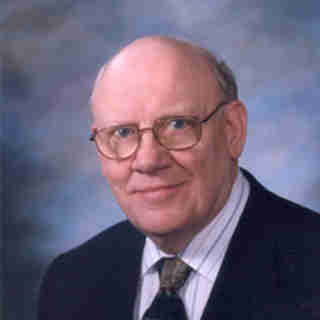 Dr. Warren Wiersbe once described Heaven as “not only a destination, but also a motivation. When you and I are truly motivated by the promise of eternity with God in heaven, it makes a difference in our lives.”
For Wiersbe, the promise of eternity became the motivation for his long ministry as a pastor, author, and radio speaker. Beloved for his biblical insight and practical teaching, he was called “one of the greatest Bible expositors of our generation” by the late Billy Graham.
Warren W. Wiersbe died on May 2, 2019, in Lincoln, Nebraska, just a few weeks shy of his 90th birthday.
“He was a longtime, cherished friend of Moody Bible Institute, a faithful servant of the Word, and a pastor to younger pastors like me,” said Dr. Mark Jobe, president of Moody Bible Institute. “We are lifting up pastor Wiersbe’s family in prayer at this time and rejoicing in the blessed hope that believers share together.”
Wiersbe grew up in East Chicago, Indiana, a town known for its steel mills and hard-working blue-collar families. In his autobiography, he connected some of his earliest childhood memories to Moody Bible Institute; his home church pastor was a 1937 graduate, Dr. William H. Taylor. After volunteering to usher at a 1945 Youth for Christ rally, Wiersbe found himself listening with rapt attention to Billy Graham’s sermon, and responded with a personal prayer of dedication.
In a precocious turn of events, the young Wiersbe was already a published author, having written a book of card tricks for the L. L. Ireland Magic Co. of Chicago. He quickly learned to liven up Sunday school lessons with magic tricks as object lessons (“not the cards!” he would say). After his high school graduation in 1947 (he was valedictorian), he spent a year at Indiana University before transferring to Northern Baptist Seminary in Chicago, where he earned a bachelor of theology degree. His future wife, Betty, worked in the school library, and Wiersbe was a frequent visitor.
While in seminary he became pastor of Central Baptist Church in East Chicago, serving until 1957. During those years he became a popular YFC speaker, which led to a full-time position with Youth for Christ International in Wheaton. He published his first article for Moody Monthly magazine in 1956, about Bible study methods, and seemed to outline his ongoing writing philosophy. “This is more of a personal testimony,” he said, “because I want to share these blessings with you, rather than write some scholarly essay, which I am sure I could not do anyway.”
At a 1957 YFC convention in Winona Lake, Indiana, Wiersbe preached a sermon that was broadcast live over WMBI, his first connection to Moody Radio. “I wish every preacher could have at least six months’ experience as a radio preacher,” he said later (because they would preach shorter).
While working with Youth for Christ, Wiersbe got a call from Pete Gunther at Moody Publishers, asking about possible book projects. First came Byways of Blessing (1961), an adult devotional; then two more books in 1962, A Guidebook for Teens and Teens Triumphant. He would eventually publish 14 titles with Moody, including William Culbertson: A Man of God (1974), Live Like a King (1976), The Annotated Pilgrim’s Progress (1980), and Ministering to the Mourning (2006), written with his son, David Wiersbe.
In 1961, D. B. Eastep invited Wiersbe to join the staff of Calvary Baptist Church in Covington, Kentucky. forming a succession plan that was hastened by Eastep’s sudden death in 1962. Warren and Betty Wiersbe remained at the church for 10 years, until they were surprised by a phone call from The Moody Church. The pastor, Dr. George Sweeting, had just resigned to become president of Moody Bible Institute. Would Wiersbe fill the pulpit, and pray about becoming a candidate?
He was already well known to the Chicago church—and to the MBI community. He continued to write for Moody Monthly and had just started a new column, “Insights for the Pastor.” The monthly feature continued to run during the years Wiersbe served at The Moody Church. Wiersbe would become one of the magazine’s most prolific writers—200 articles during a 40-year span. Meanwhile he also started work on the BE series of exegetical commentaries, books that soon found a place on the shelf of every evangelical pastor.
His ministry to pastors continued as he spoke at Moody Founder’s Week, Pastors’ Conference, and numerous campus events. He also inherited George Sweeting’s role as host of the popular Songs in the Night radio broadcast, produced by Moody Radio’s Bob Neff and distributed on Moody’s growing network of radio stations.
Later in life he would move to Lincoln, Nebraska, where he served as host of the Back to the Bible radio broadcast. He also taught courses on preaching at Trinity Evangelical Divinity School and Grand Rapids Baptist Seminary. He kept writing, eventually publishing more than 150 books and losing track of how many (“I can’t remember them all, and I didn’t save copies of everything,” he said.)
Throughout his ministry, Warren Wiersbe described himself as a bridge builder, a reference to his homiletical method of moving “from the world of the Bible to the world of today so that we could get to the other side of glory in Jesus.” As explained by his grandson, Dan Jacobson, “His preferred tools were words, his blueprints were the Scriptures, and his workspace was a self-assembled library.”
Several of Wiersbe’s extended family are Moody alums, including a son, David Wiersbe ’76; grandson Dan Jacobsen ’09 and his wife, Kristin (Shirk) Jacobsen ’09; and great-nephew Ryan Smith, a current student.
During his long ministry and writing career, Warren Wiersbe covered pretty much every topic, including the inevitability of death. These words from Ministering to the Mourning offer a fitting tribute to his own ministry:
We who are in Christ know that if He returns before our time comes to die, we shall be privileged to follow Him home. God’s people are always encouraged by that blessed hope. Yet we must still live each day soberly, realizing that we are mortal and that death may come to us at any time. We pray, “Teach us to number our days aright, that we may gain a heart of wisdom” (Psalm 90:12).
Dr. Warren Wiersbe once described Heaven as “not only a destination, but also a motivation. When you and I are truly motivated by the promise of eternity with God in heaven, it makes a difference in our lives.”
For Wiersbe, the promise of eternity became the motivation for his long ministry as a pastor, author, and radio speaker. Beloved for his biblical insight and practical teaching, he was called “one of the greatest Bible expositors of our generation” by the late Billy Graham.
Warren W. Wiersbe died on May 2, 2019, in Lincoln, Nebraska, just a few weeks shy of his 90th birthday.
“He was a longtime, cherished friend of Moody Bible Institute, a faithful servant of the Word, and a pastor to younger pastors like me,” said Dr. Mark Jobe, president of Moody Bible Institute. “We are lifting up pastor Wiersbe’s family in prayer at this time and rejoicing in the blessed hope that believers share together.”
Wiersbe grew up in East Chicago, Indiana, a town known for its steel mills and hard-working blue-collar families. In his autobiography, he connected some of his earliest childhood memories to Moody Bible Institute; his home church pastor was a 1937 graduate, Dr. William H. Taylor. After volunteering to usher at a 1945 Youth for Christ rally, Wiersbe found himself listening with rapt attention to Billy Graham’s sermon, and responded with a personal prayer of dedication.
In a precocious turn of events, the young Wiersbe was already a published author, having written a book of card tricks for the L. L. Ireland Magic Co. of Chicago. He quickly learned to liven up Sunday school lessons with magic tricks as object lessons (“not the cards!” he would say). After his high school graduation in 1947 (he was valedictorian), he spent a year at Indiana University before transferring to Northern Baptist Seminary in Chicago, where he earned a bachelor of theology degree. His future wife, Betty, worked in the school library, and Wiersbe was a frequent visitor.
While in seminary he became pastor of Central Baptist Church in East Chicago, serving until 1957. During those years he became a popular YFC speaker, which led to a full-time position with Youth for Christ International in Wheaton. He published his first article for Moody Monthly magazine in 1956, about Bible study methods, and seemed to outline his ongoing writing philosophy. “This is more of a personal testimony,” he said, “because I want to share these blessings with you, rather than write some scholarly essay, which I am sure I could not do anyway.”
At a 1957 YFC convention in Winona Lake, Indiana, Wiersbe preached a sermon that was broadcast live over WMBI, his first connection to Moody Radio. “I wish every preacher could have at least six months’ experience as a radio preacher,” he said later (because they would preach shorter).
While working with Youth for Christ, Wiersbe got a call from Pete Gunther at Moody Publishers, asking about possible book projects. First came Byways of Blessing (1961), an adult devotional; then two more books in 1962, A Guidebook for Teens and Teens Triumphant. He would eventually publish 14 titles with Moody, including William Culbertson: A Man of God (1974), Live Like a King (1976), The Annotated Pilgrim’s Progress (1980), and Ministering to the Mourning (2006), written with his son, David Wiersbe.
In 1961, D. B. Eastep invited Wiersbe to join the staff of Calvary Baptist Church in Covington, Kentucky. forming a succession plan that was hastened by Eastep’s sudden death in 1962. Warren and Betty Wiersbe remained at the church for 10 years, until they were surprised by a phone call from The Moody Church. The pastor, Dr. George Sweeting, had just resigned to become president of Moody Bible Institute. Would Wiersbe fill the pulpit, and pray about becoming a candidate?
He was already well known to the Chicago church—and to the MBI community. He continued to write for Moody Monthly and had just started a new column, “Insights for the Pastor.” The monthly feature continued to run during the years Wiersbe served at The Moody Church. Wiersbe would become one of the magazine’s most prolific writers—200 articles during a 40-year span. Meanwhile he also started work on the BE series of exegetical commentaries, books that soon found a place on the shelf of every evangelical pastor.
His ministry to pastors continued as he spoke at Moody Founder’s Week, Pastors’ Conference, and numerous campus events. He also inherited George Sweeting’s role as host of the popular Songs in the Night radio broadcast, produced by Moody Radio’s Bob Neff and distributed on Moody’s growing network of radio stations.
Later in life he would move to Lincoln, Nebraska, where he served as host of the Back to the Bible radio broadcast. He also taught courses on preaching at Trinity Evangelical Divinity School and Grand Rapids Baptist Seminary. He kept writing, eventually publishing more than 150 books and losing track of how many (“I can’t remember them all, and I didn’t save copies of everything,” he said.)
Throughout his ministry, Warren Wiersbe described himself as a bridge builder, a reference to his homiletical method of moving “from the world of the Bible to the world of today so that we could get to the other side of glory in Jesus.” As explained by his grandson, Dan Jacobson, “His preferred tools were words, his blueprints were the Scriptures, and his workspace was a self-assembled library.”
Several of Wiersbe’s extended family are Moody alums, including a son, David Wiersbe ’76; grandson Dan Jacobsen ’09 and his wife, Kristin (Shirk) Jacobsen ’09; and great-nephew Ryan Smith, a current student.
During his long ministry and writing career, Warren Wiersbe covered pretty much every topic, including the inevitability of death. These words from Ministering to the Mourning offer a fitting tribute to his own ministry:
We who are in Christ know that if He returns before our time comes to die, we shall be privileged to follow Him home. God’s people are always encouraged by that blessed hope. Yet we must still live each day soberly, realizing that we are mortal and that death may come to us at any time. We pray, “Teach us to number our days aright, that we may gain a heart of wisdom” (Psalm 90:12).
There Is a Name
In a world of tolerance and pluralism, few truth claims taste as sour as this one: Jesus is the only way to God. Or as the apostle Peter so boldly says, There is salvation in no one else, for there is no other name given under heaven by which we must be saved. (Acts 4:12) Just one name for eight billion people? Just one Savior for almost seven thousand people groups? Just one heavenward path for men and women, young and old, urban and rural, Asian and American and African and European? Peter, apparently, felt unashamed of the claim. “Let it be known to all of you,” he began (Acts 4:10). But what Peter proclaimed, many of us whisper, especially among those who take offense. “No other name” may sound fine in small group, but our voices can crack at a neighbor’s kitchen table. Embarrassment, not boldness, might mark even the lovers of Jesus’s name. “Into this world of curse and sin, where half our house hangs over the cliff edge of judgment, God has given a name.” Perhaps, then, we need help feeling the wonder that there is any name at all. Into this world of curse and sin, where half our house hangs over the cliff edge of judgment, God has given a name. World with No Name By all just reckonings, we ought to live in a world with no name. We ought to walk east of Eden, with no promise of a coming son. We ought to toil under Pharaoh, with no outstretched arm to rescue. We ought to tremble before Goliath, with no David to sling his stones. We ought to hang our harps in Babylon, with no hope of a future song. On our own, of course, we struggle to consent to such dismal oughts. We feel, even if we do not speak, not that we ought to perish, but that God ought to save. We sense that heaven, not hell, is humanity’s default destination. We talk of a hundred paths up the mountain because we assume, deep down, that most (if not all) deserve to reach the top. Yet we feel, sense, and assume like this only when we feel, sense, and assume that our sin is smaller than God says. To those with slight views of sin, little could be more offensive than there being only one name. But for those who, like Job (Job 42:6), or Isaiah (Isaiah 6:5), or Peter (Luke 5:8), or John (Revelation 1:17), have found themselves thrust into the presence of the Holy One, little could be more wonderfully surprising. Why should God send a sunrise to pierce our chosen darkness? Why should the Father rise and race to meet his wayward son? Why should Christ become our Hosea to redeem us from the brothel? Why should heaven’s blood be shed to win back heaven’s haters? Why should Jesus give his name to rescue crucifiers? Only because the reckonings of heaven reach beyond mere justice. There Is a Name Now, hear again the words that so often offend or embarrass: There is salvation in no one else, for there is no other name under heaven given among men by which we must be saved. (Acts 4:12) The exclusivity of Jesus Christ does indeed sit at the center of Peter’s words, like a stone of stumbling or a rock of offense (Acts 4:11; Romans 9:33). Yet strewn around that stone are jewels so beautiful that Peter’s claim, so far from offending or embarrassing, ought to break the hearts of sinners and unloose the tongues of saints. NAME GIVEN There is . . . [a] name . . . given. When the Son of God was born in Bethlehem, he was born into a world without a saving name. No name among Greece’s wise philosophers could save. No name in Rome’s expansive pantheon could save. Israel, of course, had long taken refuge in the name of Yahweh (Exodus 34:6–7). Yet even Yahweh waited for the day when he would give his name in a new way — and through it, a salvation far beyond the Jews’ imagination (Jeremiah 23:5–6; Joel 2:32). Then on that lonely night, the God of heaven gave a name to lost and dying sinners. Unto us was born that day in the city of David a Savior, named Jesus Christ the Lord (Luke 2:11). Take heart, exiles of Eden. Have courage, slaves of Pharaoh. Lift up your heads, soldiers of Israel. Play your harps, prisoners of Babylon. Your God has come, and he has given you a name. UNDER HEAVEN There is . . . [a] name under heaven given among men. God could have given this name to the Caesars and Herods of the world. He could have handed it to the wise and powerful. Or most likely of all, he could have entrusted it to the Jews alone. Instead, he gave a name under (all) heaven, among (all) men. “Jesus’s name will meet the eastern sunrise. Jesus’s name will watch the western sunset.” Wherever men and women live under heaven, however far the image of God has wandered, there this name must go. It must run beyond Jerusalem; it must reach past Judea; it must fly outside Samaria to find the ends of the earth (Acts 1:8). As the psalmist sings, “From the rising of the sun to its setting, the name of the Lord is to be praised!” (Psalm 113:3). So it is and will be in Jesus. His name will meet the eastern sunrise. His name will watch the western sunset. And everywhere in between, all people “will be blessed in him, all nations call him blessed” (Psalm 72:17). FOR SALVATION There is . . . [a] name under heaven given among men by which we must be saved. God has given a name. This name is for everyone under heaven. And here is God’s purpose, God’s desire, in giving that universal name: my people must be saved (Acts 2:21). God saw fit to wrap salvation in the syllables of this name. “You shall call his name Jesus,” the angel told Mary, “for he will save his people from their sins” (Matthew 1:21). “God sees,” “God sympathizes,” “God strengthens” — any of these names would have been wonderful. But Jesus, “God saves” — or more literally, “Yahweh saves”? No wonder Mary marveled (Luke 1:46–55). God did not send this name into the world to condemn the world, but in order that the world might be saved through it (John 3:17). What a Glorious Name So then, in Jesus, we hear the only name that saves. We can, if we want, nurture offense or embarrassment about God’s giving only one name. Or we can thank God for that name, treasure that name, and join God himself in spreading that name wherever it is not sung. If we do, we join a mission that cannot fail. Hear God Almighty take up the longing of Psalm 113:3 and turn it into a prophetic promise, sealed twice over: From the rising of the sun to its setting my name will be great among the nations, and in every place incense will be offered to my name, and a pure offering. For my name will be great among the nations, says the Lord of hosts. (Malachi 1:11) His name will be great: in Zambia and New Zealand, in India and Iceland, in China and Colombia, and in the darkened streets of our own cities. And to that end, God has made us stewards of his sacred name. In Christ, we can shine the light that splits the darkness (Luke 1:78–79), lower the hand that lifts the fallen (Psalm 40:2), raise the snake that heals the bitten (John 3:14–15), and say the name that saves the sinner. There is no other name given among men by which we must be saved. And oh what a glorious name it is. Article by Scott Hubbard