
GIP Library icon

Crazy Love (Overwhelmed By A Relentless Love) Crazy Love (Overwhelmed By A Relentless Love)

Crazy Love (Overwhelmed By A Relentless Love) Order Printed Copy

  • Author: Francis Chan
  • Size: 447KB | 183 pages
  • |
Continue with
Google Twitter
LOG IN TO REVIEW
About the Book


"Crazy Love" by Francis Chan is a Christian book that challenges readers to reevaluate their understanding of God's love and their response to it. Through personal anecdotes and biblical teachings, Chan presents a compelling argument for wholeheartedly embracing God's unconditional love and living a life of radical devotion to Him. The book calls readers to break free from complacency and pursue a deeper, more intimate relationship with God.

Gordon Lindsay

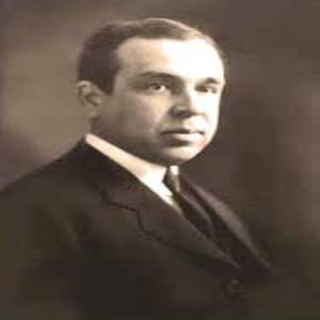
Gordon Lindsay Gordon Lindsay’s Early life Gordon Lindsay’s parents were members of J. A. Dowie’s Zion City, Illinois when he was born. The city’s financial difficulties forced the family west in 1904, where they temporarily joined another Christian-based community led by Finis Yoakum at Pisgah Grande, California. When similar problems emerged the family moved to Oregon after only a few months. From here the family moved to Portland, Oregon where Lindsay attended high school and was converted during a Charles F. Parham evangelistic campaign. During his youth he came under the influence of John G. Lake, former resident of Zion City, missionary to South Africa, and founder of the Divine Healing missions in Spokane, Washington, and Portland, Oregon in 1920. Lindsay joined the healing and evangelistic campaigns of Lake, traveling throughout California and the southern states. Lindsay began his own ministry in California as pastor of small churches in Avenal and San Fernando and for the next eighteen years, he travelled acros s the country holding revivals in full gospel churches. This period of travel prepared him as perhaps no other man in the nation to establish communication among a variety of Pentecostals. When World War II began, Lindsay felt compelled to give up his evangelistic ministry because its rigorous lifestyle was taking its toll on his young family. He accepted a call to pastor a church in Ashland, Oregon. William Branham enters Gordon Lindsay’s life By 1947 he had witnessed the extraordinary ministry of William Branham and responded to the invitation to become Branham’s manager. His managerial skills were soon obvious in the Branham campaigns, and in April 1948, he furthered the cause of the of the revival when he produced the first issue of The Voice of Healing, specifically to promote Branham’s ministry. To Lindsay’s great surprise Branham announced that he “would not continue on the field more than a few weeks more.” At great financial cost Lindsay decided to continue the publication of the new magazine in cooperation with his long-time friends, Jack Moore and his talented daughter Anna Jeanne Moore. He broadened the scope of the magazine by including more of the lesser known healing evangelists who were beginning to hold campaigns and were drawing large audiences. One such evangelist was William Freeman who had been holding meetings in small churches. Lindsay visited one of his campaigns and immediately felt it was the will of God to team up with him and organise a series of meetings through 1948. The Voice of Healing featured the miracles of the Freeman campaigns. Voice of Healing Conventions By March 1949 The Voice of Healing circulation had grown to nearly 30,000 per month and had clearly become the voice of the healing movement. It’s pages successfully spread the message of the Salvation-Deliverance-Healing revival across the world. In December 1949, Lindsay arranged the first convention of healing revivalists in Dallas, Texas. The assembly was addressed by Branham, Lindsay, Moore, old-timers such as F. F. Bosworth and Raymond T. Richey, and a number of rising revivalists including O. L. Jaggers, Gayle Jackson, Velmer Gardner, and Clifton Erickson. This historic conference symbolized the vitality and cohesion of the revival. The following year, the convention, now about 1,000 strong, met in Kansas City, with virtually every important revivalist in the nation, with the notable exceptions of William Branham and Oral Roberts. Lindsay exercised great skill and wisdom exposing several points of danger and tension in the movement proposed guidelines for the future. Lindsay understood the fears of the older Pentecostal denominations and leaders and tried his utmost to deal with the offending issues. In an article announcing “the purpose, plan and policy of the Voice of Healing Convention,” he denounced “free-lancers who violently and indiscriminately attack organization in general,” and he urged avoidance of “novel prophetic interpretations, dogmatic doctrinal assertions, sectarian predilections, theological hair-splitting.” The Voice of Healing Association The 1950 meeting made the Voice of Healing convention into a loose association of healing revivalists. The evangelists officially associated with The Voice of Healing magazine held “family meetings” at the conventions, at the same time maintaining their desire to “prove to the world that those associated with The Voice of Healing have no intention to organize another movement.” Through the decade the Voice of Healing conventions were showcases for healing revivalism. The conference programs were workshops on the problems of healing evangelists. Typical topics were “prayer and fasting,” “preparation for a campaign,” “the follow-up work after a campaign,” “the system of cards for the prayer tent and the healing line” and the delicate issue of finances. As the association grew in importance in the 1950s, the program was frequently headed by Roberts or Branham; though every new revivalist aspired to be a speaker on the program. The Voice of Healing family of evangelists flowered in the early 1950s. Lindsay continued to publicize Branham’s work, although he was not formally associated with the organization; the nucleus of the fellowship was an influential clique which included O. L. Jaggers, William Freeman, Jack Coe, T. L. Osborn, A. A. Allen, and Velmer Gardner. Gradually major ministries began their own magazines and had no further need for Voice of Healing promotion. Nevertheless, by 1954 the “associate editors and evangelists” listed in The Voice of Healing numbered nearly fifty. Though Lindsay became personally involved with healing evangelism from 1949, especially with other revivalists such as T. L. Osborn, he confined his best work to organization and management of the Voice of Healing magazine. By 1956 the expenses of the Voice of Healing were running $1,000 a day. In addition to the national and regional conventions sponsored by his organization, Lindsay also began to sponsor missions and a radio program. “Lindsay was more than an advisor during the first decade of the healing revival; he was much like the director of an unruly orchestra. He tried desperately to control the proliferation of ministries in an effort to keep the revival respectable. He repeatedly advised, “It is better for one to go slow. Get your ministry on a solid foundation. . . . By all means avoid Hollywood press agent stuff.” Many of the new leaders of the early 1950s owed their early success to the literary support of Gordon Lindsay through the Voice of Healing, but by 1958, many of the revivalists believed that Lindsay’s work was over. An evolving ministry Lindsay’s efforts to consolidate and coordinate the healing movement and its ministries became an impossible task. The increasing independence of ministries and the burgeoning charismatic movement caused Lindsay to reconsider his goals. He took the example of T. L. Osborn and concentrated on missionary endeavours. He remained the historian and theologian of the healing movement but began to produce teaching and evangelistic materials which were sent across the world. The Voice of Healing ultimately became Christ for the Nations. Native church programs, literature, teaching tapes and funds were distributed to hundreds of locations. The organization had changed from one of healing revivalists into an important missionary society. His ministry was always to those involved in the healing revival, independents and mainline Pentecostals, but the new charismatics – Lutherans, Methodists and Baptists – became his new audience. His encouragement of, and involvement with, the Full Gospel Businessmen’s Fellowship was designed to provide teaching and wisdom for charismatic leaders, many of whom held Lindsay in high regard. His death on April 1st 1971 Suddenly, on April 1, 1973, Gordon Lindsay died. His wife, Freda, stepped into the breach and was able to stabilize and advance the ministry of Christ for the Nations. Lindsay’s death brought unparalleled financial support paying off all debts and expanding most of its programs. David Harrel summarises the life of Gordon Lindsay perfectly: ‘The death of Gordon Lindsay closed a major chapter in the charismatic revival. No single man knew the revival and its leaders so well. No man understood its origins, its changes, and its diversity as did Lindsay. A shrewd manager and financier, Lindsay had been as nearly the coordinator of the healing revival as any man could be. When the revival began to wane, Lindsay was faced with a crisis more severe than those of most of the evangelists themselves. Never a dynamic preacher, he found himself virtually abandoned by his most successful protégés. But Lindsay proved able to adapt. Always a balanced person, Lindsay built a balanced and enduring ministry.’ Tony Cauchi

tweeted to and fro - surviving a distracted and divided age

“We live in a divided age” is so self-evidently true that it’s frankly boring to write. Theories abound on how we got here; what’s undisputed is that we’re here. It sure can feel as if the temperature of virtually every conversation and debate, however trivial, is set to  blazing hot . And worst of all, the previous paragraph doesn’t just describe the world — it describes many churches. Rather than shining as a contrast to the perpetual outrage machine, many of us are too busy being conformed to the pattern of this age (Romans 12:2). How, then, can believers forge meaningful unity in a fractured time? It is looking unlikely that we’re going to tweet our way out of the problem. So what’s the path forward? Whiplash World As author Yuval Levin has observed in  A Time to Build , the function of institutions in modern life has largely shifted from  formative  to  performative  — from habitats for growth to platforms for self-expression. Enter a secular university, for example, and you may well emerge more coddled than shaped. But this performative dynamic isn’t confined to colleges; it also infects local churches. Long past are the days when American churchgoers looked to their pastors  first  (or perhaps even second or third) for help navigating a fraught cultural landscape. Nowadays it’s pundits — whether on cable news or talk radio or social media — whose voices are most formative. On one level, this is understandable. Pastors are not omnicompetent. They aren’t experts on everything, or even most things. Thus when it comes to current events, Christians should (in one sense) expect less from their pastors. Nevertheless, the larger trend is troubling. When church becomes just another arena in which to perform — whether via a “leadership position” or simply by keeping up appearances — rather than a family in which to be shaped, it has ceased to occupy the gravitational center of one’s life. No wonder priorities spin out of orbit. No wonder people demand that their pastors affirm, and publicly echo, their settled opinions on debatable matters. I’ve heard countless stories of someone leaving their church because of their politics. What I have yet to hear is someone leaving their politics because of their church. One reason churches are losing the battle to form hearts is because the Christians who visit and join and show up for worship Sunday after Sunday are battered by the storms of digital discourse. They’re limping along, exhausted and distracted and confused. No Longer Tossed This is precisely why congregational unity is so essential. Unity is not a squishy sentiment or optional add-on to the Christian life; it is something for which Jesus prayed and bled and died (John 17:22). Just consider the apostle Paul’s logic in Ephesians 4. The ascended King Jesus gave the gift of pastors to equip church members for ministry (verses 8–12). As such ministry  builds up  the body (verse 13), the ensuing unity  tears down  whatever threatens it (verse 14). In other words, ministry generates unity, and unity generates stability. Thus, unity’s purpose is plain: “so that we may no longer be children, tossed to and fro by the waves and carried about by every wind of doctrine, by human cunning, by craftiness in deceitful schemes” (verse 14). Living in a turbulent time? Labor for unity. It will have a stabilizing effect. But how, practically, do we do this in the local church? How do we keep each other from being pummeled by the raging rapids of modern media? Here are two suggestions. 1. Dust Off Your Documents A good statement of faith, used properly, is a goldmine for church unity. Same with a members’ covenant. These documents shouldn’t gather dust in a file drawer or be confined to a website. They should be  used , for they are pregnant with unity-forging potential. Why? They provide a common core, enabling churches to keep the main things central and helping to regulate the temperature of our debates. The million-dollar question then becomes whether our statement of faith speaks to a given topic.  Yes, clearly?  Then we also will.  Yes, sort of?  Then we might.  No, not at all?  Then we likely won’t. In my estimation, a good statement of faith is neither so  exhaustive  that an undiscipled Christian couldn’t join the church, nor so  mere  that there’s little the church is actually standing for. But we refuse to divide over things we never agreed to agree on. As a church planter, I’ve had to think about developing documents that will establish biblical guardrails — while recognizing that not all doctrines are equally important or clear. In a recent membership class, someone asked why we don’t stake out a clearer position on the end times. It’s a good question. I briefly explained the idea of theological triage — there are first-rank doctrines we must agree on to be Christians, second-rank doctrines we must agree on to be members of the same church, and third-rank doctrines we can actually disagree on and still be members of the same church. Even if various gospel-proclaiming churches classify second- and third-rank doctrines a bit differently, the classification system itself is a useful tool. By codifying only certain doctrines (statement of faith) and promises (covenant), a church crystallizes what members  must  agree on — and where there’s room to disagree. This engenders confidence in the essentials and freedom in everything else. This is not to say that a pastor should avoid debatable matters in his preaching — as he unfolds the “whole counsel of God” (Acts 20:27), many such matters will arise. It’s simply to say that a church cannot bind members’ consciences on issues where (the church has agreed, as reflected in its documents) God has not clearly spoken. “It’s counterintuitive but true: one way to preserve sound doctrine is to leave ample room for Christian freedom.” It’s counterintuitive but true: one way to preserve sound doctrine is to leave ample room for Christian freedom. Otherwise, churches can easily succumb to legalism by requiring agreement on third-rank issues. But by lowering the fences on debatable matters, we raise the fences on non-debatable ones. Or to change the metaphor, by lowering our collective voice on issues where Scripture is not clear — say, a specific political-policy proposal — we can raise our voice on issues where it is. This is why liberty of conscience is so critical in an age of outrage. As Mark Dever has observed, leaving space for disagreement (on many matters other than gospel clarity) is, in part, what keeps the gospel clear. When we lack a clear understanding of Christian liberty and space for conscience, we will be tempted to stick more into the gospel than is there — that is, agreement on a wider variety of issues. Don’t underestimate the practical value of church documents. They are your friends; weave them into the life of your church. Corporately confess portions of your statement of faith on Sundays. Rehearse the covenant’s promises when you convene a members’ meeting or celebrate the Lord’s Supper. Quote the documents in sermon applications. In so doing, you will forge unity around what has been agreed on — and avoid division around what hasn’t. 2. Get a Table Another way to foster church unity, not to mention sanity, is to trade the Twitter timeline for a table. I mean this literally. How many hours per week do you typically spend scrolling through social media? (Statistically, it’s probably more than you think.) By comparison, how many do you spend conversing with fellow church members over meals? (Statistically, it may be less than you think.) If the first number dwarfs the second, consider that a check-engine light for your soul. Proximity may not always breed unity, but distance certainly won’t. It’s just harder to resent someone when you’re asking them to pass the salt. “Christian, you are spiritually responsible for the members of your church, not for strangers on the Internet.” Christian, you are spiritually responsible for the members of your church, not for strangers on the Internet. Yet who is getting your best energy these days — the members or the strangers? Likewise, if you are a pastor, remember that on the last day you will give account to God not for your followers, but for your flock (Hebrews 13:17). Who is claiming your best energy these days — the followers or the flock? To borrow language from later in Ephesians 4, we are called to “put off” anything that decreases our joy in God, and in his children, and to “put on” whatever increases it (verses 22–24; see also 1 Thessalonians 2:19–20). If something is generating suspicion or coldness toward fellow believers — especially fellow members — then put it off. Maybe that means  shut it off . Pray your heart would be more animated by the faces in your membership directory than by the faces in your newsfeed. No Replacement Technology and parachurch ministries are gifts, but they are no replacement for the local church. Anchor your identity there, friend, for only in the communion of the saints will you find ballast amid the storms. In a world of endless options, the church makes our commitments clear. In a world of enormous complexity, the church makes our duties simple. In a world of escalating division, the church makes our unity sweet. These are my people, and I am theirs.

Feedback
Suggestionsuggestion box
x