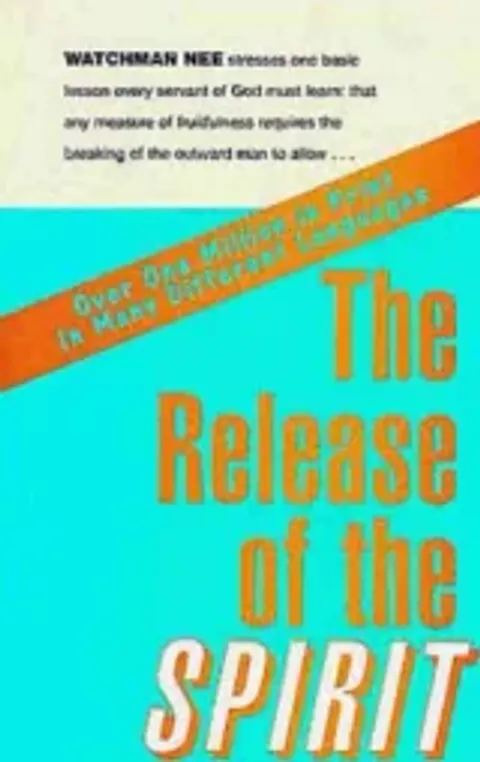

Others like the release of spirit Features >>
The Character Of God’s Workman

The Seven Spirits Of God

The Release Of Power

The Freedom Of Self Forgetfulness
The Spirit Of Python
-160.webp)
The Power Of Your Words: How God Can Bless Your Life Through The Words You Speak

The Release Of The Spirit
The Spirit Within & The Spirit Upon
The Holy Spirit And His Gifts
-160.webp)
The Law Of Recognition (The Laws Of Life Series)
About the Book
"The Release Of Spirit" by Watchman Nee explores the nature of the human spirit and how it can be released to experience spiritual growth and intimacy with God. The book focuses on the importance of surrendering to God, cultivating a life of prayer, and developing a deeper relationship with the Holy Spirit. Nee emphasizes the power and freedom that comes from aligning one's spirit with God's will and living a life of surrender and obedience.
Warren Wiersbe
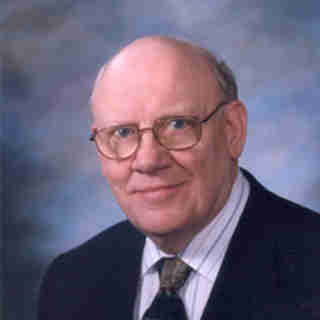 Dr. Warren Wiersbe once described Heaven as “not only a destination, but also a motivation. When you and I are truly motivated by the promise of eternity with God in heaven, it makes a difference in our lives.”
For Wiersbe, the promise of eternity became the motivation for his long ministry as a pastor, author, and radio speaker. Beloved for his biblical insight and practical teaching, he was called “one of the greatest Bible expositors of our generation” by the late Billy Graham.
Warren W. Wiersbe died on May 2, 2019, in Lincoln, Nebraska, just a few weeks shy of his 90th birthday.
“He was a longtime, cherished friend of Moody Bible Institute, a faithful servant of the Word, and a pastor to younger pastors like me,” said Dr. Mark Jobe, president of Moody Bible Institute. “We are lifting up pastor Wiersbe’s family in prayer at this time and rejoicing in the blessed hope that believers share together.”
Wiersbe grew up in East Chicago, Indiana, a town known for its steel mills and hard-working blue-collar families. In his autobiography, he connected some of his earliest childhood memories to Moody Bible Institute; his home church pastor was a 1937 graduate, Dr. William H. Taylor. After volunteering to usher at a 1945 Youth for Christ rally, Wiersbe found himself listening with rapt attention to Billy Graham’s sermon, and responded with a personal prayer of dedication.
In a precocious turn of events, the young Wiersbe was already a published author, having written a book of card tricks for the L. L. Ireland Magic Co. of Chicago. He quickly learned to liven up Sunday school lessons with magic tricks as object lessons (“not the cards!” he would say). After his high school graduation in 1947 (he was valedictorian), he spent a year at Indiana University before transferring to Northern Baptist Seminary in Chicago, where he earned a bachelor of theology degree. His future wife, Betty, worked in the school library, and Wiersbe was a frequent visitor.
While in seminary he became pastor of Central Baptist Church in East Chicago, serving until 1957. During those years he became a popular YFC speaker, which led to a full-time position with Youth for Christ International in Wheaton. He published his first article for Moody Monthly magazine in 1956, about Bible study methods, and seemed to outline his ongoing writing philosophy. “This is more of a personal testimony,” he said, “because I want to share these blessings with you, rather than write some scholarly essay, which I am sure I could not do anyway.”
At a 1957 YFC convention in Winona Lake, Indiana, Wiersbe preached a sermon that was broadcast live over WMBI, his first connection to Moody Radio. “I wish every preacher could have at least six months’ experience as a radio preacher,” he said later (because they would preach shorter).
While working with Youth for Christ, Wiersbe got a call from Pete Gunther at Moody Publishers, asking about possible book projects. First came Byways of Blessing (1961), an adult devotional; then two more books in 1962, A Guidebook for Teens and Teens Triumphant. He would eventually publish 14 titles with Moody, including William Culbertson: A Man of God (1974), Live Like a King (1976), The Annotated Pilgrim’s Progress (1980), and Ministering to the Mourning (2006), written with his son, David Wiersbe.
In 1961, D. B. Eastep invited Wiersbe to join the staff of Calvary Baptist Church in Covington, Kentucky. forming a succession plan that was hastened by Eastep’s sudden death in 1962. Warren and Betty Wiersbe remained at the church for 10 years, until they were surprised by a phone call from The Moody Church. The pastor, Dr. George Sweeting, had just resigned to become president of Moody Bible Institute. Would Wiersbe fill the pulpit, and pray about becoming a candidate?
He was already well known to the Chicago church—and to the MBI community. He continued to write for Moody Monthly and had just started a new column, “Insights for the Pastor.” The monthly feature continued to run during the years Wiersbe served at The Moody Church. Wiersbe would become one of the magazine’s most prolific writers—200 articles during a 40-year span. Meanwhile he also started work on the BE series of exegetical commentaries, books that soon found a place on the shelf of every evangelical pastor.
His ministry to pastors continued as he spoke at Moody Founder’s Week, Pastors’ Conference, and numerous campus events. He also inherited George Sweeting’s role as host of the popular Songs in the Night radio broadcast, produced by Moody Radio’s Bob Neff and distributed on Moody’s growing network of radio stations.
Later in life he would move to Lincoln, Nebraska, where he served as host of the Back to the Bible radio broadcast. He also taught courses on preaching at Trinity Evangelical Divinity School and Grand Rapids Baptist Seminary. He kept writing, eventually publishing more than 150 books and losing track of how many (“I can’t remember them all, and I didn’t save copies of everything,” he said.)
Throughout his ministry, Warren Wiersbe described himself as a bridge builder, a reference to his homiletical method of moving “from the world of the Bible to the world of today so that we could get to the other side of glory in Jesus.” As explained by his grandson, Dan Jacobson, “His preferred tools were words, his blueprints were the Scriptures, and his workspace was a self-assembled library.”
Several of Wiersbe’s extended family are Moody alums, including a son, David Wiersbe ’76; grandson Dan Jacobsen ’09 and his wife, Kristin (Shirk) Jacobsen ’09; and great-nephew Ryan Smith, a current student.
During his long ministry and writing career, Warren Wiersbe covered pretty much every topic, including the inevitability of death. These words from Ministering to the Mourning offer a fitting tribute to his own ministry:
We who are in Christ know that if He returns before our time comes to die, we shall be privileged to follow Him home. God’s people are always encouraged by that blessed hope. Yet we must still live each day soberly, realizing that we are mortal and that death may come to us at any time. We pray, “Teach us to number our days aright, that we may gain a heart of wisdom” (Psalm 90:12).
Dr. Warren Wiersbe once described Heaven as “not only a destination, but also a motivation. When you and I are truly motivated by the promise of eternity with God in heaven, it makes a difference in our lives.”
For Wiersbe, the promise of eternity became the motivation for his long ministry as a pastor, author, and radio speaker. Beloved for his biblical insight and practical teaching, he was called “one of the greatest Bible expositors of our generation” by the late Billy Graham.
Warren W. Wiersbe died on May 2, 2019, in Lincoln, Nebraska, just a few weeks shy of his 90th birthday.
“He was a longtime, cherished friend of Moody Bible Institute, a faithful servant of the Word, and a pastor to younger pastors like me,” said Dr. Mark Jobe, president of Moody Bible Institute. “We are lifting up pastor Wiersbe’s family in prayer at this time and rejoicing in the blessed hope that believers share together.”
Wiersbe grew up in East Chicago, Indiana, a town known for its steel mills and hard-working blue-collar families. In his autobiography, he connected some of his earliest childhood memories to Moody Bible Institute; his home church pastor was a 1937 graduate, Dr. William H. Taylor. After volunteering to usher at a 1945 Youth for Christ rally, Wiersbe found himself listening with rapt attention to Billy Graham’s sermon, and responded with a personal prayer of dedication.
In a precocious turn of events, the young Wiersbe was already a published author, having written a book of card tricks for the L. L. Ireland Magic Co. of Chicago. He quickly learned to liven up Sunday school lessons with magic tricks as object lessons (“not the cards!” he would say). After his high school graduation in 1947 (he was valedictorian), he spent a year at Indiana University before transferring to Northern Baptist Seminary in Chicago, where he earned a bachelor of theology degree. His future wife, Betty, worked in the school library, and Wiersbe was a frequent visitor.
While in seminary he became pastor of Central Baptist Church in East Chicago, serving until 1957. During those years he became a popular YFC speaker, which led to a full-time position with Youth for Christ International in Wheaton. He published his first article for Moody Monthly magazine in 1956, about Bible study methods, and seemed to outline his ongoing writing philosophy. “This is more of a personal testimony,” he said, “because I want to share these blessings with you, rather than write some scholarly essay, which I am sure I could not do anyway.”
At a 1957 YFC convention in Winona Lake, Indiana, Wiersbe preached a sermon that was broadcast live over WMBI, his first connection to Moody Radio. “I wish every preacher could have at least six months’ experience as a radio preacher,” he said later (because they would preach shorter).
While working with Youth for Christ, Wiersbe got a call from Pete Gunther at Moody Publishers, asking about possible book projects. First came Byways of Blessing (1961), an adult devotional; then two more books in 1962, A Guidebook for Teens and Teens Triumphant. He would eventually publish 14 titles with Moody, including William Culbertson: A Man of God (1974), Live Like a King (1976), The Annotated Pilgrim’s Progress (1980), and Ministering to the Mourning (2006), written with his son, David Wiersbe.
In 1961, D. B. Eastep invited Wiersbe to join the staff of Calvary Baptist Church in Covington, Kentucky. forming a succession plan that was hastened by Eastep’s sudden death in 1962. Warren and Betty Wiersbe remained at the church for 10 years, until they were surprised by a phone call from The Moody Church. The pastor, Dr. George Sweeting, had just resigned to become president of Moody Bible Institute. Would Wiersbe fill the pulpit, and pray about becoming a candidate?
He was already well known to the Chicago church—and to the MBI community. He continued to write for Moody Monthly and had just started a new column, “Insights for the Pastor.” The monthly feature continued to run during the years Wiersbe served at The Moody Church. Wiersbe would become one of the magazine’s most prolific writers—200 articles during a 40-year span. Meanwhile he also started work on the BE series of exegetical commentaries, books that soon found a place on the shelf of every evangelical pastor.
His ministry to pastors continued as he spoke at Moody Founder’s Week, Pastors’ Conference, and numerous campus events. He also inherited George Sweeting’s role as host of the popular Songs in the Night radio broadcast, produced by Moody Radio’s Bob Neff and distributed on Moody’s growing network of radio stations.
Later in life he would move to Lincoln, Nebraska, where he served as host of the Back to the Bible radio broadcast. He also taught courses on preaching at Trinity Evangelical Divinity School and Grand Rapids Baptist Seminary. He kept writing, eventually publishing more than 150 books and losing track of how many (“I can’t remember them all, and I didn’t save copies of everything,” he said.)
Throughout his ministry, Warren Wiersbe described himself as a bridge builder, a reference to his homiletical method of moving “from the world of the Bible to the world of today so that we could get to the other side of glory in Jesus.” As explained by his grandson, Dan Jacobson, “His preferred tools were words, his blueprints were the Scriptures, and his workspace was a self-assembled library.”
Several of Wiersbe’s extended family are Moody alums, including a son, David Wiersbe ’76; grandson Dan Jacobsen ’09 and his wife, Kristin (Shirk) Jacobsen ’09; and great-nephew Ryan Smith, a current student.
During his long ministry and writing career, Warren Wiersbe covered pretty much every topic, including the inevitability of death. These words from Ministering to the Mourning offer a fitting tribute to his own ministry:
We who are in Christ know that if He returns before our time comes to die, we shall be privileged to follow Him home. God’s people are always encouraged by that blessed hope. Yet we must still live each day soberly, realizing that we are mortal and that death may come to us at any time. We pray, “Teach us to number our days aright, that we may gain a heart of wisdom” (Psalm 90:12).
The Secret to Job Satisfaction
Many Christians work in jobs we would not necessarily choose for ourselves. I have before — maybe you are now. We did choose it at some point along the way, but just for less inspiring reasons. I have to pay my rent. I have an engineering degree. I only received one offer. We start jobs for money and a hundred other reasons. After a few years (or months, or even weeks), the satisfying security of the paycheck wears off, and we’re left wondering if we settled too soon and missed “the one.” We start dreaming about something different — different, more comfortable pay; different, more empowering boss; different, more fulfilling responsibilities. Our Vocational Anthems Meanwhile, the culture’s choir sings beautiful harmony to our melancholy melody: Find a job where you get to do what you love to do most. Follow your heart. Don’t settle for any job you’re not passionate about. The songs and slogans are sold by the millions, but for those willing to be honest about our work, at least three realities set in over time: That dream job simply does not exist for many. If it does, it either does not pay enough to cover the rent, or we are not qualified for it. An awful lot of work has to be done that no one dreams about, which means an awful lot of the available jobs are not dream jobs. The hard reality is that we can’t glorify God in the job we want (at least not yet). But we can glorify God in the job we have. Modern Bondservants I wonder how the songs we Millennials hear most about our careers would have landed on Christian slaves in Ephesus? The apostle Paul writes, Bondservants, obey your earthly masters with fear and trembling, with a sincere heart, as you would Christ, not by the way of eye-service, as people-pleasers, but as bondservants of Christ, doing the will of God from the heart, rendering service with a good will as to the Lord and not to man, knowing that whatever good anyone does, this he will receive back from the Lord, whether he is a bondservant or is free. (Ephesians 6:5–8) Paul writes to “bondservants” about their work, not to support the institution of slavery, but to strengthen faith and inspire joy among the enslaved. To be clear, such slavery was not the brutal and dehumanizing chattel slavery in American history, but these men and women were not as free as we are in America today, either (Ephesians 6:8). If Paul could write these self-denying, countercultural, other-worldly words to slaves about their livelihood, could he write them to us about our jobs? If so, here are three ways we can glorify God in our job, whether we are working the dream, or dreading our work. 1. The work is for God, regardless of who we report to. Bondservants, obey your earthly masters with fear and trembling . . . as bondservants of Christ. (Ephesians 6:5–6) Your tax forms may say you work for the government, or a business, or even for yourself, but Paul says you work for God. You are always first and foremost an employee for Christ. Every task you complete comes underneath his lordship. You may never be paid to share or apply the gospel, but it still hangs high over everything else you are paid to do. Work as if Christ were your superior — with holy fear and trembling, and with sincerity. Why? Bosses can cheat us, mistreat us, even fire us, but Christ can do far worse — and far better. He not only sees our every move at work, but knows our every thought — nothing ever gets by him. And he can send us to hell. If your boss monitored you all day every day, would you work differently? Your almighty Savior and Judge sits even closer than that. If we go about our everyday work with greater seriousness and joy, people will ask about our boss. And if there’s nothing remarkable about our boss, they just might ask about our God. 2. The standard is not mere excellence, but heartfelt service. Bondservants, obey your earthly masters . . . with a sincere heart, as you would Christ, not by the way of eye-service, as people-pleasers, but . . . doing the will of God from the heart. (Ephesians 6:5–6) Some will hear “doing the will of God from the heart” and hear “work as much and as hard as you possibly can.” But that is more American than Christian. Men and women chasing the American dream love to be told to work harder and achieve more. They work from the heart — it’s just a heart in love with money, or recognition, or control, or themselves. Christians dream about our jobs differently. When we work from the heart, we work from a passion for Jesus. We don’t spend time counting all the things we can have or achieve here on earth. No, we “count everything as loss” — paychecks, promotions, progress, retirement — “because of the surpassing worth of knowing Christ” (Philippians 3:8). “For his sake [we suffer] the loss of all things and count them as rubbish, in order that [we] may gain Christ and be found in him” (Philippians 3:8–9). We never have to fake joy in our jobs because our joy does not come from our jobs. We work from full hearts, not striving to fill our hearts. That kind of heart — not mere excellence — makes our work distinctly Christian. That does not mean Christians should not do their work excellently. We should, as if we were completing our work for Christ. But excellence can easily be mistaken for Christlikeness, when in and of itself, it says nothing about Christ. Lots of doctors, teachers, engineers, and mothers do their work excellently and hate Jesus. The quality of our work might punctuate what we believe, but no one is saved by commas or periods. Something else must set our excellence apart from every other kind of excellence, and that something else happens in our hearts before it ever reaches our hands. 3. The goal is not another paycheck here, but treasure in heaven. Bondservants, obey your earthly masters . . . knowing that whatever good anyone does, this he will receive back from the Lord, whether he is a bondservant or is free. (Ephesians 6:5, 8) Do you think about your job primarily in terms of what it will reap in this life, or in the next? The work these slaves did each day may have led to many things — favor with their master, financial or circumstantial gain, maybe even precious freedom — but Paul says the most important outcome could not be had or achieved here on earth. No, the work they were doing was mainly about storing up treasure in heaven. As Jesus says, “Do not lay up for yourselves treasures on earth, where moth and rust destroy and where thieves break in and steal, but lay up for yourselves treasures in heaven, where neither moth nor rust destroys and where thieves do not break in and steal. For where your treasure is, there your heart will be also.” (Matthew 6:19–21) Another paycheck may feel like our most immediate need, but it is another grain of sand compared with all God will give us in eternity. Paychecks are so objective and predictable and tradable next to the overwhelming unknowns of “this he will receive back from the Lord.” But the adrenaline high and false security runs out so fast. And every one of those paychecks will bounce in paradise. Instead of settling for a few higher numbers on a tiny piece of paper (that we’ll probably spend before the month runs out), let’s work like those who are waiting and working for more than we could ever imagine for ourselves (1 Corinthians 2:9). Better Than Your Dream Job None of this means we should pass on a job opportunity that would employ more of our gifts, or a job that we would enjoy more, or one that would free us up to do more ministry. But it has everything to do with how we work when God does not open that door, maybe for months, maybe years, maybe decades. Do we know the secret of job satisfaction? Paul says elsewhere, I have learned in whatever [job I have] to be content. I know how to be brought low, and I know how to abound. In any and every circumstance, I have learned the secret of facing plenty and hunger, abundance and need. I can do all things through him who strengthens me. (Philippians 4:11–13) Paul knew the secret. He passed it along to the bondservants in Ephesus. And he wanted you to carry it with you to your job each day. Work for God, from your joy in him, for treasure far greater than money, recognition, or comfort. Bring those dreams to your day job, instead of looking for happiness in your dream job. Article by Marshall Segal