

The Freedom Of Self Forgetfulness Order Printed Copy
- Author: Timothy Keller
- Size: 449KB | 28 pages
- |
Others like the freedom of self forgetfulness Features >>

The Power Of Awareness
Freedom From Depression
The Fear Of The Lord
The Code Of The Holy Spirit
The Results Of Neglect
.epub-160.webp)
The Price Of Spiritual Power

The Order Of Melchizedek
The Art Of War For Spiritual Battle

The Wisdom Of Making Right Choices
-160.webp)
Bitter Free (How To Forgive Anyone, Resolve Conflict And Overcome Anger)
About the Book
"The Freedom of Self-Forgetfulness" by Timothy Keller explores the idea that true freedom comes from forgetting ourselves and focusing instead on God and serving others. Keller emphasizes the importance of having a humble and Christ-centered mindset in order to experience true contentment and freedom in life. Drawing from the teachings of the apostle Paul, Keller encourages readers to let go of their ego and find fulfillment in living a life of purpose and service to others.
Oral Roberts
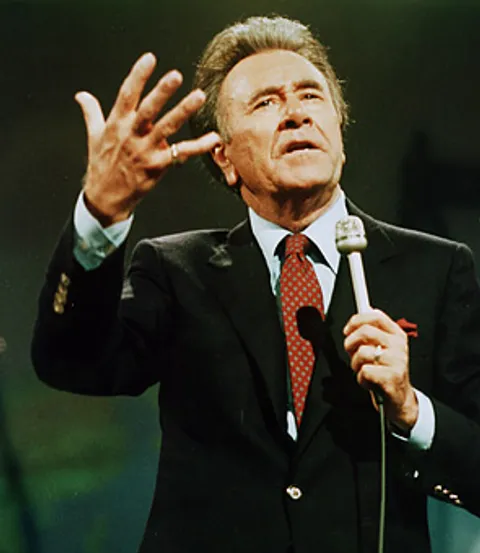 Granville Oral Roberts was born January 24, 1918 in Pontotoc County, near Ada, in Oklahoma. His parents were deeply religious. His father was a farmer who also preached the gospel and established Pentecostal Holiness churches. His mother regularly prayed for the sick and led people to Christ. While she was still pregnant, Robert's mother committed Oral to God's service. Even though Oral had a very strong stutter his mother would tell him that one day God would heal his tongue and he would speak to multitudes.
The Roberts family was desperately poor. When Roberts was 16 he moved away from home, hoping for a better life. He rejected God and his upbringing. He started living a wild life and his health collapsed. Roberts had contracted tuberculosis. He returned home and eventually dropped to 120 pounds. He was a walking skeleton. God spoke to his older sister, Jewel, and told her that He was going to heal Oral. During this same time Oral turned his heart back to God and gave his life to Christ. A traveling healing evangelist named George Moncey came to Ada and held meetings in a tent. Oral's elder brother was touched when he saw friends of his healed in the meeting. He decided that he should get Oral and bring him to be healed. On the way to the meeting God spoke to Oral and said "Son, I'm going to heal you and you are to take my healing power to your generation. You are to build me a University and build it on My authority and the Holy Spirit." Once at the meeting Oral waited until the very end. He was too sick to get up and receive prayer, and so had to wait for Moncey to come to him. At 11:00 at night his parents lifted him so he could stand. When Moncey prayed for him the power of God hit him and he was instantly healed. Not only that but every bit of his stutter was gone!
After Roberts was healed he began to travel the evangelistic circuit. He met and married Evelyn Lutman, a school teacher from the same Holiness Pentecostal background as Roberts. They had their first child Rebecca and then the entire family began traveling as ministers. In 1942 they left the evangelistic field for a while and Roberts became a pastor. He also returned to college to further his education. While a pastor he prayed for a church member whose foot was crushed. The foot was instantly healed. God continued to speak to Roberts about his call to the multitudes. God called him to an unusual fast. Roberts was to read the four gospels and the book of Acts three times consecutively, while on his knees, for thirty days. God began to reveal Jesus as the healer in a new way. God also began to give Roberts dreams where he would see people's needs as God saw them. God called him to hold a healing meeting in his town. A woman was dramatically healed, several people were saved and Roberts' ministry changed overnight.
Roberts resigned his church in 1947 and began an itinerant ministry. Notable healings began to occur. One man tried to shoot Roberts. God used the story to bring him media attention, which expanded his ministry very quickly. Roberts felt called to purchase a tent and take his evangelistic ministry to larger cities. His first tent held 3,000 but he quickly exchanged it for a tent that held 12,000. In July 1948 The Oral Roberts Evangelistic Association was established. Oral began traveling continuously throughout the United States. Like many of his Pentecostal brethren Roberts held inter-racial meetings. This brought him a lot of negative attention from groups who didn't like his stand. He even received death threats for not holding segregated meetings. In 1956 Roberts was invited to Australia. He held meetings in Sydney and Melbourne. In Melbourne there were outright physical attacks and destructive gangs. He was literally driven out of the city for praying for the sick. Often when people discuss the healing revival of the 1950s Oral Roberts and William Branham are listed as the most widely recognized leaders of the movement. Others came along side and many emulated them, but they were the most widely recognized personalities.
Roberts was a man who understood and used the media for his benefit. Roberts began publishing a magazine almost immediately upon starting his ministry. He grasped the power of radio and television. In 1954 Roberts began filming his crusades. He began playing his sermons on radio and then airing the crusade tapes during evening television prime time. Unfortunately there is some evidence that healing meetings were scripted ahead of time, and not all healings were genuine. People began writing to the Ministry headquarters by the thousands. They were accepting Christ as their savior after seeing a person healed on TV. By 1957 the ministry was receiving 1,000 letters a day and he was getting thousands of phone calls. He established a round the clock prayer team to answer calls and pray for people who contacted the ministry. In 1957 Roberts claimed 1,000,000 salvations. Between 1947 and 1968 Roberts conducted over 300 major Crusades. Money was flowing into the organization at an unprecedented rate.
In the late 1950s the healing movement was waning and ministries were under attack for their lack of financial accountability. Roberts began to move on the vision God gave him to build a University. It was chartered in 1963 and became open to students in 1965. Roberts was having a significant national impact in the late 1950s and early 1960s. For several years his named appeared in the Top 100 list of the nation's most respected people. Although Roberts continued to hold healing meetings his focus shifted to the University and the television programs.
The 1970s and 80s brought many crises to the Roberts family. Their daughter Rebecca and son-in-law Marshall were killed in a plane crash. Their son Ronnie struggled with depression after serving in Vietnam and also declaring himself gay. He grew despondent after losing his job and committed suicide. Richard Roberts got a divorce. After Richard remarried he and his wife lost a new born son within two days. Roberts began teaching a doctrine of "seed faith" where he claimed that if you gave to his ministry then God would pay you back in multiplied ways. The television ministry received heavy criticism for the constant requests for money. The Roberts were living an extravagance lifestyle while many of their supporters were not wealthy. Financial questions were raised in how Roberts used University endowment funds to purchase personal homes and cars.
In 1977 Roberts had a vision to build a hospital where people not only received care but received healing prayer. It was to be called City of Faith. Roberts put his heart and soul into the project, believing that God would build it as He had the University. The hospital struggled along and Roberts called his followers to give to the project, believing he had a vision from God to raise the money. Roberts even claimed twice that if money didn't come in that Jesus would "take him home." The hospital was built, but never succeeded financially, and finally closed in 1989. Financial giving was plummeting for both the Oral Roberts Evangelistic Association and Oral Roberts University.
Roberts retired in 1993, at the age of 75. Roberts, with his wife Evelyn, moved to California to live near the coast. Evelyn died in May 2005. Although Roberts influence waned after the problems of the 1970s and 1980s, he was still recognized for his pioneering work on the "sawdust trail", television evangelism, and building a Christian University. He often appeared on religious broadcasting networks as a recognized leader in the healing movement of the last half century. He died December 15, 2009 at the age of 91.
Oral Roberts' legacy is a mixed one. Roberts brought the truth of God's healing to the public in a way that few others accomplished in his lifetime. His financial and personal issues and increasingly extravagant claims eventually brought his ministry into disrepute. The University he established continued to have financial crises under the leadership of his son Richard Roberts. It was only after Richard stepped down in 2009 and new leadership took over the University that it stabilized financially. The University is no longer connected to the Oral Roberts Evangelistic Association.
Granville Oral Roberts was born January 24, 1918 in Pontotoc County, near Ada, in Oklahoma. His parents were deeply religious. His father was a farmer who also preached the gospel and established Pentecostal Holiness churches. His mother regularly prayed for the sick and led people to Christ. While she was still pregnant, Robert's mother committed Oral to God's service. Even though Oral had a very strong stutter his mother would tell him that one day God would heal his tongue and he would speak to multitudes.
The Roberts family was desperately poor. When Roberts was 16 he moved away from home, hoping for a better life. He rejected God and his upbringing. He started living a wild life and his health collapsed. Roberts had contracted tuberculosis. He returned home and eventually dropped to 120 pounds. He was a walking skeleton. God spoke to his older sister, Jewel, and told her that He was going to heal Oral. During this same time Oral turned his heart back to God and gave his life to Christ. A traveling healing evangelist named George Moncey came to Ada and held meetings in a tent. Oral's elder brother was touched when he saw friends of his healed in the meeting. He decided that he should get Oral and bring him to be healed. On the way to the meeting God spoke to Oral and said "Son, I'm going to heal you and you are to take my healing power to your generation. You are to build me a University and build it on My authority and the Holy Spirit." Once at the meeting Oral waited until the very end. He was too sick to get up and receive prayer, and so had to wait for Moncey to come to him. At 11:00 at night his parents lifted him so he could stand. When Moncey prayed for him the power of God hit him and he was instantly healed. Not only that but every bit of his stutter was gone!
After Roberts was healed he began to travel the evangelistic circuit. He met and married Evelyn Lutman, a school teacher from the same Holiness Pentecostal background as Roberts. They had their first child Rebecca and then the entire family began traveling as ministers. In 1942 they left the evangelistic field for a while and Roberts became a pastor. He also returned to college to further his education. While a pastor he prayed for a church member whose foot was crushed. The foot was instantly healed. God continued to speak to Roberts about his call to the multitudes. God called him to an unusual fast. Roberts was to read the four gospels and the book of Acts three times consecutively, while on his knees, for thirty days. God began to reveal Jesus as the healer in a new way. God also began to give Roberts dreams where he would see people's needs as God saw them. God called him to hold a healing meeting in his town. A woman was dramatically healed, several people were saved and Roberts' ministry changed overnight.
Roberts resigned his church in 1947 and began an itinerant ministry. Notable healings began to occur. One man tried to shoot Roberts. God used the story to bring him media attention, which expanded his ministry very quickly. Roberts felt called to purchase a tent and take his evangelistic ministry to larger cities. His first tent held 3,000 but he quickly exchanged it for a tent that held 12,000. In July 1948 The Oral Roberts Evangelistic Association was established. Oral began traveling continuously throughout the United States. Like many of his Pentecostal brethren Roberts held inter-racial meetings. This brought him a lot of negative attention from groups who didn't like his stand. He even received death threats for not holding segregated meetings. In 1956 Roberts was invited to Australia. He held meetings in Sydney and Melbourne. In Melbourne there were outright physical attacks and destructive gangs. He was literally driven out of the city for praying for the sick. Often when people discuss the healing revival of the 1950s Oral Roberts and William Branham are listed as the most widely recognized leaders of the movement. Others came along side and many emulated them, but they were the most widely recognized personalities.
Roberts was a man who understood and used the media for his benefit. Roberts began publishing a magazine almost immediately upon starting his ministry. He grasped the power of radio and television. In 1954 Roberts began filming his crusades. He began playing his sermons on radio and then airing the crusade tapes during evening television prime time. Unfortunately there is some evidence that healing meetings were scripted ahead of time, and not all healings were genuine. People began writing to the Ministry headquarters by the thousands. They were accepting Christ as their savior after seeing a person healed on TV. By 1957 the ministry was receiving 1,000 letters a day and he was getting thousands of phone calls. He established a round the clock prayer team to answer calls and pray for people who contacted the ministry. In 1957 Roberts claimed 1,000,000 salvations. Between 1947 and 1968 Roberts conducted over 300 major Crusades. Money was flowing into the organization at an unprecedented rate.
In the late 1950s the healing movement was waning and ministries were under attack for their lack of financial accountability. Roberts began to move on the vision God gave him to build a University. It was chartered in 1963 and became open to students in 1965. Roberts was having a significant national impact in the late 1950s and early 1960s. For several years his named appeared in the Top 100 list of the nation's most respected people. Although Roberts continued to hold healing meetings his focus shifted to the University and the television programs.
The 1970s and 80s brought many crises to the Roberts family. Their daughter Rebecca and son-in-law Marshall were killed in a plane crash. Their son Ronnie struggled with depression after serving in Vietnam and also declaring himself gay. He grew despondent after losing his job and committed suicide. Richard Roberts got a divorce. After Richard remarried he and his wife lost a new born son within two days. Roberts began teaching a doctrine of "seed faith" where he claimed that if you gave to his ministry then God would pay you back in multiplied ways. The television ministry received heavy criticism for the constant requests for money. The Roberts were living an extravagance lifestyle while many of their supporters were not wealthy. Financial questions were raised in how Roberts used University endowment funds to purchase personal homes and cars.
In 1977 Roberts had a vision to build a hospital where people not only received care but received healing prayer. It was to be called City of Faith. Roberts put his heart and soul into the project, believing that God would build it as He had the University. The hospital struggled along and Roberts called his followers to give to the project, believing he had a vision from God to raise the money. Roberts even claimed twice that if money didn't come in that Jesus would "take him home." The hospital was built, but never succeeded financially, and finally closed in 1989. Financial giving was plummeting for both the Oral Roberts Evangelistic Association and Oral Roberts University.
Roberts retired in 1993, at the age of 75. Roberts, with his wife Evelyn, moved to California to live near the coast. Evelyn died in May 2005. Although Roberts influence waned after the problems of the 1970s and 1980s, he was still recognized for his pioneering work on the "sawdust trail", television evangelism, and building a Christian University. He often appeared on religious broadcasting networks as a recognized leader in the healing movement of the last half century. He died December 15, 2009 at the age of 91.
Oral Roberts' legacy is a mixed one. Roberts brought the truth of God's healing to the public in a way that few others accomplished in his lifetime. His financial and personal issues and increasingly extravagant claims eventually brought his ministry into disrepute. The University he established continued to have financial crises under the leadership of his son Richard Roberts. It was only after Richard stepped down in 2009 and new leadership took over the University that it stabilized financially. The University is no longer connected to the Oral Roberts Evangelistic Association.
god's estimate of the lost
At no point is faith more tested than in receiving the divine estimate of the present estate and destiny of all who are not saved; yet the record stands on the sacred page and is as much a part of God's revelation of truth as is the more winsome disclosure concerning the saved and heaven. In vain does man struggle to deliver himself from the dread and shadow of the former while still attempting to retain the comfort and light of the latter. Even a blinded, unregenerate mind must be convinced of the unreasonableness of selecting only desirable elements out of the unitive whole of divine revelation. If man can dispose of the dark picture which describes the estate of the lost, he has, by that process, surrendered all claim to authority and all ground of assurance in those Scriptures which describe the estate of the saved. Man is prone to disregard the plain boundary lines of distinction between the saved and the unsaved as indicated in the Bible. He is naturally occupied with the temporal things that are seen, and is by nature blind to the eternal things (1 Cor. 2:14; 2 Cor. 4:3-4; John 3:3) which are not seen. He is inclined to conceive of salvation as resulting from a manner of daily life, both moral and religious, rather than a state wrought by the creative power of God. An appeal for a reformed manner of life is to him "practical" and "reasonable," and he sees little value in the Biblical appeal for personal faith in the saving power and grace of God. A saved person, by his new life from God, may live on a higher plane, and certainly will; but to attempt to live on a higher plain will not, and cannot, impart the new life, or save a lost soul. The unsaved, according to the Bible, include all who have not been accepted by God through a personal trust in the crucified and risen Saviour. All moral and religious people are not, therefore, according to the divine conditions, to be counted among the saved. Paul prayed for Israel "that they might be saved" (Rom. 10:1,2), and those for whom he prayed, it should be remembered, were the very ones of whom he wrote in this same passage that they had "a zeal for God" and went about "to establish their own righteousness." We know, also, that they fasted, and prayed, and gave a tithe of all they possessed; yet, in spite of all this, the faithful, inspired Apostle prays that they might be saved. To be saved was evidently, in the Apostle's mind, more than the diligent effort along the lines of moral and religious practices. The Bible sharply distinguishes between the saved and the unsaved, and in its classification, of necessity, wholly ignores what may seem reasonable or unreasonable in the sphere of human life. It bases its distinctions on the eternal necessities and provisions within the larger sphere of the kingdom of God. Here the important issues of conduct and service are not first to be considered. The deeper reality of an entire new nature is rather the primary objective, and no good works can take its place. It is as terrible for a church member, or minister, to be lost as for any one else. Certainly there is nothing in the fact of church membership, ordinances, or the preaching profession that can take the place of the Biblical requirement for salvation, or mitigate the final doom that is assured to those who reject the Saviour. The five virgins who possessed every outward appearance and profession were, nevertheless, without the oil which is the symbol of the divine life. In spite of all their religious externals they heard it said, "I know you not." "Not every one that saith unto me, Lord, Lord, shall enter into the kingdom of heaven; but he that doeth the will of my Father which is in heaven. Many will say to me in that day, Lord, Lord, have we not prophesied in thy name? and in thy name have cast out devils? and in thy name done many wonderful works? And then will I profess unto them, I never knew you: depart from me, ye that work iniquity" (Matt. 7:21-23). "Jesus answered and said unto them, This is the work of God, that ye believe on him whom he hath sent" (John 6:29). The estate of the unsaved is described in the Bible by positive terms: "For the Son of man is come to seek and to save that which was lost" (Luke 19:10). "For God so loved the world, that he gave his only begotten Son, that whosoever believeth in him should not perish, but have everlasting life"; "He that believeth on him is not condemned: but he that believeth not is condemned already, because he hath not believed in the name of the only begotten Son of God. And this is the condemnation, that light is come into the world, and men loved darkness rather than light, because their deeds were evil. For every one that doeth evil hateth the light, neither cometh to the light, lest his deeds should be reproved" (John 3:16; John 18-20). "He that believeth on the Son hath everlasting life: and he that believeth not the Son shall not see life; but the wrath of God abideth on him" (John 3:36). "Ye are of your father the devil, and the lusts of your father ye will do. He was a murderer from the beginning, and abode not in the truth, because there is no truth in him. When he speaketh a lie, he speaketh of his own: for he is a liar, and the father of it" (John 8:44). "Wherein in time past ye walked according to the course of this world, according to the prince of the power of the air, the spirit that now worketh in the children of disobedience" (Eph. 2:2). "For from within, out of the heart of men, proceed evil thoughts, adulteries, fornications, murders, Thefts, covetousness, wickedness, deceit, lasciviousness, an evil eye, blasphemy, pride, foolishness: All these evil things come from within, and defile the man" (Mk. 7:21-23). In Eph. 2:1-2 the contrast between the saved and the unsaved is first drawn at the point of possessing or not possessing the divine life: "And you hath he quickened, who were dead in trespasses and sins; Wherein in time past ye walked according to the course of this world, according to the prince of the power of the air, the spirit that now worketh in the children of disobedience." This death is not physical, for the dead ones are said to be walking according to the course of this world, the aspirations of which walk are centered in the things of the world system. They are also said to be walking "according to the prince of the power of the air [Satan], the spirit that now worketh in [energizeth] the children of disobedience." This classification, "the children of disobedience," includes all who have not been "made alive" by the power of God. Disobedience here is a state of being and is federal rather than personal. "By one man's disobedience [Adam] many were made sinners." So, also, "by the obedience of one [Christ] shall many be made righteous." Thus the acceptableness of the saved one is also a state and is federal rather than personal. He being in Christ is a child of obedience; the unsaved one being in Adam is a child of disobedience. In Adam disobedient and lost; in Christ obedient, righteous and acceptable to God (Rom. 5:19; Eph. 1:6). He "became obedient unto death, even the death of the cross." Before the infinite holiness of God no person, saved or unsaved, can rightfully claim, within his own merit, to be obedient and righteous in the sight of God; yet the weakest person who stands in Christ is, by virtue of that position, a child of obedience in the sight of God. In all the children of disobedience, regardless of professions or conduct, Satan is here said to be the energizing power. The energy of this mighty being may inspire refinement, education, culture, and the externals of religion, for it is not against these external virtues that Satan is opposed. His enmity is intelligently directed against the saving grace of God, which is a widely differing issue from that which the problems of personal conduct present. Satan is said to be energizing the unsaved within all the spheres of their present activity. In like manner, the saved are said to be energized by God: "For it is God which worketh in you both to will and to do of his good pleasure" (Phil. 2:13). The testimony of these two passages is to the effect that there is now no such thing as an independent human life. Men are either energized by God or by Satan, and accordingly as they are saved or unsaved. The estate of the unsaved is revealed again in Col. 1:13: "Who hath delivered us from the power of darkness, and hath translated us into the kingdom of his dear Son." Until this divine transformation is wrought, man must be considered as yet in the powers of darkness. This revelation is given in other passages: "Jesus answered and said unto him, Verily, verily, I say unto thee, Except a man be born again, he cannot see the kingdom of God" (John 3:3). "But the natural man receiveth not the things of the Spirit of God: for they are foolishness unto him: neither can he know them, because they are spiritually discerned" (1 Cor. 2:14). "But if our gospel be hid, it is hid to them that are lost: In whom the god of this world hath blinded the minds of them which believe not, lest the light of the glorious gospel of Christ, who is the image of God, should shine unto them" (2 Cor. 4:3-4). "We know that we are of God, and the whole world lieth in wickedness" (1 John 5:19). "That at that time ye were without Christ, being aliens from the commonwealth of Israel, and strangers from the covenants of promise, having no hope, and without God in the world" (Eph. 2:12). "Being filled with all unrighteousness, fornication, wickedness, covetousness, maliciousness; full of envy, murder, debate, deceit, malignity; whisperers, Backbiters, haters of God, despiteful, proud, boasters, inventors of evil things, disobedient to parents, Without understanding, covenant breakers, without natural affection, implacable, unmerciful: Who knowing the judgment of God, that they which commit such things are worthy of death, not only do the same, but have pleasure in them that do them" (Rom. 1:29-32). "As it is written, There is none righteous, no, not one: There is none that understandeth, there is none that seeketh after God. They are all gone out of the way, they are together become unprofitable; there is none that doeth good, no, not one. Their throat is an open sepulchre; with their tongues they have used deceit; the poison of asps is under their lips: Whose mouth is full of cursing and bitterness: Their feet are swift to shed blood: Destruction and misery are in their ways: And the way of peace have they not known: There is no fear of God before their eyes" (Rom. 3:10-18). "Now the works of the flesh are manifest, which are these; Adultery, fornication, uncleanness, lasciviousness, Idolatry, witchcraft, hatred, variance, emulations, wrath, strife, seditions, heresies, Envyings, murders, drunkenness, revellings, and such like..." (Gal. 5:19-21). "God saw that the wickedness of man was great in the earth, and that every imagination of the thoughts of his heart was only evil continually" (Gen. 6:5). "Behold, I was shapen in iniquity; and in sin did my mother conceive me" (Psa. 51:5). "The heart is deceitful above all things, and desperately wicked: who can know it?" (Jer. 17:9). "From within, out of the heart of men, proceed evil thoughts, adulteries, fornications, murders, Thefts, covetousness, wickedness, deceit, lasciviousness, an evil eye, blasphemy, pride, foolishness" (Mk. 7:21,22). "That which is born of the flesh is flesh..." (John 3:6). "Because the carnal mind is enmity against God: for it is not subject to the law of God, neither indeed can be" (Rom. 8:7). "And you hath he quickened who were dead in trespasses and sins ... and were by nature the children of wrath even as others" (Eph. 2:1,3). "There is not a just man upon earth, that doeth good, and sinneth not" (Ec. 7:20). "We are all as an unclean thing, and all our righteousnesses are as filthy rags..." (Isa. 64:6). After this manner the Bible reveals the present estate of the unsaved, and upon the above lines of distinction which are outside the sphere of this world. Every condition presented in these passages demands a superhuman power for its cure. Men are not said to be lost in the eyes of their fellow-men, or as measured by the standards of the institutions of the world. They are lost in the sight of a Holy God, with Whom they finally have to do, and under the conditions that exist and are effective in a larger sphere. In like manner, men are not saved by an adjustment to the estimates and conclusions of the limited world of fallen humanity, or by what may seem to them to be reasonable or unreasonable. Salvation is not a human undertaking. It did not originate in this sin-cursed world. It is of God and unto God, and hence moves along lines and under conditions and necessities which are of a higher realm. To be saved one must see himself as God sees him, and adapt himself to the divine principles of another world, which principles have been faithfully revealed in the written Word. A man of faith is one who thus adapts himself to the revelation of God; one who is instructed by and acts on the unfolding of facts revealed by God which would otherwise be unknown through human understanding. It was this divine estimate of humanity, described by the words "lost," "perish," "condemned," under the wrath of God,"blind," in the powers of darkness,"dead in trespasses and sins," which brought the Saviour from heaven to earth. It was this dark picture that impelled Him to give His life a ransom for many. His saving work was a practical accomplishment. It has provided every needed cure that could be demanded by the infinite purity and holiness of God. From Salvation by Lewis Sperry Chafer. Philadelphia: Sunday School Times Company, ©1917.