








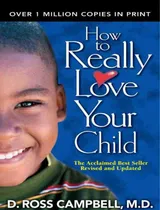

About the Book
"The Lady, Her Lover, Her Lord" by T. D. Jakes is a Christian self-help book that explores the relationship between a woman, her partner, and God. It discusses how women can strengthen their faith, self-worth, and relationships by prioritizing their connection with God. Jakes emphasizes the importance of spiritual growth and communication in romantic relationships to achieve true fulfillment and happiness.
Richard Wurmbrand
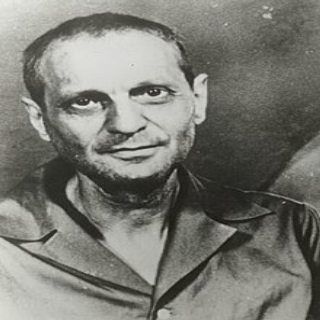 Richard Wurmbrand (1909 – 2001) was born in 1909 in Bucharist in the country of Romania. He was the youngest of four boys born in a Jewish family. He lived with his family in Istanbul for a short time. When he was 9, his father died and the Wurmbrands returned to Romania when he was 15.
He was sent to study Marxism in Moscow. When he returned, he was already a Comintern Agent. A Comintern Agent was a member of the Communist International Organisation which intended to fight:
Like other Romanian Communists, he was arrested and released several times.
He married Sabina Oster on 26th October 1936. Wurmbrand and his wife went to live in an isolated village high in the mountains of Romania. But, as a athiest there was no peace to be found in his heart. So one day, when his heart was in a state of turmoil he cried out:
“God, if perchance you exist, it is Your duty to reveal yourself to me.”
Shorthly after he prayed that prayer, he met a German carpenter in his village who gave him a bible. The carpenter and his wife had been praying earnestly that God would bring a Jew to his village, because the carpenter wanted to bring a Jew to Christ, because Jesus was a Jew. So the carpenter gave him a Bible to read. Wurmbrand said, when he opened that Bible he could not stop weeping. He had read the Bible before but it had meant nothing to him. This time when he opened the Bible he could barely read it because of the copious amount of tears that filled his eyes. Sometime later he found out the carpenter and his wife had been praying earnestly for him. Wurnbrand said that every word that he read were like flames of love burning in his heart. He realized for the first ime in his life that there was a God of love who loved him, even though he had beeen living a bad life and had nurtured a hated towards the concept of a ‘loving’ God.
The Power of Intercessory Prayer
But now for the first time he knew that Jesus had suffered at the cross of Calvary for his sins and he was loved and accepted of God. Richard and his wife became believers in Jesus the Messiah. All the hatred that he had formerly held toward God was washed away under the blood of Christ and Richard and his wife Sabrina were born of the Spirit. That is the power of intercessory prayer!
Richard prepared himself for the ministry. He was ordained as an Anglican minister in 1938 at the start of world war 2. Both Richard and his wife were arrested several times. They were beaten and hauled before a Nazi court. They suffered under the Nazi regime throughout world war 2. But Richard said, it was only a taste of what was to come.
Russian Troups Enter Romania
Towards the end of world war 2, Richard Wurmbrand became a Lutheran and he pastored a Lutheran church in Romania. But, the same year, 1 million Russian troups entered and occupied the entire territory of Romania.
Within a very short space of time the Communists took over Romania. The reign of terror began. Out of fear 4,000 priests, pastors & ministers became Communists overnight. They confessed their allegience and loyalty to the new Communist Government because they all feared for their survival.
Romania’s Resistance
Harsh persecutions of any enemies of the Communist government started with the Soviet occupation in 1945. The Soviet army behaved as an occupation force (although theoretically it was an ally against Nazi Germany), and could arrest virtually anyone at will. Shortly after Soviet occupation, ethnic Germans (who were Romanian citizens and had been living as a community in Romania for 800 years) were deported to the Donbas coal mines. Despite the King’s protest, who pointed out that this was against international law, an estimated 70,000 men and women were forced to leave their homes, starting in January 1945, before the war had even ended. They were loaded in cattle cars and put to work in the Soviet mines for up to ten years as “reparations”, where about one in five died from disease, accidents and malnutrition.
Once the Communist government became more entrenched, the number of arrests increased. All strata of society were involved, but particularly targeted were the pre-war elites, such as intellectuals, clerics, teachers, former politicians (even if they had left-leaning views) and anybody who could potentially form the nucleus of anti-Communist resistance. The existing prisons were filled with political prisoners, and a new system of forced labor camps and prisons was created, modeled after the Soviet Gulag. Some of the most notorious prisons included Sighet, Gherla, Piteşti and Aiud, and forced labor camps were set up at lead mines and in the Danube Delta.
Underground Church
Richard and his wife knew that Christianity and Communism were totally opposed to each other. They knew that a true follower of Christ cannot compromise. So they created an “Underground Church” movement to preach the pure gospel of Christ and to reach out to the unsaved people of Romania and secondly to reach out secretly to the Russian soldiers. They secretly printed thousands of Bibles and Christian literature and distributed it to the Russian soldiers. Many of the Russian soldiers were convicted and they gave their life to Christ.
So the underground church grew. But, in 1948 the Secret Police arrested Wurmbrand and he was placed in solitary confinement for 3 years. He was then transferred to a group cell for the next five years. Whilst in prison he continued to win the other prisoners to Christ. After 8 years in prison he was released and he immediately resumed his work with the undergound church. A few years later, 1959, he was arrested again and was sentenced to 25 years in prison. However, after spending 5 years in prison an organisation called the Christian Alliance negotiated with the Communist Government and they managed to secure his release for a fee of $10,000. They quickly got Richard Wurmbrand out of Romania and took him to England, then to the USA.
In 1966, Richard was called to Washington DC to give his testimony before the United States Senate. He took off his shirt to show the Senate the scars and the wounds that he received whilst he served time in prison under the Communist Government in Romania.
The newspapers throughout the USA, Europe and Asia carried his story all across the world. Christian leaders called him the “Voice of the Underground Church.”
In 1967, with a $100 old typewriter and 500 names and addresses, Richard Wurmbrand published the first issue of THE VOICE OF THE MARTYRS newsletter. This newsletter was dedicated to communicating the testimonies and trails facing our brothers and sisters in restricted nations worldwide. Richard wrote:
“The message I bring from the Underground Church is:
“Don’t abandon us!”
“Don’t forget us!”
“Don’t write us off!”
“Give us the tools we need! We will pay the price for using them!”
“This is the message I have been charged to deliver to the free church.”
Richard Wurmbrand and his wife travelled throughout the world to establish a network of over 30 offices. Their primary aim was to call Christians to shoulder their responsibility and to demonstrate the real substance of their faith by supporting their brothers and sisters in Christ who are being persecuted in heathen lands.
The VOICE OF THE MARTYRS newsletter continues to inform, and lead to action, Christians throughout the free world of the plight of those who suffer for their faith in Jesus Christ. Throughout their network of offices around the world, the newsletter is published in over 30 different languages. To this cause, VOICE OF THE MARTYRS presses on, serving in nearly 40 countries around the world where our brothers and sisters are systematically persecuted.
The writer of the Book of Hebrews brings a convicting word to the Christian church:
” Remember them that are in bonds, as bound with them; and them that suffer adversity, as being yourselves also in the body.”
(Hebrews 13:3)
We have a responsibility to those who suffer for their faith in Christ.
Today, there is an estimated 200 million Christians in heathen nations who are suffering persecution for their faith in Christ.
Richard Wurmbrand (1909 – 2001) was born in 1909 in Bucharist in the country of Romania. He was the youngest of four boys born in a Jewish family. He lived with his family in Istanbul for a short time. When he was 9, his father died and the Wurmbrands returned to Romania when he was 15.
He was sent to study Marxism in Moscow. When he returned, he was already a Comintern Agent. A Comintern Agent was a member of the Communist International Organisation which intended to fight:
Like other Romanian Communists, he was arrested and released several times.
He married Sabina Oster on 26th October 1936. Wurmbrand and his wife went to live in an isolated village high in the mountains of Romania. But, as a athiest there was no peace to be found in his heart. So one day, when his heart was in a state of turmoil he cried out:
“God, if perchance you exist, it is Your duty to reveal yourself to me.”
Shorthly after he prayed that prayer, he met a German carpenter in his village who gave him a bible. The carpenter and his wife had been praying earnestly that God would bring a Jew to his village, because the carpenter wanted to bring a Jew to Christ, because Jesus was a Jew. So the carpenter gave him a Bible to read. Wurmbrand said, when he opened that Bible he could not stop weeping. He had read the Bible before but it had meant nothing to him. This time when he opened the Bible he could barely read it because of the copious amount of tears that filled his eyes. Sometime later he found out the carpenter and his wife had been praying earnestly for him. Wurnbrand said that every word that he read were like flames of love burning in his heart. He realized for the first ime in his life that there was a God of love who loved him, even though he had beeen living a bad life and had nurtured a hated towards the concept of a ‘loving’ God.
The Power of Intercessory Prayer
But now for the first time he knew that Jesus had suffered at the cross of Calvary for his sins and he was loved and accepted of God. Richard and his wife became believers in Jesus the Messiah. All the hatred that he had formerly held toward God was washed away under the blood of Christ and Richard and his wife Sabrina were born of the Spirit. That is the power of intercessory prayer!
Richard prepared himself for the ministry. He was ordained as an Anglican minister in 1938 at the start of world war 2. Both Richard and his wife were arrested several times. They were beaten and hauled before a Nazi court. They suffered under the Nazi regime throughout world war 2. But Richard said, it was only a taste of what was to come.
Russian Troups Enter Romania
Towards the end of world war 2, Richard Wurmbrand became a Lutheran and he pastored a Lutheran church in Romania. But, the same year, 1 million Russian troups entered and occupied the entire territory of Romania.
Within a very short space of time the Communists took over Romania. The reign of terror began. Out of fear 4,000 priests, pastors & ministers became Communists overnight. They confessed their allegience and loyalty to the new Communist Government because they all feared for their survival.
Romania’s Resistance
Harsh persecutions of any enemies of the Communist government started with the Soviet occupation in 1945. The Soviet army behaved as an occupation force (although theoretically it was an ally against Nazi Germany), and could arrest virtually anyone at will. Shortly after Soviet occupation, ethnic Germans (who were Romanian citizens and had been living as a community in Romania for 800 years) were deported to the Donbas coal mines. Despite the King’s protest, who pointed out that this was against international law, an estimated 70,000 men and women were forced to leave their homes, starting in January 1945, before the war had even ended. They were loaded in cattle cars and put to work in the Soviet mines for up to ten years as “reparations”, where about one in five died from disease, accidents and malnutrition.
Once the Communist government became more entrenched, the number of arrests increased. All strata of society were involved, but particularly targeted were the pre-war elites, such as intellectuals, clerics, teachers, former politicians (even if they had left-leaning views) and anybody who could potentially form the nucleus of anti-Communist resistance. The existing prisons were filled with political prisoners, and a new system of forced labor camps and prisons was created, modeled after the Soviet Gulag. Some of the most notorious prisons included Sighet, Gherla, Piteşti and Aiud, and forced labor camps were set up at lead mines and in the Danube Delta.
Underground Church
Richard and his wife knew that Christianity and Communism were totally opposed to each other. They knew that a true follower of Christ cannot compromise. So they created an “Underground Church” movement to preach the pure gospel of Christ and to reach out to the unsaved people of Romania and secondly to reach out secretly to the Russian soldiers. They secretly printed thousands of Bibles and Christian literature and distributed it to the Russian soldiers. Many of the Russian soldiers were convicted and they gave their life to Christ.
So the underground church grew. But, in 1948 the Secret Police arrested Wurmbrand and he was placed in solitary confinement for 3 years. He was then transferred to a group cell for the next five years. Whilst in prison he continued to win the other prisoners to Christ. After 8 years in prison he was released and he immediately resumed his work with the undergound church. A few years later, 1959, he was arrested again and was sentenced to 25 years in prison. However, after spending 5 years in prison an organisation called the Christian Alliance negotiated with the Communist Government and they managed to secure his release for a fee of $10,000. They quickly got Richard Wurmbrand out of Romania and took him to England, then to the USA.
In 1966, Richard was called to Washington DC to give his testimony before the United States Senate. He took off his shirt to show the Senate the scars and the wounds that he received whilst he served time in prison under the Communist Government in Romania.
The newspapers throughout the USA, Europe and Asia carried his story all across the world. Christian leaders called him the “Voice of the Underground Church.”
In 1967, with a $100 old typewriter and 500 names and addresses, Richard Wurmbrand published the first issue of THE VOICE OF THE MARTYRS newsletter. This newsletter was dedicated to communicating the testimonies and trails facing our brothers and sisters in restricted nations worldwide. Richard wrote:
“The message I bring from the Underground Church is:
“Don’t abandon us!”
“Don’t forget us!”
“Don’t write us off!”
“Give us the tools we need! We will pay the price for using them!”
“This is the message I have been charged to deliver to the free church.”
Richard Wurmbrand and his wife travelled throughout the world to establish a network of over 30 offices. Their primary aim was to call Christians to shoulder their responsibility and to demonstrate the real substance of their faith by supporting their brothers and sisters in Christ who are being persecuted in heathen lands.
The VOICE OF THE MARTYRS newsletter continues to inform, and lead to action, Christians throughout the free world of the plight of those who suffer for their faith in Jesus Christ. Throughout their network of offices around the world, the newsletter is published in over 30 different languages. To this cause, VOICE OF THE MARTYRS presses on, serving in nearly 40 countries around the world where our brothers and sisters are systematically persecuted.
The writer of the Book of Hebrews brings a convicting word to the Christian church:
” Remember them that are in bonds, as bound with them; and them that suffer adversity, as being yourselves also in the body.”
(Hebrews 13:3)
We have a responsibility to those who suffer for their faith in Christ.
Today, there is an estimated 200 million Christians in heathen nations who are suffering persecution for their faith in Christ.
Am I Really a Christian
Am I really a Christian? Perhaps for you, that question looms like a shadow in the back of the soul, threatening your dearest hopes and peace. Others may struggle to understand why. You bear all the outward marks of a Christian: You read, pray, and gather with your church faithfully. You serve and sacrifice your time. You look for opportunities to share Christ with neighbors. You hide no secret sins. But “the heart knows its own bitterness” (Proverbs 14:10), and so too its own darkness. No matter how much you obey on the outside, when you look within you find a mass of conflicting desires and warring ambitions. Every godly impulse seems mixed with an ungodly one; every holy desire with something shameful. You can’t pray earnestly without feeling proud of yourself afterward. You can’t serve without some part of you wanting to be praised. You remember Judas and Demas, men whose outward appearance deceived others and deceived themselves. You know that on the last day many will find themselves surprised, knocking on the door of heaven only to hear four haunting words: “I never knew you” (Matthew 7:23; 25:11–12). And so, in the stillness before sleep, in quiet moments of the day, and sometimes in the middle of worship itself, the shadow returns: Am I real — or am I just deceiving myself? ‘With You There Is Forgiveness’ Sometimes, the most apt answers to our most pressing questions are buried hundreds of years ago. And when it comes to assurance in particular, we may never surpass the pastoral wisdom of those seventeenth-century soul physicians, the Puritans. Assurance proved to be a common struggle for the Christians of that era, such that John Owen devoted over three hundred pages to the topic in his masterful Exposition of Psalm 130, most of which addresses a single verse: “With you there is forgiveness, that you may be feared” (Psalm 130:4). “When it comes to assurance, what matters most is not sin’s persistence, but our resistance.” With God there is forgiveness — free forgiveness, abundant forgiveness, glad forgiveness, based on the blood and righteousness of Jesus Christ. But Owen knew that some Christians would hesitate to believe that forgiveness was for them. He knew that some introspective believers, bruised with a sense of their indwelling sin, would respond, “Yes, there is forgiveness with God, but I see so much darkness within myself — is there forgiveness for me?” In a way, Owen’s entire book is his answer to that question. But he devotes special attention to such believers in one brief section — not aiming, necessarily, to remove every doubt (something only God can do), but merely to help readers see themselves from a new, more gracious angle. Grief can be a good sign. When some Christians search their hearts, they have eyes only for their sin. Their highest worship seems tainted with self-focus; their best obedience seems spoiled by strains of insincerity. They are ready to sigh with David, “My iniquities have overtaken me, and I cannot see; they are more than the hairs of my head; my heart fails me” (Psalm 40:12). But such grief can be a good sign. Owen asks us to imagine a man with a numb leg. As long as his leg has lost sensation, the man “endures deep cuts and lancings, and feels them not.” Yet as soon as his nerves awake, he “feels the least cut, and may think the instruments sharper than they were before, when all the difference is, that he hath got a quickness of sense” (Works of John Owen, 6:604). Outside of Christ, our souls are numb to the evil of sin. The guilt and the consequences of sin may have wounded us from time to time, but its evil we could hardly feel (if at all) — no matter how often it thrust us through. But once our souls come alive, we need only a paper cut to wince. Sin burdens us, oppresses us, grieves us, not because we are worse than we were before, but because we finally feel sin for what it is: the thorns that crowned our Savior’s head, the spear that pierced our Lord. So, Owen writes, “‘Oh wretched man that I am! who shall deliver me from the body of this death?’ [Romans 7:24] is a better evidence of grace and holiness than ‘God, I thank thee I am not as other men’ [Luke 18:11]” (601). Grief over our sin, far from disqualifying us from the kingdom, suggests that comfort is on the way (Matthew 5:4). Your resistance, not sin’s persistence, matters most. Temptation is frustratingly persistent. Sin would grieve us less if it left us alone more often: if pride were not ready to rise on all occasions, if anger did not flame up from the smallest sparks, if foolish thoughts did not fill our minds so often. Can we have any confidence of assurance if we find sin so relentlessly tempting? Owen takes us to 1 Peter 2:11, where the apostle writes, “Abstain from the passions of the flesh, which wage war against your soul.” He comments, “Now, to war is not to make faint or gentle opposition, . . . but it is to go out with great strength, to use craft, subtlety, and force, so as to put the whole issue to a hazard. So these lusts war” (605). “God’s ‘well done’ says less about the worth of our works than about the wonder of his mercy.” Sin wars — and not against those whom it holds captive, but against those who have been rescued from its authority and now fight below Christ’s banner. When it comes to assurance, then, what matters most is not sin’s persistence, but our resistance. Or as Owen puts it, “Your state is not at all to be measured by the opposition that sin makes to you, but by the opposition you make to it” (605). Sin may burden and tempt you, oppose and oppress you. Every army does. But do you, for your part, resist? Do you run up the watchtower and raise an alarm? Do you grip your shield and swing your sword? Do you labor, strive, watch, pray, and keep close to your Captain? Then sin’s warfare against you may be a sign that you are in Christ’s service. Christ purifies our obedience. The most sensitive Christians, Owen writes, often “find their hearts weak, and all their duties worthless. . . . In the best of them there is such a mixture of self, hypocrisy, unbelief, vain-glory, that they are even ashamed and confounded with the remembrance of them” (600). Whatever fruit they bear seems covered with the mold of indwelling sin. But often, God sees more grace in his sin-burdened people than they see in themselves. Remember Sarah, Owen says: even when she was walking in unbelief, God took notice of the fact — a trifle in our eyes — that she called her husband “lord” (Genesis 18:12; 1 Peter 3:6). So too, on the last day, Jesus will commend his people for good works they have long forgotten and struggle even to recognize (Matthew 25:37–40). Of course, God’s “well done” says less about the worth of our works than about the wonder of his mercy. Our Father hangs our pictures upon his wall because Christ adorns them with the jewels of his own crown. Owen writes, Jesus Christ takes whatever is evil and unsavoury out of them, and makes them acceptable. . . . All the ingredients of self that are in them on any account he takes away, and adds incense to what remains, and presents it to God. . . . So that God accepts a little, and Christ makes our little a great deal. (603) The only works that God accepts are those that have been washed in the blood of Jesus (Revelation 7:14). And any work that is washed in the blood of Jesus becomes transfigured, a small but resplendent reflection of “Christ in you, the hope of glory” (Colossians 1:27). And therefore God, in unspeakable grace, “remembers the duties which we forget, and forgets the sins which we remember” (603). Assurance arises from faith. Owen’s final piece of counsel may feel counterintuitive to the unassured heart. Many who struggle with assurance hesitate to rest their full weight on Christ’s saving promises until they feel some warrant from within that the promises belong to them. They wait to come boldly to the throne of grace until they find something to bring with them. But this gets the order exactly backward. Owen writes, “Do not resolve not to eat thy meat until thou art strong, when thou hast no means of being strong but by eating” (603). When we wait to focus our gaze on Christ’s promises until we are holy enough, we are like a man waiting to eat until he becomes strong, or waiting to sleep until he feels energized, or waiting to study until he grows wise. Sinclair Ferguson, a modern-day pupil of Owen, puts it this way: Believing [gives] rise to obedience, not obedience . . . to assurance irrespective of believing. Such faith cannot be forced into us by our efforts to be obedient; it arises only from larger and clearer views of Christ. (The Whole Christ, 204) The faith that nourishes both obedience and assurance arises only from larger and clearer views of Christ. If we stay away from Jesus until we are holy enough, we will stay away forever. But if we come to him right now and every morning hereafter, no matter how dead we feel, looking for welcome on the basis of his blood rather than our efforts, then we can hope, in time, to find faith flowering in fuller obedience and deeper assurance. But we will come only if we know, with Owen, that “with you there is forgiveness, that you may be feared” (Psalm 130:4). All who come to Christ, trust in Christ, and embrace Christ find the forgiveness that is with Christ. And you are no exception. Article by Scott Hubbard