


Others like the gentle breeze of jesus Features >>








About the Book
"The Gentle Breeze of Jesus" by Mel Tari is a spiritual autobiography that recounts the author's experiences with the Holy Spirit and the miraculous signs and wonders he witnessed in Indonesia. Tari shares personal stories of healing, deliverance, and supernatural encounters, highlighting the power of faith and the presence of Jesus in everyday life. The book emphasizes the importance of living a life filled with faith, love, and obedience to God.
Kenneth E. Hagin
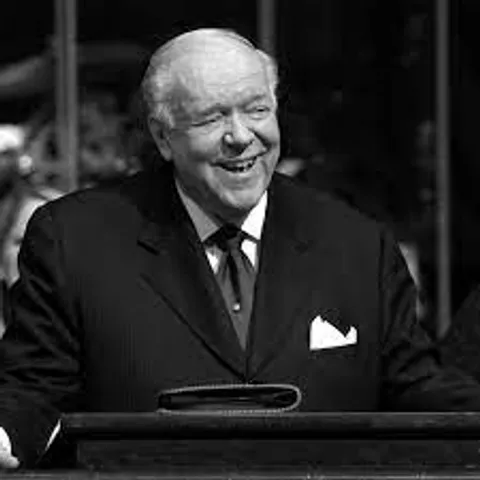 Rev. Kenneth Erwin Hagin was born on Aug. 20, 1917, in McKinney, Texas. Rev. Hagin was sickly as a child, suffering from a deformed heart and an incurable blood disease. He was not expected to live and became bedfast at age 15. In April 1933 during a dramatic conversion experience, he reported dying three times in 10 minutes, each time seeing the horrors of hell and then returning to life.
In August 1934, Rev. Hagin was miraculously healed, raised off a deathbed by the power of God and the revelation of faith in God’s Word. Jesus appeared to Rev. Hagin eight times over the next several years in visions that changed the course of his ministry. In 1967, he began a regular radio broadcast that continues today as Rhema for Today.
In 1968 Rev. Hagin published the first issues of The Word of Faith. That magazine, now produced nine times a year, has a circulation of over 200,000. The publishing outreach he founded, Faith Library Publications, has circulated worldwide more than 75 million copies of books by Rev. Hagin, Kenneth W. Hagin, Lynette Hagin, Craig W. Hagin, and several other authors. Faith Library Publications also has produced millions of audio and video teachings.
Other outreaches of Kenneth Hagin Ministries include Rhema Praise, a weekly television broadcast hosted by Revs. Kenneth and Lynette Hagin; Rhema Correspondence Bible School; Rhema Alumni Association; Rhema Ministerial Association International; the Rhema Prayer and Healing Center; and the Rhema prison ministry.
In 1974 Rev. Hagin founded what is now Rhema Bible Training College. The school has campuses all over the world and continues to expand.
Until shortly before his death, Rev. Hagin continued to travel and teach throughout the United States and into Canada conducting All Faiths’ Crusades and other special meetings.
Known as the “father of the modern faith movement,” Rev. Hagin was a dynamic preacher, teacher, and prophet. His teachings and books are filled with vivid stories that show God’s power and truth working in his life and the lives of others. He will be remembered not only as a great minister but as a great family man—for his family was his heart. He was there at every milestone ready to talk, to answer, to pray. He was a man whose belly laugh filled the room at the sight of one of his grandchildren or great-grandchildren.
Rev. Kenneth Erwin Hagin was born on Aug. 20, 1917, in McKinney, Texas. Rev. Hagin was sickly as a child, suffering from a deformed heart and an incurable blood disease. He was not expected to live and became bedfast at age 15. In April 1933 during a dramatic conversion experience, he reported dying three times in 10 minutes, each time seeing the horrors of hell and then returning to life.
In August 1934, Rev. Hagin was miraculously healed, raised off a deathbed by the power of God and the revelation of faith in God’s Word. Jesus appeared to Rev. Hagin eight times over the next several years in visions that changed the course of his ministry. In 1967, he began a regular radio broadcast that continues today as Rhema for Today.
In 1968 Rev. Hagin published the first issues of The Word of Faith. That magazine, now produced nine times a year, has a circulation of over 200,000. The publishing outreach he founded, Faith Library Publications, has circulated worldwide more than 75 million copies of books by Rev. Hagin, Kenneth W. Hagin, Lynette Hagin, Craig W. Hagin, and several other authors. Faith Library Publications also has produced millions of audio and video teachings.
Other outreaches of Kenneth Hagin Ministries include Rhema Praise, a weekly television broadcast hosted by Revs. Kenneth and Lynette Hagin; Rhema Correspondence Bible School; Rhema Alumni Association; Rhema Ministerial Association International; the Rhema Prayer and Healing Center; and the Rhema prison ministry.
In 1974 Rev. Hagin founded what is now Rhema Bible Training College. The school has campuses all over the world and continues to expand.
Until shortly before his death, Rev. Hagin continued to travel and teach throughout the United States and into Canada conducting All Faiths’ Crusades and other special meetings.
Known as the “father of the modern faith movement,” Rev. Hagin was a dynamic preacher, teacher, and prophet. His teachings and books are filled with vivid stories that show God’s power and truth working in his life and the lives of others. He will be remembered not only as a great minister but as a great family man—for his family was his heart. He was there at every milestone ready to talk, to answer, to pray. He was a man whose belly laugh filled the room at the sight of one of his grandchildren or great-grandchildren.
Blessed Are the Unoffendable
I remember the flush of embarrassment that came to my face as I realized that my friend was letting me know I hadn’t been invited to be a part of the group of women she was meeting with regularly — and not by accident. I tried to navigate the moment, relieving the tension by telling her not to worry about it. I let her know that my plate was full with doctors’ appointments and kids’ activities. “I couldn’t join the group even if I were asked!” I laughed, doing all I could to keep her from feeling sorry for me. And my words were true. I really did have a plate too full to add anything else. I really didn’t want her to worry about it. Yet my hot cheeks and thumping heart told the secret I was trying to conceal — I was fighting the impulse to take offense. Shutting the Gates I knew well enough how destructive becoming offended can be. Proverbs 18:19 says, “A brother offended is more unyielding than a strong city.” What horrible strength there is in taking up an offense! Offended people can become unassailable. Recalcitrant. Too hard-hearted to hear an appeal. When we are offended, we believe ourselves to have the moral high ground; therefore, we feel justified in making the one who has offended us a villain. I thought I was on the inside of this particular group of friends, only to discover I was not. My sense of where I fit in with others was challenged in a painful way. I could choose to accept it with goodwill toward these sisters and lean on my Savior who has called me his friend, or I could get tough — hard as nails — like an unyielding strong city whose gates have been shut and whose pride has locked out the offending parties. “Offended people become unassailable. Recalcitrant. Too hard-hearted to hear an appeal.” The Scriptures show us many instances of Jesus causing offense. He offends his hometown crowd. He offends Pharisees and scribes. He is the stone of stumbling and rock of offense. This is no big surprise to Christians. We aren’t shocked that the Pharisees or the hometown crowd are resentful and outraged by his superior understanding and his mighty deeds. From our vantage point, it isn’t too hard to see that when Jesus challenges their view of reality, he’s always right. We can see their blind spots and pride and how that pride makes them easily offended. But it’s much harder to spot the pride when we’re the one being offended, and when the offender is someone other than the perfect Jesus. The Drug of Offendedness What do we do when we’re offended by one another? What do we do if the offense given or taken is a result of carelessness, or thin skin, or personality differences, or unintentionally missing the mark, or sinfulness in ourselves or others? First, remember that when others are offensive in a truly sinful way, their offense is against God first and foremost. Sin against us feels personal, because it often is personal. But it’s significantly more personal to God, who doesn’t just relate to us, but who created us. God is patient with those who have offended his holiness. But he will not wait forever. And for those who are united to his Son through faith, their offenses against him have been extinguished at the cross. Second, it is good to remember that God has made a way for us to deal with a legitimate offense. We can follow the instructions of our Lord and go to that person directly in the hopes of gaining our brother (Matthew 18:15). We don’t ever need to stay offended. Even when we don’t gain our brother by going to him, we don’t have to live in our offended state; we can lay that down at the cross. And laying our offense there, we can take a posture that is eager for reconciliation, should God grant it. But what about when there is no intentional or discernible sin? What about the kind of situation that I found myself in — the one where I had not been sinned against, yet my hurt feelings were poised to harden into offendedness? It helps to acknowledge that taking offense is a powerful drug. It’s a powerful drug precisely because it gives us power. Remember the proverb — the offended brother is more unyielding than a strong city! “Taking offense is a powerful drug. It’s a powerful drug precisely because it gives us power.” When we turn hurt feelings into offendedness, we go from vulnerable to impenetrable. When we’re hurt by someone else’s words or actions, it’s tempting to try to protect ourselves with anger or self-righteousness that masquerades as having been offended. It’s easier to imagine the ones who have hurt us as villains rather than own that our hurt often has to do with our insecurities and fragility more than with the objective sinfulness of others. Good Sense and Glory Proverbs 19:11 says, “Good sense makes one slow to anger, and it is his glory to overlook an offense.” Good sense and glory are in short supply these days. Rather than slow down and give our rational minds a chance to inform our wildly thumping hearts, we let our feelings inform our response. Rather than overlook an offense, we go conjuring them up from every possible infraction, mounting chips on our shoulders. Everything another person says that we disagree with is a devilish opportunity for taking up an offense. Anything another person does that is different than how we would do it strengthens the resolve of the unyielding, hardened heart. Too often, we can’t merely disagree with people; we are personally offended by the words, opinions, and actions of others, even when they have no bearing on our personal lives. And if we can’t find a way to be personally offended ourselves, too many have begun taking up an offense on behalf of another. Rather than cover an offense in the interest of love and refusing to repeat a matter (Proverbs 17:9), the society around us urges us to lend and borrow offenses as a currency of backward virtue. Blessed Are the Unoffendable There is more than insecurity and fragility underneath our proclivity to take up an offense, although those problems are constantly feeding it. At root, our easily offended hearts are full of pride and idolatry. We have set ourselves as the standard of what is right and good and what must be honored — any perceived challenge to that assumption results in anger, resentment, and the taking up of an offense. But we’re not the standard; God is — which is wonderful news for sinners. Because he is the standard, because only he can see into hearts and discern the motives of each of us, we can be free to assume the best of others, trusting that he will judge perfectly in the end. We can have the good sense to be slow to anger. We can become gloriously unoffendable. Won’t you lay down the offendedness you’ve nursed against others, and rest in the salvation of the God who is slow to anger and abounding in steadfast love? He is patient in delaying judgment, but judgment will come. Today is the day to crucify the counterfeit power of offendedness and take hold of the gospel — which is the power of God for salvation to all who believe (Romans 1:16). Article by Abigail Dodds

-480.webp)