
Others like the next great move of god Features >>


About the Book
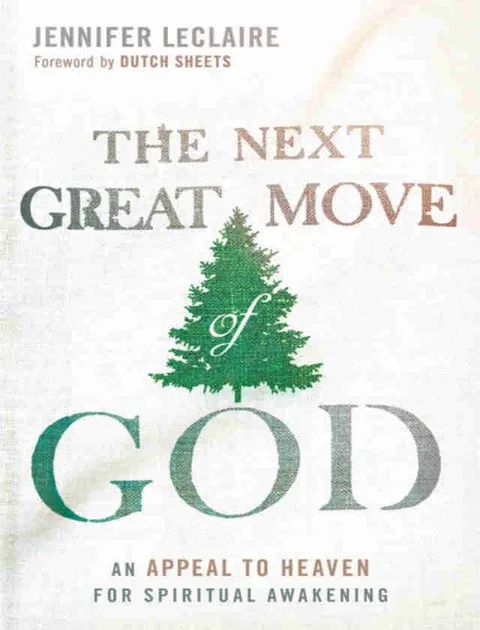
"The Next Great Move of God" by Jennifer Leclaire explores the concept of a coming spiritual revival and awakening, discussing how individuals can prepare themselves to be a part of this move of God. Leclaire examines the characteristics of past revivals and offers insights into how individuals can position themselves to be vessels for God's work in the world. The book is a call to action for believers to embrace their role in the next great move of God and be agents of change in their communities.
Steven Curtis Chapman
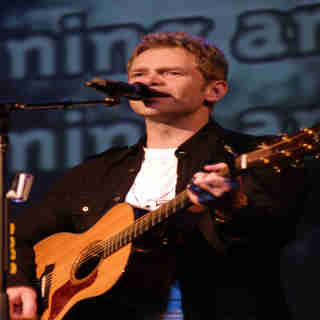 Steven Curtis Chapman is an American Christian musician, singer, song writer, record producer, actor, author and social activist. He is the only artist in the history of music to have won 56 Gospel Music Association Dove Awards and is also a proud receiver of 5 Grammy Awards. His music is known for being a unique cross between country music, soft rock and orchestrated pop, which made him a prominent artist in the contemporary Christian music circuit of the 1980s. Chapman grew up in a humble environment where he found his calling for music, owing to his father’s inclination towards country music. He learnt to play instruments like guitar and piano just by hanging around in his father’s music store, listening to him play along with his friends. He took up music seriously when he moved to Nashville and got recognized by Sparrow Records, a company he stayed with for a long period in his career. He has released 19 studio albums and has sold over 10 million albums until now. Chapman is a family oriented person just like his father and has a big family comprising of his wife Mary Beth and 3 biological and 2 adopted children. He is a vocal advocate for adoption and has worked socially to eradicate the problem of youth violence.
Childhood & Early Life
Steven Curtis Chapman was born on November 21, 1962 in Paducah, Kentucky, to Herb and Judy Chapman. His father was a country singer and songwriter, who turned down opportunities to become a successful singer to concentrate on his family. His mother was a stay-at-home mom.
His father owned a music store, a business he managed from his basement and used to play music with his friends. Such creative environment at home influenced Chapman’s life from very early on and he bought his first guitar at 6.
Chapman joined as a pre-med student at Georgetown College in Kentucky but after few semesters he moved to Anderson College, Indiana. But he ultimately dropped the idea of studying and went to Nashville to pursue his first love, music.
During 1980s, he wrote a song ‘Built to Last’, which gained huge popularity after getting recorded by a gospel group ‘The Imperials’. The success of the song fetched Chapman a songwriting deal with Sparrow Records.
Career
Chapman’s first official album ‘First Hand’ was released in 1987. The album was an instant hit with singles like ‘Weak Days’ and topped at number 2 on the Contemporary Christian Music chart. The album had a mix of country music with soft rock and pop.
In 1988, following the success of his first album, Chapman released ‘Real Life Conversations’. Its hit single ‘His Eyes’ received the ‘Contemporary Recorded Song of the Year’ award from the ‘Gospel Music Association’. He co-wrote it with James Isaac Elliot.
After a few years, he made a swift turn to mainstream music with his album ‘The Great Adventure’ in 1992. It earned him two Grammy awards for the album and for the title song of the album.
After gaining consistent success with albums like ‘Heaven in the Real World (1994), ‘Signs of Life (1996) and ‘Speechless (1999), Chapman’s next great album ‘Declaration’ came out in 2001, for which he toured 70 cities.
In 2003, ‘All About Love’ was released and it ranked at Top 15 on the Christian Music charts. It was released under Sparrow Records and Chapman very humbly credited his wife Mary Beth for being the inspiration for his album.
‘All Things New’ was released in 2004 and the album added another Grammy to Chapman’s proud award collection. This time he received it in the category of Best Pop/Contemporary Gospel Album. It was also nominated for the Dove Award.
In 2005, ‘All I Really Want for Christmas’ was released, which was Chapman’s another successful Christmas album after ‘The Music of Christmas’. It had traditional holiday tunes and favorites like ‘Go Tell It on the Mountain’ and Silver Bells’.
Chapman took his music to greater levels by taking his concert to South Korea for the U.S. troops who were serving there in 2006. It was the first Christian concert that ever performed for the American army in that country.
In 2007, he released ‘This Moment’ which included hit singles like ‘Cinderella’, for which he was chosen for WOW Hits 2009. He also went on his ‘Winter Jam’ tour and took his sons’, Caleb and Will’s band along.
‘Beauty Will Rise’, Chapman’s seventeenth album, was released in 2009. It is said that he wrote the songs of the album after getting inspired by his daughter Maria Sue’s sad and untimely demise. It included songs like ‘Meant to Be’ and ‘Re:creation’.
In 2012, Chapman finally parted ways with Sparrow Records, the record company that he remained loyal to for so many years. He was signed on by Sony’s Provident Label Group and came out with a Christmas album called ‘JOY’.
‘The Glorious Unfolding’ was released in 2013 under Reunion Records and it peaked on number 27 on the Billboard 200 and was number 1 Top Christian Album. The album was produced by Chapman himself and Brent Milligan.
Major Works
Chapman’s ‘The Great Adventure’ in 1992 was a turning point in his musical career because until now he was making soft and contemporary country music but with ‘The Great Adventure’ he targeted the mainstream audience and tasted huge commercial success for the first time.
Awards & Achievements
Chapman is the winner of five Grammy awards for albums like ‘For the Sake of the Call’ ‘The Great Adventure’ ‘The Live Adventure’, ‘Speechless’ and ‘All Things New’. He has also received 56 Gospel Music Association Dove Awards, more than any other artist.
Personal Life & Legacy
Chapman got married to Mary Beth in 1984 after they first met at Anderson University in Indiana. They have three biological children: Emily, Caleb and Will and three adopted children: Shaohannah, Stevey and Maria, together.
In 2008, Chapman’s youngest son Will ran over his car by accident on his adopted daughter Maria Sue Chunxi Chapman. She was running towards him to meet him but he did not see her and she was pronounced dead on arrival at the hospital.
Trivia
Chapman’s wife Mary Beth Chapman has written and released a book about losing her youngest daughter called ‘Choosing to SEE: A Journey of Struggle and Hope’.
Chapman and his wife have written three children's books with adoption themes: ‘Shaoey And Dot: Bug Meets Bundle’ (2004), ‘Shaoey and Dot: The Christmas Miracle’ (2005), and ‘Shaoey and Dot: A Thunder and Lightning Bug Story’ (2006).
He has received an Honorary Doctorate of Music from Anderson University.
Steven Curtis Chapman is an American Christian musician, singer, song writer, record producer, actor, author and social activist. He is the only artist in the history of music to have won 56 Gospel Music Association Dove Awards and is also a proud receiver of 5 Grammy Awards. His music is known for being a unique cross between country music, soft rock and orchestrated pop, which made him a prominent artist in the contemporary Christian music circuit of the 1980s. Chapman grew up in a humble environment where he found his calling for music, owing to his father’s inclination towards country music. He learnt to play instruments like guitar and piano just by hanging around in his father’s music store, listening to him play along with his friends. He took up music seriously when he moved to Nashville and got recognized by Sparrow Records, a company he stayed with for a long period in his career. He has released 19 studio albums and has sold over 10 million albums until now. Chapman is a family oriented person just like his father and has a big family comprising of his wife Mary Beth and 3 biological and 2 adopted children. He is a vocal advocate for adoption and has worked socially to eradicate the problem of youth violence.
Childhood & Early Life
Steven Curtis Chapman was born on November 21, 1962 in Paducah, Kentucky, to Herb and Judy Chapman. His father was a country singer and songwriter, who turned down opportunities to become a successful singer to concentrate on his family. His mother was a stay-at-home mom.
His father owned a music store, a business he managed from his basement and used to play music with his friends. Such creative environment at home influenced Chapman’s life from very early on and he bought his first guitar at 6.
Chapman joined as a pre-med student at Georgetown College in Kentucky but after few semesters he moved to Anderson College, Indiana. But he ultimately dropped the idea of studying and went to Nashville to pursue his first love, music.
During 1980s, he wrote a song ‘Built to Last’, which gained huge popularity after getting recorded by a gospel group ‘The Imperials’. The success of the song fetched Chapman a songwriting deal with Sparrow Records.
Career
Chapman’s first official album ‘First Hand’ was released in 1987. The album was an instant hit with singles like ‘Weak Days’ and topped at number 2 on the Contemporary Christian Music chart. The album had a mix of country music with soft rock and pop.
In 1988, following the success of his first album, Chapman released ‘Real Life Conversations’. Its hit single ‘His Eyes’ received the ‘Contemporary Recorded Song of the Year’ award from the ‘Gospel Music Association’. He co-wrote it with James Isaac Elliot.
After a few years, he made a swift turn to mainstream music with his album ‘The Great Adventure’ in 1992. It earned him two Grammy awards for the album and for the title song of the album.
After gaining consistent success with albums like ‘Heaven in the Real World (1994), ‘Signs of Life (1996) and ‘Speechless (1999), Chapman’s next great album ‘Declaration’ came out in 2001, for which he toured 70 cities.
In 2003, ‘All About Love’ was released and it ranked at Top 15 on the Christian Music charts. It was released under Sparrow Records and Chapman very humbly credited his wife Mary Beth for being the inspiration for his album.
‘All Things New’ was released in 2004 and the album added another Grammy to Chapman’s proud award collection. This time he received it in the category of Best Pop/Contemporary Gospel Album. It was also nominated for the Dove Award.
In 2005, ‘All I Really Want for Christmas’ was released, which was Chapman’s another successful Christmas album after ‘The Music of Christmas’. It had traditional holiday tunes and favorites like ‘Go Tell It on the Mountain’ and Silver Bells’.
Chapman took his music to greater levels by taking his concert to South Korea for the U.S. troops who were serving there in 2006. It was the first Christian concert that ever performed for the American army in that country.
In 2007, he released ‘This Moment’ which included hit singles like ‘Cinderella’, for which he was chosen for WOW Hits 2009. He also went on his ‘Winter Jam’ tour and took his sons’, Caleb and Will’s band along.
‘Beauty Will Rise’, Chapman’s seventeenth album, was released in 2009. It is said that he wrote the songs of the album after getting inspired by his daughter Maria Sue’s sad and untimely demise. It included songs like ‘Meant to Be’ and ‘Re:creation’.
In 2012, Chapman finally parted ways with Sparrow Records, the record company that he remained loyal to for so many years. He was signed on by Sony’s Provident Label Group and came out with a Christmas album called ‘JOY’.
‘The Glorious Unfolding’ was released in 2013 under Reunion Records and it peaked on number 27 on the Billboard 200 and was number 1 Top Christian Album. The album was produced by Chapman himself and Brent Milligan.
Major Works
Chapman’s ‘The Great Adventure’ in 1992 was a turning point in his musical career because until now he was making soft and contemporary country music but with ‘The Great Adventure’ he targeted the mainstream audience and tasted huge commercial success for the first time.
Awards & Achievements
Chapman is the winner of five Grammy awards for albums like ‘For the Sake of the Call’ ‘The Great Adventure’ ‘The Live Adventure’, ‘Speechless’ and ‘All Things New’. He has also received 56 Gospel Music Association Dove Awards, more than any other artist.
Personal Life & Legacy
Chapman got married to Mary Beth in 1984 after they first met at Anderson University in Indiana. They have three biological children: Emily, Caleb and Will and three adopted children: Shaohannah, Stevey and Maria, together.
In 2008, Chapman’s youngest son Will ran over his car by accident on his adopted daughter Maria Sue Chunxi Chapman. She was running towards him to meet him but he did not see her and she was pronounced dead on arrival at the hospital.
Trivia
Chapman’s wife Mary Beth Chapman has written and released a book about losing her youngest daughter called ‘Choosing to SEE: A Journey of Struggle and Hope’.
Chapman and his wife have written three children's books with adoption themes: ‘Shaoey And Dot: Bug Meets Bundle’ (2004), ‘Shaoey and Dot: The Christmas Miracle’ (2005), and ‘Shaoey and Dot: A Thunder and Lightning Bug Story’ (2006).
He has received an Honorary Doctorate of Music from Anderson University.
God So Loved the World, He Sent You
Long before he made the world, God the Father prepared to send his one and only Son to earth. He loved him “before the foundation of the world” (John 17:24), and yet even then he knew how much the baby born in Bethlehem would suffer. We know the Father knew because our names were “written before the foundation of the world in the book of life of the Lamb who was slain” (Revelation 13:8). Before God planted the first pine tree, the Christmas story had already been planned. Before he lit the sun with fire, he had already begun digging the ground where the cross would one day stand. He always knew that Jesus would one day take on flesh and, eventually, shed his own blood. Can you imagine the all-wise, all-powerful author of life and history preparing his Son to live as one of us — and to die a uniquely horrible death? Even our wildest dreams would look like scratch drawings on a napkin compared with the intimacy they shared in divinity for an eternity before history — before there was even time to count. God So Loved His Son But the sent one himself gives us stunning glimpses into how the Father had prepared him: “I lay down my life for the sheep. And I have other sheep that are not of this fold. I must bring them also, and they will listen to my voice. . . . For this reason the Father loves me, because I lay down my life that I may take it up again. No one takes it from me, but I lay it down of my own accord. I have authority to lay it down, and I have authority to take it up again. This charge I have received from my Father.” (John 10:15–18) When the Son came to earth, he came covered in his Father’s love. When the Father set his love on us, at the excruciating expense of his Son, he did not love his Son less. He loved him more for his sacrifice. Jesus says, “For this reason the Father loves me, because I lay down my life that I may take it up again” (John 10:17). God’s love for his Son didn’t keep him from sending his Son to save us. Love for his Son prompted God to send him. The Father sent Jesus with unparalleled love, and with unrivaled authority. Jesus says, “No one takes it from me, but I lay it down of my own accord. I have authority to lay it down, and I have authority to take it up again” (John 10:18). The Father harnessed all the power of heaven for this mission, and entrusted it to the humble child from Nazareth. He held nothing back. Jesus, who was human in every way that we are, could say the scandalous and unfathomable: “All that the Father has is mine” (John 16:15). As much as he suffered as man, he did not come to earth empty-handed; he came bearing the universe. He came as God. But with the limitless love and unassailable authority of his Father, he was sent to die. Feel the awful heaviness of the full meaning of Christmas in his words: “I lay down my life for the sheep. . . . I lay down my life. . . . This charge I have received from my Father” (John 10:15, 17–18). The Father did not merely send Jesus to take on flesh, but to lay it down. The Spirit conceived a Christ to be crucified. For lost and wandering and helpless sheep — for you and me. Jesus was sent to lose everything that we might gain everything. He became poor — in birth, in life, and in death — that we might inherit his heavenly wealth (2 Corinthians 8:9). Sent in love, sent with authority, sent to die — and to save. As the Father Sent Me The wonder and weight of Christmas — a sending conceived in the mind of God before the foundation of the world, a sending on which every event in history turns and hangs — fills one sentence from Jesus with staggering significance. He prays to the Father, “As you sent me into the world, so I have sent them into the world.” (John 17:18) Nothing compares to the Creator of the universe sending the radiance of his own glory, the exact imprint of his nature into his creation. Until Jesus sends you. After he rises from the dead, he says it again, before he ascends into heaven, “Peace be with you. As the Father has sent me, even so I am sending you” (John 20:21). As the Father sent the Son — planned before the foundation of the world, demonstrating God’s infinite beauty, strength, and worth, paying for the sins of people from every tribe, tongue, people, and nation, with billions and billions of destinies hanging in the balance — so the Son now sends us. As the Father sent his Son on a specific and spectacular mission, so the Son has set us loose on a world in need of hope (John 17:21, 23). As the Father sent his Son with precious words to proclaim, so the Son has given us something to say, a Lord to adore, and a commission to obey (John 17:14; Matthew 28:19–20). As the Father sent the Son to suffer for love, so the Son sends his sheep into the wolf pack (Matthew 10:16). As the Father set joy before his Son, so the Son has promised us his very own joy (John 17:13), now in part, forever in full. As the Father sent his Son with love, so the Son has loved us (John 15:13). And so he has sent us into the world. God So Loved the World We have not descended from heaven, but in Christ we are not of this world. Jesus says of you and me, “They are not of the world, just as I am not of the world” (John 17:16). But while neither he nor we are of this world, he has stationed us here for now. Jesus prays, “I am no longer in the world, but they are in the world” (John 17:11). He is not in the world anymore, but we are. Instead of staying to bring in by himself all the sheep who are not yet of this fold, he ascended to mission control — the throne of the universe — and sent us in after him. Having completed his once-for-all mission of securing redemption — the work only he could do — he entrusted us with telling the whole world what he had done. He says to his disciples, “All authority in heaven and on earth has been given to me. Go therefore and make disciples of all nations” (Matthew 28:18–19). As he had heard the Father say, “Go,” he now sends us into the world — with his authority, his words, his help, his joy, and his own presence: “Behold, I am with you always, to the end of the age” (Matthew 28:20). To whom has God sent you? The people in your family, on your street, near your office are not the offspring of chance. God lovingly placed them within arm’s reach of forgiveness, hope, and joy — by placing you near them. They were not alive a hundred years ago, but they are now. They will not live where they do in a hundred years, but they do now. God arranged and orchestrated every person in your life for his glory (Acts 17:26–27), just as he guided all of human history for thousands of years before Christ came — and then he sent you precisely where you are — with words and joy, in love, to suffer and say and save. As you celebrate the greatest sending again this Christmas, remember God so loved the world, that he also sent you. Article by Marshall Segal