
Others like the emotionally healthy leader Features >>
Emotionally Healthy Spirituality
The Worship Leader’s Handbook

The School Of The Seers

The Enemy Has Done This
-160.webp)
Renovation Of The Heart: Putting On The Character Of Christ
Supernatural Transformation
The Roots Of Endurance

The Assignment Vol 3: The Trials And The Triumphs
Created For Community - Connecting Christian Belief With Christian Living
The Spiritual Man
About the Book
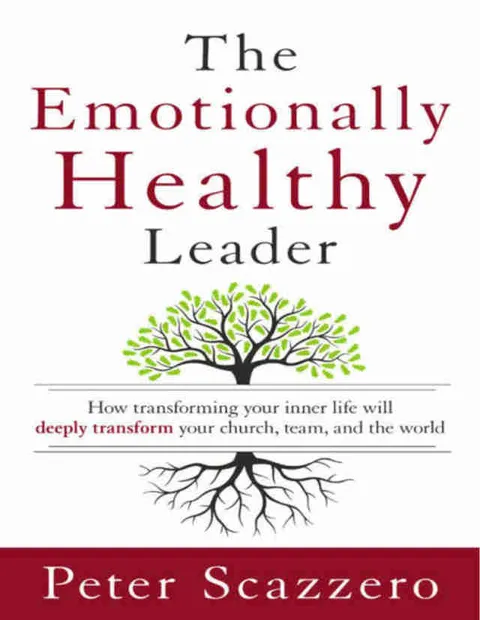
"The Emotionally Healthy Leader" by Peter Scazzero explores how leaders can cultivate emotional health in themselves and their teams to create a more effective and fulfilling work environment. The book emphasizes the importance of self-awareness, boundaries, and leading from a place of emotional maturity. Scazzero combines personal anecdotes with practical advice to help leaders develop a healthy mindset and navigate the challenges of leadership with grace and authenticity.
Jackie Hill Perry

letter to a friend engaged to a nonbeliever
Dear Kelly, I was surprised by the recent news of your engagement. While I wish I could celebrate with you without reservation, I admit I have some. My greatest concern is that your fiancé does not know or love Christ. Because I love you and care about your future, I feel compelled to speak now rather than to hold my peace, knowing full well how you might receive my “peace.” I expect that, if you’re honest, you may have your own reservations about the upcoming ceremony. I hope you will heed those reservations and reconsider. As I have watched people walk down this road, I have noticed several common ways people justify marrying a nonbeliever. I want to address them in hope that you might experience grace to trust God and his word regarding marriage. “Others Are Doing It.” “Let me be clear: to marry an unbeliever is to sin against God (1 Corinthians 7:39).” You know my story. My wife began dating me as an unbeliever. But as much as I love her and our marriage, it was wrong for her to do so. While God was gracious to us, and brought me to a saving knowledge of Christ prior to our wedding date, let me be clear: to marry an unbeliever is to sin against God (1 Corinthians 7:39). Furthermore, the difficult path to my own conversion and then to our wedding ceremony is not one I would wish upon others. I fear you’ve latched onto God’s grace in my marriage (and others like mine) as a sort of promise for your own. God has made no such promise. While God was merciful to bring me to himself despite my wife’s disobedience, we are the exception and not the rule — certainly not the model. I know far more stories that did not play out like ours. The Bible gives us more stories like that (Exodus 34:16; Ezra 9:1–15). Solomon says, “Whoever walks with the wise becomes wise, but the companion of fools will suffer harm” (Proverbs 13:20). Don’t let the mistakes of others serve as a justification for repeating them. “He’s a Good Guy.” While I do think your fiancé is a great guy by earthly standards, it’s his standing before God that matters most for marriage. You mentioned how important it was to you that he respected your boundaries, particularly after your last boyfriend pushed the boundaries, even while claiming to be Christian. I agree that he certainly seems to outshine your last suitor, but it’s easy to fall into the trap of lateral comparison. We must be careful about making choices today based solely on setting them next to bad choices in the past. Look for a man striving to imitate Jesus (1 Corinthians 11:1). Why did you put your faith in Jesus, and choose to follow him? Are you absolutely sure you won’t regret committing yourself until death to someone who might never help you see or love Jesus more? If he does not share your captivation with Christ, you and he will always stand on unlevel and unsteady ground as you carry out your vows in marriage. “Give Him a Chance.” You’ve mentioned that your boyfriend is “warming up” to the idea of spiritual things. You’ve even thought at times he might be on the verge of conversion. Beware of your heart, which is prone to lie to you (Jeremiah 17:9), and of the butterflies in your stomach that often flutter louder than the Spirit within us. Until you are absolutely sure that he has also been born again by the same Spirit alive in you (John 3:5), heed the warning and conviction the Spirit brings (John 16:8). “If he has no interest in the things of Christ now, what makes you think things will change after the wedding?” Don’t be fooled into thinking he is simply “spiritual, but not religious.” There is no such thing as spiritual neutrality. We are always either with Jesus or against him (Matthew 12:30). Despite his warmth toward you, any attempt to have God on his own terms is an attempt to reject the true God over your life and heart. If he has no interest in the things of Christ now, what makes you think things will change after the wedding? “I’ll Die Alone.” I know it can be hard to see other couples getting married, holding hands, and having kids while you remain single. Don’t let this serve as a reason to try and seize marriage at the first opportunity. I wish you could see a glimpse of a future in which you remained faithful to your vows to a man who remained faithless toward your Savior. Worse than attending church alone your entire life, while your husband remained at home, is the haunting thought that the man you gave yourself to might spend eternity separated from you and God. Worse yet is the thought that he might lead you or your children down the same path (Matthew 7:13). It really is possible to be more isolated and alone within a marriage than without. Marriage is no savior. It will not ultimately save anyone from sin or loneliness or unhappiness. It cannot bear the weight of those needs and longings. While the single life is not without trials, remember you are not alone. So long as you cling to Jesus, he will be with you (Matthew 28:20). He will never leave you nor forsake you (Hebrews 13:5). He’s also given you community in the church. Even if your hope for a husband is never fulfilled in this life, you are promised a seat at the great wedding supper of the Lamb (Revelation 19:7), and he will far surpass everything you might have experienced with an earthly husband. “I Already Said ‘Yes.’” I know that backing out of your engagement at this point may cost you, financially and otherwise. I know it might feel embarrassing. But it would be far better in the long run to lose some money and gain a few months of heartache than to commit the rest of your life to a marriage God does not want for you. Until you say, “I do,” it is not too late to wait. God may even redeem the situation in a surprising way for his glory if it is handled well. Would it not speak volumes about your faith if you told him you were deciding to entrust your future to God? If you were to say, “The Lord gave, and the Lord has taken away; blessed be the name of the Lord” (Job 1:21)? Tell him you will settle for nothing less than being married “in the Lord.” Confess your disobedience to God and the sin of misleading him. Your repentance and faith could, by God’s mysterious grace, be the vehicle God uses to bring him to himself. “If you truly love him, your concern for his soul should outweigh your hopes for marriage.” Even then, you must make clear to him that a future with you is not promised. Should he come to saving faith, it must be to have God, not to have a wife. Otherwise, he risks making an idol out of you and using Jesus as a means to something else. If you truly love him, your concern for his soul should outweigh your hopes for marriage. I trust that, if you are willing to listen, the Holy Spirit will lead you into the truth that gaining a husband while forsaking your soul is a trade you do not want to make (Mark 8:36). I also pray that you would eventually see any wounds I have caused you as the faithful wounds of a friend (Proverbs 27:6), and not as those of an enemy. As you seek God’s will, hide yourself in him and his will, and wait with patience for the day he will wipe away every tear. With love and grace, Your Pastor