
Others like the roots of endurance Features >>

The Power Of Your Mind
-160.webp)
The Power Of Your Words: How God Can Bless Your Life Through The Words You Speak

Stand: A Call For The Endurance Of The Saints
The Purpose Driven Life

The Art Of War For Spiritual Battle
The Power Of Awareness

The Power To Change The World
-160.webp)
The Gift Of Prophecy
-160.webp)
The Law Of Recognition (The Laws Of Life Series)

The Gift Of Discerning Of Spirits
About the Book
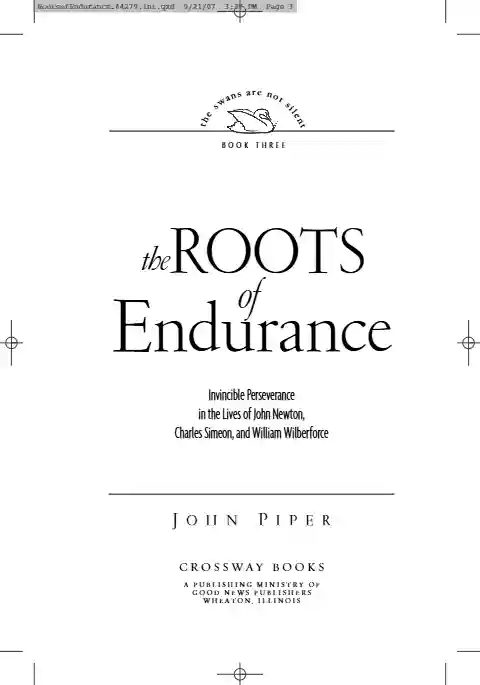
In "The Roots of Endurance," John Piper explores the lives of eight Christian leaders who endured suffering and hardship with unwavering faith. Through their stories, Piper highlights the importance of trusting in God's sovereignty, finding joy in suffering, and persevering in the face of trials. This book serves as a powerful reminder of the strength and endurance that comes from a deep relationship with Christ.
Kenneth E. Hagin
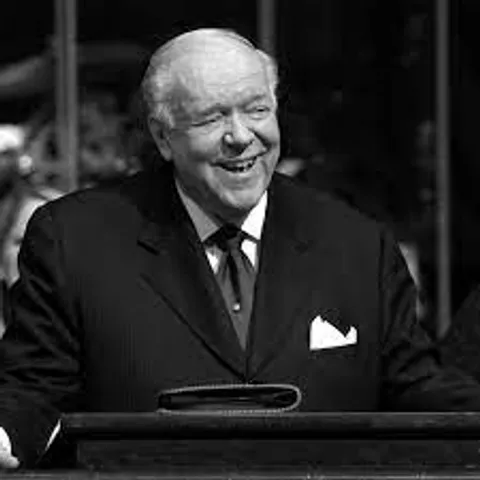 Rev. Kenneth Erwin Hagin was born on Aug. 20, 1917, in McKinney, Texas. Rev. Hagin was sickly as a child, suffering from a deformed heart and an incurable blood disease. He was not expected to live and became bedfast at age 15. In April 1933 during a dramatic conversion experience, he reported dying three times in 10 minutes, each time seeing the horrors of hell and then returning to life.
In August 1934, Rev. Hagin was miraculously healed, raised off a deathbed by the power of God and the revelation of faith in God’s Word. Jesus appeared to Rev. Hagin eight times over the next several years in visions that changed the course of his ministry. In 1967, he began a regular radio broadcast that continues today as Rhema for Today.
In 1968 Rev. Hagin published the first issues of The Word of Faith. That magazine, now produced nine times a year, has a circulation of over 200,000. The publishing outreach he founded, Faith Library Publications, has circulated worldwide more than 75 million copies of books by Rev. Hagin, Kenneth W. Hagin, Lynette Hagin, Craig W. Hagin, and several other authors. Faith Library Publications also has produced millions of audio and video teachings.
Other outreaches of Kenneth Hagin Ministries include Rhema Praise, a weekly television broadcast hosted by Revs. Kenneth and Lynette Hagin; Rhema Correspondence Bible School; Rhema Alumni Association; Rhema Ministerial Association International; the Rhema Prayer and Healing Center; and the Rhema prison ministry.
In 1974 Rev. Hagin founded what is now Rhema Bible Training College. The school has campuses all over the world and continues to expand.
Until shortly before his death, Rev. Hagin continued to travel and teach throughout the United States and into Canada conducting All Faiths’ Crusades and other special meetings.
Known as the “father of the modern faith movement,” Rev. Hagin was a dynamic preacher, teacher, and prophet. His teachings and books are filled with vivid stories that show God’s power and truth working in his life and the lives of others. He will be remembered not only as a great minister but as a great family man—for his family was his heart. He was there at every milestone ready to talk, to answer, to pray. He was a man whose belly laugh filled the room at the sight of one of his grandchildren or great-grandchildren.
Rev. Kenneth Erwin Hagin was born on Aug. 20, 1917, in McKinney, Texas. Rev. Hagin was sickly as a child, suffering from a deformed heart and an incurable blood disease. He was not expected to live and became bedfast at age 15. In April 1933 during a dramatic conversion experience, he reported dying three times in 10 minutes, each time seeing the horrors of hell and then returning to life.
In August 1934, Rev. Hagin was miraculously healed, raised off a deathbed by the power of God and the revelation of faith in God’s Word. Jesus appeared to Rev. Hagin eight times over the next several years in visions that changed the course of his ministry. In 1967, he began a regular radio broadcast that continues today as Rhema for Today.
In 1968 Rev. Hagin published the first issues of The Word of Faith. That magazine, now produced nine times a year, has a circulation of over 200,000. The publishing outreach he founded, Faith Library Publications, has circulated worldwide more than 75 million copies of books by Rev. Hagin, Kenneth W. Hagin, Lynette Hagin, Craig W. Hagin, and several other authors. Faith Library Publications also has produced millions of audio and video teachings.
Other outreaches of Kenneth Hagin Ministries include Rhema Praise, a weekly television broadcast hosted by Revs. Kenneth and Lynette Hagin; Rhema Correspondence Bible School; Rhema Alumni Association; Rhema Ministerial Association International; the Rhema Prayer and Healing Center; and the Rhema prison ministry.
In 1974 Rev. Hagin founded what is now Rhema Bible Training College. The school has campuses all over the world and continues to expand.
Until shortly before his death, Rev. Hagin continued to travel and teach throughout the United States and into Canada conducting All Faiths’ Crusades and other special meetings.
Known as the “father of the modern faith movement,” Rev. Hagin was a dynamic preacher, teacher, and prophet. His teachings and books are filled with vivid stories that show God’s power and truth working in his life and the lives of others. He will be remembered not only as a great minister but as a great family man—for his family was his heart. He was there at every milestone ready to talk, to answer, to pray. He was a man whose belly laugh filled the room at the sight of one of his grandchildren or great-grandchildren.
How God Impacts Our Money and Stuff
The love of money is more than dangerous — it’s spiritual suicide. The consistent warning of Scripture is that the people of God better watch their backs when it comes to the allure of financial gain (Matthew 6:24; 1 Timothy 6:10). Earning a stout salary can be a good thing, but what we do with those earnings is all important — and the writer to the Hebrews can help us. In a list of practical exhortations, he writes, Keep your life free from love of money, and be content with what you have, for he has said, “I will never leave you nor forsake you.” (Hebrews 13:5) This is a simple verse, but the line of argument is astounding. Notice the first two lines. The commands parallel one another: keep your life free from the love of money and be content with what you have. Contentment and Freedom The commands look like different angles on the same posture. We are exhorted to free ourselves from the love of money (and its siren call to acquire more), and then, in the same spirit, we’re exhorted to be content with what we currently have. This latter command (“be content”) functions as a sort of development from the former. In order to really keep ourselves free from the love of money, we have to sincerely believe that what we already have is enough. There’s food on the table and clothes on our back. We’re going to be all right (1 Timothy 6:8). If we lack contentment — if we are always thinking about what we want next — then our orientation on money creeps along from value to veneration. Money becomes our ticket to more. It becomes our gateway to that thing that will give us what we think we’re missing, which means it becomes a hero. And anytime we attribute savior-like qualities to something, however subtle it might be, our affections are sure to follow. If we keep dreaming about what we don’t have, we’ll soon be doing an adulterous rendezvous with the revenue. The most vehement traction against this slippery slope is too simply be okay with what you have. The writer to the Hebrews says to be content. We’re good. We’ll be okay. We can pause our panting for more. And then he tells us why. He Is There Keep your life free from love of money and be content with what you have, for [God] has said, “I will never leave you nor forsake you.” The command for us to be free and content is grounded in God’s promise to always be there. The quotation here is taken from Joshua 1:5, but now carries an amplified meaning after the ascension of Jesus. In the Commission to his disciples, Jesus says clearly, “I am with you always, to the end of the age” (Matthew 28:20). And as he told us about the Holy Spirit, “I will ask the Father, and he will give you another Helper, to be with you forever” (John 14:16). We have the Trinitarian surety that wherever we are, God is there. Whatever circumstance, whether we have abundance or want (Philippians 4:11–12), God is there and he’s not leaving us. This might seem like a strange influence on our financial situation, but it’s really not. The presence of God, as with so many other things, drastically alters our perspective on money and stuff. We don’t love money, and we are content with what we have, because we have God. We don’t love money, and we are content with what we have, because we have God. We can always say, no matter the state of our earthly assets, that “we have a better possession and an abiding one” (Hebrews 10:34). God is our portion (Psalm 73:26). He is a feast for our souls (Psalm 63:5). “I will never leave you nor forsake you,” he says. Our treasure — the most desirable Being in the universe — is irreversibly committed to keeping us close forever. So yeah, money is just money, and what we already have is plenty. Article by Jonathan Parnell