








About the Book
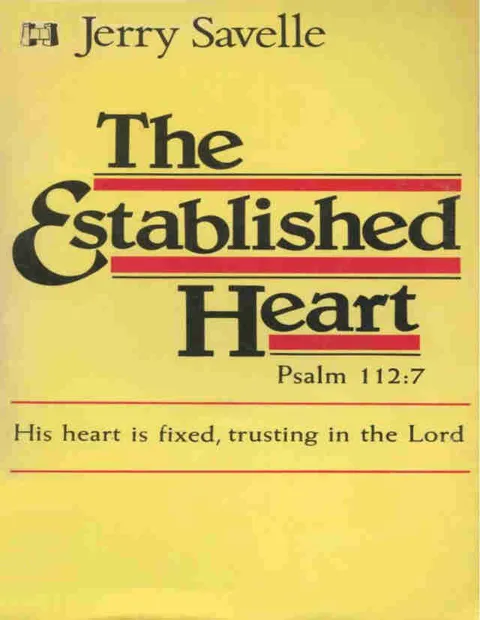
"The Established Heart" by Jerry Savelle is a book that provides practical insights on how to develop a strong and unwavering faith in God. Savelle emphasizes the importance of keeping a steadfast heart in the face of challenges and adversity, using personal anecdotes and biblical teachings to inspire readers to trust in God’s promises. Through a combination of personal reflection and practical advice, Savelle encourages readers to cultivate a heart that is firmly established in faith and trust in God.
Aimee Semple McPherson
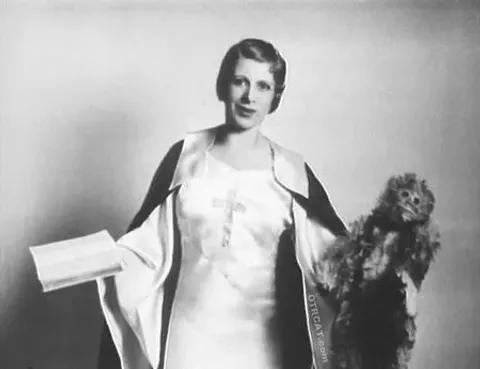 Aimee Semple McPherson was born on Oct. 9, 1890, on a farm in Salford Ontario, Canada. Her father, James Kennedy, was a farmer and came from a Methodist background. Her mother, Mildred, known as “Millie,” came from a Salvation Army background.
Although she was raised in a Christian home, she began to question the Bible during her teen years.
When she was 17, she attended a revival Pentecostal meeting presented by evangelist Robert Semple, where she heard the message of repentance. He also spoke of baptism in the Holy Spirit, an experience for which she hungered. After receiving the infilling of the Holy Spirit, she also was filled with a great love and compassion for souls and a fervent passion to serve the Lord throughout her whole life.
The meeting Aimee attended changed her life not only spiritually but also romantically. The evangelist Robert Semple later become Aimee’s husband. They were married when she was 18. Their ministry desires were compatible. After their ministry trips in Chicago and the Ingersoll area, they headed to China as missionaries.
In 1910 while in China, Robert and Aimee contracted Malaria within months of arriving in Hong Kong. Robert didn’t survive, leaving Aimee pregnant and a widow at 19. When her daughter, Roberta Star, was a month old, Aimee returned to United States to raise her. Aimee and Roberta lived in New York with Aimee’s mother.
She assisted her mother raising money for the Salvation Army. It was there she met and married a Christian businessman named Harold McPherson. They had a son, Rolf Kennedy McPherson. After a decline in health, two major surgeries and a near-death experience, God asked her one last time, “Now, will you go?” She answered yes to God’s call and almost immediately was healed. She never again questioned the call to preach the gospel.
Aimee is known for founding the Foursquare Gospel Church in 1918. She also was a woman ahead of her time, possessing boldness in her speaking ability and creative ways to communicate the gospel.
The name Foursquare Gospel originated from the Book of Ezekiel. It represents the four phases of the gospel of Jesus Christ. In the face of the Man, she saw Jesus our Saviour. In the face of the lion, she saw Jesus the mighty Baptiser with the Holy Spirit and fire. In the face of the ox, she saw Jesus the Great Burden Bearer. In the face of an eagle, she saw Jesus the coming King, who will return in power and glory. It was, in Aimee’s opinion, “a perfect gospel. A complete gospel for body, for spirit and for eternity.”
Her ministry was dynamic. She witnessed thousands saved and healed during her evangelistic meetings. Being creative and theatrical, Aimee used drama, music and opera to appeal to the audience. Bands, choirs and other crowd-pleasing touches enhanced her dynamic preaching. Though she was well-versed in the Bible, Aimee’s success wasn’t based on her knowledge, but rather the delivery of her messages.
She also was known as a faith healer, with claims of physical healing occurring during her meetings. Her faith healing demonstrations were written about extensively in the media, as they were a large focus of her early ministry. Aimee was an evangelistic pioneer, determined to spread the message of the Pentecostal faith, and used her fervour and flamboyance to win a huge following.
She had achieved what no one had yet done in ministry, which was to build a 5,000-seat auditorium in an influential area of Los Angeles. This paved the way for other female evangelists during a time when women were not accepted in the pulpit. She also launched the first Christian radio station and established a Bible college. By 1917, she had started her own magazine The Bridal Call, for which she wrote many articles about women’s roles in religion; she portrayed the link between Christians and Jesus as a marriage bond.
Jan. 1, 1923, the new Angelus Temple was opened in a flamboyant style. Aimee was seated on a red velvet throne dressed in a nurse’s uniform and cape. Accompanying her were 200 singers, three bands, two orchestras and six quartets. The Angelus Temple was featured on a float in Pasadena’s Tournament of Roses parade, while the extravagant dedication service was given full coverage in The New York Times. What became the home of The Church of the Foursquare Gospel filled four times each Sunday and twice weekly. Aimee also ministered at highly sought-after healing services during the week.
Reporters marveled at her oral skills, saying, “Never did I hear such language from a human being. Without one moment’s intermission, she would talk from an hour to an hour and a half, holding her audience spellbound.” Rather than using fire-and-brimstone preaching, Aimee resorted to a style of joyous celebration, representing the loving face of God.
She also brought old-time religion into the modern age, using illustrated sermons to help people understand the gospel better. Also, stage productions were incorporated, drawing people who usual didn’t attend church. In an era prior to television, these services proved entertaining, and she used this method to present the message of salvation through faith in Jesus.
Aimee welcomed all walks of life. She preached to the high class of society, as well as the poor and disadvantaged. She treated everyone equally regardless of race, gender or status.
In the 1920s, Aimee became a well-known voice among civic leaders, politicians, actors and actresses, and pastors from various denominations. Her sermons were reprinted in hundreds of newspapers in Canada, the United States and Mexico and were read by millions. In 1927, she opened a commissary to feed the marginalized and supply them with clothing and other necessities. Aimee set up a 24/7 soup kitchen at her temple in 1936 to help families through the Great Depression .She also became involved with war bond rallies and linked religion to patriotism in her sermons when America joined the Second World War in 1941.
Aimee’s legacy is threefold. Using the dramatic arts to reach the lost (an innovative tool) and the latest technology to spread the gospel. She reached out to the poor, helping thousands in the Los Angeles area who were starving. She taught a full-gospel message and regularly saw thousands of healings and miracles in her meetings.
Aimee passed away due to an accidental overdose in 1944 and was buried in Forest Lawn Memorial Park Cemetery in California. Her son, Rolf, has kept her memory and ministry alive by carrying the ministry for 40 four years. The Foursquare church is still standing strong with 8 million members worldwide.
Aimee Semple McPherson was born on Oct. 9, 1890, on a farm in Salford Ontario, Canada. Her father, James Kennedy, was a farmer and came from a Methodist background. Her mother, Mildred, known as “Millie,” came from a Salvation Army background.
Although she was raised in a Christian home, she began to question the Bible during her teen years.
When she was 17, she attended a revival Pentecostal meeting presented by evangelist Robert Semple, where she heard the message of repentance. He also spoke of baptism in the Holy Spirit, an experience for which she hungered. After receiving the infilling of the Holy Spirit, she also was filled with a great love and compassion for souls and a fervent passion to serve the Lord throughout her whole life.
The meeting Aimee attended changed her life not only spiritually but also romantically. The evangelist Robert Semple later become Aimee’s husband. They were married when she was 18. Their ministry desires were compatible. After their ministry trips in Chicago and the Ingersoll area, they headed to China as missionaries.
In 1910 while in China, Robert and Aimee contracted Malaria within months of arriving in Hong Kong. Robert didn’t survive, leaving Aimee pregnant and a widow at 19. When her daughter, Roberta Star, was a month old, Aimee returned to United States to raise her. Aimee and Roberta lived in New York with Aimee’s mother.
She assisted her mother raising money for the Salvation Army. It was there she met and married a Christian businessman named Harold McPherson. They had a son, Rolf Kennedy McPherson. After a decline in health, two major surgeries and a near-death experience, God asked her one last time, “Now, will you go?” She answered yes to God’s call and almost immediately was healed. She never again questioned the call to preach the gospel.
Aimee is known for founding the Foursquare Gospel Church in 1918. She also was a woman ahead of her time, possessing boldness in her speaking ability and creative ways to communicate the gospel.
The name Foursquare Gospel originated from the Book of Ezekiel. It represents the four phases of the gospel of Jesus Christ. In the face of the Man, she saw Jesus our Saviour. In the face of the lion, she saw Jesus the mighty Baptiser with the Holy Spirit and fire. In the face of the ox, she saw Jesus the Great Burden Bearer. In the face of an eagle, she saw Jesus the coming King, who will return in power and glory. It was, in Aimee’s opinion, “a perfect gospel. A complete gospel for body, for spirit and for eternity.”
Her ministry was dynamic. She witnessed thousands saved and healed during her evangelistic meetings. Being creative and theatrical, Aimee used drama, music and opera to appeal to the audience. Bands, choirs and other crowd-pleasing touches enhanced her dynamic preaching. Though she was well-versed in the Bible, Aimee’s success wasn’t based on her knowledge, but rather the delivery of her messages.
She also was known as a faith healer, with claims of physical healing occurring during her meetings. Her faith healing demonstrations were written about extensively in the media, as they were a large focus of her early ministry. Aimee was an evangelistic pioneer, determined to spread the message of the Pentecostal faith, and used her fervour and flamboyance to win a huge following.
She had achieved what no one had yet done in ministry, which was to build a 5,000-seat auditorium in an influential area of Los Angeles. This paved the way for other female evangelists during a time when women were not accepted in the pulpit. She also launched the first Christian radio station and established a Bible college. By 1917, she had started her own magazine The Bridal Call, for which she wrote many articles about women’s roles in religion; she portrayed the link between Christians and Jesus as a marriage bond.
Jan. 1, 1923, the new Angelus Temple was opened in a flamboyant style. Aimee was seated on a red velvet throne dressed in a nurse’s uniform and cape. Accompanying her were 200 singers, three bands, two orchestras and six quartets. The Angelus Temple was featured on a float in Pasadena’s Tournament of Roses parade, while the extravagant dedication service was given full coverage in The New York Times. What became the home of The Church of the Foursquare Gospel filled four times each Sunday and twice weekly. Aimee also ministered at highly sought-after healing services during the week.
Reporters marveled at her oral skills, saying, “Never did I hear such language from a human being. Without one moment’s intermission, she would talk from an hour to an hour and a half, holding her audience spellbound.” Rather than using fire-and-brimstone preaching, Aimee resorted to a style of joyous celebration, representing the loving face of God.
She also brought old-time religion into the modern age, using illustrated sermons to help people understand the gospel better. Also, stage productions were incorporated, drawing people who usual didn’t attend church. In an era prior to television, these services proved entertaining, and she used this method to present the message of salvation through faith in Jesus.
Aimee welcomed all walks of life. She preached to the high class of society, as well as the poor and disadvantaged. She treated everyone equally regardless of race, gender or status.
In the 1920s, Aimee became a well-known voice among civic leaders, politicians, actors and actresses, and pastors from various denominations. Her sermons were reprinted in hundreds of newspapers in Canada, the United States and Mexico and were read by millions. In 1927, she opened a commissary to feed the marginalized and supply them with clothing and other necessities. Aimee set up a 24/7 soup kitchen at her temple in 1936 to help families through the Great Depression .She also became involved with war bond rallies and linked religion to patriotism in her sermons when America joined the Second World War in 1941.
Aimee’s legacy is threefold. Using the dramatic arts to reach the lost (an innovative tool) and the latest technology to spread the gospel. She reached out to the poor, helping thousands in the Los Angeles area who were starving. She taught a full-gospel message and regularly saw thousands of healings and miracles in her meetings.
Aimee passed away due to an accidental overdose in 1944 and was buried in Forest Lawn Memorial Park Cemetery in California. Her son, Rolf, has kept her memory and ministry alive by carrying the ministry for 40 four years. The Foursquare church is still standing strong with 8 million members worldwide.
to all who feel empty - invitation to the bored and disappointed
It was a small, flesh-colored growth on my cheek. The doctor said it was mild skin cancer and should be removed. But after looking at the biopsy, the hospital’s tumor board recommended a second procedure to remove more skin, to be sure they got it all. That’s when my fear started. What if the cancer has already spread? What if this is more serious than everyone is saying? What if it’s too late? At times like this, it’s tempting to seek comfort in being positive (“It will be okay”), in percentages (“Most of these cancers are nothing”), or in self-pity (“Why is this happening to me?”). But God invites us to a far better comfort: Come, everyone who thirsts, come to the waters; and he who has no money, come, buy and eat! Come, buy wine and milk. without money and without price. Why do you spend your money for that which is not bread, and your labor for that which does not satisfy? Listen diligently to me, and eat what is good, and delight yourselves in rich food. Incline your ear, and come to me; hear, that your soul may live; and I will make with you an everlasting covenant, my steadfast, sure love for David. (Isaiah 55:1–3) This invitation is for everyone who is emotionally thirsty and hungry, longing for peace and joy. It’s for everyone who feels bored, insecure, jealous, frustrated, impatient, disappointed, fearful. Fearful . That described me. So, God’s invitation was for me . “God satisfies us fully and lastingly by giving us himself.” And what does this invitation promise? God promises to satisfy and delight our hearts (Isaiah 55:2) with wine and milk and rich food (Isaiah 55:1). How does he do this? Not by giving us earthly comforts, since at best those give temporary, partial satisfaction. No: God satisfies us fully and lastingly by giving us himself . We can see this by comparing the beginning of the passage, where God says, “Come to the waters ,” with the end, where he says, “Come to me .” What God gives us is himself . Sit and Eat The prophet Hosea puts it this way: “Let us know; let us press on to know the Lord; his going out is sure as the dawn; he will come to us as the showers, as the spring rains that water the earth” (Hosea 6:3). We are dry, parched land, in need of rain. And God promises that when we press on to know him, he himself will come to us with the refreshing rain of his presence. And he says this promise is as certain as the sun rising tomorrow. So, when we are emotionally hungry and thirsty, it’s like God is inviting us to a banquet table piled high with sizzling chicken fajitas and hot, cheesy lasagna and apple pie à la mode and fresh-baked chocolate chip cookies and water and wine and milk. All we need to do is come, sit down, and eat. But if that’s true, then why are we ever emotionally hungry and thirsty? Why do we get bored, or jealous, or bitter, or insecure? And why was I feeling such fear? Why Such Fear? We often blame our circumstances. We think we lack joy and peace because we didn’t get the promotion, or because our children aren’t behaving, or because we’re stuck in traffic, or in my case, because I have skin cancer. But God says there’s a deeper reason. It’s that we’ve ignored his invitation, and taken our hunger to what is not bread (Isaiah 55:2). We’ve turned from God’s table to the world’s table, which at best has an occasional rotten, mushy banana, a day-old bowl of half-eaten oatmeal, or a glass of murky water. That’s why I was fearful. I was ignoring God’s table, with its unshakable promises of everlasting joy, and was trusting the world’s table, whose promises were being threatened by skin cancer. And that’s why we are: Bored: We are ignoring God’s table and looking for something exciting at the world’s table. But nothing looks promising. Grumpy: We were hoping something on the world’s table would satisfy us, but when we sat down, it ended up being a dry, half-eaten cracker. Disappointed: We’ve been trusting that something on the world’s table will satisfy us, but either it was taken away, or it didn’t end up being what we hoped for. Jealous: We’re sitting at the world’s table but are not satisfied with what we’ve been served, and we think that what someone else was served would make us happier. Whenever we feel emotional hunger and thirst, we do well to ask if we’ve moved from God’s guaranteed, all-satisfying table to the world’s uncertain, disappointing table. Buy Without Money But turning from God’s table not only leaves us hungry and thirsty. It also makes us guilty before God, because eating from the world’s table is sin. And sin requires a payment of punishment, which is why God says his food must be bought (Isaiah 55:1). But God also says that we have no money (Isaiah 55:1), because we can’t make up for our sin by being good enough. “When we press on to know God, he himself will come to us with the refreshing rain of his presence.” So, if we are going to enjoy God’s table, someone else must make the payment. And two chapters earlier we read that this is what the Messiah would do: “He was pierced for our transgressions; he was crushed for our iniquities” (Isaiah 53:5). Though we have no money, we can buy this food by trusting Jesus, who pays the penalty of our punishment by dying on the cross. God has given us the invitation, and he has paid the price. So, how do we get up from the world’s table and enjoy God’s table? Come to the Table Here are the steps God used to help me. First, I confessed my sin to God — that I had turned from his table to the world’s table, and I was fearful because the world’s promise of earthly comforts and long life was threatened by my skin cancer (1 John 1:9). Second, I admitted to God that I could not pay for my sins, and I thanked and praised him that Jesus fully paid for them on the cross (1 Peter 3:18). Third, I asked God to help me taste and experience how superior his banquet is to the world’s table (Psalm 43:3–4). Fourth, I set my heart on a few Scriptures that describe God’s banquet (John 8:31–32): Pleasure in him now and forever (Psalm 16:11). Joy unspeakable and full of glory (1 Peter 1:8). Life in Christ now, and gain when I die (Philippians 1:21). A heavenly, eternal dwelling made by God himself (2 Corinthians 5:1–4). Fifth, I prayed over these Scriptures, asking God to help me feel their reality and glory, until I experienced the Spirit changing and satisfying my heart (John 6:35). And that’s what he did. Over the next twenty minutes, I felt my faith strengthen and my fear disappear, as God used his word to give me a taste of his all-satisfying glory, which nothing, not even death, can threaten. Are you sitting at the world’s table, hungry and disappointed? If so, God is inviting you to his piled-high banquet table. He’s paid for the ticket, and is holding a seat for you. Enjoy the feast.
-480.webp)