
Others like the birth of satan Features >>
The Authority Of The Bible And The Rise Of The Modern World
Paul And The Language Of Faith

The Disciple Whom Jesus Loved
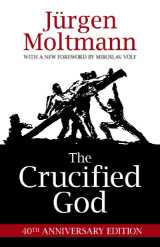
The Crucified God

Hebrews For Everyone
God The Father, God The Son, God The Holy Spirit
Discipleship: The Road Less Taken
God Vs Darwin
Deep Exegesis - The Mystery Of Reading Scripture
Did God Really Command Genocide: Coming To Terms With The Justice Of God
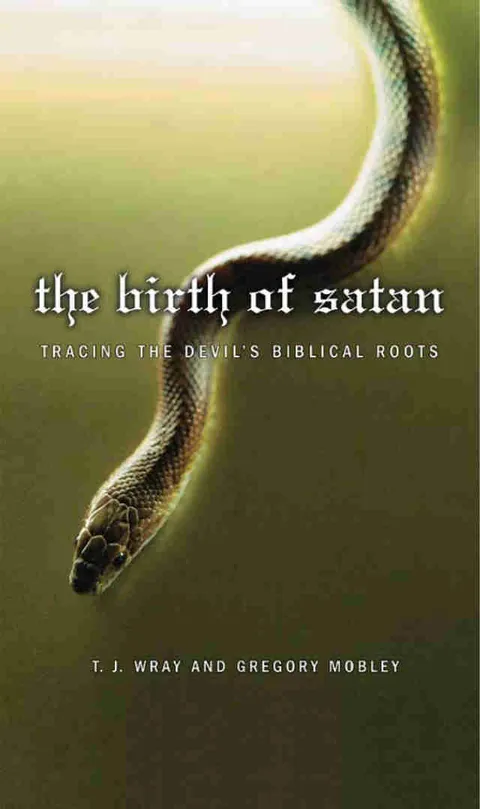
About the Book
"The Birth of Satan" by T.J. Wray and Gregory Mobley explores the origins and evolution of the figure of Satan in religious and cultural histories. The book discusses how Satan has been portrayed and interpreted throughout different time periods, including in the Bible and in contemporary popular culture. Wray and Mobley examine the ways in which the concept of Satan has influenced society's understanding of evil and moral responsibility.
Brother Andrew
Son of a blacksmith, Brother Andrew didnât even finish high school. But God used this ordinary dutch man, with his bad back, limited education, without sponsorship and no funds to do things that many said were impossible. From Yugoslavia to North Korea, Brother Andrew penetrated countries hostile to the gospel to bring bibles and encouragement to believers.
Andy van der Bijl, who became known as Brother Andrew, was born in 1928 the son of a deaf father and a semi-invalid mother. Andrew was the third of six children and they lived in the smallest house in the village of Witte in the Netherlands.
In the book Godâs smuggler, Andrew describes the impact that the death of his oldest brother âBasâ had upon him. Bas, who was severely handicapped died when Andrew was just 11 years old. Andrew had wanted to die with Bas, but God hadnât let him.
THIRST FOR ADVENTURE
As a child, brother Andrew was mischievous and dreamt of adventure. When Germany invaded, Andrew amused himself (and the rest of the village) by playing pranks on the occupying troops.
NOTORIOUS COMMANDO WHO NEEDED GOD
His thirst for adventure led him into the Dutch army at the age of 18 where he became a notorious commando. Andrew and his comrades became famous for wearing yellow straw hats in battle, their motto was: âget smart â lose your mindâ.
The atrocities that Andrew committed as a commando haunted him and he became wrapped in a sense of guilt. Nothing he did â drinking, fighting, writing or reading letters helped him escape the strangle that guilt had upon him.
Shot in the ankle in combat, at the age of 20, his time in the army came to an abrupt end.
In hospital, bed ridden, the witness of Franciscan sisters who served the sick joyfully and the conviction of his own sin, drove him to read the Bible. Andy studied the bible while asking many questions to a friend (Thile), who had written to him throughout his time in the army. Andrew sent questions to Thile who searched for answers from her pastor and the library. His searching within the bible did not however lead him to give his life to God whilst he was still in hospital.
ANDREW RETURNS HOME A CRIPPLE AND SEEKS GOD
Returning home a cripple to his old town, Andrewâs life was empty. He had not found the adventure he had been looking for.
Somehow however, when he return home, he developed a thirst for God. Every evening Andrew attended a meeting and during the day he would read the bible and lookup up bible verses mentioned in the sermons he had heard. At last, one evening he gave up his ego and prayed: âLord if You will show me the way, I will follow You. Amenâ.
GOD CALLS BROTHER ANDREW TO MISSION
Soon after becoming a Christian, Brother Andrew attended a an evangelistic meeting taken by a Dutch evangelist Arne Donker. At this meeting Andrew responded to the call to become a missionary. This call to share the good news of salvation started at home, with Andrew and his friend Kees holding an evangelistic event with Pastor Donker in their home town of Witte.
Before going away on mission, Andrew started work at the Ringers chocolate factory. Working in a female dominated environment which was smitten with filthy jokes, God used Andrew and another Christian, and future wife Corrie, to reach their lost co-workers. Through personal witness and inviting them to evangelistic events, many became Christians, including the ring leader of the women. The atmosphere at work changed dramatically and prayer groups were held.
Andrew excelled in his work despite being lame and Mr Ringers, the owner of the factory applauded his work and evangelistic efforts. Because of his high IQ, Andrew was trained up as a job analyst within the factory. But Andrew knew that God was calling him to mission. The big obstacle however was his lack of education.
Giving up smoking, Andrew was able to start saving to buy books. Andrew bought dictionaries and commentaries and so began studying in his spare time. One day Andrew learnt about the bible college in Glasgow run by the WEC mission. At Glasgow bible college Christians could be trained up for mission in 2 years.
Unsure of Gods will for his life, Andrew spent a Sunday afternoon alone with God, speaking aloud with God. Through this time, Andrew realised that he needed to say âyesâ to God who was calling him to mission. Before this, Andrew had been saying âYes BUT I am lame.â âYes BUT I have no educationâ. Andrew said yes. In an amazing instant, Andrew made this step of yes, and in Godâs grace he healed Andrews lame leg.
ANDREW GOES TO ENGLAND
Andrew applied for the Bible college in Glasgow and was accepted. Sponsored by no church, no organisation and lacking education, Andrew obeyed God and went despite being told by the love of his life at the time (Thile) that in going he would lose her.
Andrewâs place at the bible college was delayed by a year. Despite receiving a telegram from WEC telling him not to come, Andrew believed God was instructing him to go. In faith he obeyed God and left for England in 1952.
Andrew spent the first few months in England painting the WEC headquarters building (Bulstrode). While living at Bulstrode, Andrew began spending time with God at the beginning of everyday â a Quiet Time. This was something that Andrew found helpful and endeavoured to do every day of his life. Once Andrew had finished painting Bulstrode, he then moved in with Mr and Mrs Hopkins. Living with Mr and Mrs Hopkins, they developed a wonderful relationship. Andy learnt so much from the couple because they were utterly without self-consciousness and opened up their home to drunks and beggars.
In September 1953, Brother Andrew started his studies at the WEC Glasgow bible college. Over the entrance of the wooden archway of the college were the wordsâhave faith in Godâ. During the following two years whilst studying, Andrew learnt about having faith in God and put his faith into practice in numerous ways.
THE KINGS WAY
Throughout his time at Glasgow bible college, Andy learnt of âThe Kings Wayâ in providing. Andrew saw God provide every essential need he had and always provide on time. In the book Godâs Smuggler, Andrew describes how it was exciting waiting to see how God would provide at his time of need. God always provided, but did so, not according to mans logic but in a kingly matter, not in a grovelling way.
One example of God providing miraculously was when Andrew needed to pay his visa. When Andrew received a visitor the day before he needed to send off his application for a visa, he was confident that the visitor would have come to give him money to pay for the visa. But the visitor was Richard, a man who Andrew had met in the slums in Glasgow. Richard had not come to give, but to ask. Andy explained that he had no money himself to give to Richard, but as he spoke, Andy saw a Shilling on the floor. This shilling was how much Andy needed to pay for his visa which would mean he could stay at the bible school. Rather than keeping the Shilling for himself, Andrew gave the Shilling to Richard. Andy had done what he knew was right, but how would God provide? Minutes later, Andy received a letter and in it was 30 Shillings! God had provided in His way, a Kingly Manner of provision.
GOD CALLS ANDREW BEHIND THE IRON CURTAIN
Leaving bible college in 1955, God guided Andy to attend a Communist trip to Warsaw. This would be the first of many trips into Communist countries.
During his first trip to Warsaw, brother Andrew visited local churches, a bible shop and spoke with Christians in the country. Coming back to Holland, Andrew had lots of opportunities to share about his trip and how Christians lived behind the iron curtain.
Weeks later, the communist party arranged for him to attend a trip to Czechoslovakia. Andrew managed to break away from the organised trip to learn that the church was suffering and that bibles were very scarce. Officials were angry he had broken away from the official tour and had contact with Christians so he was prohibited from entering the country again. But his trip had opened his eyes to the needs of the church behind the iron curtain and this became his mission field.
In the following years, Andy dedicated his life to the needs of the church in the Communist countries. God provided Andrew with a new Volkswagen Beetle and with it Brother Andrew smuggled bibles and literature into the countries in need. Working alone for the first few years, Andrew worked tirelessly in serving the churches behind the iron curtain. When Andrew had finished one trip he would go back to Holland where he would share his experience and then go back to one of the countries. Each trip was full of stories of how God had miraculously provided and led Andrew to meet Godly believers.
ANDREW MARRIES AND HAS A FAMILY
Although serving God in this way was exciting, Andrew felt alone and wanted a wife. In the book Godâs Smuggler, Andrew describes how he prayed about a wife three times. The first two times that Brother Andrew asked for a wife God spoke to him clearly through Isaiah 54:1 âThe children of the desolate are more than the children of the marriedâ. But Andrew prayed a third time about it, and this time God answered his prayer, reminding him of a lady he worked with at the Ringers chocolate factor, Corrie van Dam. Andrew hadnât had contact with Corrie for a long time so went to visit her. By Godâs grace, Corrie was still single and over a period of several years Andrew and Corrie became great friends. Corrie and Andrew married on June 27th 1958 in Alkmaar, Netherlands.
Corrie was married to a missionary and Andrew very much continued to live like a missionary, smuggling bibles into countries closed countries. Over the years, God blessed Corrie and Andrew with five children, three boys and two girls.
ANDREW STARTS WORKING WITH OTHERS
Andrew kept serving God behind the iron curtain but the work had become difficult to do alone. Andrew thought about how helpful it would be to have a co-worker. This began with a man called Hans and slowly grew until a number of them were smuggling bibles into the communist countries.
SERVING THE WORLD WIDE CHURCH
When the doors to communist Europe were opened in the 1960âs, Brother Andrew began to serve and strengthen the churches in the Middle East and Islamic world.
BROTHER ANDREW RECEIVES RELIGIOUS LIBERTY AWARD IN 2007
On Andy van der Bijlâs 69th birthday, he was honoured by being awarded âThe Religious Liberty Awardâ which was presented by the World Evangelical Fellowship (WEF). The chairman of WEFâs Religious Liberty Commission stated:
âBrother Andrew has been the preeminent example of those from the outside who have excelled in the ministry of encouragement â the many years he has devoted himself to serving the oppressed. His exploits have become legendary as he has crossed borders carrying Bibles, which were liable to confiscation. Time after time God has blinded the eyes of the border guards, and the Bibles got through.
BROTHER ANDREW RESOURCES
Godâs Smuggler â Book about Brother Andrew smuggling Bibles.
Weighing the Beauty and Brevity of Life
Itâs been ten years since my father died. A decade. Already? Nearly 20 percent of my lifetime has passed since I last saw him. Where did the time go? My oldest child recently turned 24. To me it seems that almost yesterday I was holding that precious newborn, singing softly to him while slowly pacing in the hospital room. But in reality, Iâve since lived 44 percent of my lifetime. Where did the time go? Thirty-six years ago, I began dating a beautiful 16-year-old girl whom I had the extraordinary privilege of marrying four years later. Scenes from that hot, sunny, summer day when it all began are still vivid to me, and have a hue of new  about them. Yet 65 percent of my life has managed to slip by since that monumental moment became a memory. Where did the time go? Where did the time go?  Why do we all ask some form of that question â and ask it over and over as the years pass? Itâs not like we donât know. Each of the approximately 3,700 days since my father died, the 8,800 days since my son was born, and the 13,200 days since my wife and I began dating passed just like the ones before it. The days accumulated over time. Itâs simple math. But of course, itâs not the math that bewilders us. Weâre bewildered by something far more profound â that this life weâve been given, this significant existence with all its sweet and bitter dimensions, passes so quickly and then is gone. We Are Marvels We all intuitively discern that our lives have profound significance. Even when weâre told they donât, we donât really believe it â or if we really do, we no longer want to live. We also intuitively discern that there is profound significance to the great human story-arc, with all of its collective triumphs and tragedies. This isnât mere human hubris, because most of us, including the greatest among us, have always been cognizant of our smallness in the cosmos. Truly did David pray, When I look at your heavens, the work of your fingers,      the moon and the stars, which you have set in place, what is man that you are mindful of him,      and the son of man that you care for him? (Psalm 8:3â4) âWe are marvels of creation, who long for eternity, yet whose lifespans here are like a mist.â But even in view of our smallness, itâs undeniable that there is something awesome about humanity. Just a brief glance around us shouts this. From where Iâm writing (on a laptop computer wirelessly connected to the world!), I see automobiles driving by, a commercial jet flying overhead, an educational institution devoted to helping underprivileged children succeed in school, and a talented gardener carefully cultivating her organic artwork. These phenomena are just part of ânormalâ daily life for me, yet each represents staggering layers of human ingenuity. And to top it off, my (also wirelessly world-connected) mobile phone has just informed me that NASA has successfully launched its latest rover mission to the planet Mars. Without denying our great and grievous capacities for evil, every single one of us is simply a marvel in our various ranges of intellect, capacities for language and communication, aptitudes for innovation, abilities to impose order upon chaos, and contributions to collective human achievements. Truly did David pray, You have made [man] a little lower than the heavenly beings      and crowned him with glory and honor. You have given him dominion over the works of your hands;      you have put all things under his feet. (Psalm 8:5â6) God has endowed human beings with the glory and honor of being made in his image (Genesis 1:26â27). This is the profound significance we all intuit, even those who deny it. Our lives are imbued with tremendous meaning. We Are Mists Yet each of our profoundly significant earthly lives, no matter how short or long it lasts, is so brief. We look up to find 10, 24, 36 years have suddenly passed. Repeatedly weâre hit with the realization that our lives âare soon gone, and we fly awayâ (Psalm 90:10). Truly did David pray, Behold, you have made my days a few handbreadths,      and my lifetime is as nothing before you. Surely all mankind stands as a mere breath! (Psalm 39:5) And truly did James say, âWhat is your life? For you are a mist that appears for a little time and then vanishesâ (James 4:14). Itâs this existential experience of being marvels and mists that we find bewildering. We find it a strange phenomenon to watch our lives move relentlessly along a continuum, leaving experiences that are massively important to us in an increasingly distant past, while our earthly end â the end of the only reality weâve ever known â approaches with unnerving speed. It recurrently catches us by surprise. With Eternity in Our Hearts But why  do we find this experience strange and surprising? Many experts from various branches of the cognitive and biological sciences venture answers. But just as recounting the math of passing days doesnât address the strangeness and surprise we feel when we ask, âWhere did the time go?â neither do the chemical mechanics of consciousness. And thereâs more to the deep longings this whole experience awakens than just the awareness and anticipation of our mortality. Truly did the writer of Ecclesiastes say, [God] has put eternity into manâs heart, yet so that he cannot find out what God has done from the beginning to the end. (Ecclesiastes 3:11) God has given us the ability to conceive of eternity, yet in spite of conferring upon us many marvelous capacities, he has not granted us to peer into eternity past or eternity future, no matter how hard we try. And due to our efforts to seize forbidden knowledge, God has withdrawn our once-free access to simply eat of the tree of life and live forever (Genesis 3:22â24). We are marvels of creation, whose lives are imbued with great meaning, who long for eternity, yet whose lifespans here are like a mist. No wonder we find time mystifying. Teach Us to Number Our Days Our strange experience of the passing of time is more than a by-product of consciousness, more than mere existential angst over mortality. It is a reminder and a pointer. âGod has reopened for us the way to the tree of life, to eternal life, and that way is through his Son, Jesus.â It is a reminder  that we are contingent creatures and that the profound significance we intuitively know our lives possess is derived  significance, not self-conferred  significance. Though created in the likeness of God and given marvelous capacities, we are not self-existent or self-determining like God. Rather, âin him we live and move and have our beingâ (Acts 17:28), receiving from him our âallotted periodsâ of life and âthe boundaries of [our] dwelling placeâ (Acts 17:26). And the brevity of those allotted periods of life are meant to make us cry out, âO Lord, make me know my end and what is the measure of my days; let me know how fleeting I am!â (Psalm 39:4). And our experience of deep heart longing for eternity in the face of such brevity is a pointer  that we are actually designed for such a thing as eternal life. For those who have eyes to see, this is a gospel pointer. For God has reopened for us the way to the tree of life, to eternal life, and that way is through his Son, Jesus (John 3:16; 14:6; Romans 6:23; Revelation 2:7). Those moments when we ask, âWhere did the time go?â are reminders that âall flesh is grass, and all its beauty is like the flower of the field. The grass withers, the flower fades when the breath of the Lord blows on itâ (Isaiah 40:6â7). And they are pointers to the reality that though our âdays are like grass,â yet âthe steadfast love of the Lord is from everlasting to everlasting on those who fear himâ (Psalm 103:15â17). Those moments come to us in order to âteach us to number our days that we may get a heart of wisdomâ (Psalm 90:12).