
Others like the crucified god Features >>
Ethics Of Hope
At The Origins Of Christian Worship

The Bible And Reason
The Justification Of God (An Exegetical And Theological Study Of Romans 91-23)
Christ In His Sanctuary
Searching For The Pattern
An Exposition Of The Seven Church Ages
The Birth Of Satan
Deep Exegesis - The Mystery Of Reading Scripture
Way Of Life Encyclopedia Of The Bible & Christianity
About the Book
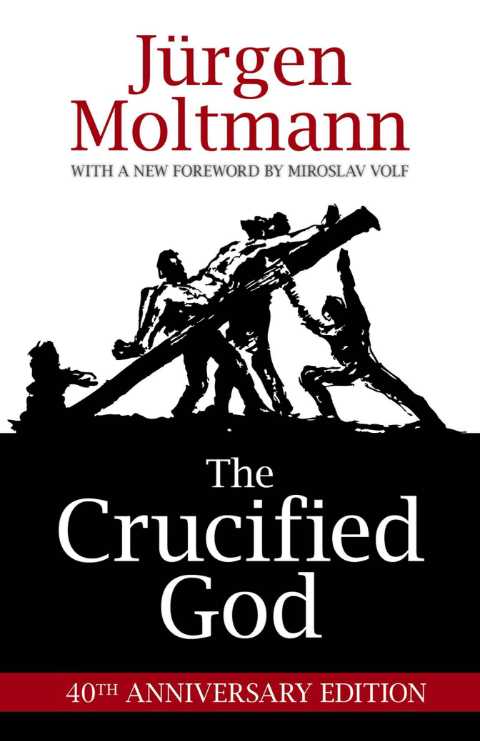
"The Crucified God" by Jurgen Moltmann is a profound theological exploration of the significance of Christ's crucifixion. Moltmann argues that the crucifixion is not just a historical event, but an ongoing reality that reveals God's solidarity with humanity in suffering. He emphasizes the transformative power of the cross in bringing hope and redemption to a broken world, and challenges traditional understandings of God's omnipotence and impassibility. Moltmann ultimately presents a vision of a God who suffers alongside humanity, offering love, forgiveness, and new life through the crucified Christ.
Oral Roberts
Granville Oral Roberts was born January 24, 1918 in Pontotoc County, near Ada, in Oklahoma. His parents were deeply religious. His father was a farmer who also preached the gospel and established Pentecostal Holiness churches. His mother regularly prayed for the sick and led people to Christ. While she was still pregnant, Robert's mother committed Oral to God's service. Even though Oral had a very strong stutter his mother would tell him that one day God would heal his tongue and he would speak to multitudes.
The Roberts family was desperately poor. When Roberts was 16 he moved away from home, hoping for a better life. He rejected God and his upbringing. He started living a wild life and his health collapsed. Roberts had contracted tuberculosis. He returned home and eventually dropped to 120 pounds. He was a walking skeleton. God spoke to his older sister, Jewel, and told her that He was going to heal Oral. During this same time Oral turned his heart back to God and gave his life to Christ. A traveling healing evangelist named George Moncey came to Ada and held meetings in a tent. Oral's elder brother was touched when he saw friends of his healed in the meeting. He decided that he should get Oral and bring him to be healed. On the way to the meeting God spoke to Oral and said "Son, I'm going to heal you and you are to take my healing power to your generation. You are to build me a University and build it on My authority and the Holy Spirit." Once at the meeting Oral waited until the very end. He was too sick to get up and receive prayer, and so had to wait for Moncey to come to him. At 11:00 at night his parents lifted him so he could stand. When Moncey prayed for him the power of God hit him and he was instantly healed. Not only that but every bit of his stutter was gone!
After Roberts was healed he began to travel the evangelistic circuit. He met and married Evelyn Lutman, a school teacher from the same Holiness Pentecostal background as Roberts. They had their first child Rebecca and then the entire family began traveling as ministers. In 1942 they left the evangelistic field for a while and Roberts became a pastor. He also returned to college to further his education. While a pastor he prayed for a church member whose foot was crushed. The foot was instantly healed. God continued to speak to Roberts about his call to the multitudes. God called him to an unusual fast. Roberts was to read the four gospels and the book of Acts three times consecutively, while on his knees, for thirty days. God began to reveal Jesus as the healer in a new way. God also began to give Roberts dreams where he would see people's needs as God saw them. God called him to hold a healing meeting in his town. A woman was dramatically healed, several people were saved and Roberts' ministry changed overnight.
Roberts resigned his church in 1947 and began an itinerant ministry. Notable healings began to occur. One man tried to shoot Roberts. God used the story to bring him media attention, which expanded his ministry very quickly. Roberts felt called to purchase a tent and take his evangelistic ministry to larger cities. His first tent held 3,000 but he quickly exchanged it for a tent that held 12,000. In July 1948 The Oral Roberts Evangelistic Association was established. Oral began traveling continuously throughout the United States. Like many of his Pentecostal brethren Roberts held inter-racial meetings. This brought him a lot of negative attention from groups who didn't like his stand. He even received death threats for not holding segregated meetings. In 1956 Roberts was invited to Australia. He held meetings in Sydney and Melbourne. In Melbourne there were outright physical attacks and destructive gangs. He was literally driven out of the city for praying for the sick. Often when people discuss the healing revival of the 1950s Oral Roberts and William Branham are listed as the most widely recognized leaders of the movement. Others came along side and many emulated them, but they were the most widely recognized personalities.
Roberts was a man who understood and used the media for his benefit. Roberts began publishing a magazine almost immediately upon starting his ministry. He grasped the power of radio and television. In 1954 Roberts began filming his crusades. He began playing his sermons on radio and then airing the crusade tapes during evening television prime time. Unfortunately there is some evidence that healing meetings were scripted ahead of time, and not all healings were genuine. People began writing to the Ministry headquarters by the thousands. They were accepting Christ as their savior after seeing a person healed on TV. By 1957 the ministry was receiving 1,000 letters a day and he was getting thousands of phone calls. He established a round the clock prayer team to answer calls and pray for people who contacted the ministry. In 1957 Roberts claimed 1,000,000 salvations. Between 1947 and 1968 Roberts conducted over 300 major Crusades. Money was flowing into the organization at an unprecedented rate.
In the late 1950s the healing movement was waning and ministries were under attack for their lack of financial accountability. Roberts began to move on the vision God gave him to build a University. It was chartered in 1963 and became open to students in 1965. Roberts was having a significant national impact in the late 1950s and early 1960s. For several years his named appeared in the Top 100 list of the nation's most respected people. Although Roberts continued to hold healing meetings his focus shifted to the University and the television programs.
The 1970s and 80s brought many crises to the Roberts family. Their daughter Rebecca and son-in-law Marshall were killed in a plane crash. Their son Ronnie struggled with depression after serving in Vietnam and also declaring himself gay. He grew despondent after losing his job and committed suicide. Richard Roberts got a divorce. After Richard remarried he and his wife lost a new born son within two days. Roberts began teaching a doctrine of "seed faith" where he claimed that if you gave to his ministry then God would pay you back in multiplied ways. The television ministry received heavy criticism for the constant requests for money. The Roberts were living an extravagance lifestyle while many of their supporters were not wealthy. Financial questions were raised in how Roberts used University endowment funds to purchase personal homes and cars.
In 1977 Roberts had a vision to build a hospital where people not only received care but received healing prayer. It was to be called City of Faith. Roberts put his heart and soul into the project, believing that God would build it as He had the University. The hospital struggled along and Roberts called his followers to give to the project, believing he had a vision from God to raise the money. Roberts even claimed twice that if money didn't come in that Jesus would "take him home." The hospital was built, but never succeeded financially, and finally closed in 1989. Financial giving was plummeting for both the Oral Roberts Evangelistic Association and Oral Roberts University.
Roberts retired in 1993, at the age of 75. Roberts, with his wife Evelyn, moved to California to live near the coast. Evelyn died in May 2005. Although Roberts influence waned after the problems of the 1970s and 1980s, he was still recognized for his pioneering work on the "sawdust trail", television evangelism, and building a Christian University. He often appeared on religious broadcasting networks as a recognized leader in the healing movement of the last half century. He died December 15, 2009 at the age of 91.
Oral Roberts' legacy is a mixed one. Roberts brought the truth of God's healing to the public in a way that few others accomplished in his lifetime. His financial and personal issues and increasingly extravagant claims eventually brought his ministry into disrepute. The University he established continued to have financial crises under the leadership of his son Richard Roberts. It was only after Richard stepped down in 2009 and new leadership took over the University that it stabilized financially. The University is no longer connected to the Oral Roberts Evangelistic Association.
the quiet power of ordinary devotions
As Christians, we are not interested in merely reading our Bibles. We want to be moved, inspired, changed by what we read. We do not wake up early simply to pass our eyes over the pages of Scripture. We come to meet God (1 Samuel 3:21). We come to taste honey and gather gold (Psalm 19:10). We come to “rejoice with joy that is inexpressible and filled with glory” (1 Peter 1:8). That means days of ordinary devotions, as we’ve all experienced, can be all the more disappointing. As any faithful Bible reader knows, many devotional times come and go without fireworks. We may get alone, ask for God’s help, read attentively, and then rise up feeling — normal. Our time in the living, active, inspired word of God has felt spectacularly ordinary. Sometimes, the ordinariness comes as a result of our lingering blindness to glory. I, for one, feel a kinship with those disciples on the Emmaus road, to whom Jesus said, “O foolish ones, and slow of heart to believe all that the prophets have spoken” (Luke 24:25). God save us from foolish minds and slow hearts, which so often close our eyes to the light of his revelation. “The grace of God sometimes lands on us like lighting, and sometimes falls like dew.” Yet the cause does not always lie in us. If we are reading our Bibles rightly, in fact, we should expect many mornings of ordinary devotions: devotions that do not sparkle with insight or direct-to-life application, but that nevertheless do us good. Just as most meals are ordinary, but still nourish, and just as most conversations with friends are ordinary, but still deepen affection, so most devotions are ordinary, but still grow us in the grace and knowledge of Jesus Christ. Saturated with Scripture As a new Christian in college, I carried in my pocket a packet of Scripture-memory cards from the Navigators. On one of the first cards, I found 2 Timothy 3:16: “All Scripture is breathed out by God and profitable for teaching, for reproof, for correction, and for training in righteousness.” I believed Paul’s words readily, having felt firsthand the profit of books like John and Romans, Philippians and James. Scarcely did I realize then, however, that Paul would have thought first of passages quite different from these — passages from which I struggled then (and still do now) to find the same kind of encouragement. Consider, for example, some of the God-breathed, profitable Scripture Paul had in mind as he wrote 2 Timothy: Solomon’s discussion of wisdom in Proverbs 2:6 (2 Timothy 2:7) Isaiah’s prophecy of the cornerstone in Isaiah 28:16 (2 Timothy 2:19) The story of Korah’s rebellion in Numbers 16 (2 Timothy 2:19) The account of the Egyptian magicians in Exodus 7–9 (2 Timothy 3:8) Few of us would dip into these passages for immediate edification. Few of us would offer them as our first illustrations of God-breathed, profitable Scriptures. Many of us, after stumbling through such pages of God’s word, emerge on the other side feeling unchanged, uninspired — ordinary. We can strive to avoid such experiences, of course, by staying safely in those parts of Scripture where we have felt God’s breath most powerfully. And yet, if we want a soul not merely sprinkled but saturated with God’s words, our only option is to carry on a long, patient acquaintance with passages that seem obscure. With passages that, upon first, second, or even fifth reading, leave us feeling quite ordinary afterward, but that slowly reveal the scope of God’s glory and make us “wise for salvation through faith in Christ Jesus” (2 Timothy 3:15). Devotions Without a Devotional Perhaps our impatience with days of ordinary devotions comes from the expectation that daily devotions  should be like devotionals . A devotional gathers perhaps a month’s or a year’s worth of daily readings, each designed to give a boost toward Godward thinking and living. And the best of them do so quite well. Daily devotionals have a place in the Christian life. (I would have to ditch Charles Spurgeon’s Morning and Evening  if I thought otherwise.) Yet we do well to remember that, in giving us Scripture, God did not intend to give us a typical daily devotional. If he had, the chronicler might have spared us his genealogies, Ezekiel might have skipped his extended temple vision, and the author of Hebrews might have left out Melchizedek. If a daily devotional is like a photo album, with each page offering a self-contained snapshot of glory, Scripture itself is like a mural, with each day’s reading comprising only a centimeter of the whole. Some days, we happen upon a centimeter bright with glory, perhaps Psalm 23 or Romans 8. Other days, a dark image appears before us, as when we read prophecies or stories of judgment. Still other days, we find a section that simply mystifies us, the kind that we would never find in a daily devotional. Over time, though, we begin to grasp a glory in this mural that a snapshot could never give: a swirl of brightness and darkness, clarity and obscurity that coalesces into a masterpiece. And on those days, we will not wish that we had stayed safely within the snapshots of glory. Grace Like Dew We can rarely judge the value of our daily devotions, then, by considering any day in itself. In fact, initial impressions can deceive. High-octane devotions do not always lead to spiritual growth, and ordinary devotions often yield more fruit than we expect. J.C. Ryle once preached, Do not think you are getting no good from the Bible, merely because you do not see that good day by day. The greatest effects are by no means those which make the most noise, and are the most easily observed. The greatest effects are often silent, quiet, and hard to detect at the time they are being produced. Think of the influence of the moon upon the earth, and of the air upon the human lungs. Remember how silently the dew falls, and how imperceptibly the grass grows. There may be far more doing than you think in your soul by your Bible-reading. “Ordinary devotions are not the enemy. Like the manna in the wilderness, they too are from God.” The grace of God sometimes lands on us like lighting, and sometimes falls like dew. During some devotions, God places us in the cleft of the rock and lets us catch the trailing edge of his glory as he passes by (Exodus 33:18–23). During others, he shrouds us in darkness so that we cannot see (Isaiah 50:10). Yet if we read patiently and faithfully, not trusting in our wisdom but crying out for God’s, then the grace of God, though perhaps hidden in the moment, will in due time reveal its silent working. Sometimes, then, we do well to ask of our morning devotions not “What were my feelings?” but “What, over time, are the effects?” Regardless of what I feel on any given morning, am I coming to treasure more of Christ’s multifaceted glories? Is God’s word making me a more holy husband, wife, brother, sister, friend? Am I growing in my readiness for every good work (2 Timothy 3:17)? Manna and Milk Ordinary devotions, of course, are not the ideal. We do not hope to come to our Bibles and walk away unmoved — or, worse, confused. We hope rather to “behold wondrous things out of your law” (Psalm 119:18) and walk away full of praise. And when this hope is deferred, it too can make the heart sick. Yet neither are ordinary devotions the enemy. Like the manna in the wilderness, they too are from God. They too nourish and sustain us, even if imperceptibly. If we will patiently, faithfully eat the food God provides, ordinary days will give way to the milk and honey we long to taste again. And in the meantime, how good it is for us to be thrown back on God, knowing more deeply than ever that if we are to see at all, he  must give us sight. How good to sing with the psalmist, “As the eyes of servants look to the hand of their master, as the eyes of a maidservant to the hand of her mistress, so our eyes look to the Lord our God, till he has mercy upon us” (Psalm 123:2). In God’s good time, if we do not give up, the unfolding of his words will give light (Psalm 119:130).