

Others like the act of the apostle Features >>

The Great Visions Of Ellen G White

Smith Wigglesworth: Apostle Of Faith
-160.webp)
The Myth Of The Twelve Tribes Of Israel (New Identities Across Time And Space)

Testimonies To The Church, Vol 1

The Keys Of This Blood: The Struggle For World Dominion Between Pope John Paul II, Mikhail Gorbachev And The Capitalist West

The Life Of Bunyan, The Pilgrim's Progress And Christiana

Fire On The Earth - Eyewitness Reports From The Azusa Street Revival

J. Wesley - Biography

Pedalling Backwards
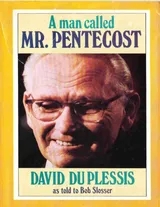
Man Called Mr. Pentecost
About the Book
"The Acts of the Apostles" by Ellen G. White is a detailed account of the early Christian church and the ministry of the apostles after the death and resurrection of Jesus Christ. The book covers the spread of Christianity, the persecution faced by early Christians, and the growth of the church through the power of the Holy Spirit. White emphasizes the importance of unity, faith, and obedience in fulfilling the Great Commission to bring the gospel to all nations.
Gordon Lindsay
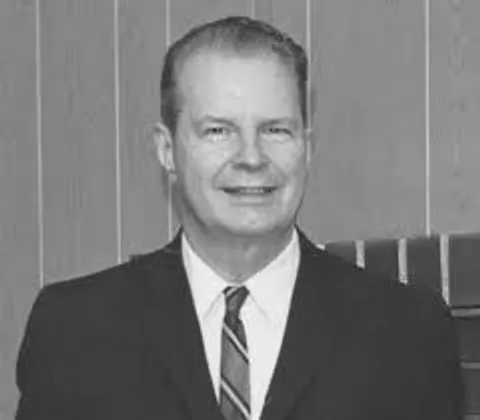 Gordon Lindsay’s Early life
Gordon Lindsay’s parents were members of J. A. Dowie’s Zion City, Illinois when he was born. The city’s financial difficulties forced the family west in 1904, where they temporarily joined another Christian-based community led by Finis Yoakum at Pisgah Grande, California. When similar problems emerged the family moved to Oregon after only a few months. From here the family moved to Portland, Oregon where Lindsay attended high school and was converted during a Charles F. Parham evangelistic campaign.
During his youth he came under the influence of John G. Lake, former resident of Zion City, missionary to South Africa, and founder of the Divine Healing missions in Spokane, Washington, and Portland, Oregon in 1920. Lindsay joined the healing and evangelistic campaigns of Lake, traveling throughout California and the southern states.
Lindsay began his own ministry in California as pastor of small churches in Avenal and San Fernando and for the next eighteen years, he travelled acros s the country holding revivals in full gospel churches. This period of travel prepared him as perhaps no other man in the nation to establish communication among a variety of Pentecostals.
When World War II began, Lindsay felt compelled to give up his evangelistic ministry because its rigorous lifestyle was taking its toll on his young family. He accepted a call to pastor a church in Ashland, Oregon.
William Branham enters Gordon Lindsay’s life
By 1947 he had witnessed the extraordinary ministry of William Branham and responded to the invitation to become Branham’s manager. His managerial skills were soon obvious in the Branham campaigns, and in April 1948, he furthered the cause of the of the revival when he produced the first issue of The Voice of Healing, specifically to promote Branham’s ministry. To Lindsay’s great surprise Branham announced that he “would not continue on the field more than a few weeks more.”
At great financial cost Lindsay decided to continue the publication of the new magazine in cooperation with his long-time friends, Jack Moore and his talented daughter Anna Jeanne Moore. He broadened the scope of the magazine by including more of the lesser known healing evangelists who were beginning to hold campaigns and were drawing large audiences.
One such evangelist was William Freeman who had been holding meetings in small churches. Lindsay visited one of his campaigns and immediately felt it was the will of God to team up with him and organise a series of meetings through 1948. The Voice of Healing featured the miracles of the Freeman campaigns.
Voice of Healing Conventions
By March 1949 The Voice of Healing circulation had grown to nearly 30,000 per month and had clearly become the voice of the healing movement. It’s pages successfully spread the message of the Salvation-Deliverance-Healing revival across the world.
In December 1949, Lindsay arranged the first convention of healing revivalists in Dallas, Texas. The assembly was addressed by Branham, Lindsay, Moore, old-timers such as F. F. Bosworth and Raymond T. Richey, and a number of rising revivalists including O. L. Jaggers, Gayle Jackson, Velmer Gardner, and Clifton Erickson. This historic conference symbolized the vitality and cohesion of the revival.
The following year, the convention, now about 1,000 strong, met in Kansas City, with virtually every important revivalist in the nation, with the notable exceptions of William Branham and Oral Roberts. Lindsay exercised great skill and wisdom exposing several points of danger and tension in the movement proposed guidelines for the future. Lindsay understood the fears of the older Pentecostal denominations and leaders and tried his utmost to deal with the offending issues.
In an article announcing “the purpose, plan and policy of the Voice of Healing Convention,” he denounced “free-lancers who violently and indiscriminately attack organization in general,” and he urged avoidance of “novel prophetic interpretations, dogmatic doctrinal assertions, sectarian predilections, theological hair-splitting.”
The Voice of Healing Association
The 1950 meeting made the Voice of Healing convention into a loose association of healing revivalists. The evangelists officially associated with The Voice of Healing magazine held “family meetings” at the conventions, at the same time maintaining their desire to “prove to the world that those associated with The Voice of Healing have no intention to organize another movement.” Through the decade the Voice of Healing conventions were showcases for healing revivalism.
The conference programs were workshops on the problems of healing evangelists. Typical topics were “prayer and fasting,” “preparation for a campaign,” “the follow-up work after a campaign,” “the system of cards for the prayer tent and the healing line” and the delicate issue of finances. As the association grew in importance in the 1950s, the program was frequently headed by Roberts or Branham; though every new revivalist aspired to be a speaker on the program.
The Voice of Healing family of evangelists flowered in the early 1950s. Lindsay continued to publicize Branham’s work, although he was not formally associated with the organization; the nucleus of the fellowship was an influential clique which included O. L. Jaggers, William Freeman, Jack Coe, T. L. Osborn, A. A. Allen, and Velmer Gardner.
Gradually major ministries began their own magazines and had no further need for Voice of Healing promotion. Nevertheless, by 1954 the “associate editors and evangelists” listed in The Voice of Healing numbered nearly fifty.
Though Lindsay became personally involved with healing evangelism from 1949, especially with other revivalists such as T. L. Osborn, he confined his best work to organization and management of the Voice of Healing magazine. By 1956 the expenses of the Voice of Healing were running $1,000 a day. In addition to the national and regional conventions sponsored by his organization, Lindsay also began to sponsor missions and a radio program.
“Lindsay was more than an advisor during the first decade of the healing revival; he was much like the director of an unruly orchestra. He tried desperately to control the proliferation of ministries in an effort to keep the revival respectable. He repeatedly advised, “It is better for one to go slow. Get your ministry on a solid foundation. . . . By all means avoid Hollywood press agent stuff.”
Many of the new leaders of the early 1950s owed their early success to the literary support of Gordon Lindsay through the Voice of Healing, but by 1958, many of the revivalists believed that Lindsay’s work was over.
An evolving ministry
Lindsay’s efforts to consolidate and coordinate the healing movement and its ministries became an impossible task. The increasing independence of ministries and the burgeoning charismatic movement caused Lindsay to reconsider his goals. He took the example of T. L. Osborn and concentrated on missionary endeavours. He remained the historian and theologian of the healing movement but began to produce teaching and evangelistic materials which were sent across the world.
The Voice of Healing ultimately became Christ for the Nations. Native church programs, literature, teaching tapes and funds were distributed to hundreds of locations. The organization had changed from one of healing revivalists into an important missionary society.
His ministry was always to those involved in the healing revival, independents and mainline Pentecostals, but the new charismatics – Lutherans, Methodists and Baptists – became his new audience. His encouragement of, and involvement with, the Full Gospel Businessmen’s Fellowship was designed to provide teaching and wisdom for charismatic leaders, many of whom held Lindsay in high regard.
His death on April 1st 1971
Suddenly, on April 1, 1973, Gordon Lindsay died. His wife, Freda, stepped into the breach and was able to stabilize and advance the ministry of Christ for the Nations. Lindsay’s death brought unparalleled financial support paying off all debts and expanding most of its programs.
David Harrel summarises the life of Gordon Lindsay perfectly: ‘The death of Gordon Lindsay closed a major chapter in the charismatic revival. No single man knew the revival and its leaders so well. No man understood its origins, its changes, and its diversity as did Lindsay. A shrewd manager and financier, Lindsay had been as nearly the coordinator of the healing revival as any man could be.
When the revival began to wane, Lindsay was faced with a crisis more severe than those of most of the evangelists themselves. Never a dynamic preacher, he found himself virtually abandoned by his most successful protégés. But Lindsay proved able to adapt. Always a balanced person, Lindsay built a balanced and enduring ministry.’
Tony Cauchi
Gordon Lindsay’s Early life
Gordon Lindsay’s parents were members of J. A. Dowie’s Zion City, Illinois when he was born. The city’s financial difficulties forced the family west in 1904, where they temporarily joined another Christian-based community led by Finis Yoakum at Pisgah Grande, California. When similar problems emerged the family moved to Oregon after only a few months. From here the family moved to Portland, Oregon where Lindsay attended high school and was converted during a Charles F. Parham evangelistic campaign.
During his youth he came under the influence of John G. Lake, former resident of Zion City, missionary to South Africa, and founder of the Divine Healing missions in Spokane, Washington, and Portland, Oregon in 1920. Lindsay joined the healing and evangelistic campaigns of Lake, traveling throughout California and the southern states.
Lindsay began his own ministry in California as pastor of small churches in Avenal and San Fernando and for the next eighteen years, he travelled acros s the country holding revivals in full gospel churches. This period of travel prepared him as perhaps no other man in the nation to establish communication among a variety of Pentecostals.
When World War II began, Lindsay felt compelled to give up his evangelistic ministry because its rigorous lifestyle was taking its toll on his young family. He accepted a call to pastor a church in Ashland, Oregon.
William Branham enters Gordon Lindsay’s life
By 1947 he had witnessed the extraordinary ministry of William Branham and responded to the invitation to become Branham’s manager. His managerial skills were soon obvious in the Branham campaigns, and in April 1948, he furthered the cause of the of the revival when he produced the first issue of The Voice of Healing, specifically to promote Branham’s ministry. To Lindsay’s great surprise Branham announced that he “would not continue on the field more than a few weeks more.”
At great financial cost Lindsay decided to continue the publication of the new magazine in cooperation with his long-time friends, Jack Moore and his talented daughter Anna Jeanne Moore. He broadened the scope of the magazine by including more of the lesser known healing evangelists who were beginning to hold campaigns and were drawing large audiences.
One such evangelist was William Freeman who had been holding meetings in small churches. Lindsay visited one of his campaigns and immediately felt it was the will of God to team up with him and organise a series of meetings through 1948. The Voice of Healing featured the miracles of the Freeman campaigns.
Voice of Healing Conventions
By March 1949 The Voice of Healing circulation had grown to nearly 30,000 per month and had clearly become the voice of the healing movement. It’s pages successfully spread the message of the Salvation-Deliverance-Healing revival across the world.
In December 1949, Lindsay arranged the first convention of healing revivalists in Dallas, Texas. The assembly was addressed by Branham, Lindsay, Moore, old-timers such as F. F. Bosworth and Raymond T. Richey, and a number of rising revivalists including O. L. Jaggers, Gayle Jackson, Velmer Gardner, and Clifton Erickson. This historic conference symbolized the vitality and cohesion of the revival.
The following year, the convention, now about 1,000 strong, met in Kansas City, with virtually every important revivalist in the nation, with the notable exceptions of William Branham and Oral Roberts. Lindsay exercised great skill and wisdom exposing several points of danger and tension in the movement proposed guidelines for the future. Lindsay understood the fears of the older Pentecostal denominations and leaders and tried his utmost to deal with the offending issues.
In an article announcing “the purpose, plan and policy of the Voice of Healing Convention,” he denounced “free-lancers who violently and indiscriminately attack organization in general,” and he urged avoidance of “novel prophetic interpretations, dogmatic doctrinal assertions, sectarian predilections, theological hair-splitting.”
The Voice of Healing Association
The 1950 meeting made the Voice of Healing convention into a loose association of healing revivalists. The evangelists officially associated with The Voice of Healing magazine held “family meetings” at the conventions, at the same time maintaining their desire to “prove to the world that those associated with The Voice of Healing have no intention to organize another movement.” Through the decade the Voice of Healing conventions were showcases for healing revivalism.
The conference programs were workshops on the problems of healing evangelists. Typical topics were “prayer and fasting,” “preparation for a campaign,” “the follow-up work after a campaign,” “the system of cards for the prayer tent and the healing line” and the delicate issue of finances. As the association grew in importance in the 1950s, the program was frequently headed by Roberts or Branham; though every new revivalist aspired to be a speaker on the program.
The Voice of Healing family of evangelists flowered in the early 1950s. Lindsay continued to publicize Branham’s work, although he was not formally associated with the organization; the nucleus of the fellowship was an influential clique which included O. L. Jaggers, William Freeman, Jack Coe, T. L. Osborn, A. A. Allen, and Velmer Gardner.
Gradually major ministries began their own magazines and had no further need for Voice of Healing promotion. Nevertheless, by 1954 the “associate editors and evangelists” listed in The Voice of Healing numbered nearly fifty.
Though Lindsay became personally involved with healing evangelism from 1949, especially with other revivalists such as T. L. Osborn, he confined his best work to organization and management of the Voice of Healing magazine. By 1956 the expenses of the Voice of Healing were running $1,000 a day. In addition to the national and regional conventions sponsored by his organization, Lindsay also began to sponsor missions and a radio program.
“Lindsay was more than an advisor during the first decade of the healing revival; he was much like the director of an unruly orchestra. He tried desperately to control the proliferation of ministries in an effort to keep the revival respectable. He repeatedly advised, “It is better for one to go slow. Get your ministry on a solid foundation. . . . By all means avoid Hollywood press agent stuff.”
Many of the new leaders of the early 1950s owed their early success to the literary support of Gordon Lindsay through the Voice of Healing, but by 1958, many of the revivalists believed that Lindsay’s work was over.
An evolving ministry
Lindsay’s efforts to consolidate and coordinate the healing movement and its ministries became an impossible task. The increasing independence of ministries and the burgeoning charismatic movement caused Lindsay to reconsider his goals. He took the example of T. L. Osborn and concentrated on missionary endeavours. He remained the historian and theologian of the healing movement but began to produce teaching and evangelistic materials which were sent across the world.
The Voice of Healing ultimately became Christ for the Nations. Native church programs, literature, teaching tapes and funds were distributed to hundreds of locations. The organization had changed from one of healing revivalists into an important missionary society.
His ministry was always to those involved in the healing revival, independents and mainline Pentecostals, but the new charismatics – Lutherans, Methodists and Baptists – became his new audience. His encouragement of, and involvement with, the Full Gospel Businessmen’s Fellowship was designed to provide teaching and wisdom for charismatic leaders, many of whom held Lindsay in high regard.
His death on April 1st 1971
Suddenly, on April 1, 1973, Gordon Lindsay died. His wife, Freda, stepped into the breach and was able to stabilize and advance the ministry of Christ for the Nations. Lindsay’s death brought unparalleled financial support paying off all debts and expanding most of its programs.
David Harrel summarises the life of Gordon Lindsay perfectly: ‘The death of Gordon Lindsay closed a major chapter in the charismatic revival. No single man knew the revival and its leaders so well. No man understood its origins, its changes, and its diversity as did Lindsay. A shrewd manager and financier, Lindsay had been as nearly the coordinator of the healing revival as any man could be.
When the revival began to wane, Lindsay was faced with a crisis more severe than those of most of the evangelists themselves. Never a dynamic preacher, he found himself virtually abandoned by his most successful protégés. But Lindsay proved able to adapt. Always a balanced person, Lindsay built a balanced and enduring ministry.’
Tony Cauchi
For Anyone Happy Without God
“I know you don’t believe me, but I do not need Christianity to be happy. I am happier than most Christians I know.” Looking up from his coffee, he smiled and assured me, “I am glad you found happiness in Jesus, but I am quite content without him. I have found my path to happiness, and I am glad you have found a different one. We stand at the same end, it would appear.” I did not know what to say. I knew how to share the Joy of the world to the discontent, the miserable, the downcast, but I stood perplexed at this man who told me, in no uncertain terms, “I do not need Christ to be happy.” Wasn’t his heart restless until it found its rest in him? He assured me it wasn’t. Didn’t he have a God-shaped hole in his heart? He swore that he didn’t. And what was more, he truly seemed to be, as far as I could tell, happy. I knew Jesus was a Comfort for those who mourned, a Light to those in darkness, a North Star to those who wandered the world without hope. I didn’t know what he was to those happy enough in their own way. Can Unbelievers Be Truly Happy? I wish I could go back and talk with this man. Instead of trying to convince him, for hours on end, of his unhappiness, all so I could then share Christ with him, I wish I would have spoken the way Paul did when he addressed those he found in Lystra. He [God] did not leave himself without witness, for he did good by giving you rains from heaven and fruitful seasons, satisfying your hearts with food and gladness. (Acts 14:17) Paul did not address the downtrodden, the depressed, the poor in spirit. Here, he addressed those who ate, drank, and when tomorrow came, died. Those with food and happiness enough not to alert them to their spiritual starvation. To such as these, Paul did not start by handing out prescriptions for happiness they didn’t feel they needed. He knew he spoke to a people that I was unfamiliar with: the happy heathen. Paul says that God satisfied their hearts with food and gladness. Gladness. The only other place in the New Testament where this word appears is in Luke’s citation of another well-known verse: “You have made known to me the paths of life; you will make me full of gladness with your presence” (Acts 2:28; citing Psalm 16:11). In Psalm 16, God’s Fatherly presence to his children gives one kind of heart-gladness (a full, everlasting, permanent kind), but his food and common-grace-goodness bestows another. Both are real. God Makes His Enemies Smile God allows his enemies to smile. Have you wondered at this? God allows those who ignore him, reject him, despise his glory, and belittle his name to breathe his air, feast on his food, swim in his waters, hike in his forests, ski on his mountains, laugh, sing, and dance on his lands. He has not yet evicted them. He has not taken back his bread from their plates nor his air from their lungs. Rather — and note the benevolence of the God of the universe — he “gives to all mankind life and breath and everything” (Acts 17:25). No good and perfect gift comes down from any other hand but his (James 1:17). He is an abundantly gracious God, even to his enemies. The God constantly sneered at and ignored “makes his sun rise on the evil.” Almighty God “sends rain . . . on the unjust” who despise his glory (Matthew 5:45). This kindness makes angels sing of his mercy and patience. Gifts Without Gratitude The man that I spoke with took these gifts from God, enjoyed them, and refused to say thank you. Man is the only creature other than fallen angels to pay God back so basely. God opens his hand and satisfies the desire of every living thing (Psalm 145:16). He opens his hand to eagles in their treetops, to antelope on the plains, to fish in the sea and flowers of the field. They declare his glory and groan for his return (Romans 8:19–23). But men and devils do not. Devils contemplate the return of God saying, “What have you to do with us, O Son of God? Have you come here to torment us before the time?” (Matthew 8:29). And men look their fellow men in the eye and say they have no need of Christ; indeed, who is Christ that he should be obeyed? God opens his hand to this creature — best positioned to return to him gratefulness and love — and he will not bother to look up. He does not honor him, nor does he return him thanks (Romans 1:21). I wish I would have shared with this man how his reasons for happiness — family, friends, health, good food, good drink, good sports — were not just “how things were.” I wish I would have bid him to consider how God watches him, day in and day out, parade about with his gifts while discounting his person. What Our Pleasures Testify Instead of telling him that I was sure he is really unhappy somewhere deep down, or trying to debate him as to whether he feels his God-sized hole (which he still has), what should I have told him? I should have explored all his reasons for happiness, and then told him plainly that these were all gifts from God meant to lead him to God. And that, furthermore, his failure to do so was already a serious crime that must be atoned for, and thus he must be led to Christ, God’s greatest gift to the world. Sin, not just his psychological experience of joy, gave Jesus utmost relevance to him. He had a sin problem, if not a felt joy problem. He stood not only a branch withering apart from the Vine; he stood a branch prepared for the fire (John 15:6). Paul told the happy heathens that God had not left himself without witness to both his existence and his goodness. And what was this witness’s testimony? Repent. “Or do you presume on the riches of his kindness and forbearance and patience, not knowing that God’s kindness is meant to lead you to repentance?” (Romans 2:4). Beautiful families whisper, repent. Enjoyable careers urge, repent. Sunsets in vacation selfies cry, repent. All of these declare that God is good, benevolent, and patient with his enemies, and that he calls them to turn away from sin and to forgiveness found in Christ. Word to Happy Heathen If I could go back to talk with this man, I might say something like the following. The Christian faith is not merely about man’s happiness, although God gives more joy than you can now imagine. Christianity addresses how sinful men, women, and children can be reconciled to their Creator and live happy lives for his glory. God has placed good gifts to summon you to see God’s ultimate gift: his Son, Jesus Christ. He came to save a people he didn’t have to save. To live a life we couldn’t live. To die the death we deserved to die. And to rise, summoning all everywhere to turn away from their sin, and trust in his finished work on the cross for sinners. The smartphone in your pocket has everything to do with this God. The music massaging your ears, the colors jumping before your eyes, the gladness of heart and the love you feel are kindnesses from God with one message upon their lips: “Repent and believe.” Instead of justifying a life apart from God, substituting the gifts for the Giver, the gifts of great joy are given to lead to the Giver. His multi-varied kindnesses, his overwhelming patience, his forbearance give room for faith. Even now he beckons. Even now he invites. Come, heed the message in every good gift of God’s perfect gift — Jesus Christ — and live. Article by Greg Morse Staff writer, desiringGod.org