
Others like pedalling backwards Features >>
Walking From East To West
The Apostolic Fathers I
-160.webp)
By Their Blood (Christian Martyrs From The Twentieth Century And Beyond)

A Joyful Pilgrimage
Unprovoked Murder
The Apostolic Fathers II

God’s Generals: John Alexander Dowie
-160.webp)
God's Generals (Evan Roberts)
-160.webp)
The Life And Times Of Jesus Of Nazareth
The Life Of Bunyan, The Pilgrim's Progress And Christiana
About the Book
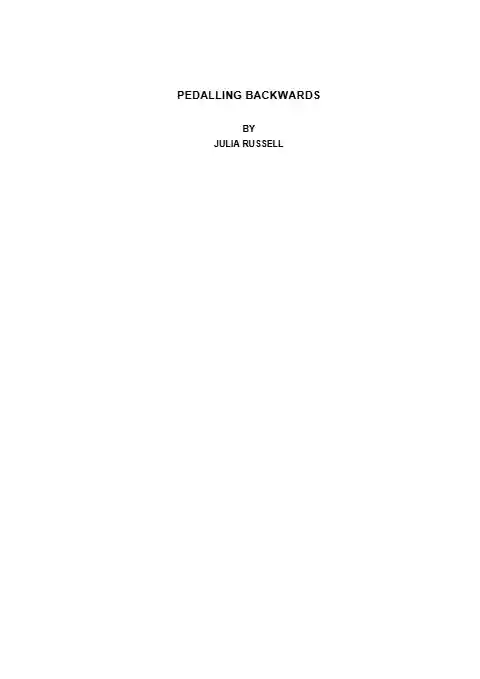
"Pedalling Backwards" by Julia Russell follows the story of eleven-year-old Benjamin, who navigates the challenges of family dynamics, friendship, and growing up. As he grapples with changes in his life, Benjamin learns important lessons about the power of forgiveness, acceptance, and resilience. With a blend of humor and heart, this coming-of-age novel explores the complexities of adolescence and the importance of self-discovery.
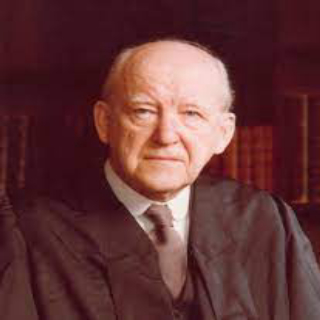
Martyn Lloyd-Jones
weakness may be your greatest strength
How well are you investing the weaknesses you’ve been given? Perhaps no one has ever asked you that question before. Perhaps it sounds nonsensical. After all, people invest assets in order to increase their value. They don’t invest liabilities . They try to eliminate or minimize or even cover up liabilities. It’s easy for us to see our strengths as assets. But most of us naturally consider our weaknesses as liabilities — deficiencies to minimize or cover up. But God, in his providence, gives us our weaknesses just as he gives us our strengths. In God’s economy, where the return on investment he most values is “faith working through love” (Galatians 5:6), weaknesses become assets — we can even call them talents — to be stewarded, to be invested. It may even be that the most valuable asset God has given you to steward is not a strength, but a weakness. But if we’re to value weaknesses as assets, we need to see clearly where Scripture teaches this. The apostle Paul provides us with the clearest theology of the priceless value of weakness. I have found 1 Corinthians 1:18–2:16 and, frankly, the entire book of 2 Corinthians, to be immensely helpful in understanding the indispensable role weakness plays in strengthening the faith and witness of individual Christians and the church as a whole. Paradoxical Power of Weakness Paul’s most famous statement on the paradoxical spiritual power of weakness appears in 2 Corinthians 12. He tells us of his ecstatic experience of being “caught up into paradise,” where he received overwhelming and ineffable revelations (2 Corinthians 12:1–4). But as a result, a thorn was given me in the flesh, a messenger of Satan to harass me, to keep me from becoming conceited. Three times I pleaded with the Lord about this, that it should leave me. But he said to me, “My grace is sufficient for you, for my power is made perfect in weakness.” Therefore I will boast all the more gladly of my weaknesses, so that the power of Christ may rest upon me. For the sake of Christ, then, I am content with weaknesses, insults, hardships, persecutions, and calamities. For when I am weak, then I am strong. (2 Corinthians 12:7–10) In these few sentences, Paul completely reframes the way Christians are to view weaknesses, even deeply painful ones that can appear to hinder our calling and that the powers of darkness seek to exploit. What at first seems to us like an expensive liability turns out to be a valuable, God-given asset. Weakness and Sin Before we go further, we need to be clear that Paul does not include sin in his description of weakness here. The Greek word Paul uses is astheneia , the most common word for “weakness” in the New Testament. J.I. Packer, in his helpful study on 2 Corinthians, Weakness Is the Way , explains astheneia like this: The idea from first to last is of inadequacy. We talk about physical weakness [including sickness and disability] . . . intellectual weakness . . . personal weakness . . . a weak position when a person lacks needed resources and cannot move situations forward or influence events as desired . . . relational weakness when persons who should be leading and guiding fail to do so — weak parents, weak pastors, and so on. (13–14) But when Paul speaks of sin, he has more than inadequacy in mind. The Greek word for “sin” he typically uses is hamartia , which refers to something that incurs guilt before God. Hamartia happens when we think, act, or feel in ways that transgress what God forbids. “Weaknesses manifest God’s power in us in ways our strengths don’t.” Though Paul was aware that hamartia could lead to astheneia (1 Corinthians 11:27–30) and astheneia could lead to hamartia (Matthew 26:41), he clearly did not believe “weakness” was synonymous with “sin.” For he rebuked those who boasted that their sin displayed the power and immensity of God’s grace (Romans 6:1–2). But he “gladly” boasted of his weaknesses because they displayed the power and immensity of God’s grace (2 Corinthians 12:9). In sin, we turn from God to idols, which profanes God, destroys faith, and obscures God in the eyes of others. But weakness has the tendency to increase our conscious dependence on God, which glorifies him, strengthens our faith, and manifests his power in ways our strengths never do. And that’s the surprising value of our weaknesses: they manifest God’s power in us in ways our strengths don’t. That’s what Jesus meant when he told Paul, “My power is made perfect in weakness” (2 Corinthians 12:9) — “perfect” meaning complete or entirely accomplished . Our weaknesses are indispensable because God manifests the fullness of his power through them. Asset Disguised as a Liability At this point, you may be thinking, “Whatever Paul’s ‘thorn’ was, my weakness is not like that.” Right. That’s what we all think. I have a thorn-like weakness, known only to those closest to me. If I shared it with you, you might be surprised. It dogs me daily as I seek to carry out my family, vocational, and ministry responsibilities. It makes almost everything harder and regularly tempts me to exasperation. It’s not romantic, certainly not heroic. It humbles me in embarrassing, not noble, ways. And most painful to me, I can see how in certain ways it makes life harder for those I live and work with. Often it has seemed to me a liability. I’ve pleaded with the Lord, even in tears, to remove it or grant me more power to overcome it. But it’s still here. Paul also initially saw his weakness as a grievous liability and pleaded repeatedly to be delivered from it. But as soon as he understood Christ’s purposes in it, he saw it in a whole new light: a priceless asset disguised as a liability. And he gloried in the depths of God’s knowledge, wisdom, and omnipotent grace. “God, in his providence, gives us our weaknesses just as he gives us our strengths.” I have been slower than Paul in learning to see my thorn as an asset (and honestly, I’m still learning). But I see at least some of the ways this weakness has strengthened me. It has forced me to live daily in dependent faith on God’s grace. It has heightened my gratitude for those God has placed around me who have strengths where I’m weak. Beset with my own weakness, I am more prone to deal gently and patiently with others who struggle with weaknesses different from mine (Hebrews 5:2). And I can see now how it has seasoned much of what I’ve written over the years with certain insights I doubt would have come otherwise. In other words, I see ways God has manifested his power more completely through my perplexing weakness. The fact that we don’t know what Paul’s thorn was is evidence of God’s wisdom. If we did, we likely would compare our weaknesses to his and conclude that ours have no such spiritual value. And we would be wrong. Stewards of Surprising Talents Paul said that his weakness, his “thorn . . . in the flesh,” was “given” to him (2 Corinthians 12:7). Given by whom? Whatever role Satan played, in Paul’s mind he was secondary. Paul received this weakness, as well as “insults, hardships, persecutions, and calamities” (2 Corinthians 12:10), as assets given to him by his Lord. And as a “[steward] of the mysteries of God” (1 Corinthians 4:1), he considered his weaknesses a crucial part of the portfolio his Master had entrusted to him. So, he determined to invest them well in order that his Master would see as much of a return as possible. If you’re familiar with Jesus’s parable of the talents (Matthew 25:14–30), you might recognize that I’m drawing from its imagery. Jesus has given each of us different “talents” to steward, assets of immense kingdom value, “each according to his ability” (Matthew 25:15). And his expectation is that we will invest them well while we wait for his return. Some of these talents are strengths and abilities our Lord has given us. But some of them are our weaknesses, our inadequacies and limitations, which he’s also given to us. And he’s given us these weaknesses not only to increase in us the invaluable and shareable treasure of humility (2 Corinthians 12:7), but also to increase our strength in the most important aspects of our being: faith and love (2 Corinthians 12:10). But our weaknesses are not only given to us as individuals; they are also given to the church. Our limitations, as much as our abilities, are crucial to Christ’s design to equip his body so that it works properly and “builds itself up in love” (Ephesians 4:16). Our weaknesses make us depend on one another in ways our strengths don’t (1 Corinthians 12:21–26). Which means they are given to the church for the same reason they are given to us individually: so that the church may grow strong in faith (1 Corinthians 2:3–5) and love (1 Corinthians 13) — two qualities that uniquely manifest Jesus’s reality and power to the world (John 13:35). Don’t Bury Your Weaknesses Someday, when our Master returns, he will ask us to give an account of the talents he’s entrusted to us. Some of those talents will be our weaknesses. We don’t want to tell him we buried any of them. It may even be that the most valuable talent in our investment portfolio turns out to be a weakness. Since “it is required of stewards that they be found faithful” (1 Corinthians 4:2), we would be wise to examine how faithfully we are stewarding the talents of our weaknesses. So, how well are you investing the weaknesses you’ve been given?