
Others like a joyful pilgrimage Features >>
The Great Visions Of Ellen G White
The True History Of The Early Christian Church
Smith Wigglesworth : A Life Ablaze With The Power Of God
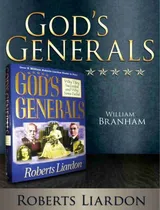
God's Generals: William Branham
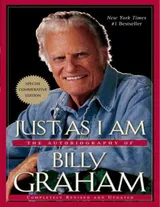
Just As I Am: The Autobiography Of Billy Graham
Autobiography Of Madame Guyon
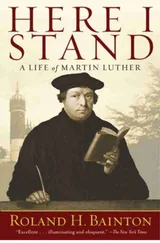
Here I Stand
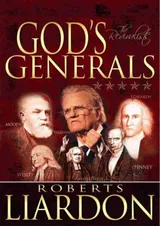
God's Generals: The Revivalists
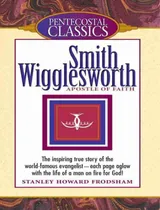
Smith Wigglesworth: Apostle Of Faith
-160.webp)
God's Generals (Smith Wigglesworth)
About the Book
"A Joyful Pilgrimage" by Emmy Arnold is a spiritual memoir that chronicles the author's journey of faith and personal growth. Through her experiences, Arnold reflects on the beauty of nature, the power of prayer, and the importance of community in finding joy and purpose in life. The book offers a message of hope and inspiration for readers seeking a deeper connection with God and a more fulfilling life.
A.W. Tozer (Aiden Wilson Tozer)
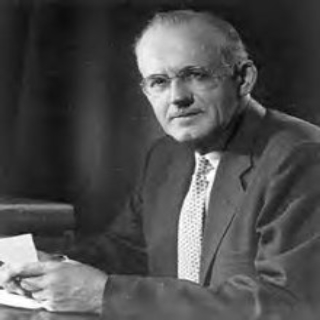 Early life
Tozer hailed from a tiny farming community in western La Jose, Pennsylvania. He was converted to Christianity as a teenager in Akron, Ohio: While on his way home from work at a tire company, he overheard a street preacher say, "If you don't know how to be saved ... just call on God, saying, 'Lord, be merciful to me a sinner.'" Upon returning home, he climbed into the attic and heeded the preacher's advice.
Pastor
In 1919, five years after his conversion and without formal education in Christian theology, Tozer accepted an offer to serve as pastor of his first church. That began 44 years of ministry associated with the Christian and Missionary Alliance (C&MA), a Protestant Evangelical denomination, 33 of them serving as a pastor in several different congregations (his first, a small storefront church in Nutter Fort, West Virginia). Later, he served thirty years (1928 to 1959) as the pastor of Southside Alliance Church in Chicago; the final years of his life he spent as pastor of Avenue Road Church in Toronto, Ontario, Canada. Observing contemporary Christian living, Tozer felt that the church was on a dangerous course toward compromising with "worldly" concerns.
Born into poverty, Tozer was self-educated and taught himself what he missed in high school and university.
Author
Tozer began writing in 1931 for the denominational magazine of the Christian and Missionary Alliance, Alliance Weekly (now Alliance Life), which became the platform from which his writing career emerged. He later wrote the monthly column “There’s Truth in It” (1936–37) and “A Word in Season” (1944–46). In May 1950, he became the editor of the Alliance Weekly, a position he filled until his death in 1963.
At the urging of David W. Fant, publications secretary of the C&MA, Tozer wrote biographies of A. B. Simpson (1943) and Robert A. Jaffray (1947). It was the publication of his third book, The Pursuit of God (1948), that made Tozer a household name among evangelicals. In addition to the 12 books he published in his lifetime, more than 40 other books have been compiled from his magazine features, editorials, and transcribed sermons.
During his lifetime, Tozer’s works were published by Christian Publications, Inc., the denominational press operated by the C&MA. The publishing house declared bankruptcy in 2006 and was purchased by WingSpread Publishers of Camp Hill, Pennsylvania.[8] In November 2013, Moody Publishers acquired Wingspread from parent company Zur Ltd., a transaction that included more than 60 Tozer books and pamphlets. Some of Tozer’s works are now in the public domain and have been issued by multiple publishers.
Personal life
Tozer had seven children, six sons and a daughter. Living a simple and non-materialistic lifestyle, he and his wife, Ada Cecelia Pfautz, never owned a car, preferring bus and train travel. Even after becoming a well-known Christian author, Tozer signed away much of his royalties to those who were in need.
Prayer was of vital personal importance for Tozer. "His preaching as well as his writings were but extensions of his prayer life," comments his biographer, James L. Snyder, in the book In Pursuit of God: The Life Of A.W. Tozer. "He had the ability to make his listeners face themselves in the light of what God was saying to them," writes Snyder.
Death and legacy
Tozer died on May 13, 1963, after suffering a heart attack. He was buried in Chicago, and later the family had his remains reinterred at Ellet Cemetery, Akron, Ohio. A simple marker reads: A. W. Tozer—A Man of God. The Alliance Weekly ran a memorial issue with numerous tributes and excerpts. The same issue also featured “God’s Greatest Gift to Man," a transcription of his final sermon. A few months prior to his death, Tozer had submitted the manuscript to The Christian Book of Mystical Verse, which was released in 1964 as his final book. His official publisher, Christian Publications, released many titles after his death, based on his magazine articles and sermon transcriptions. These continue in print with Moody Publishers. Several other publishers have released his public domain works.
In 2000, The Pursuit of God was named to Christianity Today’s list of 100 “Books of the Century.” In 2006, Knowledge of the Holy was named in “The Top 50 Books That Have Shaped Evangelicals.” Contemporary Christian music artist Lauren Barlow of BarlowGirl later published a compilation of stories told by 59 artists, writers, and leaders about A.W. Tozer’s personal inspiration.
Early life
Tozer hailed from a tiny farming community in western La Jose, Pennsylvania. He was converted to Christianity as a teenager in Akron, Ohio: While on his way home from work at a tire company, he overheard a street preacher say, "If you don't know how to be saved ... just call on God, saying, 'Lord, be merciful to me a sinner.'" Upon returning home, he climbed into the attic and heeded the preacher's advice.
Pastor
In 1919, five years after his conversion and without formal education in Christian theology, Tozer accepted an offer to serve as pastor of his first church. That began 44 years of ministry associated with the Christian and Missionary Alliance (C&MA), a Protestant Evangelical denomination, 33 of them serving as a pastor in several different congregations (his first, a small storefront church in Nutter Fort, West Virginia). Later, he served thirty years (1928 to 1959) as the pastor of Southside Alliance Church in Chicago; the final years of his life he spent as pastor of Avenue Road Church in Toronto, Ontario, Canada. Observing contemporary Christian living, Tozer felt that the church was on a dangerous course toward compromising with "worldly" concerns.
Born into poverty, Tozer was self-educated and taught himself what he missed in high school and university.
Author
Tozer began writing in 1931 for the denominational magazine of the Christian and Missionary Alliance, Alliance Weekly (now Alliance Life), which became the platform from which his writing career emerged. He later wrote the monthly column “There’s Truth in It” (1936–37) and “A Word in Season” (1944–46). In May 1950, he became the editor of the Alliance Weekly, a position he filled until his death in 1963.
At the urging of David W. Fant, publications secretary of the C&MA, Tozer wrote biographies of A. B. Simpson (1943) and Robert A. Jaffray (1947). It was the publication of his third book, The Pursuit of God (1948), that made Tozer a household name among evangelicals. In addition to the 12 books he published in his lifetime, more than 40 other books have been compiled from his magazine features, editorials, and transcribed sermons.
During his lifetime, Tozer’s works were published by Christian Publications, Inc., the denominational press operated by the C&MA. The publishing house declared bankruptcy in 2006 and was purchased by WingSpread Publishers of Camp Hill, Pennsylvania.[8] In November 2013, Moody Publishers acquired Wingspread from parent company Zur Ltd., a transaction that included more than 60 Tozer books and pamphlets. Some of Tozer’s works are now in the public domain and have been issued by multiple publishers.
Personal life
Tozer had seven children, six sons and a daughter. Living a simple and non-materialistic lifestyle, he and his wife, Ada Cecelia Pfautz, never owned a car, preferring bus and train travel. Even after becoming a well-known Christian author, Tozer signed away much of his royalties to those who were in need.
Prayer was of vital personal importance for Tozer. "His preaching as well as his writings were but extensions of his prayer life," comments his biographer, James L. Snyder, in the book In Pursuit of God: The Life Of A.W. Tozer. "He had the ability to make his listeners face themselves in the light of what God was saying to them," writes Snyder.
Death and legacy
Tozer died on May 13, 1963, after suffering a heart attack. He was buried in Chicago, and later the family had his remains reinterred at Ellet Cemetery, Akron, Ohio. A simple marker reads: A. W. Tozer—A Man of God. The Alliance Weekly ran a memorial issue with numerous tributes and excerpts. The same issue also featured “God’s Greatest Gift to Man," a transcription of his final sermon. A few months prior to his death, Tozer had submitted the manuscript to The Christian Book of Mystical Verse, which was released in 1964 as his final book. His official publisher, Christian Publications, released many titles after his death, based on his magazine articles and sermon transcriptions. These continue in print with Moody Publishers. Several other publishers have released his public domain works.
In 2000, The Pursuit of God was named to Christianity Today’s list of 100 “Books of the Century.” In 2006, Knowledge of the Holy was named in “The Top 50 Books That Have Shaped Evangelicals.” Contemporary Christian music artist Lauren Barlow of BarlowGirl later published a compilation of stories told by 59 artists, writers, and leaders about A.W. Tozer’s personal inspiration.
When I (Still) Don’t Desire God
It’s been fifteen years since I wrote When I Don’t Desire God: How to Fight for Joy . I wrote it because hundreds of people who hear the message of Christian Hedonism with hope drift into discouragement because they don’t have the joy in God that they know they should. Christian Hedonism says that God is most glorified in us when we are most satisfied in him . Which makes matters worse if that satisfaction is missing. That’s why I wrote the book. I have been asked, What would I say now, with the accumulated wisdom of 72 years, to those still struggling to “delight yourself in the Lord” (Psalm 37:4)? This is not theoretical for me. Not only do I share the struggle, but I have conversations with real people struggling like this. I followed up one such conversation recently with an email. I’m going to share that with you below. But first a caution. Wisdom for the Darkness Whether we can help someone struggling with joylessness in the Christian life depends not primarily on the quantity of wisdom we have accumulated over the years, but on how we apply the truth we have, and whether the Spirit of God turns that truth into life and freedom and joy. “When the darkness of uncertainty and fear hangs over you, don’t let go of the One you knew in the light.” I am not minimizing the value of accumulated wisdom. The Old Testament sage commands, “ Get wisdom” (Proverbs 4:7). Jesus “ increased in wisdom” (Luke 2:52). Paul prays that we would be “ filled with spiritual wisdom” (Colossians 1:9). We know that in Christ “are hidden all the treasures of wisdom” (Colossians 2:3). Paul calls us to admonish each other “in all wisdom” (Colossians 3:16). James tells us that if we “lack wisdom,” we should ask for it from God (James 1:5). For there is a “wisdom that comes down from above” (James 3:17). We can never get too much wisdom. But my point is that if you are 30 instead of 70, you should not be intimidated or paralyzed by the fact that you still have 40 years of wisdom accumulation in front of you. As you read your Bible tomorrow morning, praying for supernatural insight, God may grant you a glimpse of some precious truth that later in the day will be exactly the truth that your struggling friend needs. Am I Beyond Hope? After the conversation that I had recently with my friend, he followed up with an email. He was still in distress. What do you say when you feel you have said all you know to say — in the book and in conversation? One answer is this: Don’t think that you need the tailor-made answer to the presenting problem. Instead, realize that any precious biblical truth that has ministered deeply to you, though it may seem irrelevant to your friend’s situation, may be more helpful than you realize. Just go ahead and overflow from your morning devotions. They will know the truth (which may seem random to us), and the truth may set them free. You also can give the sober counsel that struggling has hope of success, but forsaking the struggle does not. I think it is a mistake to give unqualified assurance to a struggler when you do not know if they are born again. You hope they are. They hope they are. But you are not God. And they are in a season of darkness. What you do know beyond doubt is: if they finally abandon Christ and hope, there is no hope. “Struggling has hope of success, but forsaking the struggle does not.” So I thought it might be helpful to share with you how I responded to my friend’s email. Keep in mind that his struggle has to do with patterns of repeated sin which make him feel hopeless about ever getting victory. These failures leave him feeling distant from God and, at times, wondering if he is a Christian, or perhaps whether he may even be an Esau who has spurned grace so often that true repentance is no longer possible (Hebrews 12:16–17). This is a terrifying position to be in. I don’t think my friend is unusual. I think thousands of Christians, if they will pause to be painfully honest, will admit to the same struggles. It is hard to admit this, because it is so scary. Parts of the following letter are exact quotes. Other parts are altered enough so as not to betray any confidences. Letter to a Distressed Friend Dear brother, I totally empathize with the frustration and fears of possibly being an Esau because of sinning so deeply against God’s mercy and light and patience. There is no comfortable answer to how one conquers such fears and escapes such a condition. From my own experience, what I would say is this: If you have the grace to hold on to God’s mercy and not throw it away in apostasy, there is hope. This is not a comfortable answer. It doesn’t speak in terms of simple certainties — namely, that you will definitely prove not to be an Esau. But it is the only way forward into light and hope and relief. I can’t promise that you are a child of God, but I can promise that if you throw away hope, you will prove not to be a child of God. God’s word speaks often about “waiting” for the Lord, as in Psalm 40: I waited patiently for the Lord; he inclined to me and heard my cry. He drew me up from the pit of destruction, out of the miry bog, and set my feet upon a rock, making my steps secure. (Psalm 40:1–2) How long was David in the miry bog? It doesn’t say. But what is clear from all the psalms is that the psalmists never forsake God when they feel like he has forsaken them. Something holds them. “I can’t promise that you’re a child of God, but I can promise that if you abandon hope, you will prove not to be.” Not only does the Bible speak of waiting for God in the miry bog, but it also speaks of true believers walking in a kind of darkness. Perhaps you have considered this word from Isaiah: Who among you fears the Lord and obeys the voice of his servant? Let him who walks in darkness and has no light trust in the name of the Lord and rely on his God. Behold, all you who kindle a fire, who equip yourselves with burning torches! Walk by the light of your fire, and by the torches that you have kindled! This you have from my hand: you shall lie down in torment. (Isaiah 50:10–11) We may not be able to describe adequately what it means both to walk in darkness and to trust the Lord. They seem contradictory. And yet there it is. I’m suggesting that it would mean this: When the darkness of uncertainty and fear hangs over you, inasmuch as by grace it remains in you, don’t let go of the One you knew in the light . Keep holding on, if only, it may seem, by your fingernails. Know this: his hands are on his children’s fingernails — day and night. Pray for dawn and deliverance. From where I stand at age 72, I believe I can encourage you that it will come. Paul speaks in a way that captures some of the mystery of the ongoing battle with sin: Wretched man that I am! Who will deliver me from this body of death? Thanks be to God through Jesus Christ our Lord! So then, I myself serve the law of God with my mind, but with my flesh I serve the law of sin. (Romans 7:24–25) Paul is ashamed of his inconsistency in these times of defeat. But he does not despair. He looks away from himself, confesses his divided self, and presses on in the battle. But he also tells us that the way he fights as an imperfect saint is by the hope that Christ has a firmer grip on him than he does on Christ. He may feel like only his fingernails grip the cliff. But he believes that Christ grips his fingernails: Not that I have already obtained this or am already perfect, but I press on to make it my own, because Christ Jesus has made me his own . (Philippians 3:12) Or, to paraphrase, “I grasp for the hope for future perfection, because Christ has already grasped me and will not let me go.” Sometimes we feel his grasp more sweetly than at other times. It is a fearful thing when we are going through a season where we don’t feel it at all. I’m not going to give you a list of ways to fight for your joy. Those are all in the book that you already read. What I am doing in this letter is simply reminding you (1) that God is present in the darkness, (2) that he is holding on to his people when they feel barely able to hold on to him, and (3) that though you may feel unsure of your salvation in this struggle, you may be totally sure you will not have salvation if you give up the struggle and walk away. “If you have the grace to hold on to God’s mercy and not throw it away in apostasy or suicide, there is hope.” May I recommend a song about God’s precious keeping power? In the last several years, the song “He Will Hold Me Fast” has gone deep with me and become very sweet. I love the robust congregational affirmation of this recording of Capitol Hill Baptist Church singing it. I could never keep my hold Through life’s fearful path. For my love is often cold, He must hold me fast. May God give you the grace to sing it anew.