
GIP Library icon

LOG IN TO REVIEW
About the Book


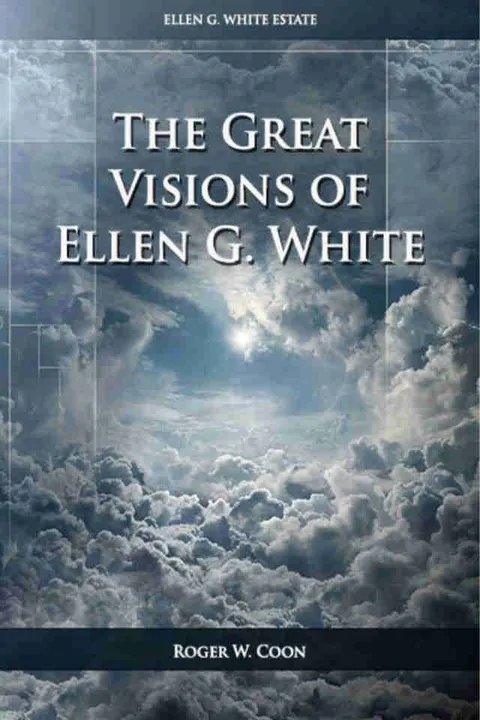
"The Great Visions of Ellen G. White" by Roger W. Coon provides an in-depth analysis of the prophetic visions of Ellen G. White, a prominent figure in the Seventh-day Adventist Church. Coon explores the significance of White's visions, their impact on the church, and the messages they conveyed. He also discusses the historical context in which White received her visions and how they influenced the development of Seventh-day Adventist beliefs and practices.

Jack Miller

Jack Miller Cecil John Miller (December 28, 1928 – April 8, 1996[1][2]), usually known as Jack Miller, was an American Presbyterian pastor. He served as pastor of New Life Presbyterian Church in Jenkintown, Pennsylvania, and taught practical theology at Westminster Theological Seminary. Early life and education Miller was born on December 28, 1928 in Gold Beach, Oregon. He married Rose Marie Carlsen in 1950, and graduated from San Francisco State College in 1953. In 1966 he received an M.Div. from Westminster Theological Seminary and in 1978 earned his Ph.D. in English literature from the University of the Pacific.[2] Career Starting in 1955, Miller taught at Ripon Christian School for five years in Ripon, California. He was ordained as a minister in the Orthodox Presbyterian Church in 1959, and worked as a chaplain for several years in Stockton, California. From 1965-1972 he served as the pastor of Mechanicsville Chapel in Mechanicsville, Pennsylvania.[2] Gary North argues that Miller was "deeply affected by the counter-culture", and this led him to adopt new, people-oriented approaches to evangelism.[3] Chad B. Van Dixhoorn suggests that Miller's Sonship program stemmed from three and a half months spent in Spain overlooking the Mediterranean Sea. Miller "studied the promises of Scripture for three and a half months culminating in a mountaintop experience, or its seaside equivalent. He returned to America with two things on his mind, adoption and revival."[4] Miller founded World Harvest Mission (now named Serge) and the New Life Presbyterian network of Orthodox Presbyterian churches.[5] He was known for emphasizing the Christian's status as a child of God, a view known as sonship theology. Tullian Tchividjian notes that Miller summed up the gospel in this way: "Cheer up; you're a lot worse off than you think you are, but in Jesus you're far more loved than you could have ever imagined."[6] Miller wrote a number of books, most notably Outgrowing the Ingrown Church (1986). A volume of his letters, The Heart of a Servant Leader, was published in 2004. In 2020, P&R Publishing released a biography written by Michael A. Graham titled Cheer Up! The Life, Teaching, and Ministry of C. John ā€˜Jack’ Miller. Miller died on April 8, 1996 in Malaga, Spain.[2] References 1. "Notable Former Professors". Westminster Theological Seminary. Retrieved 18 October 2013. 2. Van Dyke, Jody (2018). "Cecil John (Jack) Miller". PCA Historical Center: Archives and Manuscript Repository for the Continuing Presbyterian Church. Presbyterian Church in America. Retrieved February 8, 2021. 3. North, Gary (1991). Westminster's Confession: The Abandonment of Van Til's Legacy (PDF). Institute for Christian Economics. p. 35. 4. Chad B. Van Dixhoorn, "The Sonship Program for Revival: A Summary and Critique," Westminster Theological Journal 61.2 (1999), 227-246. 5. Frame, John (2017). Theology of My Life: A Theological and Apologetic Memoir. Cascade Publishing. p. 92. ISBN 978-1532613784. 6. Tchividjian, Tullian (2010). Surprised by Grace: God's Relentless Pursuit of Rebels. Crossway. p. 44.

Heaven Will Be Better Than Eden

When we read about the garden of Eden in Genesis 1 and 2, we can’t help but feel drawn to its beauty and abundance and innocence. It must have been wonderful to live in such a pristine environment, with every need met, to experience an intimate marriage full of delight in each other, and to have a satisfying sense of purpose in ruling over God’s creation together. In fact, we often hear people talk about the future in terms of a return to, or restoration of, Eden. But to speak of the new creation in terms of a restoration of Eden is actually a reduction of what God has planned for his people and for his world. Eden was never intended to be the end. It was always headed somewhere — somewhere even more glorious: new heavens and a new earth (2 Peter 3:13; Revelation 21:1–2). Rather than thinking of Eden in terms of perfection, we should think of it in terms of potential. Eden was unspoiled, but it was also unfinished; it was unsullied, but it was also incomplete. As Adam and Eve were fruitful and multiplied, more offspring in the image of God would come to glorify God by enjoying him forever. As they worked and kept the garden, the boundaries of Eden would expand, and the glory of their royal rule would increase. Just as Eden was not yet all that God intended the home he shared with his people to be, so Adam and Eve were not yet all that God intended his people to be. They were sinless, but they were vulnerable to temptation. They were alive, but they were vulnerable to death. They were made in God’s image, and crowned with a measure of his glory, but they weren’t yet as glorious as God intended them to be. If they obeyed God regarding the forbidden tree, they would be able to eat of the tree of life and enter into the unending, glorious life promised by the tree of life. But, of course, that’s not what happened. Garden Gone Wrong ā€œRather than thinking of Eden in terms of perfection, we should think of it in terms of potential.ā€ When Satan slithered into Eden in the form of a serpent, Adam did not crush his head then and there but listened to and obeyed him. So rather than extending the boundaries of Eden, Adam and Eve were expelled from Eden. Rather than more fully sharing the glory of the image of God, the image of God in them became marred. Rather than entering into the endless Sabbath rest, they were plunged into the restlessness of the wilderness of this world. But God’s plan for his people and the place he intends to share with them could not be hindered by human sin. God’s plan for his creation was then, and remains now, to establish his kingdom in a new creation, ruled by his Son and his Son’s bride who will share his glory and enjoy his presence in an eternal Sabbath rest. So why does this plan matter? Why does it matter that we understand that God’s original and still-in-place plan always has been headed toward an escalation of the excellencies of the original Eden? Understanding Eden orients us toward a better home. Sometimes we get sick of this world, and we find ourselves very homesick for the next. But what we long for is not merely a return to Eden. Eden was beautiful, but it wasn’t secure. Evil made its way into Eden and brought ruin with it. The new creation, where we will make our home forever, will be completely secure. ā€œNothing unclean will ever enter it, nor anyone who does what is detestable or falseā€ (Revelation 21:27). It will be a vast garden city, filled with a ā€œransomed people for God from every tribe and language and people and nationā€ (Revelation 5:9). As the bride of Christ, we will share this home with our perfect Bridegroom. We won’t just hear his sound in the garden (Genesis 3:10); we ā€œwill see his faceā€ (Revelation 22:4). Understanding Eden compels us to be joined to the true Adam. The first Adam failed in the work God gave him to do. Jesus, the second Adam, accomplished the work he was given to do, declaring from the cross, ā€œIt is finished!ā€ (John 19:30). The first Adam failed to obey regarding a tree. Jesus obeyed regarding the tree of Calvary. The first Adam failed to love and protect his bride. But Jesus loved his bride by giving himself up for her. Understanding the failure of Adam in Eden compels us to take hold of the true Adam, Jesus. We all are born connected by our shared humanity to the first Adam, physically alive but spiritually dead. Unless something supernatural happens, we remain spiritually dead. It is when our eyes are opened to the beauty of Christ, and we respond in repentance and faith, that something supernatural does happen. We become joined to Christ by faith so that we are made spiritually alive with his life. Understanding Eden fills us with anticipation for future glory. To be joined to the risen Christ is to have the newness and glory and life of the greater Eden breaking into our lives in the here and now. ā€œIf anyone is in Christ, he is a new creation. The old has passed away; behold, the new has comeā€ (2 Corinthians 5:17). We find that the glory of the future transforms our sense of shame now. A settled sense of the security of the future soothes our fear of death now. A growing sense of our identity as citizens of heaven changes how we see ourselves now. Truly taking in the love relationship we’re going to enjoy forever warms our hearts toward Christ now. ā€œWe’re looking forward to the consummation of all that Eden was intended to be.ā€ But the glory we experience now is nothing compared with the glory to come. One day Christ is going to come and call us to rise from our graves. He’s going to give us resurrected, glorified bodies that are fit for living forever with him. We’ll experience all that God has planned, and been preparing, to share with his people from the very beginning. We’re not merely looking forward to a restoration of what Eden once was. Instead, we’re looking forward to the consummation of all that Eden was intended to be. Jesus, the true Adam, our glorious Bridegroom, the Seed who crushed the serpent’s head (Genesis 3:15), will not fail to lead us into all that God is preparing for us — a home even better than Eden. Article by Nancy Guthrie

Feedback
Suggestionsuggestion box
x