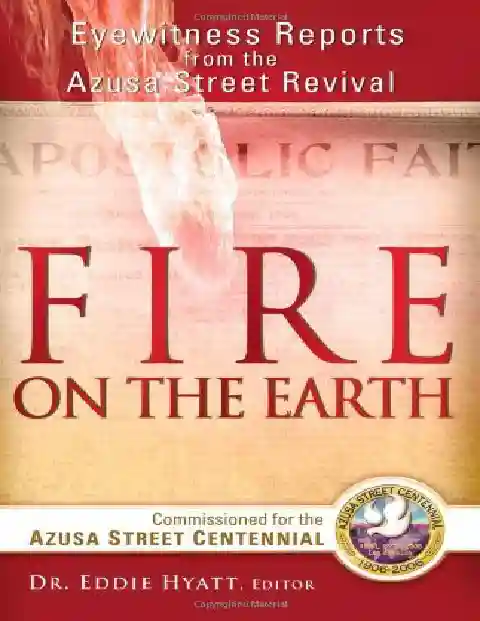

Fire On The Earth - Eyewitness Reports From The Azusa Street Revival Order Printed Copy
- Author: Dr. Eddie Hyatt
- Size: 2.4MB | 209 pages
- |
Others like fire on the earth - eyewitness reports from the azusa street revival Features >>

Fire In The Bones - William Tyndale
-160.webp)
By Their Blood (Christian Martyrs From The Twentieth Century And Beyond)

The Global War On Christians (Dispatches From The Front Lines Of Anti-Christian Persecution)

The Spirit Of Prophecy Volume 1

Autobiography Of Madame Guyon

The Keys Of This Blood: The Struggle For World Dominion Between Pope John Paul II, Mikhail Gorbachev And The Capitalist West
-160.webp)
Abraham: One Nomad's Amazing Journey Of Faith

Crimes Of The Cross
William Branham: A Man Sent By God

God’s Generals: John Alexander Dowie
About the Book
"Fire On The Earth" by Dr. Eddie Hyatt provides firsthand accounts and eyewitness reports from the Azusa Street Revival, a significant event in Pentecostal history that sparked a global Pentecostal movement. The book highlights the miraculous signs, wonders, and powerful outpouring of the Holy Spirit that occurred during this revival, inspiring readers to seek a deeper encounter with God.
Calvin Miller
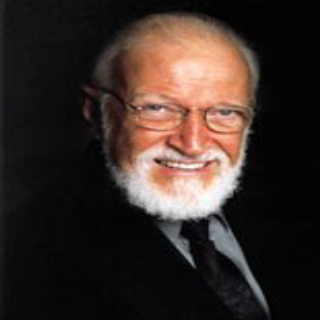 Calvin Miller was a pastor, professor and storyteller, best known for The Singer Trilogy, a mythic retelling of the New Testament story in the spirit of C. S. Lewis and J. R. R. Tolkien. Miller passed away on the afternoon of August 19, 2012, due to complications after heart surgery. He was 75.
A prolific artist and a writer's writer, Miller garnered respect and praise throughout his career from peers like Luci Shaw, Max Lucado and Philip Yancey. He was the author of more than forty books of popular theology and Christian inspiration including such recent books as Letters to Heaven, The Path of Celtic Prayer, Letters to a Young Pastor and his memoir Life Is Mostly Edges.
In addition to his twenty years of pastoral service at Westside Church in Omaha, Nebraska, Miller was also a great mentor to many students and leaders through his preaching and pastoral ministry classes at Beeson Divinity School. Calvin Miller, never one to multiply words, used just four to describe his rule of life: "Time is a gift."
RESCUE FROM THE SLUSH PILE
In October 1973 one important book was rescued from the slush pile (the stack of unsolicited manuscripts every publisher receives) by assistant editor Don Smith. He read a manuscript by a little-known Baptist pastor in Nebraska that was a poetic retelling of the life of Jesus—portraying him as a Troubadour. Both he and Linda Doll excitedly encouraged Jim Sire to take this imaginative manuscript seriously. In February 1974 Sire wrote the author, Calvin Miller, that IVP wanted to publish his book The Singer.
Months before, Miller had been waking up nights, stirred to write this tale, perhaps unconsciously inspired by the recent Broadway hits Jesus Christ Superstar and Godspell. Later Miller wrote:
When the manuscript was done, I sent it to Jim Sire at InterVarsity Press. “It’s good,” he said, “but we want to think about it a couple of weeks before we give you an answer.” So I waited until finally the letter came. They were going to do it. Jim Sire had done his Ph.D. on John Milton, and the fact that he liked it was joy immeasurable to me. “But,” he cautioned, “we’re going to print five thousand of these. They may not do well—in fact we may end up with four thousand of them on skids in our basement for the next ten years. Still, it’s a good book and deserves to be in print.”
Far more than a thousand copies sold. Actually, over three hundred times that amount sold in its first decade. It became “the most successful evangelical publication in this genre.” The Singer was followed in two years by The Song (paralleling the story of the early church in Acts) and two years after that by The Finale (inspired by the book of Revelation). Publication of The Singer changed Miller’s life. Even though he stayed in the pastorate for many years, it set him on a course of writing and speaking that he could not have imagined.
Calvin Miller was a pastor, professor and storyteller, best known for The Singer Trilogy, a mythic retelling of the New Testament story in the spirit of C. S. Lewis and J. R. R. Tolkien. Miller passed away on the afternoon of August 19, 2012, due to complications after heart surgery. He was 75.
A prolific artist and a writer's writer, Miller garnered respect and praise throughout his career from peers like Luci Shaw, Max Lucado and Philip Yancey. He was the author of more than forty books of popular theology and Christian inspiration including such recent books as Letters to Heaven, The Path of Celtic Prayer, Letters to a Young Pastor and his memoir Life Is Mostly Edges.
In addition to his twenty years of pastoral service at Westside Church in Omaha, Nebraska, Miller was also a great mentor to many students and leaders through his preaching and pastoral ministry classes at Beeson Divinity School. Calvin Miller, never one to multiply words, used just four to describe his rule of life: "Time is a gift."
RESCUE FROM THE SLUSH PILE
In October 1973 one important book was rescued from the slush pile (the stack of unsolicited manuscripts every publisher receives) by assistant editor Don Smith. He read a manuscript by a little-known Baptist pastor in Nebraska that was a poetic retelling of the life of Jesus—portraying him as a Troubadour. Both he and Linda Doll excitedly encouraged Jim Sire to take this imaginative manuscript seriously. In February 1974 Sire wrote the author, Calvin Miller, that IVP wanted to publish his book The Singer.
Months before, Miller had been waking up nights, stirred to write this tale, perhaps unconsciously inspired by the recent Broadway hits Jesus Christ Superstar and Godspell. Later Miller wrote:
When the manuscript was done, I sent it to Jim Sire at InterVarsity Press. “It’s good,” he said, “but we want to think about it a couple of weeks before we give you an answer.” So I waited until finally the letter came. They were going to do it. Jim Sire had done his Ph.D. on John Milton, and the fact that he liked it was joy immeasurable to me. “But,” he cautioned, “we’re going to print five thousand of these. They may not do well—in fact we may end up with four thousand of them on skids in our basement for the next ten years. Still, it’s a good book and deserves to be in print.”
Far more than a thousand copies sold. Actually, over three hundred times that amount sold in its first decade. It became “the most successful evangelical publication in this genre.” The Singer was followed in two years by The Song (paralleling the story of the early church in Acts) and two years after that by The Finale (inspired by the book of Revelation). Publication of The Singer changed Miller’s life. Even though he stayed in the pastorate for many years, it set him on a course of writing and speaking that he could not have imagined.
Act Like Men of God
How do men who believe in Jesus become more like Jesus? What is a man of God really like? When the apostle Paul wrote to a younger man, casting vision for what he might become in Christ, he charged him, Let no one despise you for your youth, but set the believers an example in speech, in conduct, in love, in faith, in purity. (1 Timothy 4:12) While the qualities in this verse may apply to young men and women alike, I find that they provide a simple yet challenging paradigm for becoming men of God. Previously, I addressed the first of these qualities, speech, with seven lessons for what men say. Now I want to press in to a godly man’s conduct. What does it mean for a man to set an example in his conduct? It’s an intentionally broad, all-encompassing term in Scripture, and it is often paired with speech (for example, Romans 15:18 and Colossians 3:17) — so, what we say and what we do. When it comes to our conduct, we might ask, What does the way we live say about Jesus? What kinds of conclusions would people draw about our Lord after watching us closely for a week, a month, a year? Uncommon Lifestyle In one sense, most of Paul’s letters address our conduct (directly or indirectly). In the immediate context of 1 Timothy, though, the elder qualifications in chapter 3 name and unpack some critical qualities of a godly man, including his conduct. While the qualifications are given for aspiring elders, they are not exclusive to these men — except, perhaps, for the ability to teach. Even with teaching, however, every man should aspire to handle God’s word faithfully, with accuracy and care. The qualities in the qualifications are simply what every Christian man should strive to be — and several of them speak specifically to how we live. The word that Paul uses for conduct also shows up a number of times in the apostle Peter’s letters (much more than in Paul), so we might also look to Peter to understand more fully what Paul charged Timothy (and us) to be and do. Between the elder qualifications and Peter’s instruction, we can isolate some specific ways men who believe in God become greater men of God in our conduct. This list of qualities is not exhaustive, but gives aspiring young men specific spiritual qualities to pursue. Men of Holiness Above all else, the lives of godly men are marked by holiness. “Do not be conformed to the passions of your former ignorance, but as he who called you is holy, you also be holy in all your conduct, since it is written, ‘You shall be holy, for I am holy’” (1 Peter 1:14–16). Some men continue to nurture and indulge the cravings of their flesh — lust, anger, greed, laziness, selfishness. Others wisely and joyfully seek to put to death their remaining sin (Romans 8:13). They strive to conform their conduct — all of their conduct — to the conduct of Christ (Romans 8:29). “What sort of men should we be? Holy men. Temptation-defying men. Sin-crucifying men.” “Since all these things [that is, heaven and earth] are thus to be dissolved,” Peter writes elsewhere, “what sort of people ought you to be in lives of holiness and godliness?” (2 Peter 3:11). We might translate the phrase “in lives of holiness” more literally as “in holy conduct” (the same word we’ve seen so far). So, in light of who Jesus really is, and the reality that he is coming again, what sort of men should we be? Holy men. Temptation-defying men. Sin-crucifying men. Not self-righteous men, but humble men who long to live like Jesus. Men of Self-Control Pursuing holiness will mean developing self-control. Women, of course, need self-control too (Titus 2:3–5). But given what God expects of heads of households and shepherds in the church, the cultivation of self-control is of particular importance for young men (1 Timothy 3:2; Titus 1:8). “This is the will of God, your sanctification: that you abstain from sexual immorality; that each one of you know how to control his own body in holiness and honor” (1 Thessalonians 4:3–4). If we want our conduct to magnify the worth of our Savior, we have to learn how to control unholy and dishonorable impulses within us. And not just with our bodies, but with our time, our spending, even our attention. Growing in godliness will mean regularly saying no (and often to good things). “Make every effort to supplement your faith with virtue, and virtue with knowledge, and knowledge with self-control . . .” (2 Peter 1:5–6). Where do you need to grow in self-control? What do you struggle to say no to, even when you know you should? Men of Sincerity Men of God also pursue God with sincerity. “Our boast is this, the testimony of our conscience, that we behaved in the world with simplicity and godly sincerity” (2 Corinthians 1:12). Sincerity is freedom from pretense or hypocrisy. A sincere man is the same in secret as he is everywhere else. His conduct is not a concerted effort to cover or compensate for his immaturities. It is the natural and consistent (not perfect) fruit of an increasingly healthy and holy soul. Paul’s counsel to servants applies well to all our conduct: “Obey in everything those who are your earthly masters, not by way of eye-service, as people-pleasers, but with sincerity of heart, fearing the Lord” (Colossians 3:22). This kind of man does not live and work to be seen a certain way, but lives and works knowing he is always seen by God. He fears God more than he fears the disapproval or rejection of others. And so those who know him well — those in his home, those in church, those he works with day in and day out at the office — know him to be the man he claims to be. Again, he is not perfect, but he is consistent, honest, and humble. Men Who Make Peace Another countercultural pattern among godly men is their commitment to pursue and keep peace. The qualifications say it negatively: a man must not be “quarrelsome” (1 Timothy 3:3). The clear message, though, is not simply an avoidance of petty disagreements, but a pursuit and protection of God-honoring peace. As Paul says elsewhere, “Let us pursue what makes for peace and for mutual upbuilding” (Romans 14:19). Or 2 Corinthians 13:11: “Aim for restoration, comfort one another, agree with one another, live in peace.” In what relationships does this hit home most for you? In the polarized and hostile climate we live in, peacemaking will set men of God apart all the more. They are men who savor the promise, “Blessed are the peacemakers, for they shall be called sons of God” (Matthew 5:9). These are men who disagree charitably and patiently, who initiate difficult private conversations, who take responsibility, who persevere in pursuing peace when others give up and walk away. They are quick to confess and apologize when they have sinned, and even quicker to forgive and restore when sinned against. They know that peace is not cheap, easy, or superficial, but costly, hard-earned, and profound, even miraculous. And so, as far as it depends on them, they pursue it (Romans 12:18). Men of the Home Before a man can lead the church, “he must manage his own household well” (1 Timothy 3:4). How could he shepherd a flock of dozens (or hundreds) if he can’t shepherd the few in his own home? Again, however, this ambition is not only for men aspiring to ministry, but for any man aspiring to maturity. Everything the godly man is and does in the world begins and springs from how he loves at home. Does he love his wife as Christ loved the church (Ephesians 5:25)? Does he train up his children in the way they should go (Proverbs 22:6), without provoking them to anger (Ephesians 6:4), treating them with dignity (1 Timothy 3:4)? “A sincere man is the same in secret as he is everywhere else.” This godly man is also hospitable (1 Timothy 3:2). Meaning, he not only cares well for those within his home, but he also welcomes others into his home. Home, for him, is not a place merely for rest and comfort, but for serving the kingdom of God — first, toward those of the household of faith (Romans 12:13), but also toward those who might yet believe (Hebrews 13:2). All of this is relevant to single men as well. First of all, if you eventually marry and have children, you are becoming now the man you will be then. Marriage will not make you a different man overnight; but it will soon reveal the kind of man you are. And even if you never marry, the heart of what is required here still applies. Are you the kind of man who cares for the needs of others — for roommates, for neighbors, for extended family, for the young and the old in your church? Singleness does not keep us from spiritual fatherhood and brotherhood. If anything, it may make us all the more available to those in need. Men Who Do Good In some ways, this last thread may help tie together the others. How do we set an example with our conduct? What does God want us to do? In the end, the man of God stands out for doing good. What Paul says to the rich applies to us all: “They are to do good, to be rich in good works” (1 Timothy 6:18). And not just rich in good works — so, doing lots of good works — but “zealous for good works” (Titus 2:14). The good of others, especially the eternal good of others — the good of knowing and enjoying Jesus — is an ambition these men bring to each day. It is the ambition of all their ambitions. These men know that just as God chose them before the foundation of the world (Ephesians 1:4), he also prepared good works for them to walk in (Ephesians 2:10). They know that thousands and thousands of years before they were born, God laid out good for them to do — and not just over their lifetime, but today and tomorrow and next Tuesday. And they do not assume the good will just happen, but they give careful thought to how that good will happen (Titus 3:8; see also 3:14). The Man You Once Were Maybe the best way to assess what kind of men we are would be to assess what kind of men we once were. How much has knowing Christ changed you? Paul does not use the word for conduct in 1 Timothy 4:12 often, but when he does, he is describing who he was and how he lived before grace made him someone new: “You have heard of my former life in Judaism, how I persecuted the church of God violently and tried to destroy it” (Galatians 1:13). Or he is describing who we once were: “[You were taught in Christ] to put off your old self, which belongs to your former manner of life and is corrupt through deceitful desires” (Ephesians 4:22; see also 2:3). So how does your current manner of life — your time, your attention, your spending — correspond with your former manner of life? And if you came to faith younger than most, how does your current life correspond to the life you might have lived apart from Christ? Whoever you were, and whoever you are, Peter’s charge is a good one to end with: Conduct yourselves with fear throughout the time of your exile, knowing that you were ransomed from the futile ways inherited from your forefathers, not with perishable things such as silver or gold, but with the precious blood of Christ. (1 Peter 1:17–19) Conduct yourself with a healthy, trusting, joyful fear of God. Conduct yourself as if Christ delivered you from the futility of worldliness. Conduct yourself as if your life was bought with the blood of heaven. Conduct yourself as a man chosen, saved, and sent by God. Article by Marshall Segal