
-480.webp)

Spiritual Direction (Wisdom For The Long Walk Of Faith) Order Printed Copy
- Author: Henri J. M. Nouwen
- Size: 2.05MB | 150 pages
- |
Others like spiritual direction (wisdom for the long walk of faith) Features >>
Spiritual Authority
Spiritual Timing
Spiritual Hunger And Other Sermons
A Prophetic Vision For The 21st Century
-160.webp)
Endued With Power: How To Activate The Gifts Of The Holy Spirit In Your Life
Iniquity: The Major Hindrance

Victory In The Wilderness
A Christian
The Practice Of Godliness
Overcoming Witchcraft
About the Book
"Spiritual Direction: Wisdom for the Long Walk of Faith" by Henri J. M. Nouwen offers practical guidance for individuals seeking to deepen their spiritual lives and navigate the challenges of their faith journey. Nouwen's insights on spiritual direction, solitude, and prayer provide readers with valuable tools to cultivate a closer relationship with God and find meaning in their spiritual practices.
Calvin Miller
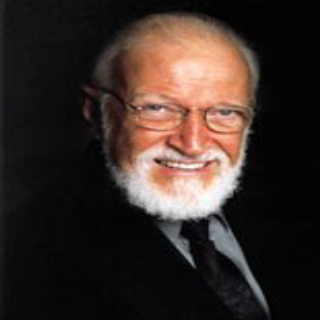 Calvin Miller was a pastor, professor and storyteller, best known for The Singer Trilogy, a mythic retelling of the New Testament story in the spirit of C. S. Lewis and J. R. R. Tolkien. Miller passed away on the afternoon of August 19, 2012, due to complications after heart surgery. He was 75.
A prolific artist and a writer's writer, Miller garnered respect and praise throughout his career from peers like Luci Shaw, Max Lucado and Philip Yancey. He was the author of more than forty books of popular theology and Christian inspiration including such recent books as Letters to Heaven, The Path of Celtic Prayer, Letters to a Young Pastor and his memoir Life Is Mostly Edges.
In addition to his twenty years of pastoral service at Westside Church in Omaha, Nebraska, Miller was also a great mentor to many students and leaders through his preaching and pastoral ministry classes at Beeson Divinity School. Calvin Miller, never one to multiply words, used just four to describe his rule of life: "Time is a gift."
RESCUE FROM THE SLUSH PILE
In October 1973 one important book was rescued from the slush pile (the stack of unsolicited manuscripts every publisher receives) by assistant editor Don Smith. He read a manuscript by a little-known Baptist pastor in Nebraska that was a poetic retelling of the life of Jesus—portraying him as a Troubadour. Both he and Linda Doll excitedly encouraged Jim Sire to take this imaginative manuscript seriously. In February 1974 Sire wrote the author, Calvin Miller, that IVP wanted to publish his book The Singer.
Months before, Miller had been waking up nights, stirred to write this tale, perhaps unconsciously inspired by the recent Broadway hits Jesus Christ Superstar and Godspell. Later Miller wrote:
When the manuscript was done, I sent it to Jim Sire at InterVarsity Press. “It’s good,” he said, “but we want to think about it a couple of weeks before we give you an answer.” So I waited until finally the letter came. They were going to do it. Jim Sire had done his Ph.D. on John Milton, and the fact that he liked it was joy immeasurable to me. “But,” he cautioned, “we’re going to print five thousand of these. They may not do well—in fact we may end up with four thousand of them on skids in our basement for the next ten years. Still, it’s a good book and deserves to be in print.”
Far more than a thousand copies sold. Actually, over three hundred times that amount sold in its first decade. It became “the most successful evangelical publication in this genre.” The Singer was followed in two years by The Song (paralleling the story of the early church in Acts) and two years after that by The Finale (inspired by the book of Revelation). Publication of The Singer changed Miller’s life. Even though he stayed in the pastorate for many years, it set him on a course of writing and speaking that he could not have imagined.
Calvin Miller was a pastor, professor and storyteller, best known for The Singer Trilogy, a mythic retelling of the New Testament story in the spirit of C. S. Lewis and J. R. R. Tolkien. Miller passed away on the afternoon of August 19, 2012, due to complications after heart surgery. He was 75.
A prolific artist and a writer's writer, Miller garnered respect and praise throughout his career from peers like Luci Shaw, Max Lucado and Philip Yancey. He was the author of more than forty books of popular theology and Christian inspiration including such recent books as Letters to Heaven, The Path of Celtic Prayer, Letters to a Young Pastor and his memoir Life Is Mostly Edges.
In addition to his twenty years of pastoral service at Westside Church in Omaha, Nebraska, Miller was also a great mentor to many students and leaders through his preaching and pastoral ministry classes at Beeson Divinity School. Calvin Miller, never one to multiply words, used just four to describe his rule of life: "Time is a gift."
RESCUE FROM THE SLUSH PILE
In October 1973 one important book was rescued from the slush pile (the stack of unsolicited manuscripts every publisher receives) by assistant editor Don Smith. He read a manuscript by a little-known Baptist pastor in Nebraska that was a poetic retelling of the life of Jesus—portraying him as a Troubadour. Both he and Linda Doll excitedly encouraged Jim Sire to take this imaginative manuscript seriously. In February 1974 Sire wrote the author, Calvin Miller, that IVP wanted to publish his book The Singer.
Months before, Miller had been waking up nights, stirred to write this tale, perhaps unconsciously inspired by the recent Broadway hits Jesus Christ Superstar and Godspell. Later Miller wrote:
When the manuscript was done, I sent it to Jim Sire at InterVarsity Press. “It’s good,” he said, “but we want to think about it a couple of weeks before we give you an answer.” So I waited until finally the letter came. They were going to do it. Jim Sire had done his Ph.D. on John Milton, and the fact that he liked it was joy immeasurable to me. “But,” he cautioned, “we’re going to print five thousand of these. They may not do well—in fact we may end up with four thousand of them on skids in our basement for the next ten years. Still, it’s a good book and deserves to be in print.”
Far more than a thousand copies sold. Actually, over three hundred times that amount sold in its first decade. It became “the most successful evangelical publication in this genre.” The Singer was followed in two years by The Song (paralleling the story of the early church in Acts) and two years after that by The Finale (inspired by the book of Revelation). Publication of The Singer changed Miller’s life. Even though he stayed in the pastorate for many years, it set him on a course of writing and speaking that he could not have imagined.
you are not that special - the glory of ordinary christianity
I had a professor in seminary who had a knack for humbling first-year students. He enjoyed showing them they weren’t special, no matter what their Sunday school teachers and home churches had told them. In fact, this professor was so effective at humbling new seminarians, he developed a reputation for it. He was provocative and polarizing. He had his detractors around campus, and beyond. To some, he seemed cocky and headstrong. But others loved him dearly. Not because he walked the fine line between arrogance and purposeful provocation, but because they themselves had been wonderfully awakened. First they had been humbled by his jabs, and it hurt. It was disorienting. But as much as it smarted at first, they came to humble themselves and receive the uncomfortable truth. The professor’s shocking words proved to be the wounds of a friend. He was right. They weren’t that special — not in the ways that seminary students (and most humans) tend to think they are. You Are (Not) Special For many of us, one of the earliest messages we heard, the constant refrain of children’s books, the chorus of our parents (and especially grandparents), and likely even the message we heard in Sunday school, was essentially you are special . There’s an element of truth in it, of course. You are indeed special — as human, and especially as redeemed — in ways that redound to the glory of God. In relation to the animal kingdom, God made our human race special, in his own image . Even the angels marvel at the grace we’ve received in Christ (1 Peter 1:12). And in Christ, no doubt, you are special to God — through being chosen before the foundation of the world, and then particularly redeemed by the sacrifice of Christ two millennia before you were born. And then you are three times special by the regenerating work of the Holy Spirit. Jesus died for his friends (John 15:13), his sheep (John 10:14–15), his bride (Ephesians 5:25). He loved the church with his special love and gave himself up for her. “God, being rich in mercy, because of the great love with which he loved us, even when we were dead in our trespasses, made us alive together with Christ” (Ephesians 2:4–5). In Christ, you are not just loved but greatly so. And on the human level, children are indeed special to their own parents and grandparents. We grant that. It’s in God’s good design. Also, it’s worth acknowledging that a group of self-doubting humans and saints have a difficult time believing they are special in ways that really matter. They’ve been so beaten down by life in this world – or perhaps they’ve simply found low self-esteem to be a convenient excuse for coddling sin. To be human, and alive, is amazing. To be called a child of the living God by being joined to his Son, by faith alone, is scandalous. Chosen by God before you even did anything good or bad! What wondrous love is this? But oh, how prone we can be, like first-year seminarians, to let such specialness go to our heads — to transpose it into ways that serve the flesh rather than the Spirit. Not That Special When sinners contemplate their own specialness, we don’t typically think about our relation to animals or angels, or what it means to be in Christ, or our particular specialness to family and friends. Rather, we often think we’re special compared to others — because of our qualities. Our gifts. Our achievements. Our abilities. Bells that ring to our own glory. This is where we need to hear a clear, and sometimes forceful, voice say, in love, You are not that special . You are not an exception to the basic laws and ordinances of human society, and as a Christian, you are not an exception to the ordinary means and patterns of the Christian life. You are not a cut above the rank-and-file in the world, and especially in the church. You are not exceptional in the ways you like to tell yourself in silence. You are not special in the sense that ordinary, everyday, normal Christianity is no longer essential to you because of your qualities. You are not that special . You don’t have a special path to heaven or a special route through the toils and snares of this world. Just consider Jesus. He is indeed the Father’s special Son. If anyone could plead special privilege, it would be the divine Son. And yet. And yet! He did not cling to his equality with God as a self-serving privilege or ask to be excused from the mission. He did not request a pass from poverty, suffering, or even torture. He became “obedient to the point of death, even death on a cross” (Philippians 2:6–8). Do we claim to be his disciples, yet presume ourselves to be greater than our Master? Inconvenient Specialness How might we discern whether we are appropriating specialness in the right places and ways? One test would be whether we tell ourselves we’re special in ways that are easy and convenient for the flesh. Do I presume I’ll get my way because I’m special? Should others follow my lead, without my earning their trust, because I’m special? Another way at it might be this: Do I love the specialness of humanity, and being Christ’s, only when it applies to me, but not when it applies to those I find most difficult to endure? Which gets at what may be one of the greatest indicators of humility: how we view the church. Not the big, universal, capital-C Church — the one that is often much easier to love. But your church. The local church where God has placed you. The people God has picked to appear, and reappear, and reappear again, in your real-life story. Those faces. That church. With all the warts and frustrations and inconveniences you’re increasingly aware of. When you ponder the flesh-and-blood Christians you know, and worship with weekly, and share the Table with, do you think of yourself as special in distinction to them? Or are you special with them? Really Belong to His Body Local churches are wonderfully humbling collectives. And one of the chief ways God roughs up our souls, and keeps them in shape, and prepares them to welcome his humbling hand when it descends — and often brings the very conflicts that are his humbling work — is through really belonging to a particular, imperfect local body of fellow believers. Really belong. Really join. As a fellow sheep. (Pastors too. Humble ones think of themselves first and foremost as sheep, not shepherds. They rejoice not that the demons are subject to them in great acts of ministry, but that their names are written in heaven, Luke 10:20.) Among other blessings, one gift that the messy, often difficult life of the local church offers us, if we will let it, is the regular reminder that we’re not that special, not in whatever twisted ways we like to tell ourselves. We are indeed special to God with these people , but not in comparison with them. And what the down-to-earth life of the local church reminds us is how good it can be to be normal, and to remember, for our good, that no Christian is exempt from normal Christianity: from repentance, from trust in Christ alone for forgiveness, from the moment-by-moment help of his Spirit, from saturating our lives in the word of God, from daily availing ourselves of his ear in prayer, and from genuinely belonging to his body in a local church. Good to Be Normal Brothers and sisters, let’s rehearse for ourselves, as much as we need it, that we are indeed special, and at the same time not that special, not in ways convenient to our flesh. And let’s celebrate that together with Jesus’s church, we are indeed special. You are special — you plural. Jesus loved the church and gave himself up for her. He laid down his life for this sheep. Through faith in Jesus, we are joined to him, and not alone. And in him we also are joined to his people, his bride, his flock. He has loved us (plural) with his special, electing, and effective love. We glory in this specialness, and die to sin’s temptation to think of ourselves as special in ways that swell our hearts with conceit.
-480.webp)
-480.webp)