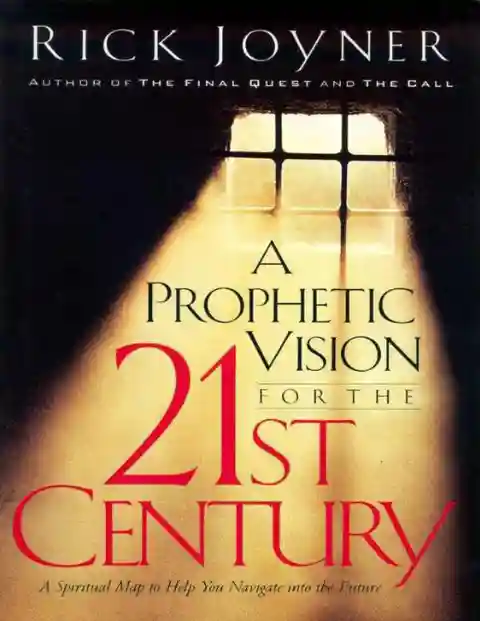

A Prophetic Vision For The 21st Century Order Printed Copy
- Author: Rick Joyner
- Size: 1.04MB | 195 pages
- |
Others like a prophetic vision for the 21st century Features >>

The Prophetic Ministry

The Sins Of The Mouth

Stand: A Call For The Endurance Of The Saints
-160.webp)
Renovation Of The Heart: Putting On The Character Of Christ
The Art Of War For Spiritual Battle

Mysterious Secrets Of The Dark Kingdom
.epub-160.webp)
The Price Of Spiritual Power

One In A Million - Journey To Your Promised Land

The Order Of Melchizedek
The Beginners Guide To Spiritual Gifts
About the Book
"A Prophetic Vision For The 21st Century" by Rick Joyner is a thought-provoking book that offers insights and predictions about the future based on biblical prophecy and current events. Joyner emphasizes the importance of faith, unity, and preparedness in facing the challenges and opportunities of the 21st century. The book encourages readers to seek spiritual guidance and embrace their role in shaping a better future.
William Still
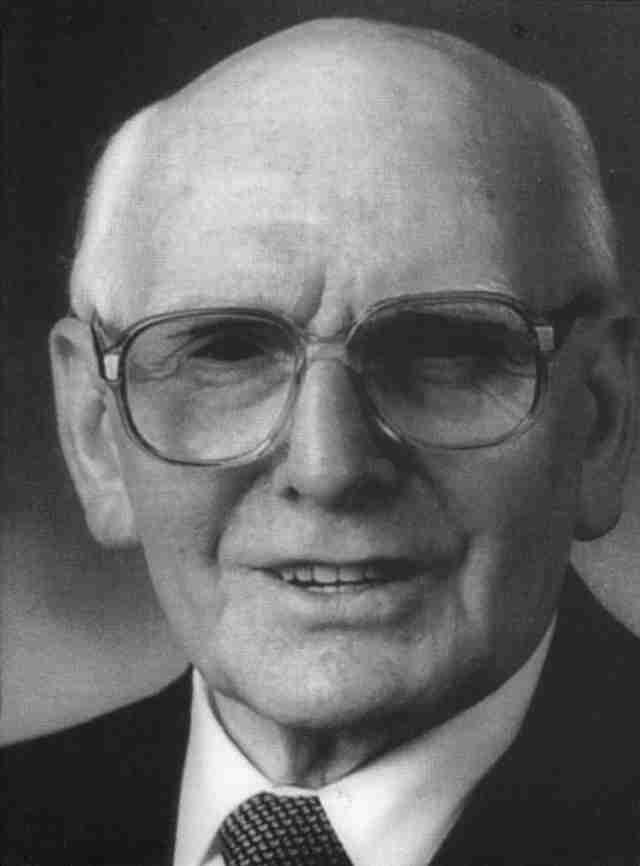 I recently read Dying to Live (Christian Focus, 1991), the autobiography of Scottish pastor William Still. I became interested in Still after reading his book The Work of the Pastor earlier this year.
The first half of Dying to Live tells about Still’s early years into young adulthood and his beginning in pastoral ministry. Still had an unsettled childhood. His parents were separated in his early years, and his father was an alcoholic. He was a sickly child who took refuge in music and became an accomplished pianist. He was part of the Salvation Army as a young man but then entered ministry in the Church of Scotland and served at the Gilcomston Church in his hometown of Aberdeen from 1945-1997.
The second half of the book deals with various aspects of Still’s pastoral ministry. Still was an evangelical. In his early ministry he worked with Billy Graham, Alan Redpath, and others in evangelistic events. With time, however, he moved away from what he came to call “evangelisticism” to develop a solid expositional ministry.
Still faced his fair share of hardships during the course of his ministry. When he moved away from pragmatic evangelistic methods, for example, more than two hundred people stopped attending his church almost overnight. In the preface, he references Martin Luther’s observation that there are three things which make a minister: study, prayer, and afflictions. He observes, “He who is not prepared to make enemies for Christ’s sake by the faithful preaching of the Word will never make lasting friends for Christ, either” (p. 93).
He describes one particularly difficult controversy early in his ministry when he confronted a group of disgruntled elders. At the end of one Sunday service, he read a statement confronting these men, which ended, “There you sit, with your heads down, guilty men. What would you say if I named you before the whole congregation? You stand condemned before God for your contempt of the Word and of his folk.” He adds, “The moment I had finished, I walked out of the pulpit. There was no last hymn—no benediction. I went right home. It was the hardest and most shocking thing I ever had to do in Gilcomston” (p. 124). That same week seven of his elders resigned and Still was called twice before his Presbytery to answer for the controversy. Yet, he endured.
Still maintains that in light of the unpleasantness one will face in the ministry that the minister of the Word must possess one quality in particular: “…I would say that this quality is courage: guts, sheer lion-hearted bravery, clarity of mind and purpose, grit. Weaklings are no use here. They have a place in the economy of God if they are not deliberate weaklings and stunted adults as Paul writes of both to the Romans and to the Corinthians. But weaklings are no use to go out and speak prophetically to men from God and declare with all compassion, as well as with faithfulness, the truth: the divine Word that cuts across all men’s worldly plans for their lives” (p. 140).
Still was a pioneer in several areas. First, he developed a pattern of preaching and teaching systematically through books of the Bible at a time when this was rarely done. He began a ministry of “consecutive Bible teaching” starting with the book of Galatians in 1947, calling this transition from “evangelisticism to systematic exposition … probably the most significant decision in my life” (p. 191).
He was also a pioneer in simplifying and integrating the ministry of the church. After noting how youth in the church were drifting away, even after extensive involvement in the church’s children’s ministry, Still writes, “I conceived the idea of ceasing all Sunday School after beginners and Primary age (seven years) and invited parents to have their children sit with them in the family pew from the age of eight” (p. 171). He laments “the disastrous dispersion of congregations by the common practice of segregating the church family into every conceivable category of division of ages, sexes, etc.” (p. 173).
Dying to Live is a helpful and encouraging work about the life and work of the minister and is to be commended to all engaged in the call of gospel ministry. As the title indicates, Still’s essential thesis is that in order to be effective in ministry the minister must suffer a series of deaths to himself (cf. John 12:24). On this he writes:
The deaths one dies before ministry can be of long duration—it can be hours and days before we minister, before the resurrection experience of anointed preaching. And then there is another death afterwards, sometimes worse than the death before. From the moment that you stand there dead in Christ and dead to everything you are and have and ever shall be and have, every breath you breathe thereafter, every thought you think, every word you say and deed you do, must be done over the top of your own corpse or reaching over it in your preaching to others. Then it can only be Jesus that comes over and no one else. And I believe that every preacher must bear the mark of that death. Your life must be signed by the Cross, not just Christ’s cross (and there is really no other) but your cross in his Cross, your particular and unique cross that no one ever died—the cross that no one ever could die but you and you alone: your death in Christ’s death (p. 136).
I recently read Dying to Live (Christian Focus, 1991), the autobiography of Scottish pastor William Still. I became interested in Still after reading his book The Work of the Pastor earlier this year.
The first half of Dying to Live tells about Still’s early years into young adulthood and his beginning in pastoral ministry. Still had an unsettled childhood. His parents were separated in his early years, and his father was an alcoholic. He was a sickly child who took refuge in music and became an accomplished pianist. He was part of the Salvation Army as a young man but then entered ministry in the Church of Scotland and served at the Gilcomston Church in his hometown of Aberdeen from 1945-1997.
The second half of the book deals with various aspects of Still’s pastoral ministry. Still was an evangelical. In his early ministry he worked with Billy Graham, Alan Redpath, and others in evangelistic events. With time, however, he moved away from what he came to call “evangelisticism” to develop a solid expositional ministry.
Still faced his fair share of hardships during the course of his ministry. When he moved away from pragmatic evangelistic methods, for example, more than two hundred people stopped attending his church almost overnight. In the preface, he references Martin Luther’s observation that there are three things which make a minister: study, prayer, and afflictions. He observes, “He who is not prepared to make enemies for Christ’s sake by the faithful preaching of the Word will never make lasting friends for Christ, either” (p. 93).
He describes one particularly difficult controversy early in his ministry when he confronted a group of disgruntled elders. At the end of one Sunday service, he read a statement confronting these men, which ended, “There you sit, with your heads down, guilty men. What would you say if I named you before the whole congregation? You stand condemned before God for your contempt of the Word and of his folk.” He adds, “The moment I had finished, I walked out of the pulpit. There was no last hymn—no benediction. I went right home. It was the hardest and most shocking thing I ever had to do in Gilcomston” (p. 124). That same week seven of his elders resigned and Still was called twice before his Presbytery to answer for the controversy. Yet, he endured.
Still maintains that in light of the unpleasantness one will face in the ministry that the minister of the Word must possess one quality in particular: “…I would say that this quality is courage: guts, sheer lion-hearted bravery, clarity of mind and purpose, grit. Weaklings are no use here. They have a place in the economy of God if they are not deliberate weaklings and stunted adults as Paul writes of both to the Romans and to the Corinthians. But weaklings are no use to go out and speak prophetically to men from God and declare with all compassion, as well as with faithfulness, the truth: the divine Word that cuts across all men’s worldly plans for their lives” (p. 140).
Still was a pioneer in several areas. First, he developed a pattern of preaching and teaching systematically through books of the Bible at a time when this was rarely done. He began a ministry of “consecutive Bible teaching” starting with the book of Galatians in 1947, calling this transition from “evangelisticism to systematic exposition … probably the most significant decision in my life” (p. 191).
He was also a pioneer in simplifying and integrating the ministry of the church. After noting how youth in the church were drifting away, even after extensive involvement in the church’s children’s ministry, Still writes, “I conceived the idea of ceasing all Sunday School after beginners and Primary age (seven years) and invited parents to have their children sit with them in the family pew from the age of eight” (p. 171). He laments “the disastrous dispersion of congregations by the common practice of segregating the church family into every conceivable category of division of ages, sexes, etc.” (p. 173).
Dying to Live is a helpful and encouraging work about the life and work of the minister and is to be commended to all engaged in the call of gospel ministry. As the title indicates, Still’s essential thesis is that in order to be effective in ministry the minister must suffer a series of deaths to himself (cf. John 12:24). On this he writes:
The deaths one dies before ministry can be of long duration—it can be hours and days before we minister, before the resurrection experience of anointed preaching. And then there is another death afterwards, sometimes worse than the death before. From the moment that you stand there dead in Christ and dead to everything you are and have and ever shall be and have, every breath you breathe thereafter, every thought you think, every word you say and deed you do, must be done over the top of your own corpse or reaching over it in your preaching to others. Then it can only be Jesus that comes over and no one else. And I believe that every preacher must bear the mark of that death. Your life must be signed by the Cross, not just Christ’s cross (and there is really no other) but your cross in his Cross, your particular and unique cross that no one ever died—the cross that no one ever could die but you and you alone: your death in Christ’s death (p. 136).
can i follow my new heart
“Why shouldn’t I follow my heart? If I am a Christian — if God has caused me to be ‘born again’ and has given me ‘a new heart’ — isn’t my new heart trustworthy?” Readers have raised some version of this objection when I’ve exhorted Christians, “Don’t follow your heart.” And the objection is warranted. After all, the Bible clearly teaches that in this era of the new covenant, God writes his law on our new hearts so that we willingly follow him (Jeremiah 31:31–34; Hebrews 8:8–12). This would seem to not merely imply, but even mandate, that Christians should follow their hearts. But the Bible’s description of what a regenerated person actually experiences in this age reveals a more spiritually and psychologically complex picture — one that I believe gives Christians biblical warrant to cultivate a healthy suspicion of what they recognize as their hearts’ desires. So, while we may, and hopefully will, reach a point in our lives as Christians where it’s right, at times, to follow our hearts, allow me to make a brief case that the phrase actually undermines Christians as they labor and struggle to discern their various desires, and that Scripture itself discourages us from thinking this way. War Within How might we summarize the complex picture the Bible paints of the born-again experience in this already-not-yet age? The New Testament explains that when the Spirit brings us from spiritual death to spiritual life (John 5:24; Romans 6:13), we enter a strange new reality. Our regenerated new self emerges, “created after the likeness of God in true righteousness and holiness.” And yet our “ old self , which belongs to [our] former manner of life,” is still “corrupt through deceitful desires” (Ephesians 4:22–24). We are “born of the Spirit” (John 3:6) while still inhabiting the “flesh,” our “body of death” in which “nothing good dwells” (Romans 7:18, 24). “The hearts of regenerated people are not yet fully free from the influence of their flesh.” When Christians are born again, we enter into a lifelong internal war where “the desires of the flesh are against the Spirit, and the desires of the Spirit are against the flesh, for these are opposed to each other, to keep you from doing the things you want to do” (Galatians 5:17). Stepping back and viewing these desires objectively, “the works of the flesh” that result from fleshly desires “are evident,” and so is “the fruit of the Spirit” (Galatians 5:19–23). But Christians often struggle — on the ground, in real time — to discern the desires of the Spirit from the desires of the flesh. This is why the New Testament Epistles are full of exhortations and corrections addressed to Christians. James tells his readers (and us at relevant times) that their “passions are at war within” them (James 4:1). Peter warns his readers (and us), “Do not be conformed to the passions of your former ignorance” (1 Peter 1:14). Paul describes this internal experience of warring passions as “wretched” (Romans 7:24). And he admonishes the Colossian Christians (and us) with strong language: “Put to death therefore what is earthly in you : sexual immorality, impurity, passion, evil desire, and covetousness, which is idolatry” (Colossians 3:5). Why did these apostles feel the need to speak this way to regenerated people? Because the hearts of these regenerated people were not yet fully free from the influence of their flesh, their old selves. Follow the Spirit Much of the Christian life is a war to die to remaining sin and live by the Spirit. John Piper calls it “the main battle of the Christian life”: The main battle is to see our hearts renovated, recalibrated, so that we don’t want to do those sinful external behaviors, and don’t just need willpower not to do them, but the root has been severed and we have different desires. In other words, the goal of change — of sanctification, of the Christian life — is to be so changed that we can and ought to follow our desires. That’s exactly right. And when we have been so changed through progressive sanctification, so renovated that our hearts (and therefore our desires, dispositions, motives, emotions, and passions) are, as Piper says, “calibrated to Christ,” then we should follow our hearts. However, at any given time within our churches, small groups, friendships, and families, different Christians are at different places for different reasons in this heart-renovation process. Some hearts are more sanctified, and therefore more reliable to follow, than others. I think that’s why we don’t hear the apostles generally counsel us to follow our hearts in our fight of faith against remaining sin, but rather to follow the Holy Spirit . Let Not Sin Reign Paul is the one who delves most deeply into this issue: “I say, walk by the Spirit, and you will not gratify the desires of the flesh” (Galatians 5:16). He devotes most of Romans 6–8 to explaining the nature of the strange new-self/old-self, Spirit/flesh reality of the Christian life, including Romans 8:13: “If you live according to the flesh you will die, but if by the Spirit you put to death the deeds of the body, you will live.” Paul lays the theological foundation of our understanding by explaining “that our old self was crucified with [Christ] in order that [our] body of sin might be brought to nothing, so that we would no longer be enslaved to sin” (Romans 6:6). Our new selves were “raised with Christ” (Colossians 3:1) so that “we too might walk in newness of life” (Romans 6:4). Therefore, we “must consider [ourselves] dead to sin and alive to God in Christ Jesus” (Romans 6:11). In light of this, Paul admonishes us, Let not sin therefore reign in your mortal body, to make you obey its passions. Do not present your members to sin as instruments for unrighteousness, but present yourselves to God as those who have been brought from death to life, and your members to God as instruments for righteousness. For sin will have no dominion over you, since you are not under law but under grace. (Romans 6:12–14) And how do we do this? By learning to “set [our] minds on the things of the Spirit” and not on “the things of the flesh” (Romans 8:5) — by learning to follow the Spirit, to “walk by the Spirit” (Galatians 5:16), because “all who are led by the Spirit of God are sons of God” (Romans 8:14). Follow the Treasure One of the reasons I find “follow your heart” generally unhelpful as counsel for Christians is that many of us, from the time we were young, have absorbed this as a pop-cultural creed that says if we just look deep into our hearts, we’ll be shown our deepest truth, and discover the way we should go. Given the significant amount our sinful flesh still influences our hearts, it’s not hard to see how this phrase can easily increase confusion when applying it to the Christian life. “Some hearts are more sanctified, and therefore more reliable to follow, than others.” I also don’t believe the Bible encourages that idea since, when it comes to engaging our hearts, far and away what we hear in it is counsel to “direct our hearts,” not to follow them. We see that clearly in Paul’s instructions above. God made our hearts to follow, not to lead. And what do our hearts follow? Jesus gives the clearest answer: “Where your treasure is, there your heart will be also” (Matthew 6:21). In time, our heart always pursues (follows) our treasure. When we are born again, the eyes of our hearts are enlightened (Ephesians 1:18) and, through faith, we begin to see the Treasure: God himself in Christ. And since our heart learns to pursue the object that stirs its greatest affections, its treasure , I suggest we not counsel each other to “follow your heart,” but instead to “follow the Treasure.” Looking into our hearts for direction can be spiritually hazardous. It is usually more helpful for us to direct our hearts to what is most valuable and delightful. Which is why I believe David counsels us, “Delight yourself in the Lord, and he will give you the desires of your heart” (Psalm 37:4).