
Others like overcoming witchcraft Features >>
-160.webp)
About the Book
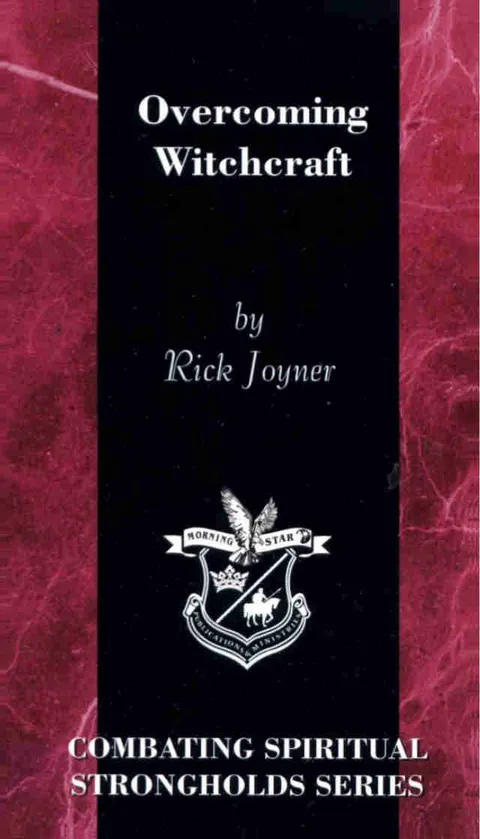
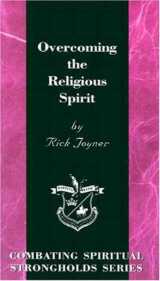
"Overcoming Witchcraft" by Rick Joyner is a practical guide to recognizing and overcoming spiritual attacks from the enemy, particularly in the form of witchcraft. Joyner provides insights and strategies for believers to stand firm in their faith, resist the devil, and walk in victory over dark forces. The book offers encouragement and practical steps for believers to live in freedom and power through the authority of Christ.
Dietrich Bonhoeffer

The Year My World Fell Apart
Twenty-five years ago, my world fell apart. I had just turned 39, was happily married with five kids, and served as the associate pastor of a growing two-year-old church plant. My health was good, I enjoyed an active life, and ministry opportunities abounded. Everything looked good from the outside. But on the inside, it was a different story. Starting in January of 1994, fear, hopelessness, depression, detachment, anxiety, and emptiness became my daily companions. All my life, I had taken pride in my ability to think clearly, but suddenly, thoughts began racing through my mind that I couldn’t stop. Panic attacks came regularly. I imagined I would be dead within months. And then there were the physical effects. Most days, I found it hard to catch my breath. My arms itched incessantly, and no amount of scratching relieved the sensation. When it didn’t seem like a 200-pound weight pressed against my chest, I often felt an eerie hollowness. My face buzzed. I was light-headed. I spent many nights pacing and trying to pray. ‘This Doesn’t Happen to Pastors’ Other than the normal pressures of a church planting pastor, there were no obvious reasons why I seemed to be going crazy. In an effort to rule out potential causes, I made an appointment with my doctor for a complete checkup. The results came back. I was “fine.” Nothing had prepared me for what I was going through. My internal accusations that “this doesn’t happen to pastors” only made me more frantic. I looked fruitlessly for something that would give me victory over whatever it was I was battling. Scripture. Prayer. Worship music. A retreat. A vacation. Even a trip to Canada during the “Toronto blessing.” Nothing helped. Early on, I thought about seeing a counselor, maybe even a psychiatrist. I was aware of occasions when people with hormonal imbalances, an inability to sleep, or traumatic personal histories benefited from medical intervention. I wondered if drugs might help me get back on my feet to deal with what I was experiencing. I also identified with various labels I had read about. Nervous breakdown. Burnout. Anxiety disorder. Depression. Whatever was going on was affecting me emotionally, physically, mentally, and spiritually. The symptoms were too numerous and intense to think this was only a “sin” problem. But no label I assigned to my condition identified root causes. If what I was experiencing originated in my own heart (as it seemed), I wanted to explore that first. I wanted to press in to the gospel to see what I might be missing. The next two and a half years were the hardest of my life. But knowing what I learned from them, they were, without a doubt, the best years. Many people, most significantly my wife, Julie, were invaluable means of grace during that time. I hope to be a means of grace to you or others you might know who have been through something similar to what I’ve been describing. These are a few of the lessons God taught me during that time. We Might Not Be Hopeless Enough About a year into my dark season, I told my good friend, Gary, that I felt dead inside. Life didn’t make sense. I felt completely hopeless. Gary’s response was one I’ll never forget and have passed on to countless people, “I don’t think you’re hopeless enough. If you were completely hopeless, you’d stop trusting in what you can do and trust in what Jesus has already done for you on the cross.” Our problem isn’t that we have no hope. We just hope in things that aren’t God. Our own abilities. A preferred outcome. Our reputation. Financial security. You fill in the blank. And when the idols we’ve hoped in don’t deliver as promised, we panic. We despair. We lash out. We go numb. That’s why the psalmists speak of hoping in the Lord and his word at least twenty-five times, and why David tells us to “hope in the Lord from this time forth and forevermore” (Psalm 131:3). It’s easy and common to hope in something other than God. Blessed Are Those Who Know Their Need For most of my life up until that point, my heart aggressively served the idols of credit and control. Those idols revealed a selfish ambition that desired not only people’s approval but their applause, even their adoration. I wanted to receive the praise only God deserves. When I couldn’t get everyone to think I was as great as I thought I was, or when I realized the world didn’t bow to my desires, my idols punished me: mentally, emotionally, and physically. I thought I was a victim. I thought depression was “coming on me” from “out there.” Actually, I was the one producing it, through my own fears, unbelief, and false worship. I was forsaking my only hope of steadfast love (Jonah 2:8). Over time I came to see God was guiding the whole process in order to turn my heart to him. He wanted to wean me from my self-centered idolatry so I could find the greater joy of pursuing his glory instead of mine. Benefits We Don’t Think We Need In the first year of my trial, I was often unaffected by normal spiritual disciplines like reading Scripture, gathering with the church on Sundays, and prayer. The promises of the Bible seemed like empty platitudes, meant for those who were doing well. In reality, I didn’t see the depths of my need clearly enough. A friend introduced me to John Owen’s Sin and Temptation and God used it to show me how deceived my heart could be. Rather than wondering why I felt so hopeless and fearful, I started to own those feelings as the effect of functionally seeing myself as my own savior. Apart from Jesus, I was completely hopeless and had every reason to fear. But Jesus died on the cross to save hopeless and fearful people. And I was one of them. That thought process, repeated a thousand times, pointed me again and again to the Savior I needed more than I had ever realized. Feelings Are Unreliable Proofs The Psalms teach us that a relationship with God involves our emotions. God’s presence brings joy, God’s promises bring comfort, God’s provision brings satisfaction (Psalm 16:11; 119:50; 145:16). But I was trying to root my faith in my experiences rather than in God’s word. I was looking to sustained peace as evidence that the Bible was true, and found myself chasing experiences rather than Jesus. When I was unaffected by the gospel, I began to see that other desires were at work in my heart. Selfish ambition. Self-atonement. Works-righteousness. A love of ease. Feelings tell me something is happening in my soul, but they don’t necessarily tell me why I feel (or don’t feel) a certain way. We discover that through patiently and consistently trusting and pursuing God (Proverbs 2:1–5). When I insist on finding relief from my emotional distress before I believe God, I’m living by sight, not by faith. Self-Focus Won’t Ultimately Defeat Self-Sins In March of 1995, I went on a personal retreat. After 24 hours, I determined my problem was that I had been depending too much on my own righteousness and needed to trust in the righteousness of Christ. When I got home, I committed myself to a rigid discipline of Scripture memorization. Julie told me I came back more bound up than when I had left. One reason my dark season lasted so long was my belief that both the problem and solution ended in me. It was my lack of faith, my legalism, my poor choices. I needed to memorize more Scripture, do more, do less, do nothing, do everything. Over time, God graciously showed me that putting sin to death involves me but doesn’t depend on me. God’s grace comes to humble, needy people, never to those who think they deserve or can earn it. Robert Murray M’Cheyne’s counsel is still wise: “For every look at self, take ten looks at Christ!” His perfect life, substitutionary sacrifice, and glorious resurrection are a never-ending stream of delight, hope, and transformation (2 Corinthians 3:18). Take Every Temptation to Christ Maturity isn’t freedom from temptation, but responding to temptation more often with what God has said and done for us in Christ. I often thought I was backsliding when the temptations of anxiety, fear, hopelessness, and depression reappeared (or even increased). In those moments, I was tempted to think what I had been doing and believing “didn’t work.” But John Owen observed, “Your state is not at all to be measured by the opposition that sin makes to you, but by the opposition you make to it.” In my discouragement, I was tempted to run to something other than God’s word and the gospel as my refuge. I started to doubt that hearing the Bible preached on Sundays could do any good. But God’s promises remain true no matter how many times we forget or neglect them. Jesus will always be the only Savior who died for my sins to bear my punishment and reconcile me to God (1 Peter 3:18). In him I am truly forgiven, justified, adopted, and eternally secure in God’s love and care. As I continued to confess my inadequacy with phrases like, “You are God, and I am not,” I saw more clearly how God alone will always be my rock, steadfast love, fortress, stronghold, deliverer, and refuge (Psalm 144:1–2). Traveling Through the Valley The lessons I learned during those years have shaped my walk with God to this day. I still battle many of the same sins I fought twenty-five years ago, but I fight with greater clarity and trust in the one who has won the war. Temptations are less frequent and less intense. I’ve been able to point others who have been going through similar seasons to the life-transforming hope we have in the gospel. Removing difficulties, problems, and trials isn’t the only way God shows he is good. Instead of superficial solutions, Jesus actually delivers us from our false hopes of ultimate salvation, satisfaction, and comfort. We want relief from the pain — God wants to make us like his Son. We want a change in our circumstances — God wants a change in our hearts. A crucified and risen Savior proves once and for all he’s actually able to bring that change about. I’ve learned that the goal of the battle against emotional turmoil isn’t simply emotional peace. The goal is to know Christ. That realization led me to pray at one point, “If being like this for the rest of my life means that I will know you better, then leave me like this.” Thankfully, God didn’t leave me like I was. He gave me a deeper trust in the care of my heavenly Father, a more passionate love for Jesus and the gospel, and a greater awareness of his Spirit’s presence. I know better now what Paul meant when he said, “To live is Christ, and to die is gain” (Philippians 1:21). Which is why I thank God that, in his abundant mercy, he caused my world to fall apart twenty-five years ago.