
Others like right place right time Features >>

The Blood Covenant

Life Before & After The Cross
-160.webp)
Agony Of Wasted Grace

Walking In Divine Favor
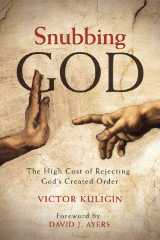
Snubbing God: The High Cost Of Rejecting God’s Created Order
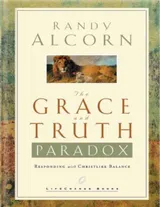
The Grace And Truth Paradox
All You Need To Have All Your Needs Met
A Treatise On Justification And Regeneration

The True Nature Of God

A Story Of Forgiveness And Healing
About the Book
"Right Place Right Time" by Joseph Prince is a Christian book that explores the concept of divine timing and how being in the right place at the right time is essential for experiencing God's blessings and fulfilling your purpose. Prince emphasizes the importance of trusting in God's timing and being open to following His guidance in order to receive His best for your life. The book offers practical advice and biblical insights to help readers align themselves with God's perfect timing for their lives.
William Chalmers Burns
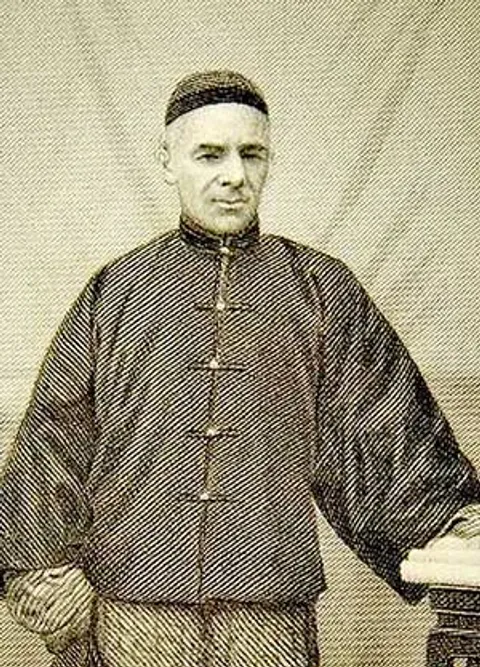 William Chalmers Burns was born in the Manse of Dun, in Angus, on April Ist, 1815. He was the third son of the Parish Church minister there. After leaving school, he went to Edinburgh to be apprenticed with an uncle to the legal profession. His eldest sister, a gay young lady, was converted to God, and became a bright witness for the Lord Jesus in 1831, and it was by means of her decided testimony that William was first awakened to a sense of his need of salvation, and led to put his trust in the Son of God, as his Redeemer and Saviour.
It was shortly after his conversion that he walked into the manse of Kilsyth, where the family then resided, having walked on foot the thirty-six miles from Edinburgh, to tell his mother and his sisters the glad news of his conversion, and to say that his desire now was to relinquish his study of law, and devote himself entirely to the preaching of the Gospel of God’s grace to his fellowmen.
And this he did heartily and with all his might, first in the neglected Parts of Scotland, and latterly among many heathen millions of the great Chinese Empire, then scarcely touched by the feet of God’s messengers of peace.
Mr. Burns’s name came into prominence in connection with a wonderful work of grace in Dundee, while he was preaching for Robert Murray M’Cheyne, then on a visit to Palestine, for the evangelization of the Jews. During Mr. Burns’s preaching in Dundee, a remarkable awakening took place; thousands were aroused to their condition in the sight of God, truly converted, and set on the heavenward way.
Remarkable scenes were witnessed in the old church of St. Peter’s, near to which M’Cheyne’s body now lies, awaiting the first resurrection. It was on the evening of a Lord’s Day in Kilsyth, after preaching to a crowded congregation, that Mr. Burns felt constrained to intimate to the people that he would preach to the people in the open air, before returning to Dundee the following day.
Deeply burdened with the souls of the people, he went into the village and invited the people, who thronged into the old church, until every seat and passage was filled. And the Lord helped His servant to preach straight to the people with great power, with the result that the whole congregation became melted under the message, many weeping aloud and crying to God for mercy. A glorious work of conversion followed.
Meetings for prayer and preaching of the Gospel continued in the churchyard, the market-place and elsewhere for weeks, while Mr. Burns returned to Dundee to resume his ministry. The work progressed in Dundee with increased interest, until the return of Mr. M’Cheyne, who greatly rejoiced in all that the Lord had done during his absence, through the ministry of His servant.
There was no jealousy, but the deepest gratitude, and these two true ministers of Christ rejoiced together over the Lord’s doings, which were indeed marvellous in their eyes.
From that time onward, until the Lord’s call came to go to China, Mr. Burns gave himself almost wholly to itinerant Gospel preaching, through Perthshire, up as far north as Aberdeen, preaching in barns, on market-places, and wherever the people could be gathered together to hear the Word. His message was plain, and to the point; thousands were awakened and many saved. But the adversary opposed. Time and again Mr. Burns was stoned, and bore the marks of these brands of the enemy for many days.
Believing it to be the call of the Lord, he went forth to China as the first missionary of the Presbyterian Church of England, in June, 1847. When questioned by those interested in his out-going, how long it would take him to prepare for the voyage, he replied with all simplicity, “I will be ready to go to-morrow.”
On a brief visit to his home, to take farewell of his sister, he silently wrung her hand, took a last glance around their old home, and with a small bag in his hand and his mother’s plaid across his arm, went forth, in the Name of the Lord with the Gospel to China’s benighted people, of whom it was said “a million a month” were dying without having once heard the Gospel.
For years this solitary witness toiled alone, at times with a few helpers, in the great heathen land, amid overwhelming hindrances, but his faith in God never faltered. On and on he went, sowing the seed which others would reap, until he reached the borders of the great kingdom of Manchuria, where, in a small, comfortless room in Nieu-chang, wearied and worn in labours abundant, he fell asleep on April 4th, 1868, his last audible words being, “For Thine is the Kingdom and the Power and the Glory.”
It is of this great land that the story of grace related in the following pages is told, and those who saw and shared in its joyful results, say that it was no doubt part of the result of William Burns’s sowing, in his earlier years in China.
William Chalmers Burns was born in the Manse of Dun, in Angus, on April Ist, 1815. He was the third son of the Parish Church minister there. After leaving school, he went to Edinburgh to be apprenticed with an uncle to the legal profession. His eldest sister, a gay young lady, was converted to God, and became a bright witness for the Lord Jesus in 1831, and it was by means of her decided testimony that William was first awakened to a sense of his need of salvation, and led to put his trust in the Son of God, as his Redeemer and Saviour.
It was shortly after his conversion that he walked into the manse of Kilsyth, where the family then resided, having walked on foot the thirty-six miles from Edinburgh, to tell his mother and his sisters the glad news of his conversion, and to say that his desire now was to relinquish his study of law, and devote himself entirely to the preaching of the Gospel of God’s grace to his fellowmen.
And this he did heartily and with all his might, first in the neglected Parts of Scotland, and latterly among many heathen millions of the great Chinese Empire, then scarcely touched by the feet of God’s messengers of peace.
Mr. Burns’s name came into prominence in connection with a wonderful work of grace in Dundee, while he was preaching for Robert Murray M’Cheyne, then on a visit to Palestine, for the evangelization of the Jews. During Mr. Burns’s preaching in Dundee, a remarkable awakening took place; thousands were aroused to their condition in the sight of God, truly converted, and set on the heavenward way.
Remarkable scenes were witnessed in the old church of St. Peter’s, near to which M’Cheyne’s body now lies, awaiting the first resurrection. It was on the evening of a Lord’s Day in Kilsyth, after preaching to a crowded congregation, that Mr. Burns felt constrained to intimate to the people that he would preach to the people in the open air, before returning to Dundee the following day.
Deeply burdened with the souls of the people, he went into the village and invited the people, who thronged into the old church, until every seat and passage was filled. And the Lord helped His servant to preach straight to the people with great power, with the result that the whole congregation became melted under the message, many weeping aloud and crying to God for mercy. A glorious work of conversion followed.
Meetings for prayer and preaching of the Gospel continued in the churchyard, the market-place and elsewhere for weeks, while Mr. Burns returned to Dundee to resume his ministry. The work progressed in Dundee with increased interest, until the return of Mr. M’Cheyne, who greatly rejoiced in all that the Lord had done during his absence, through the ministry of His servant.
There was no jealousy, but the deepest gratitude, and these two true ministers of Christ rejoiced together over the Lord’s doings, which were indeed marvellous in their eyes.
From that time onward, until the Lord’s call came to go to China, Mr. Burns gave himself almost wholly to itinerant Gospel preaching, through Perthshire, up as far north as Aberdeen, preaching in barns, on market-places, and wherever the people could be gathered together to hear the Word. His message was plain, and to the point; thousands were awakened and many saved. But the adversary opposed. Time and again Mr. Burns was stoned, and bore the marks of these brands of the enemy for many days.
Believing it to be the call of the Lord, he went forth to China as the first missionary of the Presbyterian Church of England, in June, 1847. When questioned by those interested in his out-going, how long it would take him to prepare for the voyage, he replied with all simplicity, “I will be ready to go to-morrow.”
On a brief visit to his home, to take farewell of his sister, he silently wrung her hand, took a last glance around their old home, and with a small bag in his hand and his mother’s plaid across his arm, went forth, in the Name of the Lord with the Gospel to China’s benighted people, of whom it was said “a million a month” were dying without having once heard the Gospel.
For years this solitary witness toiled alone, at times with a few helpers, in the great heathen land, amid overwhelming hindrances, but his faith in God never faltered. On and on he went, sowing the seed which others would reap, until he reached the borders of the great kingdom of Manchuria, where, in a small, comfortless room in Nieu-chang, wearied and worn in labours abundant, he fell asleep on April 4th, 1868, his last audible words being, “For Thine is the Kingdom and the Power and the Glory.”
It is of this great land that the story of grace related in the following pages is told, and those who saw and shared in its joyful results, say that it was no doubt part of the result of William Burns’s sowing, in his earlier years in China.
The Very First Prayer
From the opening chapters of the Bible, God makes it clear that humanity was created to enjoy life with God, and God in life — to experience the radiance of his presence and listen to him speak “close up.” Adam and Eve walked with God in the garden, which God himself has provided for this very purpose. And they are charged to turn the whole of creation into a place where God can be known and enjoyed (see Genesis 1:28 and 2:15–16). Relating to God, for them, was natural and unhindered. After the events of Genesis 3, of course, everything gets so much harder. “From the opening chapters of the Bible, God makes it clear that humanity was created to enjoy life with God.” God’s grand plan for his people and his world remains the same, but suddenly the way to God is littered with obstacles, as the ease of relating to God is replaced with struggle. In fact, it’s not altogether clear how our first parents are supposed to relate to God as they leave the now inaccessible garden behind (Genesis 3:24). The task they were commissioned to do in Genesis 1:28 remains, but it now will be tackled against the grain of a broken creation and without the immediate presence of the Creator. Which brings us to Genesis 4. First Recorded Prayer After the exclusion of the original couple from Eden, the narrative immediately jumps to the birth of Cain and then Abel. The intriguing note of Genesis 3:15 has set us up to expect an individual who is able to undo the recently created chaos of sin. Both brothers are pictured bringing offerings to God (the awareness of our obligation to the one who made us remains intact), but the violent events which follow do little beyond showing that the hope of humanity must be found elsewhere — and yet, remarkably, God has continued to speak to his people. Cain’s evil quickly spirals further out of control, as he settles down in a city (Genesis 4:17), rather than continuing to “fill the earth and subdue it,” and then fathers a dynasty of self-reliant men, culminating in the brutality of Lamech, who boasts to his wives that if anyone messes with him, he will exact disproportionate revenge (Genesis 4:24). At this point in the tragic narrative, we find these words: And Adam knew his wife again, and she bore a son and called his name Seth, for she said, “God has appointed for me another offspring instead of Abel, for Cain killed him.” To Seth also a son was born, and he called his name Enosh. At that time people began to call upon the name of the Lord. (Genesis 4:25–26) Initially, Genesis 4:25 raises our hopes. Cain and Abel are not to be the sole heirs of Adam — there is another son, Seth. Eve’s own words, highlighting that he is another “offspring” (same word in Genesis 3:15), lead us to expect more detail, and hopefully a bright counterpoint to the darkness of Cain and his line. However, we get no details whatsoever about Seth. He is born, and then his sole contribution to the unfolding plan of God is to sire a son, Enosh. Like his father, Enosh makes no contribution to the narrative beyond providing a descendant. All this makes it doubly puzzling when the birth of Enosh leads people to begin calling on the name of the Lord, apparently for the first time. Why Pray Now? The phrase “at that time” in the first five books of the Bible tends to introduce significant incidents (for example, Genesis 12:6; 38:1; Deuteronomy 1:9). In this case, the striking nature of the action (calling on the name of the Lord) is a further signal that something important is going on. But it is puzzling — what could possibly have occasioned this “new start” in humanity’s relationship with God? Seth is born, but does nothing else. Now Enosh is born, and similarly, there appears to be nothing remarkable about his birth. So what are we to make of this? What prompted them to seek God in this way now? It’s theoretically possible that this is simply a chronological note. Given the fact, however, that not one word is wasted in the opening chapters of the Bible, and every phrase seems loaded with significance for the unfolding narrative, this seems highly unlikely. Rather, it seems that starting to “call on the name of the Lord” is the right response to the fact that Cain and Abel, Seth and Enosh have all shown up, but there is, as yet, no sign of the promised Serpent-Crusher of Genesis 3:15. The waiting — and the appealing to God to act — has begun. We Ask for What He Promised This is the first address to God after the fall — and it is a cry to God to act by fulfilling his promises. In the Institutes, John Calvin says, “Just as faith is born from the gospel, so through it our hearts are trained to call upon God’s name” (III XX.21). I think that’s what’s going on here in Genesis 4. The announcement of Genesis 3:15 has brought gospel hope to life, which in turn leads God’s people to ask God to act. The gospel gives birth to gospel-shaped prayer. “Prayer is a means of communion with God, but far more often it is simply asking God to do what he has promised to do.” As we look at prayers throughout the Bible, it becomes increasingly apparent that they are dominated by this single concern: to see God act to fulfill his promises as he advances his plan of redemption in our world. That’s not to say, of course, that our relationship with God can be reduced to this one thing. There are lots of activities that we are invited or commanded to engage in as part of our relationship with God (like praise, or repentance, or intercession, or lament, or thanks). When it comes to prayer, however, the Bible seems to have a much narrower focus than we would normally allow. Prayer is a means of communion with God, but far more often it is simply asking God to do what he has promised to do. Until Prayer Is Unnecessary This simple observation, which flows naturally from Genesis 4:25–26, does cut through much of the guilt and confusion we often feel about prayer. Prayer begins with asking God to do his gospel work. This is presumably why Jesus can encourage us to pray unhypocritical, to-the-point kingdom prayers (Matthew 5:5–14). Prayer isn’t primarily communing with God, let alone twisting his arm, but asking God to do what he is already committed to doing (see Luke 11:5–13). It is easy to miss the significance of Genesis 4:25–26, but that doesn’t mean that it isn’t a beautifully gospel-shaped clue to how people like you and me are to relate to the God who loves us this side of the fall. We are to pray — asking God to do what he has promised — until that day when prayer is no longer needed, because all things have already been made new and all his promises have been brought to perfect fruition. But until then? We keep praying like people of the day of Seth and Enosh, asking God to act for our good and his glory. Article by Gary Millar