

All You Need To Have All Your Needs Met Order Printed Copy
- Author: David Oyedepo
- Size: 350KB | 29 pages
- |
Others like all you need to have all your needs met Features >>


-160.webp)

About the Book
"All You Need To Have All Your Needs Met" by David Oyedepo is a spiritual guide that offers practical advice on how to achieve abundance and fulfillment in all aspects of life. The book emphasizes the importance of faith, positive thinking, and alignment with God's will in order to experience divine provision and blessings. Oyedepo shares personal anecdotes and biblical teachings to inspire readers to trust in God's promises and live a life of abundance and purpose.
Brother Yun
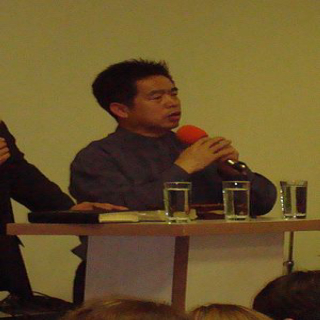 Brother Yun was born in February 1958 in the province of Henan. His original name was Liu Zhenying (刘振营).
Brother Yun became a believer at the age of 16. Soon after he became a Christian, God called him to be His witness in the west and south. As he was obedient to the calling, he eventually became a witness of Christ not just in the western and southern parts of China, but throughout China and in the nations beyond China as well.
Brother Yun was born into a poor family. His family’s financial situation took a turn for the worst when his father became ill with an asthmatic condition that led to lung cancer eventually. His life got worse when he became a Christian as he suffered severe trials and persecutions. In the midst of suffering for the Lord, however, he experienced miracle after miracle, which helped to strengthen his faith.
HOW BROTHER YUN BECAME A BELIEVER
In 1974, Brother Yun’s father became ill with lung cancer. His mother, who had been a Christian for many years but had become spiritually cold after the expulsion of Western missionaries during the Cultural Revolution, felt a deep sense of desperation because if her husband had died then, it would leave the family in dire straits. She thought of committing suicide. One evening, as she was lying in bed, she heard a voice saying to her that Jesus loved her. In tears and in repentance, she rededicated her life to God and gathered her family to pray for her husband. The next morning, her husband got better and as a result, everyone in the family, including Brother Yun, put their faith in God.
HIS HUNGER FOR THE WORD OF GOD
Brother Yun was 16 when he became a Christian. Soon after, he started hungering for the Word of God. However, his family did not have a Bible. He began asking his mother who Jesus was. In response, his mother would tell him that Jesus was the Son of God and that He had recorded all His teachings in the Bible.
Brother Yun wanted a Bible and his mother recalled that there was a man in another village who had one. So she brought him to see the man. The man was too afraid to show Brother Yun his Bible. So he suggested to the latter that he could pray and ask God for one.
Brother Yun decided to fast and pray for a Bible. For the next 100 days, he ate only one bowl of steamed rice everyday. One day at 4am, after fasting for 100 days, he saw a vision. In the vision, he was walking up a steep hill and trying to push a heavy cart at the same time. He was heading towards a village where he intended to beg for food for his family. He struggled greatly as he continued his climb uphill. The cart was about to roll back and fall on him when he saw three men walking down the hill in the opposite direction. One of them was a kind old man and he was pulling a large cart of fresh bread. When the old man saw Brother Yun, he asked him if he was hungry. He said ‘yes’ and started crying. The old man then took a red bag of bread from his cart and asked his two servants to give it to Brother Yun. As he put the bread into his mouth, it immediately turned into a Bible.
Upon waking up, Brother Yun began to search for the Bible. His search, however, was in vain. All of a sudden, he heard a faint knock on the door and someone was calling out his name. Immediately, he recognised the voice – it was the same voice he had heard in the vision. He quickly opened the door and standing before him were the two servants he had seen in the vision. One of them held a red bag in his hand. In this red bag was a Bible.
It was later that Brother Yun found out the names of the two men. One was Brother Wang while the other was Brother Sung. They were sent by an evangelist to give Brother Yun the Bible. The evangelist, who had suffered terribly during the Cultural Revolution and had nearly died while being tortured, had received a vision from God. In the vision, God showed him Brother Yun’s house and the location of his village. He was asked to give his Bible to Brother Yun. However, he did not obey God until three months later.
Brother Yun began to devour the Word of God. Even though he could hardly read, this did not deter him at all. When he had finished reading the entire Bible, he started to memorise one chapter per day. In 28 days, he had memorised the Gospel of Matthew. Then he went on to memorise the Book of Acts and so forth.
OBEDIENT TO THE CALL OF GOD
One morning at 4am, Brother Yun had a dream. In the dream, God asked him to be His witness in the west and south. In the same dream, he saw a young man from the south coming to his house. And so at daybreak, he told his mother to expect the young man’s visit and to ask him to wait for him. Then he sat off to a village he had never heard of in the west. The people in this village had been praying for him to visit as they had heard about how he had prayed for a Bible and got it.
When the meeting at the village concluded and Brother Yun got ready to leave, the villagers refused to let him go. So he stayed on and recited to them the first twelve chapters from the Book of Acts. After that, the villagers finally let him go. From the village to his house, it could take up to 2 hours to walk. Because he did not want to make the young man from the south wait too long, he decided to run home. All of a sudden, he found himself entering his village without any apparent time lapse. What should have taken him a few hours took him just a few moments. It was as if God had supernaturally transported him back to his village.
PERSECUTIONS AND MIRACLES IN HIS LIFE
Brother Yun was arrested by security police numerous times and was thrown into prison three times for sharing the gospel in communist China.
When Brother Yun was arrested the first time, he was only 17 years old. At that time, he was ministering at a meeting far away from home. After he was caught, he was thrown into a freezing cold prison cell. There was no heat in the cell and his winter coat had been thrown into the snow by the security police who had caught him. He began to sing Psalm 150 aloud. The more he sang, the more he was filled with joy. Gradually, his frozen hands and feet regained feeling and he no longer felt cold.
During his first imprisonment in Nanyang, Brother Yun felt that God wanted him to fast without food and water until he could see his family again. This fast lasted 74 days, which was humanly impossible but yet was made possible because he chose to obey God.
During those times when Brother Yun was in the hands of government officials, he was repeatedly beaten and tortured with electric batons. He was also kicked and trampled upon. Furthermore, he had needles being jabbed underneath his fingernails.
Once, Brother Yun was paraded through the streets with a red cross tied behind him for half a day. When night fell, he was locked and left alone inside a large interrogation room. The wooden cross was taken off his back but his hands were still tied up. All of a sudden, the rope that was used to tie his hands snapped by itself. He immediately walked out of the interrogation room and walked through the courtyard in the midst of onlookers. Nobody stopped him or said anything to him. It was as if God had blinded their eyes and they did not even recognise who he was.
Because the front gate was locked, the only way Brother Yun could get out was to climb over an eight-foot high cement wall. He climbed up as much as he could manage. Then he looked over the wall and saw that there was a ten-foot wide open tank directly below. Suddenly, he felt as if someone had lifted him up and thrown him over. He was thrown so far that he did not land in the tank.
Brother Yun’s 3rd imprisonment was a very dark period in his life as the prison guards in the maximum security prison were determined to prevent his escape. So they beat his legs to cripple him permanently. They had him beaten up everyday, even in his crippled state. One day, God instructed him to escape from the prison. This was confirmed by a brother-in-Christ. Thus, on May 5, 1997, he miraculously walked past dozens of prison guards and out of the maximum security prison. It was as if he had become invisible to the guards. He did not realise that his legs had been miraculously healed until later.
Throughout all the horrendous and painful experiences that Brother Yun went through, the word of the Lord kept coming to him, encouraging him and strengthening his faith.
BROTHER YUN’S MINISTRY
Brother Yun eventually escaped China and sought asylum in Germany in 2001. Since then, he has been continuing his ministry from there and has spoken to congregations internationally. He has founded “Back to Jerusalem” Movement and has been sending missionaries out from China to share the gospel in the least-reached nations.
Brother Yun’s life and ministry have impacted many lives. Thousands of people have become Christians through his ministry. It is thus inevitable that fellow Christians have allowed themselves to be used as instruments of wickedness to attack his reputation. The co-author of The Heavenly Man, Paul Hattaway has aptly put it this way, “Many of the great Christian leaders throughout history have been the subject of brutal attacks from other Christians.”
AFTERTHOUGHT
Brother Yun’s childlike faith and his prompt obedience to God’s call are exemplary. It is incredible that he has remained faithful to God despite the tremendous suffering and persecutions he has gone through.
Brother Yun was born in February 1958 in the province of Henan. His original name was Liu Zhenying (刘振营).
Brother Yun became a believer at the age of 16. Soon after he became a Christian, God called him to be His witness in the west and south. As he was obedient to the calling, he eventually became a witness of Christ not just in the western and southern parts of China, but throughout China and in the nations beyond China as well.
Brother Yun was born into a poor family. His family’s financial situation took a turn for the worst when his father became ill with an asthmatic condition that led to lung cancer eventually. His life got worse when he became a Christian as he suffered severe trials and persecutions. In the midst of suffering for the Lord, however, he experienced miracle after miracle, which helped to strengthen his faith.
HOW BROTHER YUN BECAME A BELIEVER
In 1974, Brother Yun’s father became ill with lung cancer. His mother, who had been a Christian for many years but had become spiritually cold after the expulsion of Western missionaries during the Cultural Revolution, felt a deep sense of desperation because if her husband had died then, it would leave the family in dire straits. She thought of committing suicide. One evening, as she was lying in bed, she heard a voice saying to her that Jesus loved her. In tears and in repentance, she rededicated her life to God and gathered her family to pray for her husband. The next morning, her husband got better and as a result, everyone in the family, including Brother Yun, put their faith in God.
HIS HUNGER FOR THE WORD OF GOD
Brother Yun was 16 when he became a Christian. Soon after, he started hungering for the Word of God. However, his family did not have a Bible. He began asking his mother who Jesus was. In response, his mother would tell him that Jesus was the Son of God and that He had recorded all His teachings in the Bible.
Brother Yun wanted a Bible and his mother recalled that there was a man in another village who had one. So she brought him to see the man. The man was too afraid to show Brother Yun his Bible. So he suggested to the latter that he could pray and ask God for one.
Brother Yun decided to fast and pray for a Bible. For the next 100 days, he ate only one bowl of steamed rice everyday. One day at 4am, after fasting for 100 days, he saw a vision. In the vision, he was walking up a steep hill and trying to push a heavy cart at the same time. He was heading towards a village where he intended to beg for food for his family. He struggled greatly as he continued his climb uphill. The cart was about to roll back and fall on him when he saw three men walking down the hill in the opposite direction. One of them was a kind old man and he was pulling a large cart of fresh bread. When the old man saw Brother Yun, he asked him if he was hungry. He said ‘yes’ and started crying. The old man then took a red bag of bread from his cart and asked his two servants to give it to Brother Yun. As he put the bread into his mouth, it immediately turned into a Bible.
Upon waking up, Brother Yun began to search for the Bible. His search, however, was in vain. All of a sudden, he heard a faint knock on the door and someone was calling out his name. Immediately, he recognised the voice – it was the same voice he had heard in the vision. He quickly opened the door and standing before him were the two servants he had seen in the vision. One of them held a red bag in his hand. In this red bag was a Bible.
It was later that Brother Yun found out the names of the two men. One was Brother Wang while the other was Brother Sung. They were sent by an evangelist to give Brother Yun the Bible. The evangelist, who had suffered terribly during the Cultural Revolution and had nearly died while being tortured, had received a vision from God. In the vision, God showed him Brother Yun’s house and the location of his village. He was asked to give his Bible to Brother Yun. However, he did not obey God until three months later.
Brother Yun began to devour the Word of God. Even though he could hardly read, this did not deter him at all. When he had finished reading the entire Bible, he started to memorise one chapter per day. In 28 days, he had memorised the Gospel of Matthew. Then he went on to memorise the Book of Acts and so forth.
OBEDIENT TO THE CALL OF GOD
One morning at 4am, Brother Yun had a dream. In the dream, God asked him to be His witness in the west and south. In the same dream, he saw a young man from the south coming to his house. And so at daybreak, he told his mother to expect the young man’s visit and to ask him to wait for him. Then he sat off to a village he had never heard of in the west. The people in this village had been praying for him to visit as they had heard about how he had prayed for a Bible and got it.
When the meeting at the village concluded and Brother Yun got ready to leave, the villagers refused to let him go. So he stayed on and recited to them the first twelve chapters from the Book of Acts. After that, the villagers finally let him go. From the village to his house, it could take up to 2 hours to walk. Because he did not want to make the young man from the south wait too long, he decided to run home. All of a sudden, he found himself entering his village without any apparent time lapse. What should have taken him a few hours took him just a few moments. It was as if God had supernaturally transported him back to his village.
PERSECUTIONS AND MIRACLES IN HIS LIFE
Brother Yun was arrested by security police numerous times and was thrown into prison three times for sharing the gospel in communist China.
When Brother Yun was arrested the first time, he was only 17 years old. At that time, he was ministering at a meeting far away from home. After he was caught, he was thrown into a freezing cold prison cell. There was no heat in the cell and his winter coat had been thrown into the snow by the security police who had caught him. He began to sing Psalm 150 aloud. The more he sang, the more he was filled with joy. Gradually, his frozen hands and feet regained feeling and he no longer felt cold.
During his first imprisonment in Nanyang, Brother Yun felt that God wanted him to fast without food and water until he could see his family again. This fast lasted 74 days, which was humanly impossible but yet was made possible because he chose to obey God.
During those times when Brother Yun was in the hands of government officials, he was repeatedly beaten and tortured with electric batons. He was also kicked and trampled upon. Furthermore, he had needles being jabbed underneath his fingernails.
Once, Brother Yun was paraded through the streets with a red cross tied behind him for half a day. When night fell, he was locked and left alone inside a large interrogation room. The wooden cross was taken off his back but his hands were still tied up. All of a sudden, the rope that was used to tie his hands snapped by itself. He immediately walked out of the interrogation room and walked through the courtyard in the midst of onlookers. Nobody stopped him or said anything to him. It was as if God had blinded their eyes and they did not even recognise who he was.
Because the front gate was locked, the only way Brother Yun could get out was to climb over an eight-foot high cement wall. He climbed up as much as he could manage. Then he looked over the wall and saw that there was a ten-foot wide open tank directly below. Suddenly, he felt as if someone had lifted him up and thrown him over. He was thrown so far that he did not land in the tank.
Brother Yun’s 3rd imprisonment was a very dark period in his life as the prison guards in the maximum security prison were determined to prevent his escape. So they beat his legs to cripple him permanently. They had him beaten up everyday, even in his crippled state. One day, God instructed him to escape from the prison. This was confirmed by a brother-in-Christ. Thus, on May 5, 1997, he miraculously walked past dozens of prison guards and out of the maximum security prison. It was as if he had become invisible to the guards. He did not realise that his legs had been miraculously healed until later.
Throughout all the horrendous and painful experiences that Brother Yun went through, the word of the Lord kept coming to him, encouraging him and strengthening his faith.
BROTHER YUN’S MINISTRY
Brother Yun eventually escaped China and sought asylum in Germany in 2001. Since then, he has been continuing his ministry from there and has spoken to congregations internationally. He has founded “Back to Jerusalem” Movement and has been sending missionaries out from China to share the gospel in the least-reached nations.
Brother Yun’s life and ministry have impacted many lives. Thousands of people have become Christians through his ministry. It is thus inevitable that fellow Christians have allowed themselves to be used as instruments of wickedness to attack his reputation. The co-author of The Heavenly Man, Paul Hattaway has aptly put it this way, “Many of the great Christian leaders throughout history have been the subject of brutal attacks from other Christians.”
AFTERTHOUGHT
Brother Yun’s childlike faith and his prompt obedience to God’s call are exemplary. It is incredible that he has remained faithful to God despite the tremendous suffering and persecutions he has gone through.
His Delight Is Not in Your Strength
We discover where we really find our strength not when we feel strong, but when we feel weak. Exhaustion and frustration have a way of blowing away the fog, revealing what’s really happening inside of us: Have we been leaning on God for all that we need, or have we made his help, his strength, his guidance a kind of last resort? Many of us are more self-reliant than we would admit, and self-reliance is far more dangerous than it sounds. The widespread delusion, especially among more secular people, is that I can do anything, if I am willing to work hard. I am stronger than I think, strong enough to do anything I want to do in the world. The reality, however, is that the vast majority of us are weaker than we realize — and yet love to think ourselves strong. And that false sense of strength not only intensifies our arrogance and our ineffectiveness, but it also offends our God. His delight is not in the strength of the horse, nor his pleasure in the legs of a man, but the Lord takes pleasure in those who fear him, in those who hope in his steadfast love. (Psalm 147:10–11) Our delight is often in the strength of our legs — our work ethic, our perseverance, our cleverness, our strategies. And that temptation touches every part of life — at work, in ministry, at home — because every part of life in a fallen world requires strength. But God is not pleased by all that we can do — unless we do all that we do in his strength, and not our own. Rejoice in All He Can Do One way to combat a sinful sense of self-sufficiency is to meditate on all that only God can do — all that he can do, that we cannot. Psalm 147 models how to expose and unravel the lies of pride with the strength and authority of God. The psalm says that God alone places each cloud in the sky (Psalm 147:8). He chooses when, where, and how much rain will fall, and he tends every millimeter of every blade of grass. God alone crafts every snowflake that falls, fashions every inch of frost, and decides just how cold it will be (Psalm 147:16–17). Every aspect of our winters is scripted and conducted by him, including precisely when they end (Psalm 147:18). God alone feeds the elephants, the sharks, the squirrels, and even the ants (Psalm 147:9). When newborn birds whimper in hunger, he hears each faint cry. God alone can count every star in the universe (Psalm 147:4) — and not only count them, but decide their number and give them each a name. God alone heals the wounds of the brokenhearted (Psalm 147:3). Very few are ever tempted to think we ourselves could bring rain, make snow, or count the stars, but we might be tempted to think we could heal a broken heart. We might imagine we could compensate for someone’s loss, or talk someone out of despair, or save someone’s marriage. But Psalm 147 says that God is the healing one. God alone makes peace (Psalm 147:14). We cannot achieve real peace — in families or friendships, in a church or a nation — unless God quiets the conflict and awakens harmony. If we think we can achieve peace without God, we have not understood peace, or God. “Great is our Lord, and abundant in power; his understanding is beyond measure” (Psalm 147:5). Our power is small and often failing, but his power is abundant and never exhausted. Our understanding is extremely limited and often flawed, but his understanding is universal and inscrutable. Why would we ever rely on ourselves? Embrace How Little You Can Do Yet we do rely on ourselves. We slip into habits of living, and working, and serving that don’t require him, and sometimes that barely even acknowledge him. Jeremiah’s warning is as sobering in our day as it was in his: “Thus says the Lord: ‘Cursed is the man who trusts in man and makes flesh his strength, whose heart turns away from the Lord’” (Jeremiah 17:5). The man who deep down trusts in himself cannot help but slowly walk away from God. We fight sinful self-sufficiency by glorying in all that God can do, and we fight by learning to embrace just how little we can do apart from him. Jesus says to his disciples, “I am the vine; you are the branches. Whoever abides in me and I in him, he it is that bears much fruit, for apart from me you can do nothing” (John 15:5). Many of us can recite the phrase, and still quietly suspect that he’s really exaggerating. We know we can do something on our own. And if we won’t admit it, our prayer lives betray us. The humble are strong precisely because they know how weak they truly are — and how strong God will be for them. They sing, “My flesh and my heart may fail, but God is the strength of my heart and my portion forever” (Psalm 73:26). They exhort one another, “Finally, be strong in the Lord and in the strength of his might” (Ephesians 6:10). They serve “by the strength that God supplies — in order that in everything God may be glorified through Jesus Christ” (1 Peter 4:11). The humble have experienced what Isaiah promised: “He gives power to the faint, and to him who has no might he increases strength. . . . They who wait for the Lord shall renew their strength; they shall mount up with wings like eagles; they shall run and not be weary; they shall walk and not faint” (Isaiah 40:29–31). By embracing their weakness, they found vast reservoirs of strength, strength enough to run and even fly. Weakness Welcomes Strength The apostle Paul knew how weak he was and where to find true strength. When he pleaded with God to remove the thorn that plagued him, God said, “My grace is sufficient for you, for my power is made perfect in weakness” (2 Corinthians 12:9). Why would God, in infinite, fatherly love for Paul, not spare him the pain and inconvenience of this weakness? Because our weakness welcomes the gracious strength and intervention of God. Weakness welcomes grace. When we feel strong, we are not prone to rely on the grace and strength of God. We often begin to experience, and even enjoy, the delusion that we are strong. We forget God, and our need for him. But when we feel our weakness, we more fully experience reality — and we remember our tremendous, continual need for him. The intensity of our thorns unearths the depths of his grace and mercy. Without them, we would only play in the wading pools of grace, instead of exploring the endless storehouses God fills and keeps for us. As Paul says earlier in the same letter, “We have this treasure in jars of clay, to show that the surpassing power belongs to God and not to us” (2 Corinthians 4:7). If you look strong in your own strength, very few will wonder how you are so strong. But if people watch you walk through intense or persistent weakness and adversity, with strength and faith and even joy, then God will look unmistakably strong in you. So, to the extent that you are weak, to that extent will you magnify the awesome height of his power and love. We Have Done Nothing We often learn to rely on our own strength because we want the recognition and respect of others. We want to be known as strong, not utterly weak; as independent, not deeply dependent; as self-sufficient, not uncomfortably needy. We want to be the achievers and creators, the healers and the heroes. But as J.I. Packer says, If we think of ourselves or others as achievers, creators, reformers, innovators, movers and shakers, healers, educators, benefactors of society in any way at all, we are at the deepest level kidding ourselves. We have nothing and have never had anything that we have not received, nor have we done anything good apart from God who did it through us. (Praying, 147) The happiest, strongest, most meaningfully productive people have embraced, and even rejoiced, in that reality: We have done nothing good apart from God who did it through us. “Blessed are those whose strength is in you, in whose heart are the highways to Zion” (Psalm 84:5). They have been liberated from self-sufficiency, and now run, work, create, and serve in the happy fields of their utter dependence on God. Article by Marshall Segal