
Apostle J. A. Babalola Miraculous Journey Order Printed Copy
- Author: Oke Joshua Oluwaseun
- Size: 1.32MB | 149 pages
- |
Others like apostle j. a. babalola miraculous journey Features >>

Autobiography Of Madame Guyon

Celtic Flames
Church History (From Christ To Pre-Reformation)
Foxes Book Of Martyrs (History Of The Lives, Sufferings, And Triumphant Deaths Of The Primitive Protestant Martyrs)

The Spirit Of Prophecy Volume 2
The Myth Of The Twelve Tribes Of Israel (New Identities Across Time And Space)
God's Generals (Charles F. Parham)
The Spirit Of Prophecy Volume 3
God's Generals (William J. Seymour)
God's Generals (Aimee Semple Mcpherson)
About the Book
"Apostle J. A. Babalola Miraculous Journey" is a biography about the life and ministry of Joseph Ayo Babalola, a prominent Nigerian pastor and founder of the Christ Apostolic Church. The book explores his miraculous experiences, faith, and impact on the Christian community in Nigeria. It highlights his journey from humble beginnings to becoming a respected leader and influential figure in Nigerian Christianity.
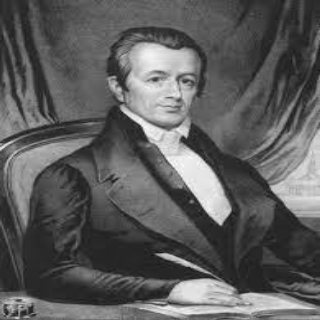
John Wesley
John Wesley, (born June 17, 1703, Epworth, Lincolnshire, England—died March 2, 1791, London), Anglican clergyman, evangelist, and founder, with his brother Charles, of the Methodist movement in the Church of England.
John Wesley was the second son of Samuel, a former Nonconformist (dissenter from the Church of England) and rector at Epworth, and Susanna Wesley. After six years of education at the Charterhouse, London, he entered Christ Church, Oxford University, in 1720. Graduating in 1724, he resolved to become ordained a priest; in 1725 he was made a deacon by the bishop of Oxford and the following year was elected a fellow of Lincoln College. After assisting his father at Epworth and Wroot, he was ordained a priest on September 22, 1728.
Recalled to Oxford in October 1729 to fulfill the residential requirements of his fellowship, John joined his brother Charles, Robert Kirkham, and William Morgan in a religious study group that was derisively called the “Methodists” because of their emphasis on methodical study and devotion. Taking over the leadership of the group from Charles, John helped the group to grow in numbers. The “Methodists,” also called the Holy Club, were known for their frequent communion services and for fasting two days a week. From 1730 on, the group added social services to their activities, visiting Oxford prisoners, teaching them to read, paying their debts, and attempting to find employment for them. The Methodists also extended their activities to workhouses and poor people, distributing food, clothes, medicine, and books and also running a school. When the Wesleys left the Holy Club in 1735, the group disintegrated.
Following his father’s death in April 1735, John was persuaded by an Oxford friend, John Burton, and Col. James Oglethorpe, governor of the colony of Georgia in North America, to oversee the spiritual lives of the colonists and to missionize the Native Americans as an agent for the Society for the Propagation of the Gospel. Accompanied by Charles, who was ordained for this mission, John was introduced to some Moravian emigrants who appeared to him to possess the spiritual peace for which he had been searching. The mission to the indigenous peoples proved abortive, nor did Wesley succeed with most of his flock. He served them faithfully, but his stiff high churchmanship antagonized them. He had a naive attachment to Sophia Hopkey, niece of the chief magistrate of Savannah, who married another man, and Wesley unwisely courted criticism by repelling her from Holy Communion. In December 1737 he fled from Georgia; misunderstandings and persecution stemming from the Sophia Hopkey episode forced him to go back to England.
In London John met a Moravian, Peter Böhler, who convinced him that what he needed was simply faith, and he also discovered Martin Luther’s commentary on the Letter of Paul to the Galatians, which emphasized the scriptural doctrine of justification by grace through faith alone. On May 24, 1738, in Aldersgate Street, London, during a meeting composed largely of Moravians under the auspices of the Church of England, Wesley’s intellectual conviction was transformed into a personal experience while Luther’s preface to the commentary to the Letter of Paul to the Romans was being read.
From this point onward, at the age of 35, Wesley viewed his mission in life as one of proclaiming the good news of salvation by faith, which he did whenever a pulpit was offered him. The congregations of the Church of England, however, soon closed their doors to him because of his enthusiasm. He then went to religious societies, trying to inject new spiritual vigour into them, particularly by introducing “bands” similar to those of the Moravians—i.e., small groups within each society that were confined to members of the same sex and marital status who were prepared to share intimate details of their lives with each other and to receive mutual rebukes. For such groups Wesley drew up Rules of the Band Societies in December 1738.
For a year he worked through existing church societies, but resistance to his methods increased. In 1739 George Whitefield, who later became an important preacher of the Great Awakening in Great Britain and North America, persuaded Wesley to go to the unchurched masses. Wesley gathered converts into societies for continuing fellowship and spiritual growth, and he was asked by a London group to become their leader. Soon other such groups were formed in London, Bristol, and elsewhere. To avoid the scandal of unworthy members, Wesley published, in 1743, Rules for the Methodist societies. To promote new societies he became a widely travelled itinerant preacher. Because most ordained clergymen did not favour his approach, Wesley was compelled to seek the services of dedicated laymen, who also became itinerant preachers and helped administer the Methodist societies.
Many of Wesley’s preachers had gone to the American colonies, but after the American Revolution most returned to England. Because the bishop of London would not ordain some of his preachers to serve in the United States, Wesley controversially took it upon himself, in 1784, to do so. In the same year he pointed out that his societies operated independently of any control by the Church of England.
Toward the end of his life, Wesley became an honoured figure in the British Isles.
Where Does God Want Me to Work
How do I find God’s will for my life? It’s always a pressing question on the college campus, and especially in our day of unprecedented options. Like never before, in an anomaly in world history, students loosened from their community of origin, “going off” to college, now make decisions about their future with minimal influence or limitation from their adolescent context. “God wants to take you by the heart, not twist you by the arm.” Before asking, “Where is God calling me?” we would do well to first ponder, “Where has God already called me?” — not that your current callings won’t change or take a fresh direction in this formative season of life, but for a Christian, our objective calling from God always precedes our consciousness of it. If it is from him, he initiates. He makes the first move. This is true of our calling to salvation, and also true of any “vocational” assignment he gives us in the world. Consider Three Factors For the college student or young adult who may feel like a free agent — considering options and determining for yourself (and often by yourself) which direction to take — it’s important to acknowledge you are already moving in a direction, not standing still. You already have divine callings — as a Christian, as a church member, as a son or daughter, as a brother or sister, as a friend. And from within the matrix of those ongoing, already-active callings, you now seek God’s guidance for where to go from here. Given, then, that you are already embedded in a context, with concrete callings, how should you go about discerning God’s direction after graduation? Or how do you find God’s will for your work-life? Christians will want to keep three important factors in view. 1. What Kind of Work Do I Desire? First, we recognize, contrary to the suspicions that may linger in our unbelief, God is the happy God (1 Timothy 1:11), not a cosmic killjoy. In his Son, by his Spirit, he wants to shape and form our hearts to desire the work to which he’s calling us and, in some good sense, in this fallen world, actually enjoy the work. Sanctified, Spirit-given desire is not a liability, but an asset, to finding God’s will. The New Testament is clear that God means for pastors to aspire to the work of the pastoral ministry. And we can assume, as a starting point, that God wants the same for his children working outside the church. “Desire is a vital factor to consider, but in and of itself this doesn’t amount to a calling.” In 1 Peter 5:2, we find this remarkably good news about how God’s heart for our good and enduring joy stands behind his leading us vocationally. The text is about the pastoral calling, but we can see in it the God who calls us into any carefully appointed station. God wants pastors who labor “not under compulsion, but willingly, as God would have you.” How remarkable is it that working from aspiration and delight, not obligation and duty, would be “as God would have you.” This is the kind of God we have — the desiring (not dutiful) God, who wants workers who are desiring (not dutiful) workers. He wants his people, like their pastors, to do their work “with joy and not with groaning, for that would be of no advantage” to those whom they serve (Hebrews 13:17). So also, when the apostle Paul addresses the qualifications of pastors, he first mentions aspiration. “The saying is trustworthy: If anyone aspires to the office of overseer, he desires a noble task” (1 Timothy 3:1). God wants workers who want to do the work, not workers who do it simply out of a sense of duty. Behold your God, whose pattern is to take you by the heart, not twist you by the arm. Desire, though, does not make a calling on its own. It’s a common mistake to presume that seeming God-given desire is, on its own, a “calling.” Aspiration is a vital factor to consider, but in and of itself this doesn’t amount to a calling. Two additional factors remain in the affirmation of others and the God-given opportunity. 2. Do Others Affirm This Direction? The second question to ask, then, after the subjective one of desire, is the more objective one of ability. Have I seen evidence, small as it may be at first, that I can meet the needs of others by working in this field? And, even more important than my own self-assessment, do others who love me, and seem to be honest with me, confirm this direction? Do they think I’d be a good fit for the kind of work I’m desiring? Here the subjective desires of our hearts meet the concrete, real-world, objective needs of others. Our vocational labors in this world, whether in Christian ministry or not, are not for existential release or our own private satisfaction, but for meeting the actual needs of others. “You may feel called, and others may affirm you, but you are not yet fully called until God opens a door.” Our desires have their part to play, but our true “calling” is not mainly shaped by our internal heart. It is shaped by the world outside of us. We so often hear “follow your heart” and “don’t settle for anything less than your dreams” in society, and even in the church. What’s most important, contrary to what the prevailing cultural word may be, is not bringing the desires of your heart to bear on the world, but letting the real-life needs of others shape your heart. In seeking God’s will for us vocationally, we look for where our developing aspirations match up with our developing abilities to meet the actual needs of others. Over time, we seek to cultivate a kind of dialogue (with ourselves and with others) between what we desire to do and what we find ourselves good at doing for the benefit of others. Delight in certain kinds of labor typically grows as others affirm our efforts, and we see them receiving genuine help. 3. What Doors Has God Opened? Finally, and perhaps the most overlooked and forgotten factor in the discussions on calling, is the actual God-given, real-world open door. You may feel called, and others may affirm your abilities, but you are not yet fully called until God opens a door. Here we glory in the truth of God’s providence, not just hypothetically but tangibly. The real world in which we live, and various options as they are presented to us, are not random or coincidental. God rules over all things — from him, through him, to him (Romans 11:36). And so as real-life options (job offers) are presented that fulfill an aspiration in us, and are confirmed by the company of others, we can take these as confirmation of God’s “calling.” Not that such a calling will never change. But for now, when your own personal sense of God’s leading, and good perspective and guidance from others, align with a real-world opportunity in the form of an actual job offer in front of you, you have a calling from God. “It is finally God, not man who provides the job offer.” And we can say this calling is from him because God himself, in his hand of providence, has done the decisive work. He started the process by planting in us righteous desires to help others; and he affirmed the direction through our lived-out abilities and the affirmation of friends. Now, he confirms that sense of calling by swinging open the right door at the right time. It is finally God, not man who provides the job offer. God not only makes overseers (Acts 20:28) and gives pastors (Ephesians 4:11–12) and sends out laborers into his global harvest (Matthew 9:37–38) and sends preachers (Romans 10:15) and sets wise managers over his household (Luke 12:42), but he makes dentists and plumbers. In his common kindness, he gives school teachers and entrepreneurs and social workers for the just and unjust. He sends executives and service workers. He gives you to the world in the service of others. Article by David Mathis