

All You Need To Have All Your Needs Met Order Printed Copy
- Author: David Oyedepo
- Size: 350KB | 29 pages
- |
Others like all you need to have all your needs met Features >>


-160.webp)
About the Book
"All You Need To Have All Your Needs Met" by David Oyedepo is a spiritual guide that offers practical advice on how to achieve abundance and fulfillment in all aspects of life. The book emphasizes the importance of faith, positive thinking, and alignment with God's will in order to experience divine provision and blessings. Oyedepo shares personal anecdotes and biblical teachings to inspire readers to trust in God's promises and live a life of abundance and purpose.
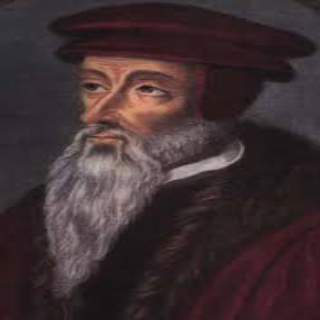
John Calvin
‘This Word Must Be Preached’
Forty years ago, John Piper was not sleeping very well. It was October of 1979, and his brain hurt. For the past five months, he had been on a teaching sabbatical from Bethel College, just north of the Twin Cities in Minnesota. It was a scholar’s dream come true: except for a few weeks of family vacation, his job would be to spend six days a week reading and writing and researching until a new school year began in the fall of 1980. He was 33 years old. Back in January, on his birthday, he had written in his personal journal, “It was a decisive age for Jesus. Deep down I feel it will be for me too.” His first book was about to be published by Cambridge University Press — a revision of the doctoral dissertation he completed five years earlier at the University of Munich. His main focus now was writing an academic monograph on Romans 9, where Paul extols the glory and freedom of God in electing individuals to salvation. On days of heavy writing, he found it physically hard to sleep. “I get so wrenched in the brain,” he wrote in his journal, “that my head feels twisted and tight lying on the pillow.” Despite the mind-numbing work, however, he was emotionally and spiritually energized. It felt terrifically rewarding to produce written pages on the great things of God. He was trying to plan out the rest of the year. The annual meeting of the Evangelical Theological Society would be held on campus at Bethel that December, and his deadline to submit his paper was just weeks away. In preparation, he was working through a book by New Testament scholar Peter Stuhlmacher. A slow but disciplined reader, John was averaging about forty pages a day of working through this German text, a pace he found frustrating. “I am closer tonight to actually deciding to resign at Bethel and take a pastorate than I have ever been.” Ronald Reagan, who had been governor when John was at Fuller Seminary out in California, was gearing up to challenge Jimmy Carter for president of the United States. But politics and cultural happenings were not the sort of thing John would have noted in his journal. That was reserved for spiritual resolutions, theological and exegetical observations, prayers from his heart, updates on his family, wrestling with decisions. He had been journaling faithfully, often every day, since his sophomore year at Wheaton. But in the first two weeks of October in 1979, his journal suddenly went dark. He penned not a single entry. October 14, 1979 On Sunday evening, October 14, John went down to the basement of their house in New Brighton. The temperature in his study was cool, with the dehumidifier in the boys’ playroom going on and off to keep the basement from becoming too damp for him and his books. He usually wore a t-shirt, layered by a sweater shirt, and on top of that his “study sweater,” a thick brown and tan cardigan knit by Noël as a gift. Diagonally across his study was an eight-foot-long former library table. A fluorescent light hung above it from the ceiling. On either side were two piles of commentaries on Romans, each open to chapter 9. There were two bookstands, one holding the Greek New Testament open to where he was at in his morning devotions, the other holding an open Revised Standard Version of the Bible. Alongside the back edge of the desk was a row of books he was reading or regularly consulting: the works of Jonathan Edwards; Chaim Potok’s 1972 novel, My Name is Asher Lev; a French New Testament; a German work on Jesus by Adolf Schlatter; a Webster’s Dictionary; and a McGuffey’s Reader #4 (for when his seven-year-old son came in and sat on his lap to read). A card table in the study was covered with books on Judaism that he was consulting for his exegetical and historical research. He had recently built his own four-foot-tall standing desk, hanging the sanded plywood by hinges from the wall, then adding two folding legs to support the front when it swung out. He also built himself a prayer bench with a shelf for the Bible that could be read in front of him as he knelt for regular times of prayer over the word. Noël and the boys were long asleep, and the hour was growing late that Sunday night. As he sat at his desk, wrestling and praying, he eventually reached for his notebook and pen, ready to start journaling again. He often said he didn’t know what he thought until he wrote. That evening, he began with these words: “I am closer tonight to actually deciding to resign at Bethel and take a pastorate than I have ever been. The urge,” he added, “is almost overwhelming.” “Is the calling so managerial in our day that the Word burning to be spoken and lived and applied is no qualification?” The desire was taking this form in his heart and mind: “I am enthralled by the reality of God and the power of his word to create authentic people.” That afternoon after church he had over to the house a dreadlocked Bethel College student named Mark. They ended up talking for four hours. It left John aching at how comparably rare it was to find such authentic men and women of faith in the church. He wrote, “I believe, I really believe, that God has made me a vessel of his Word which when poured onto people changes them in this direction.” ‘Burning to Be Spoken’ It is remarkable how realistic he was that night. He knew himself well. “I know, really know, I would despair as a pastor. I would despair that my people are not where I want them to be, I would despair at ruptured study and writing goals, I would despair at barren administrative details.” But he asked himself, “Who shall shepherd the flock of God? People who love barrenness? People who feel no flame to study God and write it out? People who weep not over the tares and the choking wheat? Is the criterion for judging one’s fitness for the ministry that one feels no pain in the mechanics of ‘running a church’? Is the calling so managerial in our day that the Word burning to be spoken and lived and applied is no qualification?” He wondered if he had been kidding himself about scholarship. Had he been foolish to think he had been destined to be an influential writer and teacher of college or seminary students? “Has not there been all along the simmering frustration that this Word — this unbelievably powerful Word — must be preached and spoken with tears to the dying and tears to the rejoicing? Has not all my occupation with the word broken out in an irresistible longing to sing its praises?” For five years he had refused to “preach around” or “teach around” the Twin Cities. Instead, he had been devoted to one Sunday School class, week after week, year after year. This seemed to signify his burden to apply the Word to one flock over the long haul. “My heart is not in one time shots or one week shots. I am not a gifted evangelist. My heart leans hard to regularity of feeding. I believe little in the injection method to health. I believe in the long steady diet of rich food in surroundings of love.” What Would He Lose? He was close to a decision. “I can taste the challenge on the horizon.” He thought about all that he would leave behind, including “the joy of long uninterrupted hours of thought in pursuit of theological problems.” But, he thought, “I have discovered more of living value in the fewer and more pressed hours of meditation for sermons and devotions than often in preparation for class.” What would be different from the scholarly realm is that it “would all have to be real, living, life-changing insight. All my energies would be on finding reality in the text for only what is real — deeply, movingly real — can be fed to the really hungry and the really needy. No more fence sitting.” John knew that when the divorcee approaches him, he must have an answer, or at the very least some word of help. He wouldn’t be leaving burgeoning theological insight for some sterile managerial slot. “The demands of the pulpit on me . . . would be the demands of God on my mind and heart to penetrate like never before to the heart of the word and to abound in understanding.” What, realistically, would he lose? He was thinking, now, as he was writing, and his pen was flowing. I would lose the simplicity of task and routine in the college. My life and time would be much less my own. I would lose the serenity of undisturbed hours of study and self-imposed hours of study and self-imposed hours of leisure because the needs of the flock are unpredictable. I would lose the quiet of the study and trade it for hours in the car on the way to the hospital, and to homes. I would lose the uniformity of responsibility and be swamped by dozens of different tasks, many of which would no doubt be distasteful unless and until my palate changed. I would lose the collegial stimulation of fellow theologians in return for a draining ministry to the hungry. I would lose an almost total occupation with theological subject matter and inherit the press for programs and functions. I would lose the ease of having to reckon with no visible failure (if I fail with students they pass on quickly). But in a church I must reckon with the possibility of nothing happening, people becoming discontented, no one being won to Christ, old animosities remaining unhealed. Magnify, Exalt, Display Life would be so different. From kindergarten until today, he had known only the life of first being a student and then a teacher. But it seemed that almost every movement of his heart over the past five years had been toward the church. “Sometimes it comes surging up as a passion to be in seminary teaching. But we know what that means.” He was having a conversation with himself now. “It means you long to be as near the proclamation event as possible but have not been encouraged by anyone to be in it yourself. But of late — a year or so — that passion has passed right through seminary and into the pulpit. Why? What has been changing?” “Oh, to make something with the Word, words, and a way with words — something powerful, full of glory.” He did not know for sure. What he thought had happened, though, was a gradually emerging clarification of what his highest values were and the most fruitful way to achieve them. “Those values are to see the Word of God produce people of great faith and great love.” The apostle Paul desired to stay on earth and minister “for your advancement and joy of faith” (Philippians 1:25). This was how he magnified Christ in his body by life. And that was John’s greatest goal as well: “To magnify, exalt, display Christ in the world and in heaven by seeing people transformed into new creatures of love and faith through His word and spirit.” Yes, that happened some at Bethel. Yes, that would happen more if he were to teach seminarians. But he had a hunger to be the direct instrument of the Word. So much of what he saw needing to be done in the pulpit was getting lost along the way between the lecture hall and the sanctuary! John believed in the goals of a liberal-arts education and could defend it powerfully. But as he examined his heart, he believed it with nothing close to the same passion and intensity that he believed in the goals of preaching. Gifted to Proclaim As John continued to think and write that night, he was reminded of another thing in his life that had changed. For the first time in his life, he had been an active, responsible member of one church for an extended period of time (five years now). “I have taught its adults and served on its board and spoken to its worship service. I have not hit and run. It is my church. I have no romantic notion of it. It is full of sinners. But it is precisely in that church over this long haul that the vision and the burden for preaching as a pastor has grown.” When John went into a Sunday school class as a student, it was not long before he was thinking about teaching. He would watch and listen, and the longing would grow: “I must do this! No, no, not to replace this preacher or that preacher, but simply to do this work which attracts me with my zeal for the word and its power to change people.” Another factor, perhaps more subconscious than the others, was his awareness that while he could hold his own in scholarly writing and in most conversations, he did not have some of the crucial gifts for greatness in scholarship, like speed-reading with comprehension or a good memory for recall. “These two deficiencies make me very narrow in my awareness and comprehension of broad sweeps of things. I do not fear being useless in scholarship. My books will bear witness to my competence. But my weaknesses often return to me and sometimes ask me: do you not see that your gift of penetration, intensity, and poetry lend themselves to moments of proclamation rather than years of research for books and seminars? Perhaps not. But perhaps yes!” Word, Words, and a Way John concluded his journal entry in this way before he went to bed that night: “This moment of indecision is real and makes me feel on the brink of doing something that could be so revolutionary for me and for some group of people that I do not want to set it aside now and say, O it will pass. You have felt this way before and you get over it and realize it was a moment of dissatisfied fantasy. No. The recurrence is now too frequent and tonight (it is almost midnight now) too strong. I will seek counsel and pray. My last word is this. I cannot decide now. But I know which side I want to win — the pastorate.” He had written 1,826 words across nine notebook pages. He closed his journal and walked upstairs, taking off the study sweater and hanging it on the back of the gray and black metal chair, where it would wait for him in the morning. “This Word — this unbelievably powerful Word — must be preached and spoken with tears to the dying and tears to the rejoicing.” After crawling into bed with Noël, sleep proved elusive, as he considered and refuted several arguments in his head. Perhaps his brain hurt again. But this time his heart was full as he eventually drifted to sleep with a new dream. Years earlier, contemplating his gifting, limitations, and future, he had written, “All I have is Word, words, and a way with words and underneath a heart. Oh, to make something with the Word, words, and a way with words — something powerful, full of glory, something to shake the foundations. A book to kindle a flame in the scholarly world, a short piece to make a thousand housewives and husbands sing, a sermon to save all the lost in the place, a tale to delight the children and teach them.” John Piper had never been a pastor. He had never been to Bethlehem Baptist Church. Nine months later, he would be their senior pastor. The God of Romans 9 was about to help a thousand husbands and wives sing of their salvation in a whole new way. Article by Justin Taylor