
GIP Library icon

LOG IN TO REVIEW

Exceptional piece. Highly recommended!

- morris user (2 months ago)

Exceptionally piece. Highly recommended

- abraham okon (3 months ago)

About the Book


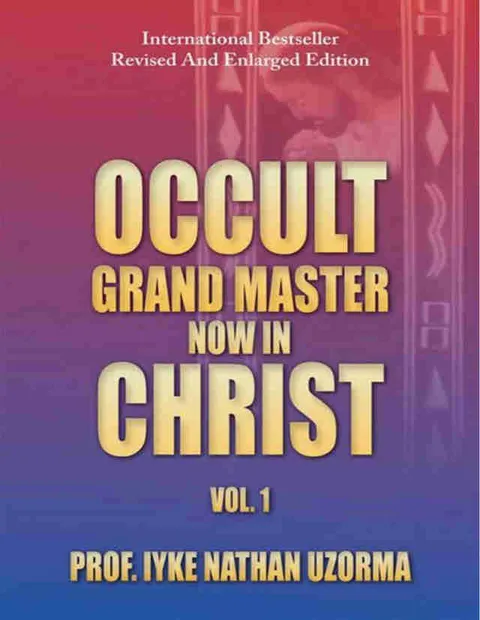
In "Occult Grand Master Now in Christ," Prof. Iyke Nathan Uzorma shares his personal journey from being a high-ranking occult leader to finding redemption and conversion to Christianity. He describes the dark world of occult practices and the supernatural encounters that ultimately led him to renounce his former beliefs and embrace the love of Jesus Christ. Through his compelling story, Uzorma illustrates the power of faith and the transformative impact of turning to God.

Emerson Andrews

Emerson Andrews His Early life Emerson Andrews was born in Mansfield, Bristol County, Massachusetts in 1806 to godly parents, James and Mercy Andrews. They were from English stock and were strict Puritans in faith and lifestyle. Although young Emerson was raised in the Congregational Church he was far from God in his teens and twenties. Nevertheless, periodically, he experienced intense conviction, usually through his parents’ counsels and prayers but particularly through two unforgettable sermons delivered by the eccentric revivalist, Lorenzo Dow. Soon after this he was converted under the ministry of another revival preacher, Asahel Nettleton. He was a very educated man formerly studying at Chesterfield Academy and, at the time of his conversion, at Plainfield Kimball Union Academy, in New Hampshire. In the spring of 1832 whilst studying further at Union College in Schenectady, New York, he was baptised by immersion in the Mohawk River. It was his convictions about the Bible’s teaching on water baptism that caused him to join the Baptist’s instead of the Congregationalists or Presbyterians. A Lover of Revival He wrote “Many revivals and protracted meetings of one, two, or more days, and some for weeks and months, have been held, in New England and elsewhere, within, my personal remembrance. These have sent out their hallowed influences, as the light of the world and salt of the earth. Just before and at the time of my second birth, many sweeping and glorious revivals, under the celebrated Dr. Netteton, John Leland, Jedediah Burchard, C. G. Finney, were hailed, enjoyed, and sounded all around and over the country. As soon as I was converted I cherished the good news of revivals; and I sought a place and portion with live Christians, that I might speak for Christ and win souls to salvation. I asked God for direction and help, and was answered. His first visit to a Revival He describes his first visit to a Revival “The first meeting that I attended after my regeneration was held in the town of Windsor, Vt. It was called a “four days’ meeting.” But many such were held in different places about that time. This came off in the summer of l830. I was much delighted, fed, and strengthened by such a sight, experience, exercise, and spiritual supper. It was a precious banquet, adapted to develop and enlarge the young convert’s soul. The four pastors of the town, with their respective churches and congregations, and some from neighboring towns, met with the Baptist church, of which Elder Leland Howard was the long-honored pastor. Some twenty other pastors also came in from adjacent towns, and a few Lawyers and teachers, who took leading parts in the services. Large congregations were constantly in attendance, and all the various exercises and meetings were interesting and profitable. Some of the sermons and prayers were most powerful, melting, and effective. Sinners often arose, requesting prayers, or sent up short petitions to be read. A lawyer by the name of Shepherd, from New York, was found to be very able, pointed, and specific in prayer, and so effective and precise in noting each different request more perfectly than the ministers, that he was often invited to lead in prayer — especially when there were some ten or twenty different, or some difficult requests presented. He seemed to be full of the Spirit, and was especially gifted and successful. Ministers learned something valuable from his wisdom and tact. I confess that his pointedness made a powerful and lasting impression on my mind and practice. The professors and ministers were much blessed, and many sinners were converted in the meetings. The gospel was preached and the Spirit poured out, prayer and sacrifices made. Novelty and wonder attracted many. Here God crowned the effort.” Mentored by Jacob Knapp He writes. ” ROCHESTER, N.Y. 1839. Here I assisted in a powerful meeting, under the preaching of the celebrated Elder Jacob Knapp, for three weeks. Marvellous things were done. The wicked raged, the Spirit worked, grace prevailed, and hundreds were converted — a glorious triumph over rum, gambling, and infidelity. Jesus reigned.” This exposure to revival power whetted his appetite for an evangelistic ministry. His first revival efforts “WHITE DEER, PENN. 1839. In this rich farming district I had a revival meeting of five weeks, with a feeble Baptist church. We began at the close of the Association; but, with all the eloquent pastoral preaching in it, the brethren were not aroused, nor sinners much convicted. Here my first sermon was from the text, “O Lord, revive thy work!” And he did so immediately. Some half a dozen persons were convicted and converted, and the church was revived by the power of God on that evening’s effort. The whole region, then, for seven miles around, was awakened, and some forty converts were immersed by Elder Spratt, D.D. Here, too, we experienced severe opposition and much persecution from outside professors and sinners, but God strengthened our hands for a triumphant work. This was a blessed era with the church, and it is fragrant still. “CLINTON, PENN. I had a revival meeting in this township. It was very great and powerful. Satan and sinners raged, at times, terribly, but the cross was triumphant. Many were immersed by the beloved pastor, Elder Spratt, D.D. Hugh Donelly, the postmaster, rum-selling merchant, and an avowed infidel, who had slandered me and ridiculed the meeting, crept in away back, then into the middle seats; then, after a few nights, fell on his knees groaning and crying for mercy. I soon aided him in coming forward. Then out came his wife and sister. We all prayed, and soon the three rejoiced in hope, and spoke boldly for Jesus. Brother Donelly has made a noble record in Pennsylvania and Indiana for Jesus and his cause….. PARMA, N.Y. In this western village, in mid-winter, I preached night and day, for three weeks, to overflowing houses and attentive hearers. Christians renewed their “first love and vows,” and many sinners were converted and baptized. An infidel, hearing a few sermons, was struck under conviction, and fled away thirty miles for comfort; but, feeling worse and worse, returned like the prodigal, feeling wretched and lost. He came forward, prayer was offered, and he soon yielded and believed, giving glory to God. Then he told his experience, and exhorted his old Universalist and infidel friends to repent and be saved from hell. Emerson Andrews Preaching His preaching zeal and effectiveness were quickly recognised and he was soon licensed to preach and for a four year period served brief pastorates in New York State – Waterford, West Troy, Lansingburg and Rome (1834-1838) In 1838 began an itinerant evangelist for thirty-five years, mainly in America, but also in Europe, Africa, Asia and Canada. His estimates were that 40,000 were converted through his ministry.

Fasting for Beginners

Chances are you are among the massive majority of Christians who rarely or never fast. It’s not because we haven’t read our Bibles or sat under faithful preaching or heard about the power of fasting, or even that we don’t genuinely want to do it. We just never actually get around to putting down the fork. Part of it may be that we live in a society in which food is so ubiquitous that we eat not only when we don’t need to, but sometimes even when we don’t want to. We eat to share a meal with others, to build or grow relationships (good reasons), or just as a distraction from responsibility. And of course, there are our own cravings and aches for comfort that keep us from the discomfort of fasting. Not So Fast Fasting is voluntarily going without food — or any other regularly enjoyed, good gift from God — for the sake of some spiritual purpose. It is markedly counter-cultural in our consumerist society, like abstaining from sex until marriage. If we are to learn the lost art of fasting and enjoy its fruit, it will not come with our ear to the ground of society, but with Bibles open. Then, the concern will not be whether we fast, but when. Jesus assumes his followers will fast, and even promises it will happen. He doesn’t say “if,” but “when you fast” (Matthew 6:16). And he doesn’t say his followers might fast, but “they will” (Matthew 9:15). “Fasting is markedly counter-cultural in our consumerist society, like abstaining from sex until marriage.” We fast in this life because we believe in the life to come. We don’t have to get it all here and now, because we have a promise that we will have it all in the coming age. We fast from what we can see and taste, because we have tasted and seen the goodness of the invisible and infinite God — and are desperately hungry for more of him. Radical, Temporary Measure Fasting is for this world, for stretching our hearts to get fresh air beyond the pain and trouble around us. And it is for the battle against the sin and weakness inside us. We express our discontent with our sinful selves and our longing for more of Christ. When Jesus returns, fasting will be done. It’s a temporary measure, for this life and age, to enrich our joy in Jesus and prepare our hearts for the next — for seeing him face to face. When he returns, he will not call a fast, but throw a feast; then all holy abstinence will have served its glorious purpose and be seen by all for the stunning gift it was. Until then, we will fast. How to Start Fasting Fasting is hard. It sounds much easier in concept than it proves to be in practice. It can be surprising how on-edge we feel when we miss a meal. Many an idealistic new fast-er has decided to miss a meal and only found our belly drove us to make up for it long before the next mealtime came. Fasting sounds so simple, and yet the world, our flesh, and the devil conspire to introduce all sorts of complications that keep it from happening. In view of helping you start down the slow path to good fasting, here are six simple pieces of advice. These suggestions might seem pedantic, but the hope is that such basic counsel can serve those who are new at fasting or have never seriously tried it. 1. Start small. Don’t go from no fasting to attempting a weeklong. Start with one meal; maybe fast one meal a week for several weeks. Then try two meals, and work your way up to a daylong fast. Perhaps eventually try a two-day juice fast. A juice fast means abstaining from all food and beverage, except for juice and water. Allowing yourself juice provides nutrients and sugar for the body to keep you operating, while also still feeling the effects from going without solid food. It’s not recommended that you abstain from water during a fast of any length. 2. Plan what you’ll do instead of eating. Fasting isn’t merely an act of self-deprivation, but a spiritual discipline for seeking more of God’s fullness. Which means we should have a plan for what positive pursuit to undertake in the time it normally takes to eat. We spend a good portion of our day with food in front of us. One significant part of fasting is the time it creates for prayer and meditation on God’s word or some act of love for others. Before diving headlong into a fast, craft a simple plan. Connect it to your purpose for the fast. Each fast should have a specific spiritual purpose. Identify what that is and design a focus to replace the time you would have spent eating. Without a purpose and plan, it’s not Christian fasting; it’s just going hungry. 3. Consider how it will affect others. Fasting is no license to be unloving. It would be sad to lack concern and care for others around us because of this expression of heightened focus on God. Love for God and for neighbor go together. Good fasting mingles horizontal concern with the vertical. If anything, others should even feel more loved and cared for when we’re fasting. So as you plan your fast, consider how it will affect others. If you have regular lunches with colleagues or dinners with family or roommates, assess how your abstaining will affect them, and let them know ahead of time, instead of just being a no-show, or springing it on them in the moment that you will not be eating. Also, consider this backdoor inspiration for fasting: If you make a daily or weekly practice of eating with a particular group of friends or family, and those plans are interrupted by someone’s travel or vacation or atypical circumstances, consider that as an opportunity to fast, rather than eating alone. 4. Try different kinds of fasting. The typical form of fasting is personal, private, and partial, but we find a variety of forms in the Bible: personal and communal, private and public, congregational and national, regular and occasional, absolute and partial. In particular, consider fasting together with your family, small group, or church. Do you share together in some special need for God’s wisdom and guidance? Is there an unusual difficulty in the church, or society, for which you need God’s intervention? Do you want to keep the second coming of Christ in view? Plead with special earnestness for God’s help by linking arms with other believers to fast together. 5. Fast from something other than food. Fasting from food is not necessarily for everyone. Some health conditions keep even the most devout from the traditional course. However, fasting is not limited to abstaining from food. As Martyn Lloyd-Jones said, “Fasting should really be made to include abstinence from anything which is legitimate in and of itself for the sake of some special spiritual purpose.” If the better part of wisdom for you, in your health condition, is not to go without food, consider fasting from television, computer, social media, or some other regular enjoyment that would bend your heart toward greater enjoyment of Jesus. Paul even talks about married couples fasting from sex “for a limited time, that you may devote yourselves to prayer” (1 Corinthians 7:5). 6. Don’t think of white elephants. “Without a purpose and plan, it’s not Christian fasting; it’s just going hungry.” When your empty stomach starts to growl and begins sending your brain every “feed me” signal it can, don’t be content to let your mind dwell on the fact that you haven’t eaten. If you make it through with an iron will that says no to your stomach, but doesn’t turn your mind’s eye elsewhere, it says more about your love for food than your love for God. Christian fasting turns its attention to Jesus or some great cause of his in the world. Christian fasting seeks to take the pains of hunger and transpose them into the key of some eternal anthem, whether it’s fighting against some sin, or pleading for someone’s salvation, or for the cause of the unborn, or longing for a greater taste of Jesus. Article by David Mathis Executive Editor, desiringGod.org

Feedback
Suggestionsuggestion box
x