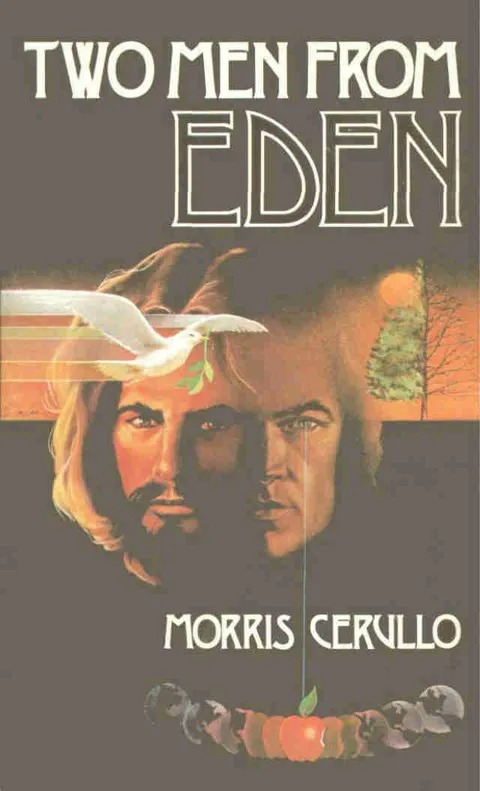






About the Book
"Two Men From Eden" by Morris Cerullo is a book that explores the story of Adam and Jesus, drawing parallels between their lives and teachings. The author highlights the spiritual journey of these two men and the lessons that can be learned from their experiences. Through this comparison, Cerullo delves into the themes of redemption, grace, and the power of faith.
Lilias Trotter
Long before the concept of the 10-40 window was invented or became a popular term in missions circles, a thirty-four-year-old promising artist named Isabella Lilias Trotter (1853â1928) landed in North Africa in 1888 along with two of her friends. They had neither mission agency support nor training but immediately began studying the Arabic language with the intention of sharing the gospel as widely as they could for as long as they could.
For the next forty years, this creative, dynamic woman poured out her life, her artistic abilities, and her linguistic skills to make the gospel known amid many difficulties. Her journals tell of her daily experience of desperately depending on the divine resources of the Holy Spirit.[1]
âThe life of Lilias Trotter challenges the worldâs meaning of success, potential, and fulfillment.â
The life of Lilias Trotter challenges the worldâs meaning of success, potential, and fulfillment. Through Trotterâs art, writings, and life story come glimpses of Christâs power in the prayers of his child and faithful witness. Her day-by-day, decade-by-decade journals reveal a life characterized by trust in her Savior and inward rest in his power for victory over sin and darkness.
Her success should not be measured numerically, but rather in the fact that Lilias succeeded in learning about prayer and love for Muslims. Her life attests to the exceeding value of knowing and preferring Christ above all else. Her personal devotion to Jesus Christ is exemplary and instructive not only for aspiring missionaries but for all who desire to live wholeheartedly for the glory of God.
Laying down Her Life
Lilias was born into a wealthy Victorian family, and they considered the value of walking humbly before God to be of first importance. A talented artist, she attracted the attention of John Ruskin, the noted Victorian art critic and Oxford lecturer. Some of her paintings and leaves from her sketchbook can be found in the Ashmolean Museum in Oxford, England.
In 1874, Lilias attended a six-day convention that emphasized the importance of the daily application of Scripture in her quest for deeper intimacy with God. She experienced a renewed vitality in personal and corporate worship. Her call to wholeheartedly follow Christ in obedience came during a call to prayer. She wrote of this in her journal: âTo bear His name with all that is wrapped up in it of fragrance and healing and power, to enter into His eternal purpose, is the calling for which it is well worth counting all things as loss.â [2]
From then on, rather than invest her extraordinary life in the things of this world, Lilias was compelled by a strong yearning for her Savior and the world he loves. In radical obedience, she left the promising artistic career that Ruskin offered her and the comforts of England for a life of missionary service in Algeria.
âIn radical obedience, she left a promising artistic career and the comforts of England for a life of missionary service in Algeria.â
Praying with Passion
Trotterâs intercession for Algerians provides inspiration to those who desire to see all peoples worship God. She spent lengthy, frequent sessions of retreat in the hills overlooking the city of Algiers. She prayed and turned her eyes on Jesus, his Word, and his revelation in creation. As she watched the broken waves pushed by the heart of the ocean crashing on the shore of the bay, she waited with faith to see âGodâs high tideâ sweep across the Muslim world.
Lilias was a contemporary of the great missionary to Muslims, Samuel Zwemer. She learned much from him about the power of prayer to pierce the veil of darkness shrouding the Muslim hearts and to engage in the spiritual battle for souls of those held captive by the adversary. Her example of perseverance in prayer is an encouragement for those today who are interceding for Godâs high tide to fill the earth and sweep away the veil of darkness.
The writings of Lilias Trotter recognize the work of the adversary to hold nonbelievers captive through their unbelief and his power to keep the life-giving truth from reaching them. She pled for Christians to ask God to do a new work among âhard-bound peoples and to generate a fire of the Holy Spirit to melt away though icy barriers and set a host free!â [3]
Proclaiming Godâs Word in Power
Courageous and innovative in her witness to the Algerians, Lilias observed and learned to witness effectively to her neighbors. In 1919, Trotter began writing tracts for Nile Mission Press. She assisted a Swedish missionary in translation and editing the gospels of Luke and John in colloquial Arabic, âinto a language that the Arab mother could read to her child.â[4] She also wrote stories in parable form that appealed to her audience, and she creatively illustrated them in Eastern style, the results of which gained wide circulation.
The story of Lilias Trotter continues to inspire and mobilize those who long to worship around the throne of Christ with all peoples. She laid down her life and talents and allowed Christ to use her in creative and innovative ways. Her life was one of passionate prayer, dependence on Godâs overcoming power, and confidence in proclaiming the life-giving Word of God. Her story encourages others to follow in her footsteps and consecrate their life to the âhardest work and the darkest sinners.â [5]
Paula Hemphill and her husband, Ken, have shared fifty years of ministry together. The stories of missionary pioneers in North Africa captured Paulaâs heart as a young pastorâs wife, calling her to a lifetime of prayer for Muslim peoples. The Hemphills have three married daughters and twelve grandchildren.
Endnotes: For more on Lilias Trotter, see Many Beautiful Things: the Life and Vision of Lilias Trotter (Oxvision Films, 2016) or read the excellent biography by Miriam Huffman Rockness, A Passion for the Impossible (Discovery House, 2003).
[1] One journal entry later became the inspiration for âTurn Your Eyes upon Jesus,â a popular hymn written by Helen H. Lemmel: âTurn your soulâs full vision on Jesus and look and look at Him, and a strange dimness will come over all that is apart from Him and the divine attributes by which Godâs saints are made, even in the twentieth century, will lay hold of you.â (I.R. Stewart, The Love that Was Stronger: Lilias Trotter of Algiers (London: Lutterworth Press, 1958), 54.)
iwo jima and the monumental sacrifice
âSome people wonder all their lives if they made a difference,â Ronald Reagan once said. Then he added, âThe Marines donât have that problem.â That was certainly true of the Marines who fought and died on a little island called Iwo Jima seventy years ago now. In the final phase of the war in the Pacific, Iwo Jima was strategic and essential to America and Japan â and it would cost them both dearly. Two out of every three Marines on Iwo Jima were killed or wounded before the Americans took the island. The fierce, heroic struggle was captured in what would become the most famous photograph of the war: Raising the Flag on Iwo Jima, taken on Mount Suribachi on February 23, 1945. Joe Rosenthalâs photograph, like the larger-than-life men he captured on camera, became the basis for the Marine Corps War Memorial in Arlington, Virginia. Though dedicated to the service and sacrifice of the Marines in all of Americaâs wars, it is still often referred to simply as the âIwo Jima Memorial.â It is the tallest bronze statue in the world. The soldier figures are each over thirty feet tall, and the rifles are sixteen feet long. Photographs, to use Lance Morrowâs phrase, âimprison time in a rectangle,â but they can never tell the whole story. Raising the flag on Mount Suribachi wasnât the moment of victory â a triumphant point between war and peace. Three of the six men who raised the flag on February 23 would be killed in action on Iwo Jima in a battle that would rage on for another month. The flag represented hope when it was raised â it did not represent victory. Worthy Sacrifices The last time I visited the Iwo Jima monument, it was a lovely evening in Arlington. Visitors who walked around the base of the great bronze spoke with hushed voices. Even the selfie-snapping was reserved. The bronze giants basked in the warmth of the last light, and the flag snapped in the wind, much like the first time. It made me feel proud and humble at the same time. From the bluff, I could see across the Potomac the tops of Americaâs other monuments huddled along the great expanse leading to the Capitol. Marble and bronze â the stuff of enduring memory â worthy of the sacrifices they commemorate. At the time I was at Arlington, Christians were being shot, beheaded, even crucified by the Islamic State, and whole Christian populations were being utterly obliterated in Syria and Iraq. I thought to myself, âWhereâs the monument to their sacrifice? Whatâs left for the generations to follow to remember?â Tragically, all that remains are smoldering ruins, bloodstains, and boot prints, as their killers move on. Sometimes, even less than that remains. In November, a Christian couple in Pakistan were incinerated. Hereâs their story. The Barbarians Are Back Debt peonage has long existed in Pakistan, keeping generations of Christians in slavery working in the brick kilns. Once I walked through such a slave colony near Lahore when the master was away in order to hear the workersâ stories. Little children stacked bricks, men tended the massive furnace firing the bricks, and women washed clothes in a stream that doubled as the sewer. It was in this same area last November that two brick workers, Shahzad Masih and his wife Shama, were killed. They were in a debt dispute with their owner, and in order to settle the score, he accused them of blasphemy, of burning pages of the Koran. The blasphemy law in Pakistan is a convenient way of dealing with inconvenient people and usually works like this: kill first, then maybe ask questions later. The setting was readymade for a mob. Bricks were handy for stoning, the legs of the husband and wife were broken so they couldnât escape, and then they were thrown into the furnace. Shahzad and his wife, who was five months pregnant, were burned to ash. This didnât happen centuries ago in barbaric times â it happened in November. The barbarians are back. Tragically, the murders of Shahzad and his wife are just more of the same. In the past three years alone, between the work of ISIS and other al-Qaeda franchises, the number of Christians killed or displaced in Iraq and Syria is in the tens of thousands, including hundreds of girls taken as sex slaves for the fighters. In sub-Saharan Africa, more than seven thousand Christians have been killed by Boko Haram and al-Shabaab in the past three years. When We Hear of Persecution Itâs understandable that these al-wannabes tend to sound alike â their handiwork certainly tends to look alike. After more than a decade in the new world disorder, they are just names and numbers on the news crawl, accompanied with a blur of blood and bombs, of gun-toting âspiritual leadersâ doing selfies on YouTube as they crow about their latest kill. I think of the lines from a Patty Griffin song, âThereâs a million sad stories on the side of the road. Strange how we all just got used to the blood.â The unspeakable seems unanswerable; and so we shrug. What can  we say? What can  we do that would make any difference? As Christians we must not look at persecution as just âbad things happening to good people.â And we shouldnât look away either. Christian persecution is tied to the very work and nature of the gospel. Here are three truths to remember when we hear of Christian persecution, whether in distant places or when it comes to our own shores. 1. We are vitally linked to our suffering brothers and sisters. âRemember those who are in prison, as though in prison with them, and those who are mistreated, since you also are in the bodyâ (Hebrews 13:3). This is why we pray, why we speak, and why we hurt alongside suffering Christians â they are family. Through the power of the gospel, our lives are forever bound up in Christâs life and, therefore, forever bound up with all other believers as well. 2. God is glorified, and his gospel advances, when his people demonstrate trust, love, and grace as they suffer for him. âI want you to know, brothers, that what has happened to me has really served to advance the gospel, so that it has become known throughout the whole imperial guard and to all the rest that my imprisonment is for Christ. And most of the brothers, having become confident in the Lord by my imprisonment, are much more bold to speak the word without fearâ (Philippians 1:12â14). Persecution has many outcomes â sometimes they donât make sense to us. But clearly, one of the outcomes is gospel advance. Saul-the-Persecutor-turned-Paul-the-Preacher was a powerful demonstration of this truth. In our day, he would have been the equivalent of an al-Qaeda commander; so his conversion was the talk of the town. âThey only were hearing it said, âHe who used to persecute us is now preaching the faith he once tried to destroy.â And they glorified God because of meâ (Galatians 1:23â24). Samuel Zwemer, the apostle to Arabia, with his âBig God, Big Gospelâ perspective on the long campaign of Kingdom advance could write, When you read in reports of troubles and opposition, of burning up books, imprisoning colporteurs, and expelling workers, you must not think that the gospel is being defeated. It is conquering. What we see under such circumstances is only the dust in the wake of the ploughman. God is turning the world upside down that it may be right side up when Jesus comes. He that plougheth should plough in hope. We may not be able to see a harvest yet in this country, but furrow after furrow, the soil is getting ready for the seed. 3. Persecution is linked to Christâs persecution. âGod is turning the world upside down that it may be right side up when Jesus comes.â âBeloved, do not be surprised at the fiery trial when it comes upon you to test you, as though something strange were happening to you. But rejoice insofar as you share Christâs sufferings, that you may also rejoice and be glad when his glory is revealedâ (1 Peter 4:12â13). Suffering that comes for the sake of his name is Christ-like. And so there is, in fact, a monument to Christian sacrifice â it is the cross, in all its blood-stained splendor. Unlike the inspiring flag-raising on Iwo Jima, when the cross was raised, it seemed to symbolize only defeat and death. Yet, secured by Sovereign Love and the empty tomb, Christâs work was so complete that everyone who comes to him will live forever. This is the reward of the Lambâs suffering. Only he could heal the hurt of his people, turning their sorrow into song and their death into life.