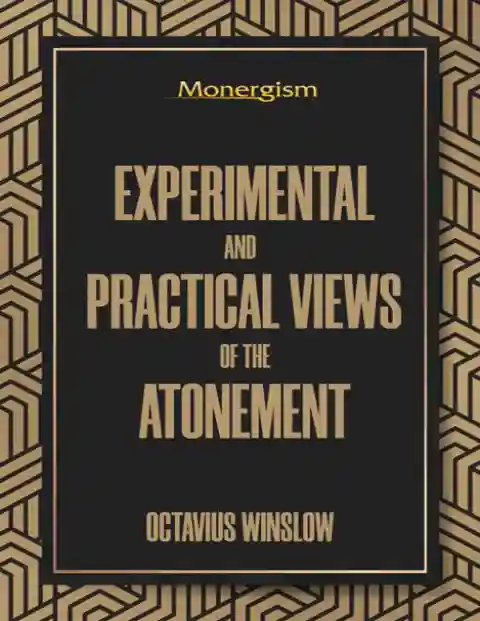

Experimental And Practical Views Of The Atonement Order Printed Copy
- Author: Octavius Winslow
- Size: 735KB | 129 pages
- |
Others like experimental and practical views of the atonement Features >>

Experiencing Father's Embrace
Slave - The Hidden Truth About Your Identity In Christ
%20_Ellen%20G%20White-160.webp)
A New Life (Revival And Beyond)
Others May I Cannot
The Priesthood And The Blood

Embracing The Love God Wants You To Have

Benjamin Generation

The Jerusalem Sinner Saved

I Dared To Call Him Father
A Covenant Of Blood
About the Book
"Experimental And Practical Views Of The Atonement" by Octavius Winslow provides a deep exploration of the doctrine of atonement and its practical implications for the Christian life. Winslow delves into the personal, emotional, and spiritual aspects of Christ's sacrifice, emphasizing the transformative power of the atonement for believers. Through a combination of theological reflection and practical application, Winslow encourages readers to embrace the atonement as a central aspect of their faith and to live out its principles in their daily lives.
Oral Roberts
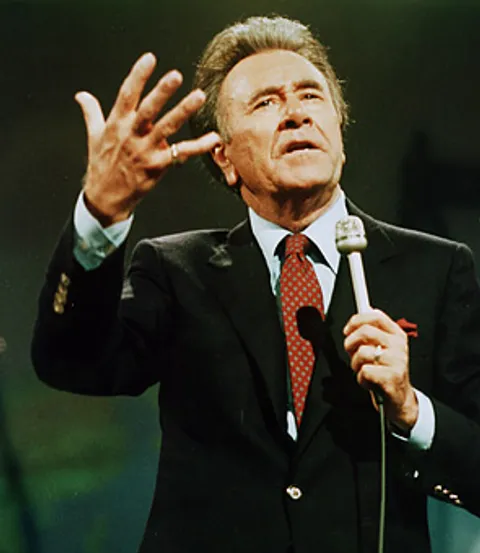 Granville Oral Roberts was born January 24, 1918 in Pontotoc County, near Ada, in Oklahoma. His parents were deeply religious. His father was a farmer who also preached the gospel and established Pentecostal Holiness churches. His mother regularly prayed for the sick and led people to Christ. While she was still pregnant, Robert's mother committed Oral to God's service. Even though Oral had a very strong stutter his mother would tell him that one day God would heal his tongue and he would speak to multitudes.
The Roberts family was desperately poor. When Roberts was 16 he moved away from home, hoping for a better life. He rejected God and his upbringing. He started living a wild life and his health collapsed. Roberts had contracted tuberculosis. He returned home and eventually dropped to 120 pounds. He was a walking skeleton. God spoke to his older sister, Jewel, and told her that He was going to heal Oral. During this same time Oral turned his heart back to God and gave his life to Christ. A traveling healing evangelist named George Moncey came to Ada and held meetings in a tent. Oral's elder brother was touched when he saw friends of his healed in the meeting. He decided that he should get Oral and bring him to be healed. On the way to the meeting God spoke to Oral and said "Son, I'm going to heal you and you are to take my healing power to your generation. You are to build me a University and build it on My authority and the Holy Spirit." Once at the meeting Oral waited until the very end. He was too sick to get up and receive prayer, and so had to wait for Moncey to come to him. At 11:00 at night his parents lifted him so he could stand. When Moncey prayed for him the power of God hit him and he was instantly healed. Not only that but every bit of his stutter was gone!
After Roberts was healed he began to travel the evangelistic circuit. He met and married Evelyn Lutman, a school teacher from the same Holiness Pentecostal background as Roberts. They had their first child Rebecca and then the entire family began traveling as ministers. In 1942 they left the evangelistic field for a while and Roberts became a pastor. He also returned to college to further his education. While a pastor he prayed for a church member whose foot was crushed. The foot was instantly healed. God continued to speak to Roberts about his call to the multitudes. God called him to an unusual fast. Roberts was to read the four gospels and the book of Acts three times consecutively, while on his knees, for thirty days. God began to reveal Jesus as the healer in a new way. God also began to give Roberts dreams where he would see people's needs as God saw them. God called him to hold a healing meeting in his town. A woman was dramatically healed, several people were saved and Roberts' ministry changed overnight.
Roberts resigned his church in 1947 and began an itinerant ministry. Notable healings began to occur. One man tried to shoot Roberts. God used the story to bring him media attention, which expanded his ministry very quickly. Roberts felt called to purchase a tent and take his evangelistic ministry to larger cities. His first tent held 3,000 but he quickly exchanged it for a tent that held 12,000. In July 1948 The Oral Roberts Evangelistic Association was established. Oral began traveling continuously throughout the United States. Like many of his Pentecostal brethren Roberts held inter-racial meetings. This brought him a lot of negative attention from groups who didn't like his stand. He even received death threats for not holding segregated meetings. In 1956 Roberts was invited to Australia. He held meetings in Sydney and Melbourne. In Melbourne there were outright physical attacks and destructive gangs. He was literally driven out of the city for praying for the sick. Often when people discuss the healing revival of the 1950s Oral Roberts and William Branham are listed as the most widely recognized leaders of the movement. Others came along side and many emulated them, but they were the most widely recognized personalities.
Roberts was a man who understood and used the media for his benefit. Roberts began publishing a magazine almost immediately upon starting his ministry. He grasped the power of radio and television. In 1954 Roberts began filming his crusades. He began playing his sermons on radio and then airing the crusade tapes during evening television prime time. Unfortunately there is some evidence that healing meetings were scripted ahead of time, and not all healings were genuine. People began writing to the Ministry headquarters by the thousands. They were accepting Christ as their savior after seeing a person healed on TV. By 1957 the ministry was receiving 1,000 letters a day and he was getting thousands of phone calls. He established a round the clock prayer team to answer calls and pray for people who contacted the ministry. In 1957 Roberts claimed 1,000,000 salvations. Between 1947 and 1968 Roberts conducted over 300 major Crusades. Money was flowing into the organization at an unprecedented rate.
In the late 1950s the healing movement was waning and ministries were under attack for their lack of financial accountability. Roberts began to move on the vision God gave him to build a University. It was chartered in 1963 and became open to students in 1965. Roberts was having a significant national impact in the late 1950s and early 1960s. For several years his named appeared in the Top 100 list of the nation's most respected people. Although Roberts continued to hold healing meetings his focus shifted to the University and the television programs.
The 1970s and 80s brought many crises to the Roberts family. Their daughter Rebecca and son-in-law Marshall were killed in a plane crash. Their son Ronnie struggled with depression after serving in Vietnam and also declaring himself gay. He grew despondent after losing his job and committed suicide. Richard Roberts got a divorce. After Richard remarried he and his wife lost a new born son within two days. Roberts began teaching a doctrine of "seed faith" where he claimed that if you gave to his ministry then God would pay you back in multiplied ways. The television ministry received heavy criticism for the constant requests for money. The Roberts were living an extravagance lifestyle while many of their supporters were not wealthy. Financial questions were raised in how Roberts used University endowment funds to purchase personal homes and cars.
In 1977 Roberts had a vision to build a hospital where people not only received care but received healing prayer. It was to be called City of Faith. Roberts put his heart and soul into the project, believing that God would build it as He had the University. The hospital struggled along and Roberts called his followers to give to the project, believing he had a vision from God to raise the money. Roberts even claimed twice that if money didn't come in that Jesus would "take him home." The hospital was built, but never succeeded financially, and finally closed in 1989. Financial giving was plummeting for both the Oral Roberts Evangelistic Association and Oral Roberts University.
Roberts retired in 1993, at the age of 75. Roberts, with his wife Evelyn, moved to California to live near the coast. Evelyn died in May 2005. Although Roberts influence waned after the problems of the 1970s and 1980s, he was still recognized for his pioneering work on the "sawdust trail", television evangelism, and building a Christian University. He often appeared on religious broadcasting networks as a recognized leader in the healing movement of the last half century. He died December 15, 2009 at the age of 91.
Oral Roberts' legacy is a mixed one. Roberts brought the truth of God's healing to the public in a way that few others accomplished in his lifetime. His financial and personal issues and increasingly extravagant claims eventually brought his ministry into disrepute. The University he established continued to have financial crises under the leadership of his son Richard Roberts. It was only after Richard stepped down in 2009 and new leadership took over the University that it stabilized financially. The University is no longer connected to the Oral Roberts Evangelistic Association.
Granville Oral Roberts was born January 24, 1918 in Pontotoc County, near Ada, in Oklahoma. His parents were deeply religious. His father was a farmer who also preached the gospel and established Pentecostal Holiness churches. His mother regularly prayed for the sick and led people to Christ. While she was still pregnant, Robert's mother committed Oral to God's service. Even though Oral had a very strong stutter his mother would tell him that one day God would heal his tongue and he would speak to multitudes.
The Roberts family was desperately poor. When Roberts was 16 he moved away from home, hoping for a better life. He rejected God and his upbringing. He started living a wild life and his health collapsed. Roberts had contracted tuberculosis. He returned home and eventually dropped to 120 pounds. He was a walking skeleton. God spoke to his older sister, Jewel, and told her that He was going to heal Oral. During this same time Oral turned his heart back to God and gave his life to Christ. A traveling healing evangelist named George Moncey came to Ada and held meetings in a tent. Oral's elder brother was touched when he saw friends of his healed in the meeting. He decided that he should get Oral and bring him to be healed. On the way to the meeting God spoke to Oral and said "Son, I'm going to heal you and you are to take my healing power to your generation. You are to build me a University and build it on My authority and the Holy Spirit." Once at the meeting Oral waited until the very end. He was too sick to get up and receive prayer, and so had to wait for Moncey to come to him. At 11:00 at night his parents lifted him so he could stand. When Moncey prayed for him the power of God hit him and he was instantly healed. Not only that but every bit of his stutter was gone!
After Roberts was healed he began to travel the evangelistic circuit. He met and married Evelyn Lutman, a school teacher from the same Holiness Pentecostal background as Roberts. They had their first child Rebecca and then the entire family began traveling as ministers. In 1942 they left the evangelistic field for a while and Roberts became a pastor. He also returned to college to further his education. While a pastor he prayed for a church member whose foot was crushed. The foot was instantly healed. God continued to speak to Roberts about his call to the multitudes. God called him to an unusual fast. Roberts was to read the four gospels and the book of Acts three times consecutively, while on his knees, for thirty days. God began to reveal Jesus as the healer in a new way. God also began to give Roberts dreams where he would see people's needs as God saw them. God called him to hold a healing meeting in his town. A woman was dramatically healed, several people were saved and Roberts' ministry changed overnight.
Roberts resigned his church in 1947 and began an itinerant ministry. Notable healings began to occur. One man tried to shoot Roberts. God used the story to bring him media attention, which expanded his ministry very quickly. Roberts felt called to purchase a tent and take his evangelistic ministry to larger cities. His first tent held 3,000 but he quickly exchanged it for a tent that held 12,000. In July 1948 The Oral Roberts Evangelistic Association was established. Oral began traveling continuously throughout the United States. Like many of his Pentecostal brethren Roberts held inter-racial meetings. This brought him a lot of negative attention from groups who didn't like his stand. He even received death threats for not holding segregated meetings. In 1956 Roberts was invited to Australia. He held meetings in Sydney and Melbourne. In Melbourne there were outright physical attacks and destructive gangs. He was literally driven out of the city for praying for the sick. Often when people discuss the healing revival of the 1950s Oral Roberts and William Branham are listed as the most widely recognized leaders of the movement. Others came along side and many emulated them, but they were the most widely recognized personalities.
Roberts was a man who understood and used the media for his benefit. Roberts began publishing a magazine almost immediately upon starting his ministry. He grasped the power of radio and television. In 1954 Roberts began filming his crusades. He began playing his sermons on radio and then airing the crusade tapes during evening television prime time. Unfortunately there is some evidence that healing meetings were scripted ahead of time, and not all healings were genuine. People began writing to the Ministry headquarters by the thousands. They were accepting Christ as their savior after seeing a person healed on TV. By 1957 the ministry was receiving 1,000 letters a day and he was getting thousands of phone calls. He established a round the clock prayer team to answer calls and pray for people who contacted the ministry. In 1957 Roberts claimed 1,000,000 salvations. Between 1947 and 1968 Roberts conducted over 300 major Crusades. Money was flowing into the organization at an unprecedented rate.
In the late 1950s the healing movement was waning and ministries were under attack for their lack of financial accountability. Roberts began to move on the vision God gave him to build a University. It was chartered in 1963 and became open to students in 1965. Roberts was having a significant national impact in the late 1950s and early 1960s. For several years his named appeared in the Top 100 list of the nation's most respected people. Although Roberts continued to hold healing meetings his focus shifted to the University and the television programs.
The 1970s and 80s brought many crises to the Roberts family. Their daughter Rebecca and son-in-law Marshall were killed in a plane crash. Their son Ronnie struggled with depression after serving in Vietnam and also declaring himself gay. He grew despondent after losing his job and committed suicide. Richard Roberts got a divorce. After Richard remarried he and his wife lost a new born son within two days. Roberts began teaching a doctrine of "seed faith" where he claimed that if you gave to his ministry then God would pay you back in multiplied ways. The television ministry received heavy criticism for the constant requests for money. The Roberts were living an extravagance lifestyle while many of their supporters were not wealthy. Financial questions were raised in how Roberts used University endowment funds to purchase personal homes and cars.
In 1977 Roberts had a vision to build a hospital where people not only received care but received healing prayer. It was to be called City of Faith. Roberts put his heart and soul into the project, believing that God would build it as He had the University. The hospital struggled along and Roberts called his followers to give to the project, believing he had a vision from God to raise the money. Roberts even claimed twice that if money didn't come in that Jesus would "take him home." The hospital was built, but never succeeded financially, and finally closed in 1989. Financial giving was plummeting for both the Oral Roberts Evangelistic Association and Oral Roberts University.
Roberts retired in 1993, at the age of 75. Roberts, with his wife Evelyn, moved to California to live near the coast. Evelyn died in May 2005. Although Roberts influence waned after the problems of the 1970s and 1980s, he was still recognized for his pioneering work on the "sawdust trail", television evangelism, and building a Christian University. He often appeared on religious broadcasting networks as a recognized leader in the healing movement of the last half century. He died December 15, 2009 at the age of 91.
Oral Roberts' legacy is a mixed one. Roberts brought the truth of God's healing to the public in a way that few others accomplished in his lifetime. His financial and personal issues and increasingly extravagant claims eventually brought his ministry into disrepute. The University he established continued to have financial crises under the leadership of his son Richard Roberts. It was only after Richard stepped down in 2009 and new leadership took over the University that it stabilized financially. The University is no longer connected to the Oral Roberts Evangelistic Association.
What Does Hell Say About God
As children, we love stories. We lie in bed, or curl up on our parent’s knee, as the voice of our mother or father takes us into fictional worlds. We explore Where the Wild Things Are. We join the inquiry, Are You My Mother? We doff our hats with Babar, learn life lessons from Charlotte’s Web, stand with outstretched arms towards The Giving Tree. We wonder what Green Eggs and Ham actually taste like. Then we grow older. But hopefully not too old to pass through wardrobes into Narnia, or dig our five-by-five Holes with Stanley Yelnats, or live in them with The Hobbit. We might imagine seeing color the first time with The Giver or soaring on a Nimbus 2000 with the boy bearing the thunderbolt scar. We humans are creatures of story. As such, we are born with a unique skill: the ability to detect off-notes in narrative. Like the wrong key struck on the piano. Little ones tell their dad, “That’s not how it’s supposed to go!” But sadly, many hear God’s story, and give the same protest when he reads that chapter which spans eternity. Truth Some Hearts Can’t Bear As many wrestle with the existence of hell — or as we ourselves wrestle with it — that innate sense resurfaces. Many read, “These will go away into eternal punishment” — to be tormented with fire and sulfur, day and night, without any reprieve or rest, forever (Matthew 25:46; Revelation 14:9–11) — and reflexively say, “That’s not how it’s supposed to go.” They shake their heads, How is that a good story? Such try to rescue us from orthodoxy with Rob Bell, who writes, Telling a story about a God who inflicts unrelenting punishment on people because they didn’t do or say or believe the correct things in a brief window of time called life isn’t a very good story. (Love Wins, 110) For Bell and company, the lack of a happily ever after for all — or even most — sounds off. Even annihilation, to them, seems like a better ending. A God that would punish humans for an eternity is devastating, crushing, unbearable, traumatizing, terrifying, cruel, wrong, untenable, unacceptable, awful, unlovable. Hear it from Bell, this God is a being that no amount of good music or coffee can cover. “Heaven will not be heaven without the reminder of God’s righteous condemnation.” The challenge, then, is not to merely prove the existence of hell from one’s exegesis, but to answer why God’s story is better than we would have authored — because it is. We must try to reason with the heart, for Jesus taught us an extraordinary truth when he exposed that the mind will misunderstand what the heart detests: “Why do you not understand what I say? It is because you cannot bear to hear my word” (John 8:43). So it is with many today when considering hell. Four Truths About Hell We should not come to this subject lightly. We are talking about a real hell for real people for a real eternity. A place it would have been better to never have been born than to enter. A place of fire. Punishment. Banishment. Outer darkness. Curse. Destruction. Anguish. Second death. A place where worms feast, strong men weep, and teeth gnash. The four letters describe an unending punishment for those we have, for a brief time, known. How Paul considered the lostness of his kinsmen, and how Jesus lamented the unbelief of Israel teaches that we need not lay aside our love for the lost in discussing the eternal lostness being an appropriate punishment for their sin. Consider four truths. 1. Who Will Be in Hell The first consideration is clarifying what sort of creature will be under God’s wrath forever. The little old lady who has shown herself to be a selfless, gentle, patient, forgiving, and amiable neighbor may have a quaint funeral. But the person eulogized is not the person who she truly was nor who she will show herself to be in eternity to come. God has hidden her from us. At death, God repossesses all borrowed virtue, the full torrent of her wicked heart is unleashed. She will be fully given over to her sin (Romans 1:24, 26, 28). The hatred of God, the impatience, the lustful thoughts, the greed, the slander, the viciousness, all will stampede forth. The evil that showed itself in seed form on earth will grow to be forests. The light of common grace will fade from her, and she will be given to the darkness which she so loved (John 3:19). Her full depravity, now exposed, will cause the saints who cared most for her on earth to shudder. Sin, fully enthroned, dehumanizes. We can see ungodliness ripen in our own life span. Little Adolf, sleeping in his crib, becomes Hitler. Jezebel casts aside her dolls to slay prophets. But these do not compare with the change to be seen when hearts fully harden, and they’re faced with the Master they hate. God cut down our life span to prevent such ripening (Genesis 6:3). While citizens of heaven are their most fallen on earth, citizens of hell are their most human. John casts a ray of light upon the tormented in the book of Revelation. These creatures will still hate God, still curse the name of our Lord, still blaspheme the Holy Spirit who eternally dwells within us — even while under the pain of judgment. The fourth angel poured out his bowl on the sun, and it was allowed to scorch people with fire. They were scorched by the fierce heat, and they cursed the name of God who had power over these plagues. They did not repent and give him glory. The fifth angel poured out his bowl on the throne of the beast, and its kingdom was plunged into darkness. People gnawed their tongues in anguish and cursed the God of heaven for their pain and sores. They did not repent of their deeds. (Revelation 16:8–11) Between gnawing themselves in anguish, they still move their chewed tongues to curse our God. “Immortal horrors,” C.S. Lewis rightly called them. Preferring to be scorched than saved, they will share the fate of their father, the devil. What fellowship shall children of light share with these creatures when both are seen as they truly will be? 2. What Hell Says About God Some, like Bell, believe that God cannot be glorified in hell. “The belief that untold masses of people suffering forever doesn’t bring God glory. Restoration brings God glory; eternal torment doesn’t. Reconciliation brings God glory; endless anguish doesn’t. Renewal and return cause God’s greatness to shine through the universe; never-ending punishment doesn’t” (Love Wins, 108). Behold the wisdom of man. To which the apostle Paul responds, What if God, desiring to show his wrath and to make known his power, has endured with much patience vessels of wrath prepared for destruction, in order to make known the riches of his glory for vessels of mercy, which he has prepared beforehand for glory — even us whom he has called, not from the Jews only but also from the Gentiles? (Romans 9:22–24) Hell, like all of creation, tells of the glory of God. Bell says it doesn’t; God says it most certainly does. The Almighty is not embarrassed by it. God’s righteous vengeance against those who exchanged his glory and rejected him for a lifetime will not be conducted in back alleys. He shows his wrath and makes known his power. Why? In order to communicate the full riches of his glory to his children. Contrary to how we might write redemption’s story, the lake of fire warms us with the reminder that our God is powerful, righteously severe, and abundantly merciful toward his own. Heaven will not be heaven, in God’s perfect plan, without the reminder of God’s righteous condemnation — this beyond, even, eternally exposing the scars of Christ. We will be sobered. We will be amazed. We will be thankful for God’s mercy to us. “Hell, like all of creation, tells of the glory of God. The Almighty is not embarrassed by it.” The unredeemed hate this. They begin to gnash their teeth already. Starting with men as the end of all things, they will not allow God the right of his deity: “I will have mercy on whom I have mercy, and I will have compassion on whom I have compassion” (Romans 9:15). They show how presumptuous the creature can be when he tells God that he must save all men; when they are shocked — not that God would have mercy on any, but that he won’t show blood-bought mercy to all. 3. What Hell Says About Christ In all discussions of hell, we must remember that God the Son knows it better than anyone else ever will — including all submerged in it forever. A thousand lifetimes later, no closer to the end than when they began, they shall not inch any closer to saying those words we find upon the Savior’s lips in the Gospels: “It is finished!” (John 19:30). With all the torment they experience, they remain but near the surface of that burning lake which Christ, out of love for his people, plunged to the bottom. When Paul, the apostle who experienced unceasing anguish for his unsaved kinsmen (Romans 9:1–3) and labored for their salvation (Romans 10:1–4), considered the refusal of the creature to his Lord’s hell-assuming love, he said, “If anyone has no love for the Lord, let him be accursed. Our Lord, come!” (1 Corinthians 16:22). In other words, when he considered the refused proposal of Jesus Christ — who did not merely stoop to one knee to ask but stooped to the grave — he said, it is proper for such a one to be damned. Did the King of glory travel from the celestial throne to a beastly stable to the garbage dump of a cross to submerge under the fire of God’s wrath — to be rejected by ants who prefer their lusts, appetites, and self to him? What must be the result when a world scrolls past the King of glory for lives of pornography and ESPN? Hell. God calls to the angels, “Be appalled, O heavens, at this; be shocked, be utterly desolate. . . . They have forsaken me [and now my Son], the fountain of living waters, and hewed out cisterns for themselves, broken cisterns that can hold no water” (Jeremiah 2:12–13). Hades testifies that preferring anything to Christ — not hell itself — is eternally horrifying. 4. What We Learn from Fairy Tales Perhaps we should pay more attention to our children’s stories. The pattern is familiar: The pristine kingdom falls, the land is cursed, evil gains the upper hand. This sets the stage for the hero to defy the curse, and, at great cost to himself (self-sacrifice), conquer the dragon, ushering in the last state that surpasses the first — the light shining best for those who have seen darkness. Yet remember how these stories end: the witch, the monster, the evil king and his henchmen, stand vanquished and banished from the kingdom. Have you ever witnessed a child cry for them? No child I have known protests the demise of Scar, Lord Voldemort, or the Witch-king of Angmar. While the analogy breaks down, as all analogies inevitably do, we should still ask why that is. Because we know the rightness of the villains being punished. We just don’t like the fact that we — and those we love — are by nature the villains of the narrative. Both Old and New Testament writers exalt in something peculiar to our modern ears: God, the man of war, slaying his enemies. Modern man, made more in the image of secular humanism than the Holy One of Israel, wonders, Singing about God’s drowning of Pharaoh’s army in the sea — how can this be? (Exodus 15). Our spiritual ancestors celebrated God’s holiness, his power, and his love to save his people from their enemies — while the Egyptians deemed him unlovable. “We are talking about a real hell for real people for a real eternity.” But is this heartless? Unfeeling? Will we not be able to enjoy heaven while ones we knew are in hell? God’s Book, along with the fairy tales and great epics, teaches us that the death of the wicked defines romances and comedies, not tragedies. One day, the lake of fire will be filled, the evil warlord and all his minions will be conquered, and we will celebrate our King’s victory over those who cursed his Son’s name and devoured his people. When we consider the story of eternity, we must silence that carnal protest that throws God in the dock to give his defense before our felt sensibilities. He is the potter; we are the clay. He is all-wise; we are all-foolish, apart from him. He is the Judge of the world; he will surely do right. And right includes hell; the casting of Sauron and his orcs into the utter darkness of Mount Doom. In so doing, he communicates the full range of his power and glory to his people, the full loveliness of his Son, and the perfect harmony of his purpose and plan — of which the redeemed will not detect a single off-note. Article by Greg Morse