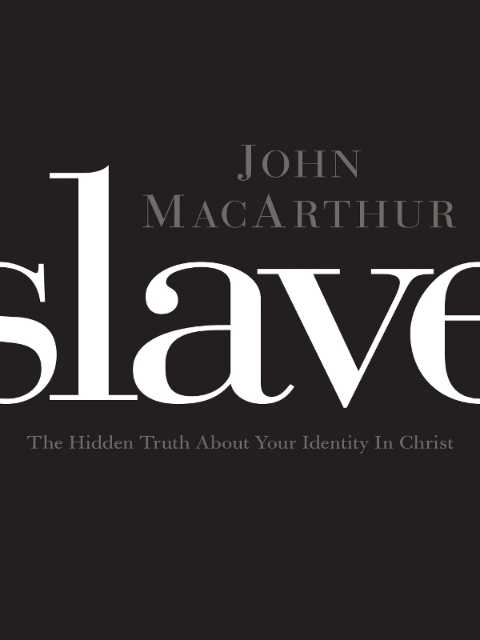

Slave - The Hidden Truth About Your Identity In Christ Order Printed Copy
- Author: John Macarthur
- Size: 394KB
- |
Others like slave - the hidden truth about your identity in christ Features >>



About the Book
"Slave" by John Macarthur explores the biblical concept of Christians being slaves to Christ, emphasizing the obedience, devotion, and complete surrender required in following Him. Macarthur challenges believers to let go of their own desires and instead serve Christ wholeheartedly. Ultimately, the book reveals the profound transformation that occurs when individuals embrace their identity as slaves to Christ.
John Welsh
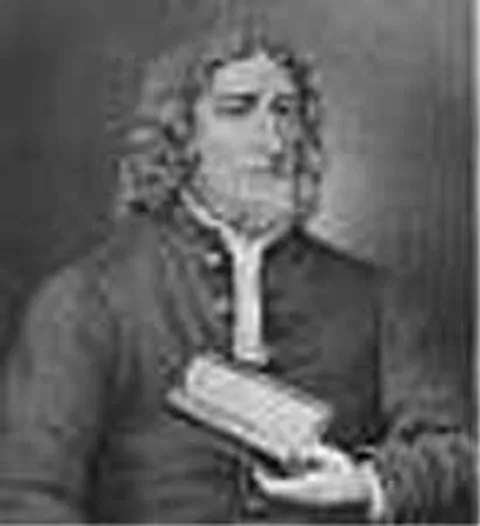 John Welsh [or Welch], minister of the gospel at Ayr, and grandfather of John Welsh of Irongray, the Covenanter, was born of an ancient and well-to-do family in Dumfriesshire about the year 1568. His early life gave to his family little prospect of his future greatness as a minister of Christ and son-in-law to Knox himself.
He was a riotous youth who frequently played truant at school and, when a young man, he joined himself to a gang of border thieves who lived by robbing the people of both nations. These unhappy escapades brought him to extreme poverty and, in the overruling providence of God, had the effect of humbling him to true repentance.
After obtaining his father’s pardon Welsh entered the newly-formed University of Edinburgh to prepare for the ministry of the Scottish Church. The University was still in its infancy, having been opened in 1583 by its distinguished Principal, Robert Rollock. Scotland was enjoying a revival of letters at this time and the study of theology was being earnestly pursued by persons of all ranks.
Welsh abounded in industry and ability, and was not slow to gain a mastery of Latin [the language of theology in that age] and a competent knowledge of Greek. But it was Divinity, rather than the Humanities, which must have made the deepest impression on the young mind of Welsh. In these halcyon days of the Scottish Reformed Church, the ‘College of Edinburgh’ was not the secularised institution it has since become, but rather a model Reformed Theological Seminary, as good perhaps as any in Europe.
The supreme aim and end in view of the University curriculum was for students to be grounded in the glorious truths of the Word of God. Edinburgh University was a well of pure Calvinism, the streams of which were to inundate the entire nation and beyond.
Welsh had the noteworthy distinction of being the very first Edinburgh graduate to be ordained to the ministry. He completed the M.A. degree in August 1588, and proceeded to the charge of Selkirk, a town some thirty-eight miles south of Edinburgh. Selkirk was hard ground in which to sow the gospel seed. The inhabitants were ignorant and uncouth. The only spiritual teaching to reach them before Welsh had come through the labours of a few pious men whose office it had been to read there the Scriptures and Knox’s Liturgy.
Welsh was here for about six years, living in lodgings because there was no manse. His whole time was taken up in spiritual exercises, preaching daily and praying without ceasing. Indeed, his prayerfulness was from the very start remarkable. When he went to bed at night he laid a Scotch plaid over the bed-clothes. During the night he would cover himself with this from the cold as he agonised with God in prayer. From the beginning to the end of his ministry he is reported to have spent seven or eight hours in prayer each day! (2)
However the gospel light brought by Welsh was far from welcomed by the people of Selkirk. It appears that they preferred their former darkness to Christ’s gospel. No very considerable fruits were evident, and the hostility there was such that one of the local gentlemen, Scot of Headschaw, even cut off the rumps of the two horses which Welsh used for his preaching excursions into the surrounding countryside.
Hence, when a call was addressed to him by the people of Kirkcudbright [in the South-West of Scotland] he acquiesced and took up his post there in 1595.
Before he left Selkirk, however, Welsh had married the third and youngest daughter of John Knox by his second wife, Margaret Stewart, daughter of the second Lord Ochiltree [in Ayrshire]. The date of the marriage is uncertain, but it must have been at some time prior to 1596.
Elizabeth Knox and her two elder sisters had been brought up near Abbotsford in that part of the Borders now associated with Sir Walter Scott. For when Knox lay dying he had urged his wife to attend carefully to the education of the girls. Hence when Mrs Knox remarried, two years after the Reformer’s death, to Ker of Faldonsyde, she had taken pains to bring up the girls in the principles of the Christian religion.
Welsh’s first charge at Selkirk was not far from Faldonsyde and it is not difficult to understand how he met his future bride. As King James VI would have it in a conversation much later, ‘Knox and Welsh – the devil never made such a match!’ But we have every reason to see the hand of a gracious and wise God in this union. Elizabeth Knox was to prove a worthy helpmeet for her husband in all his sufferings for the gospel’s sake.
Welsh’s removal to Kirkcudbright was not motived by thoughts of comfort. Kirkcudbright in those days was a hot bed of Catholicism. As such it might prove convenient at any time as a harbour for Spanish warships sent to crush the Reformed faith out of existence. David Blyth, the previous minister of the place had in fact been murdered. Blyth’s name first appears in the town’s records in the year of the Spanish Armada.
He was an able and energetic man who had studied at Glasgow University under the Presidency of the renowned Andrew Melville. Melville had selected him as one of his coadjutors when he himself had transferred to the University of St Andrews. Blyth’s assassination was unquestionably owing to his loyal struggle against the Popish faction at Kirkcudbright. It was to his pulpit that the young John Welsh now went, wearing gospel armour and wielding the sword of the Spirit.
He remained at Kirkcudbright about four years and was gladdened by a small harvest of converts through his ministry. Later on these spiritual children of Welsh frequented the preaching of Samuel Rutherford at Anwoth – truly an apostolic succession! (3) An anecdote relating to the removal of Welsh from Kirkcudbright to Ayr in 1600 is remarkable. It seems that he met at Kirkcudbright a gaily dressed young man called Robert Glendinning, who had recently returned home from his travels.
To this unlikely youth the prophetic Welsh addressed the counsel that he should change his dress and turn from his frivolities to study the Word of God, because he would be the next Reformed preacher at Kirkcudbright! The prediction was fulfilled. Glendinning’s name comes up for honourable mention in the correspondence of Rutherford.
This was a time of renewed blessing and outpouring of the Spirit in Southern Scotland. Welsh must have retained vivid impressions of the spiritual power evident at the 1596 General Assembly at which he sat in Edinburgh as commissioner with over four hundred men. As at the Disruption period much later, so in 1596 the great business of the Assembly was prayer and the confession of ministerial sin. It was John Davidson of Prestonpans who was given the task of opening the Tuesday meeting.
This he did so suitably that the assembled commissioners, filled with a profound sense of their shortcomings in God’s service, were humbled to tears of conviction and repentance for the sins of their office.
The scene is best described in the words of David Calderwood: ‘While they were humbling themselves, for the space of quarter of an hour, there were such sighs and sobs, with shedding of tears, among the most part of all estates that were present, everyone provoking another by his example, and the teacher himself by his example, that the kirk resounded, so that the place might worthily have been called Bochim; for the like of that day was never seen in Scotland since the Reformation, as every man confessed.’
It was a Divine preparation for the evils to come. That 1596 Assembly was, as Calderwood observed, the last free Assembly of the Church of Scotland for many years to come. Not until the Covenant in Greyfriars Churchyard in 1638 did the General Assembly again meet freely. During the forty or so intervening years the life of Scots Presbytery was encumbered with Episcopalianism and her purity tainted with the leaven of Herod.
The statecraft of James VI is even now worth being called to memory. His Majesty had at first expressed his fondness for Presbyterianism and had cheered Welsh and his brethren by stating his royal wish to see an increase in the number of Reformed clergy in his realm. However after the death of Chancellor Maitland, James began to execute his long premeditated scheme to put down the Presbyterian Church and to replace it with an Episcopal Church of the English type.
He had more than one reason for seeking to subvert Presbytery. The Presbyterian ministers were apt to be rather too zealous in exalting the Headship of Christ to please a Stuart monarch’s ambitions. Furthermore, by assimilating the Scots to the English Church he hoped to smooth the way more easily to the throne of both Kingdoms. The details of this notorious conflict do not concern us here. But it is sufficient to say that a man of John Welsh’s character and principles could not fail to fall foul of the King’s policy.
Outspoken in defence of the Church’s true liberties, Welsh preached a notable sermon in St Giles, Edinburgh, in December of that same year, 1596. It was admirable theology; but, under the existing political circumstances, it was deemed to be a virtual act of treason. King James would soon have his revenge on Welsh in ample measure.
Welsh’s sermons are of that ‘torrential’ kind that sweep all before them. The following specimen drawn from the pages of James Young’s biography (4) may serve to illustrate the sort of denunciation of royal encroachment with which the walls of St Giles must have rung in that December sermon.
The passage is taken from a condemnation of selfishness in those landowners who preferred to pocket funds intended to support the gospel ministry: ‘A great many of you . . . are the cause of the everlasting damnation of a great part of the people, for want of the preaching of the Word of Salvation unto them . . .
Vouchsafe so much upon every kirk as may sustain a pastor to break the bread of life unto them, and think of the damnation of so many millions of souls of your poor brethren who might have been saved, for ought that ye know, if they had had the gospel preached unto them . . .’ No hyper-Calvinism this!
From Kirkcudbright, John Welsh travelled northward to his third and last Scottish charge in the county-town of Ayr, with which town his name has ever after been associated. For it was here that his preaching was most remarkably owned of God to the pulling down of strongholds and the establishing of the Reformation. This association of Welsh with Ayr will be regarded as all the more remarkable when it is remembered that he spent slightly less than five years in the town – from August 1600 to July 1605.
Ayrshire, situated a little to the south of the Clyde, had become more favourably disposed in Welsh’s time to evangelical doctrine then almost any part of Scotland. To Ayrshire had come, long before, the itinerant preachers sent out from Oxford by John Wycliffe. Here Wycliffite theology had found a home.
The ‘Lollards of Kyle’ [‘Kyle’ being the old district around Ayr in the middle of the shire] had actively promoted evangelical beliefs long before the voices of Luther and Calvin had shattered the darkness of Romish superstition on the Continent. It was in the little Ayrshire villages Mauchline and Galston, as well as at Ayr itself, that George Wishart had preached in the west.
To Ayrshire Knox himself had come frequently. Here too a Bond had been publicly signed by many noblemen for the defence and proclamation of the true religion of Christ taught in the Scriptures.
John Welsh was not the first but the fourth Reformed preacher to come to Ayr. An Englishman, Christopher Goodman, had been the first labourer about the years 1559-1560. But he had quickly transferred to St Andrews, probably to be nearer the centre of affairs. He was succeeded by James Dalrymple who continued at Ayr to the year 1580. Following Dalrymple came John Porterfield, a man respected but not conspicuous for ability or exertion.
It was indeed as assistant to Porterfield that Welsh now came to Ayr in August 1600. On his arrival, he found at Ayr a small band of exemplary Christians, especially among the wealthier inhabitants of the town. Happily, the monuments of popery had been swept away and the Reformed Faith was preached in the ancient parish Church of St John the Baptist [one part of which has been restored and still stands to this day as the ‘Fort’, so named as the old Church had been put to secular use by Cromwell at the time of the Civil War].
But the bulk of the people at Ayr were still crude and barbaric, immoral and ignorant. Duelling in the streets was common. The private feuds of competing noblemen frequently led to the loss of many lives. A man could hardly pass through the streets in safety when Welsh first came to the town, so common were the fights and quarrels.
Welsh saw it all and his soul was stirred within him: ‘What nation [he expostulated] so polluted with all abominations and murders as thou art? Thy iniquities are more than the sand of the sea, the cry of them is beyond the cry of Sodom.’
Welsh addressed himself to the problem of the street fighting with all the energy of his holy soul. When he heard of such a brawl he would rush into the thick of the fight, clad often in a helmet, and would urge the combatants to sit down to a meal at a table placed in the street! After reconciling the parties he would conclude with prayer and the singing of a Psalm. Gradually this procedure used by Welsh proved successful. Little by little Ayr grew more peaceful.
Every aspect of Welsh’s ministerial effort at Ayr was marked by extraordinary zeal for the glory of God, and by careful circumspection. He laboured to suppress Sabbath games, promoted decent sociality, disciplined and warned the unruly, studied intensely, prayed fervently and preached frequently. In addition to the two Sabbath Services he appears to have preached twice each day, from nine to ten in the morning, and from four to five each afternoon- all that as well as catechising and visiting the people!
Welsh’s preaching was so moving that reports tell us his hearers could not restrain themselves from weeping under the intense sense of the presence of God in the services. Occasionally he shrank from entering the pulpit and intensified his prayer for Divine assistance. At such times the elders, who were intimate with their minister and his spiritual exercise, would notice that he enjoyed an unusual degree of liberty in the pulpit.
He became more sought after than any preacher in Scotland except Robert Bruce of St Giles, Edinburgh. Only Bruce excelled him in the pulpit. More than twenty years later when men spoke of the remarkable revival under David Dickson’s preaching at Irvine, Dickson was to comment that ‘the grape gleanings of Ayr in Mr Welsh’s time were far above the vintage of Irvine in his own.’
In 1604 two events took place which enhanced Welsh’s usefulness in Ayr. On the death of John Porterfield, Welsh became sole minister of the town in that year. But of far greater consequence than that was the outbreak of the plague in the east of Scotland. There had been frequent occurrences of the plague in Europe in the later Middle Ages.
Perhaps the last such outbreak in Britain was the Great Plague of London [though not confined to London] in 1665. No one who knows anything of the insanitary conditions which prevailed in those times can be in the least surprised that these fearful scourges swept periodically from one end of the land – indeed, at times, from one end of the continent – to another.
The sanitation at Ayr was quite as primitive as in most other parts of the land. Offal and filth accumulated on either side of the High Street which being the King’s highway, was not the responsibility of the town council. A more perfect environment for the breeding of the plague can scarcely be imagined. When once the epidemic broke out in one part of the land certain procedures were compulsorily introduced in the other towns to try to curtail the spread of the disease. But these measures were seldom adequate.
As the ‘pest’ travelled steadily westwards in 1604 the 3,000 inhabitants of Ayr grew more alarmed at the prospect of death. Welsh, as it might be expected, took full advantage of the opportunity providentially afforded for calling the people of Ayr to repentance and faith in the Lord Jesus Christ.
It was at this time that an event occurred which brought lasting esteem to Welsh. Two pedlars arrived at the north side of the river seeking admittance by the Auld Brig [still in use]. Although they were able to show a clean bill of health from the place last visited, the magistrates [called ‘baillies’] would not admit them without first seeking the advice of the minister. Welsh came and on hearing the problem silently sought God’s guidance in prayer.
He then declared ‘Baillie, cause these men to put on their packs again and be gone; for if God be in heaven, the plague is in these sacks.’ The peddlers moved on and travelled to Cumnock, a few miles to the east, where the plague unhappily broke out, with fearful loss of life.
These short years, 1604-1605, were the most comfortable of Welsh’s whole life. His popularity was very high with his own people. There were many hundreds of godly people in the town with whom he could share the burdens of his heart. Visitors to Ayr used to be able to see the manse gardens [a little off the High Street, where the rear of the Littlewoods premises now stands] renowned for the prolonged seasons of prayer, where the Ayr preacher used to hold sweet intercourse with Heaven.
It was even said that a light could sometimes be seen around the eminent saint as he knelt in intercession. But whether that be truth or legend it is certain that his prayer was very extraordinary. ‘O God, wilt thou not give me Scotland! O God, wilt thou not give me Scotland!’ was one of the expressions he was heard to utter as he pleaded for the progress of the gospel throughout the whole land. It might be asked how many of us stir ourselves up to similar pinnacles of agonising intercession in our own generation.
But Welsh was not to enjoy this comfort for long. He was shortly to be taken from his little town of affectionate parishioners. The hour of King James VI’s vengeance had nearly come. James was now firmly seated on the throne of both Kingdoms.
His maxim of ‘No Bishop, no King’ was beginning to find practical expression not only in the suppression of free Assemblies but now also in the imprisonment of faithful and able preachers. Matters came to a head for Welsh after the Aberdeen Assembly of 1605, to which he came late and after it had dissolved itself.
The King had forbidden the Assembly to convene at all – expecting that the commissioners would be too intimidated to meet. But a number of men did convene in Aberdeen despite the royal prohibition. They did no more than constitute themselves and then disperse. So that when Welsh arrived the men had departed. But this circumstance was not permitted to save him from the wrath of the King.
The printed volume of Welsh’s sermons published in 1744 consists of sermons he delivered in Ayr at this period of his life, when the wrath of King James was gathering against him. Sensing no doubt that his days in Ayr were numbered he laboured to rivet the doctrines of the Word on the heart of his flock. The volume is scarce nowadays but is a feast of good things for those who can procure a copy. Two sermons on the ‘great white throne’ are followed by eight on the need of repentance and nine on the Christian warfare, etc.
The short selection shows that Welsh was a scholarly, balanced preacher – no ranter, no fanatic, but a careful student of Scripture and also a man fully acquainted with the hearts of men, both saved and unregenerate. His final sermon at Ayr was delivered in the morning of 23rd July, 1605. It was a discourse on the theme ‘No Condemnation to God’s Elect’. In the printed copy which has come down to us there appears the following valedictory prayer, evidently from the hand of Welsh himself:
‘Now let the Lord give his blessing to his word, and let the Spirit of Jesus, who is the author of this verity, come in and seal up the truth of it in your hearts and souls, for Christ’s sake.’
The King’s men summoned him after the sermon to appear before the Privy Council in Edinburgh. Taking leave of his sorrowing family and bidding farewell to his devoted flock, he prepared for the journey to the capital. The people longed and prayed for his speedy return. The Kirk Session ordained ‘to proclaim out of the pulpit that every man continue paying the contributions to the poor until the minister’s homecoming’. But that was not to be. Welsh was to see his beloved little walled town of Ayr no more.
After a sham trial he was committed to the Tolbooth prison in Edinburgh, from where he was shortly transferred to Blackness Castle in West Lothian. Blackness still stands to this day in pretty much the same condition, one can imagine, as it was in Welsh’s time. It was a brutal place of confinement. Strangely, none appears to know who built it or why. Certainly its curious architecture dates from the age of bows and arrows.
Tradition has it that Welsh was put into the dungeon which can only be entered through a hole in the floor. If this is correct then the confinement of the preacher in such a foul hole can only be termed barbaric. The floor is of uneven, shelving rock, sharp and pointed underfoot so that the prisoner can neither sit, walk nor stand without pain.
There is no fire-place and scarcely enough light to read by. By comparison with it the Mamertine prison at Rome has been described as comfortable. It was here, off and on, in this grotesque architectural monstrosity that Welsh was confined till 6th November, 1606. No doubt the angel of the Lord stood beside him to strengthen his heart in those harsh and dreary months of solitude. It is no tribute to James VI that he made Blackness the principal state prison of his reign.
After the lapse of eight months or so King James disclosed in a letter to the Privy Council from Hampton Court [26th September, 1606] that Welsh and similar offending ministers were to be banished. Accordingly, several of the able Reformed preachers were condemned to the most remote parts of the Kingdom – Bute, Kintyre, Arran, Orkney, Caithness, Sutherland and Lewis.
Robert Bruce was sent to Inverness, where he speedily learnt Gaelic that he might spread the gospel among the ignorant Highland population. John Welsh was banished from the realm altogether and sent to France.
At 2 a.m. on the morning of November 7th, 1606, a boat lay off the Leith pier, in the Firth of Forth, ready to carry Welsh to the Continent. The November air must have been chill indeed for the preacher and his family who were shortly to part one from the other.
Welsh offered up the farewell devotions amid a large concourse of sympathisers and the boat sailed into the gloom of that winter’s morning to the strains of the 23rd Psalm, leaving behind many a heavy heart and tear-stained cheek. So touched was James Melville who was present on the occasion, that he wrote of the event, ‘God grant me grace for my part never to forget it!’
More than six months were to pass before Welsh saw his wife and family again – at Bordeaux, the same port into which he himself now sailed in December, 1606. If the true character of a man is revealed in his conduct while suffering, Welsh must emerge from the test as one of the mighty men of faith.
Oblivious of the cramp and agues he had to live with after the sufferings of his confinement, he writes to his friend Robert Boyd of Trochrig, ‘Desiring and thirsting for no other thing under heaven but that I may be fruitfully, with comfort, employed in His work, after the manner, and in the place and part where the only wise God has appointed and decreed . . .’ And again: ‘The fulfilment of my ministry is certainly dearer to me than my life itself’ . . . [Preaching] is my principal desire, and I could be content with mean things . . .’
Preaching was so much his ‘principal desire’ that he at once set about to acquire the language of his place of exile. He progressed so rapidly that he was able to address a French congregation in the space of fourteen weeks! These early attempts in French were in very many ways remarkable.
It appears that the doctrinal parts of his sermons were delivered with a good degree of grammatical correctness, but that when the preacher warmed to his theme and began to make his application, he became more and more vehement- and less and less grammatical! Any speaker who has at all felt the limitations of his grasp of an acquired language will sympathise with Welsh!
But, characteristically enough, he resorted to the following expedient to correct this fault. He arranged for one or other of his hearers to stand up whenever his grammar began to deteriorate. This was the signal to Welsh to pay extra attention to the technicalities of language! Within three years he brought out a book in French, ‘L’Armageddon’ in which he exposes the evils of the ‘Roman Babylon’.
France! the land of Calvin and of the Huguenots! It was into this cockpit of conflicting theologies that the pastor from Ayr now came. Here he met numbers of his expatriated fellow-countrymen, notably Robert Boyd of Trochrig, with whom he kept up a correspondence. Boyd, son of the Archbishop of Glasgow and proprietor of lands in Ayrshire, was Professor of Theology at the University of Saumur. Later, Andrew Melville was to be at Sedan, near the Belgian border.
By the year Welsh came to France, the Reformed Church there had already reached its zenith and fallen to a mere third of its strength. Perhaps no Church has passed through the fires of affliction more courageously than the Protestant Church in France in the years before the arrival of John Welsh. In 1571 the first Synod met at Rochelle under the moderatorship of Theodore Beza, Calvin’s colleague. It was a magnificent occasion.
The noble Queen of Navarre and her Son – afterwards King of France the Prince of Conde and the Count de Coligny, Admiral of France, were all present. No fewer than 2,150 churches were represented at the Synod. Many of the Reformed congregations were astonishingly large. That at Orleans numbered seven thousand communicants and was served by five pastors. ‘Perhaps in 1571, the Huguenots comprised one fourth of the whole population of France’, is the conjecture of one church historian.(6)
But the French Church had reached its climax. So brutal was the persecution, particularly that of 1572, [the ‘St Bartholomew Massacre’] that by 1598 the number of congregations represented at the Synod of Rochelle had fallen to 760. The Church schools were broken up; her ministers poorly paid; her tone of piety lowered.
But the Edict of Nantes, which had received the royal seal in 1598, was now affording a respite to the Huguenot Churches. Welsh was himself present at the meeting of the Rochelle Synod of 1607. While he was there he was deeply touched by a visit from thirty of his old parishioners from Ayr, bearing letters from home and telling of the progress of the King’s Episcopal policy.
Welsh’s indignation was white hot, but his confidence in the sovereignty of God enabled him to predict future good for the Scots Church: ‘Yet that stock and trunk of Jesse shall flourish, and the Lord shall reign in the midst of his enemies’. He never lived to witness the ‘Second Reformation’ of 1638 in Scotland nor the Long Parliament of 1641 in England, but the eye of faith pierced the mists of time and saw Christ overturning His enemies with the iron rod of his strength.
It would be fascinating to follow Welsh’s steps in the subsequent years of his exile. But the details cannot be given here. In all he served in three French congregations – at Jonsac, where he was pastor, by an interim arrangement of the Provincial Synod, from 1608 to 1614; at Nerac, where he was minister of one of the four congregations of the town – finally at St Jean d’Angely, from about 1617 to the end of his public life in 1622.
His health was poor much of the time. If the sufferings of his beloved Church of Scotland were not enough to weigh him down, the distracting scenes before his very eyes in France must have contributed to his early death. Two forces were at work, towards the end of his life, which threatened the spiritual life of the Huguenot Churches. One was the rise and growth of Arminianism. In the second place the government still continued to bear down heavily upon Protestants. Louis XIII was now seated on the throne.
Bent on irritating and provoking the Protestants he raised an army in 1621 and resolved to crush Rochelle, the ‘Geneva of France’, by force of arms. In the course of his march he laid siege to St Jean d’Angely, where Welsh preached. Here during the siege the intrepid pastor showed true heroism, venturing through the streets amid a hail of bullets and carrying gunpowder in his own hat to a Burgundian gunner on the city wall!
When the town capitulated, Welsh, disregarding all entreaties not to preach in public while the King was so close at hand, expounded the Word of God to a vast concourse of people, saying later to the enraged King: ‘Sir, if you did right, you yourself would come and hear me preach, and you would make all France hear me likewise’. Of such stuff are God’s true prophets made!
Distressed by this siege and by the disturbance it brought to the work of the gospel, Welsh at this time contemplated going to Nova Scotia to preach in the new Colony recently planted by James VI. But God was preparing to bring him shortly to a far better land. His physician advised him for reasons of health to return to Scotland to take his native air. But King James would allow him no more than to come to London.
It was in the English capital that Mrs Welsh obtained her famous interview with the King:
King James: ‘Who is your father?’ Mrs Welsh: ‘John Knox’.
King James: ‘Knox and Welsh! the Devil never made such a match as that.’
Mrs Welsh: ‘It’s right-like, Sir, for we never asked his advice.’
King James: ‘How many children did your father leave, and were they lads or lasses?’
Mrs Welsh: ‘Three, and they were all lasses’.
King James: ‘God be thanked, for if they had been three lads I had never enjoyed my three Kingdoms in peace’.
Mrs Welsh then asked permission for her husband to take his native air in Scotland.
King James: ‘Give him his native air! Give him the devil!’ Mrs Welsh: ‘Give that to your hungry courtiers’.
The King then agreed to allow Welsh to return to Scotland on condition he would submit to the bishops. Mrs Welsh held out her apron towards the King and said heroically: ‘Please your Majesty, I’d rather kep [receive] his head there’.
Welsh was able to preach once while in London, presumably in the pulpit of one of the Puritan ‘lecturers’. This was his last appearance in public and he was ‘long and fervent’. He came down exhausted from the strain of speaking and returned to his London lodgings a dying man. As he lay dying he was occasionally overheard to say in prayer, ‘Lord, hold thy hand, it is enough – thy servant is a clay vessel, and can hold no more’.
Within two hours of leaving the pulpit he resigned his spirit quietly and without pain into the hands of his Maker. So died one of those mighty spiritual giants whom it has pleased God to give to his Church from time to time. May it please him to raise up many another to the confounding of his enemies and the glory of his Name!
John Welsh [or Welch], minister of the gospel at Ayr, and grandfather of John Welsh of Irongray, the Covenanter, was born of an ancient and well-to-do family in Dumfriesshire about the year 1568. His early life gave to his family little prospect of his future greatness as a minister of Christ and son-in-law to Knox himself.
He was a riotous youth who frequently played truant at school and, when a young man, he joined himself to a gang of border thieves who lived by robbing the people of both nations. These unhappy escapades brought him to extreme poverty and, in the overruling providence of God, had the effect of humbling him to true repentance.
After obtaining his father’s pardon Welsh entered the newly-formed University of Edinburgh to prepare for the ministry of the Scottish Church. The University was still in its infancy, having been opened in 1583 by its distinguished Principal, Robert Rollock. Scotland was enjoying a revival of letters at this time and the study of theology was being earnestly pursued by persons of all ranks.
Welsh abounded in industry and ability, and was not slow to gain a mastery of Latin [the language of theology in that age] and a competent knowledge of Greek. But it was Divinity, rather than the Humanities, which must have made the deepest impression on the young mind of Welsh. In these halcyon days of the Scottish Reformed Church, the ‘College of Edinburgh’ was not the secularised institution it has since become, but rather a model Reformed Theological Seminary, as good perhaps as any in Europe.
The supreme aim and end in view of the University curriculum was for students to be grounded in the glorious truths of the Word of God. Edinburgh University was a well of pure Calvinism, the streams of which were to inundate the entire nation and beyond.
Welsh had the noteworthy distinction of being the very first Edinburgh graduate to be ordained to the ministry. He completed the M.A. degree in August 1588, and proceeded to the charge of Selkirk, a town some thirty-eight miles south of Edinburgh. Selkirk was hard ground in which to sow the gospel seed. The inhabitants were ignorant and uncouth. The only spiritual teaching to reach them before Welsh had come through the labours of a few pious men whose office it had been to read there the Scriptures and Knox’s Liturgy.
Welsh was here for about six years, living in lodgings because there was no manse. His whole time was taken up in spiritual exercises, preaching daily and praying without ceasing. Indeed, his prayerfulness was from the very start remarkable. When he went to bed at night he laid a Scotch plaid over the bed-clothes. During the night he would cover himself with this from the cold as he agonised with God in prayer. From the beginning to the end of his ministry he is reported to have spent seven or eight hours in prayer each day! (2)
However the gospel light brought by Welsh was far from welcomed by the people of Selkirk. It appears that they preferred their former darkness to Christ’s gospel. No very considerable fruits were evident, and the hostility there was such that one of the local gentlemen, Scot of Headschaw, even cut off the rumps of the two horses which Welsh used for his preaching excursions into the surrounding countryside.
Hence, when a call was addressed to him by the people of Kirkcudbright [in the South-West of Scotland] he acquiesced and took up his post there in 1595.
Before he left Selkirk, however, Welsh had married the third and youngest daughter of John Knox by his second wife, Margaret Stewart, daughter of the second Lord Ochiltree [in Ayrshire]. The date of the marriage is uncertain, but it must have been at some time prior to 1596.
Elizabeth Knox and her two elder sisters had been brought up near Abbotsford in that part of the Borders now associated with Sir Walter Scott. For when Knox lay dying he had urged his wife to attend carefully to the education of the girls. Hence when Mrs Knox remarried, two years after the Reformer’s death, to Ker of Faldonsyde, she had taken pains to bring up the girls in the principles of the Christian religion.
Welsh’s first charge at Selkirk was not far from Faldonsyde and it is not difficult to understand how he met his future bride. As King James VI would have it in a conversation much later, ‘Knox and Welsh – the devil never made such a match!’ But we have every reason to see the hand of a gracious and wise God in this union. Elizabeth Knox was to prove a worthy helpmeet for her husband in all his sufferings for the gospel’s sake.
Welsh’s removal to Kirkcudbright was not motived by thoughts of comfort. Kirkcudbright in those days was a hot bed of Catholicism. As such it might prove convenient at any time as a harbour for Spanish warships sent to crush the Reformed faith out of existence. David Blyth, the previous minister of the place had in fact been murdered. Blyth’s name first appears in the town’s records in the year of the Spanish Armada.
He was an able and energetic man who had studied at Glasgow University under the Presidency of the renowned Andrew Melville. Melville had selected him as one of his coadjutors when he himself had transferred to the University of St Andrews. Blyth’s assassination was unquestionably owing to his loyal struggle against the Popish faction at Kirkcudbright. It was to his pulpit that the young John Welsh now went, wearing gospel armour and wielding the sword of the Spirit.
He remained at Kirkcudbright about four years and was gladdened by a small harvest of converts through his ministry. Later on these spiritual children of Welsh frequented the preaching of Samuel Rutherford at Anwoth – truly an apostolic succession! (3) An anecdote relating to the removal of Welsh from Kirkcudbright to Ayr in 1600 is remarkable. It seems that he met at Kirkcudbright a gaily dressed young man called Robert Glendinning, who had recently returned home from his travels.
To this unlikely youth the prophetic Welsh addressed the counsel that he should change his dress and turn from his frivolities to study the Word of God, because he would be the next Reformed preacher at Kirkcudbright! The prediction was fulfilled. Glendinning’s name comes up for honourable mention in the correspondence of Rutherford.
This was a time of renewed blessing and outpouring of the Spirit in Southern Scotland. Welsh must have retained vivid impressions of the spiritual power evident at the 1596 General Assembly at which he sat in Edinburgh as commissioner with over four hundred men. As at the Disruption period much later, so in 1596 the great business of the Assembly was prayer and the confession of ministerial sin. It was John Davidson of Prestonpans who was given the task of opening the Tuesday meeting.
This he did so suitably that the assembled commissioners, filled with a profound sense of their shortcomings in God’s service, were humbled to tears of conviction and repentance for the sins of their office.
The scene is best described in the words of David Calderwood: ‘While they were humbling themselves, for the space of quarter of an hour, there were such sighs and sobs, with shedding of tears, among the most part of all estates that were present, everyone provoking another by his example, and the teacher himself by his example, that the kirk resounded, so that the place might worthily have been called Bochim; for the like of that day was never seen in Scotland since the Reformation, as every man confessed.’
It was a Divine preparation for the evils to come. That 1596 Assembly was, as Calderwood observed, the last free Assembly of the Church of Scotland for many years to come. Not until the Covenant in Greyfriars Churchyard in 1638 did the General Assembly again meet freely. During the forty or so intervening years the life of Scots Presbytery was encumbered with Episcopalianism and her purity tainted with the leaven of Herod.
The statecraft of James VI is even now worth being called to memory. His Majesty had at first expressed his fondness for Presbyterianism and had cheered Welsh and his brethren by stating his royal wish to see an increase in the number of Reformed clergy in his realm. However after the death of Chancellor Maitland, James began to execute his long premeditated scheme to put down the Presbyterian Church and to replace it with an Episcopal Church of the English type.
He had more than one reason for seeking to subvert Presbytery. The Presbyterian ministers were apt to be rather too zealous in exalting the Headship of Christ to please a Stuart monarch’s ambitions. Furthermore, by assimilating the Scots to the English Church he hoped to smooth the way more easily to the throne of both Kingdoms. The details of this notorious conflict do not concern us here. But it is sufficient to say that a man of John Welsh’s character and principles could not fail to fall foul of the King’s policy.
Outspoken in defence of the Church’s true liberties, Welsh preached a notable sermon in St Giles, Edinburgh, in December of that same year, 1596. It was admirable theology; but, under the existing political circumstances, it was deemed to be a virtual act of treason. King James would soon have his revenge on Welsh in ample measure.
Welsh’s sermons are of that ‘torrential’ kind that sweep all before them. The following specimen drawn from the pages of James Young’s biography (4) may serve to illustrate the sort of denunciation of royal encroachment with which the walls of St Giles must have rung in that December sermon.
The passage is taken from a condemnation of selfishness in those landowners who preferred to pocket funds intended to support the gospel ministry: ‘A great many of you . . . are the cause of the everlasting damnation of a great part of the people, for want of the preaching of the Word of Salvation unto them . . .
Vouchsafe so much upon every kirk as may sustain a pastor to break the bread of life unto them, and think of the damnation of so many millions of souls of your poor brethren who might have been saved, for ought that ye know, if they had had the gospel preached unto them . . .’ No hyper-Calvinism this!
From Kirkcudbright, John Welsh travelled northward to his third and last Scottish charge in the county-town of Ayr, with which town his name has ever after been associated. For it was here that his preaching was most remarkably owned of God to the pulling down of strongholds and the establishing of the Reformation. This association of Welsh with Ayr will be regarded as all the more remarkable when it is remembered that he spent slightly less than five years in the town – from August 1600 to July 1605.
Ayrshire, situated a little to the south of the Clyde, had become more favourably disposed in Welsh’s time to evangelical doctrine then almost any part of Scotland. To Ayrshire had come, long before, the itinerant preachers sent out from Oxford by John Wycliffe. Here Wycliffite theology had found a home.
The ‘Lollards of Kyle’ [‘Kyle’ being the old district around Ayr in the middle of the shire] had actively promoted evangelical beliefs long before the voices of Luther and Calvin had shattered the darkness of Romish superstition on the Continent. It was in the little Ayrshire villages Mauchline and Galston, as well as at Ayr itself, that George Wishart had preached in the west.
To Ayrshire Knox himself had come frequently. Here too a Bond had been publicly signed by many noblemen for the defence and proclamation of the true religion of Christ taught in the Scriptures.
John Welsh was not the first but the fourth Reformed preacher to come to Ayr. An Englishman, Christopher Goodman, had been the first labourer about the years 1559-1560. But he had quickly transferred to St Andrews, probably to be nearer the centre of affairs. He was succeeded by James Dalrymple who continued at Ayr to the year 1580. Following Dalrymple came John Porterfield, a man respected but not conspicuous for ability or exertion.
It was indeed as assistant to Porterfield that Welsh now came to Ayr in August 1600. On his arrival, he found at Ayr a small band of exemplary Christians, especially among the wealthier inhabitants of the town. Happily, the monuments of popery had been swept away and the Reformed Faith was preached in the ancient parish Church of St John the Baptist [one part of which has been restored and still stands to this day as the ‘Fort’, so named as the old Church had been put to secular use by Cromwell at the time of the Civil War].
But the bulk of the people at Ayr were still crude and barbaric, immoral and ignorant. Duelling in the streets was common. The private feuds of competing noblemen frequently led to the loss of many lives. A man could hardly pass through the streets in safety when Welsh first came to the town, so common were the fights and quarrels.
Welsh saw it all and his soul was stirred within him: ‘What nation [he expostulated] so polluted with all abominations and murders as thou art? Thy iniquities are more than the sand of the sea, the cry of them is beyond the cry of Sodom.’
Welsh addressed himself to the problem of the street fighting with all the energy of his holy soul. When he heard of such a brawl he would rush into the thick of the fight, clad often in a helmet, and would urge the combatants to sit down to a meal at a table placed in the street! After reconciling the parties he would conclude with prayer and the singing of a Psalm. Gradually this procedure used by Welsh proved successful. Little by little Ayr grew more peaceful.
Every aspect of Welsh’s ministerial effort at Ayr was marked by extraordinary zeal for the glory of God, and by careful circumspection. He laboured to suppress Sabbath games, promoted decent sociality, disciplined and warned the unruly, studied intensely, prayed fervently and preached frequently. In addition to the two Sabbath Services he appears to have preached twice each day, from nine to ten in the morning, and from four to five each afternoon- all that as well as catechising and visiting the people!
Welsh’s preaching was so moving that reports tell us his hearers could not restrain themselves from weeping under the intense sense of the presence of God in the services. Occasionally he shrank from entering the pulpit and intensified his prayer for Divine assistance. At such times the elders, who were intimate with their minister and his spiritual exercise, would notice that he enjoyed an unusual degree of liberty in the pulpit.
He became more sought after than any preacher in Scotland except Robert Bruce of St Giles, Edinburgh. Only Bruce excelled him in the pulpit. More than twenty years later when men spoke of the remarkable revival under David Dickson’s preaching at Irvine, Dickson was to comment that ‘the grape gleanings of Ayr in Mr Welsh’s time were far above the vintage of Irvine in his own.’
In 1604 two events took place which enhanced Welsh’s usefulness in Ayr. On the death of John Porterfield, Welsh became sole minister of the town in that year. But of far greater consequence than that was the outbreak of the plague in the east of Scotland. There had been frequent occurrences of the plague in Europe in the later Middle Ages.
Perhaps the last such outbreak in Britain was the Great Plague of London [though not confined to London] in 1665. No one who knows anything of the insanitary conditions which prevailed in those times can be in the least surprised that these fearful scourges swept periodically from one end of the land – indeed, at times, from one end of the continent – to another.
The sanitation at Ayr was quite as primitive as in most other parts of the land. Offal and filth accumulated on either side of the High Street which being the King’s highway, was not the responsibility of the town council. A more perfect environment for the breeding of the plague can scarcely be imagined. When once the epidemic broke out in one part of the land certain procedures were compulsorily introduced in the other towns to try to curtail the spread of the disease. But these measures were seldom adequate.
As the ‘pest’ travelled steadily westwards in 1604 the 3,000 inhabitants of Ayr grew more alarmed at the prospect of death. Welsh, as it might be expected, took full advantage of the opportunity providentially afforded for calling the people of Ayr to repentance and faith in the Lord Jesus Christ.
It was at this time that an event occurred which brought lasting esteem to Welsh. Two pedlars arrived at the north side of the river seeking admittance by the Auld Brig [still in use]. Although they were able to show a clean bill of health from the place last visited, the magistrates [called ‘baillies’] would not admit them without first seeking the advice of the minister. Welsh came and on hearing the problem silently sought God’s guidance in prayer.
He then declared ‘Baillie, cause these men to put on their packs again and be gone; for if God be in heaven, the plague is in these sacks.’ The peddlers moved on and travelled to Cumnock, a few miles to the east, where the plague unhappily broke out, with fearful loss of life.
These short years, 1604-1605, were the most comfortable of Welsh’s whole life. His popularity was very high with his own people. There were many hundreds of godly people in the town with whom he could share the burdens of his heart. Visitors to Ayr used to be able to see the manse gardens [a little off the High Street, where the rear of the Littlewoods premises now stands] renowned for the prolonged seasons of prayer, where the Ayr preacher used to hold sweet intercourse with Heaven.
It was even said that a light could sometimes be seen around the eminent saint as he knelt in intercession. But whether that be truth or legend it is certain that his prayer was very extraordinary. ‘O God, wilt thou not give me Scotland! O God, wilt thou not give me Scotland!’ was one of the expressions he was heard to utter as he pleaded for the progress of the gospel throughout the whole land. It might be asked how many of us stir ourselves up to similar pinnacles of agonising intercession in our own generation.
But Welsh was not to enjoy this comfort for long. He was shortly to be taken from his little town of affectionate parishioners. The hour of King James VI’s vengeance had nearly come. James was now firmly seated on the throne of both Kingdoms.
His maxim of ‘No Bishop, no King’ was beginning to find practical expression not only in the suppression of free Assemblies but now also in the imprisonment of faithful and able preachers. Matters came to a head for Welsh after the Aberdeen Assembly of 1605, to which he came late and after it had dissolved itself.
The King had forbidden the Assembly to convene at all – expecting that the commissioners would be too intimidated to meet. But a number of men did convene in Aberdeen despite the royal prohibition. They did no more than constitute themselves and then disperse. So that when Welsh arrived the men had departed. But this circumstance was not permitted to save him from the wrath of the King.
The printed volume of Welsh’s sermons published in 1744 consists of sermons he delivered in Ayr at this period of his life, when the wrath of King James was gathering against him. Sensing no doubt that his days in Ayr were numbered he laboured to rivet the doctrines of the Word on the heart of his flock. The volume is scarce nowadays but is a feast of good things for those who can procure a copy. Two sermons on the ‘great white throne’ are followed by eight on the need of repentance and nine on the Christian warfare, etc.
The short selection shows that Welsh was a scholarly, balanced preacher – no ranter, no fanatic, but a careful student of Scripture and also a man fully acquainted with the hearts of men, both saved and unregenerate. His final sermon at Ayr was delivered in the morning of 23rd July, 1605. It was a discourse on the theme ‘No Condemnation to God’s Elect’. In the printed copy which has come down to us there appears the following valedictory prayer, evidently from the hand of Welsh himself:
‘Now let the Lord give his blessing to his word, and let the Spirit of Jesus, who is the author of this verity, come in and seal up the truth of it in your hearts and souls, for Christ’s sake.’
The King’s men summoned him after the sermon to appear before the Privy Council in Edinburgh. Taking leave of his sorrowing family and bidding farewell to his devoted flock, he prepared for the journey to the capital. The people longed and prayed for his speedy return. The Kirk Session ordained ‘to proclaim out of the pulpit that every man continue paying the contributions to the poor until the minister’s homecoming’. But that was not to be. Welsh was to see his beloved little walled town of Ayr no more.
After a sham trial he was committed to the Tolbooth prison in Edinburgh, from where he was shortly transferred to Blackness Castle in West Lothian. Blackness still stands to this day in pretty much the same condition, one can imagine, as it was in Welsh’s time. It was a brutal place of confinement. Strangely, none appears to know who built it or why. Certainly its curious architecture dates from the age of bows and arrows.
Tradition has it that Welsh was put into the dungeon which can only be entered through a hole in the floor. If this is correct then the confinement of the preacher in such a foul hole can only be termed barbaric. The floor is of uneven, shelving rock, sharp and pointed underfoot so that the prisoner can neither sit, walk nor stand without pain.
There is no fire-place and scarcely enough light to read by. By comparison with it the Mamertine prison at Rome has been described as comfortable. It was here, off and on, in this grotesque architectural monstrosity that Welsh was confined till 6th November, 1606. No doubt the angel of the Lord stood beside him to strengthen his heart in those harsh and dreary months of solitude. It is no tribute to James VI that he made Blackness the principal state prison of his reign.
After the lapse of eight months or so King James disclosed in a letter to the Privy Council from Hampton Court [26th September, 1606] that Welsh and similar offending ministers were to be banished. Accordingly, several of the able Reformed preachers were condemned to the most remote parts of the Kingdom – Bute, Kintyre, Arran, Orkney, Caithness, Sutherland and Lewis.
Robert Bruce was sent to Inverness, where he speedily learnt Gaelic that he might spread the gospel among the ignorant Highland population. John Welsh was banished from the realm altogether and sent to France.
At 2 a.m. on the morning of November 7th, 1606, a boat lay off the Leith pier, in the Firth of Forth, ready to carry Welsh to the Continent. The November air must have been chill indeed for the preacher and his family who were shortly to part one from the other.
Welsh offered up the farewell devotions amid a large concourse of sympathisers and the boat sailed into the gloom of that winter’s morning to the strains of the 23rd Psalm, leaving behind many a heavy heart and tear-stained cheek. So touched was James Melville who was present on the occasion, that he wrote of the event, ‘God grant me grace for my part never to forget it!’
More than six months were to pass before Welsh saw his wife and family again – at Bordeaux, the same port into which he himself now sailed in December, 1606. If the true character of a man is revealed in his conduct while suffering, Welsh must emerge from the test as one of the mighty men of faith.
Oblivious of the cramp and agues he had to live with after the sufferings of his confinement, he writes to his friend Robert Boyd of Trochrig, ‘Desiring and thirsting for no other thing under heaven but that I may be fruitfully, with comfort, employed in His work, after the manner, and in the place and part where the only wise God has appointed and decreed . . .’ And again: ‘The fulfilment of my ministry is certainly dearer to me than my life itself’ . . . [Preaching] is my principal desire, and I could be content with mean things . . .’
Preaching was so much his ‘principal desire’ that he at once set about to acquire the language of his place of exile. He progressed so rapidly that he was able to address a French congregation in the space of fourteen weeks! These early attempts in French were in very many ways remarkable.
It appears that the doctrinal parts of his sermons were delivered with a good degree of grammatical correctness, but that when the preacher warmed to his theme and began to make his application, he became more and more vehement- and less and less grammatical! Any speaker who has at all felt the limitations of his grasp of an acquired language will sympathise with Welsh!
But, characteristically enough, he resorted to the following expedient to correct this fault. He arranged for one or other of his hearers to stand up whenever his grammar began to deteriorate. This was the signal to Welsh to pay extra attention to the technicalities of language! Within three years he brought out a book in French, ‘L’Armageddon’ in which he exposes the evils of the ‘Roman Babylon’.
France! the land of Calvin and of the Huguenots! It was into this cockpit of conflicting theologies that the pastor from Ayr now came. Here he met numbers of his expatriated fellow-countrymen, notably Robert Boyd of Trochrig, with whom he kept up a correspondence. Boyd, son of the Archbishop of Glasgow and proprietor of lands in Ayrshire, was Professor of Theology at the University of Saumur. Later, Andrew Melville was to be at Sedan, near the Belgian border.
By the year Welsh came to France, the Reformed Church there had already reached its zenith and fallen to a mere third of its strength. Perhaps no Church has passed through the fires of affliction more courageously than the Protestant Church in France in the years before the arrival of John Welsh. In 1571 the first Synod met at Rochelle under the moderatorship of Theodore Beza, Calvin’s colleague. It was a magnificent occasion.
The noble Queen of Navarre and her Son – afterwards King of France the Prince of Conde and the Count de Coligny, Admiral of France, were all present. No fewer than 2,150 churches were represented at the Synod. Many of the Reformed congregations were astonishingly large. That at Orleans numbered seven thousand communicants and was served by five pastors. ‘Perhaps in 1571, the Huguenots comprised one fourth of the whole population of France’, is the conjecture of one church historian.(6)
But the French Church had reached its climax. So brutal was the persecution, particularly that of 1572, [the ‘St Bartholomew Massacre’] that by 1598 the number of congregations represented at the Synod of Rochelle had fallen to 760. The Church schools were broken up; her ministers poorly paid; her tone of piety lowered.
But the Edict of Nantes, which had received the royal seal in 1598, was now affording a respite to the Huguenot Churches. Welsh was himself present at the meeting of the Rochelle Synod of 1607. While he was there he was deeply touched by a visit from thirty of his old parishioners from Ayr, bearing letters from home and telling of the progress of the King’s Episcopal policy.
Welsh’s indignation was white hot, but his confidence in the sovereignty of God enabled him to predict future good for the Scots Church: ‘Yet that stock and trunk of Jesse shall flourish, and the Lord shall reign in the midst of his enemies’. He never lived to witness the ‘Second Reformation’ of 1638 in Scotland nor the Long Parliament of 1641 in England, but the eye of faith pierced the mists of time and saw Christ overturning His enemies with the iron rod of his strength.
It would be fascinating to follow Welsh’s steps in the subsequent years of his exile. But the details cannot be given here. In all he served in three French congregations – at Jonsac, where he was pastor, by an interim arrangement of the Provincial Synod, from 1608 to 1614; at Nerac, where he was minister of one of the four congregations of the town – finally at St Jean d’Angely, from about 1617 to the end of his public life in 1622.
His health was poor much of the time. If the sufferings of his beloved Church of Scotland were not enough to weigh him down, the distracting scenes before his very eyes in France must have contributed to his early death. Two forces were at work, towards the end of his life, which threatened the spiritual life of the Huguenot Churches. One was the rise and growth of Arminianism. In the second place the government still continued to bear down heavily upon Protestants. Louis XIII was now seated on the throne.
Bent on irritating and provoking the Protestants he raised an army in 1621 and resolved to crush Rochelle, the ‘Geneva of France’, by force of arms. In the course of his march he laid siege to St Jean d’Angely, where Welsh preached. Here during the siege the intrepid pastor showed true heroism, venturing through the streets amid a hail of bullets and carrying gunpowder in his own hat to a Burgundian gunner on the city wall!
When the town capitulated, Welsh, disregarding all entreaties not to preach in public while the King was so close at hand, expounded the Word of God to a vast concourse of people, saying later to the enraged King: ‘Sir, if you did right, you yourself would come and hear me preach, and you would make all France hear me likewise’. Of such stuff are God’s true prophets made!
Distressed by this siege and by the disturbance it brought to the work of the gospel, Welsh at this time contemplated going to Nova Scotia to preach in the new Colony recently planted by James VI. But God was preparing to bring him shortly to a far better land. His physician advised him for reasons of health to return to Scotland to take his native air. But King James would allow him no more than to come to London.
It was in the English capital that Mrs Welsh obtained her famous interview with the King:
King James: ‘Who is your father?’ Mrs Welsh: ‘John Knox’.
King James: ‘Knox and Welsh! the Devil never made such a match as that.’
Mrs Welsh: ‘It’s right-like, Sir, for we never asked his advice.’
King James: ‘How many children did your father leave, and were they lads or lasses?’
Mrs Welsh: ‘Three, and they were all lasses’.
King James: ‘God be thanked, for if they had been three lads I had never enjoyed my three Kingdoms in peace’.
Mrs Welsh then asked permission for her husband to take his native air in Scotland.
King James: ‘Give him his native air! Give him the devil!’ Mrs Welsh: ‘Give that to your hungry courtiers’.
The King then agreed to allow Welsh to return to Scotland on condition he would submit to the bishops. Mrs Welsh held out her apron towards the King and said heroically: ‘Please your Majesty, I’d rather kep [receive] his head there’.
Welsh was able to preach once while in London, presumably in the pulpit of one of the Puritan ‘lecturers’. This was his last appearance in public and he was ‘long and fervent’. He came down exhausted from the strain of speaking and returned to his London lodgings a dying man. As he lay dying he was occasionally overheard to say in prayer, ‘Lord, hold thy hand, it is enough – thy servant is a clay vessel, and can hold no more’.
Within two hours of leaving the pulpit he resigned his spirit quietly and without pain into the hands of his Maker. So died one of those mighty spiritual giants whom it has pleased God to give to his Church from time to time. May it please him to raise up many another to the confounding of his enemies and the glory of his Name!
Too Afraid to Say Nothing
On a steamy Saturday in July, I dropped off our son at a local community college to take the ACT. Earlier that morning, before leaving the house, we paused for prayer. I knew how nervous he was, how much he hates a timed test. I remembered my own anxiety and apprehension as a high schooler, realizing that part of your future rests on a few hours in a room full of strangers. So, I prayed for him not to be afraid. Fear is a curious and powerful emotion. It can debilitate. Fear can stop our mind, shut our mouth, and stay our hand. Yet fear can also set us into action. As much as fear keeps us from taking risks and being effective, fear can also be an incredible motivator. In a way, fear is what’s made our son an excellent student thus far. It’s what kept him up studying late at night, and it’s why he willingly walked into that testing room. The right kind of fear is also one of the best motivators for our evangelism. Fear That Freezes Evangelism When it comes to evangelism, Christians tend to view fear as purely negative. Many of us have come to believe that fear is the primary factor that keeps us from speaking the gospel to others. Fear freezes us. When we sense the Spirit leading us to talk with our neighbor, friend, or family member, we get the same feeling that many of us experienced on a Friday algebra exam. We struggle to focus. Our hands perspire. We don’t even know where to begin. Some of that physical response comes from a fear of failure. Like when taking a test, we don’t want to mess up. We don’t want to give someone the wrong answer. So, churches often respond by providing evangelism training. Education is the solution. We help people prepare, supply them with resources, and even give them, as it were, the opportunity for practice tests. And this information is truly important. We must be able to proclaim the gospel clearly and truthfully. Such an approach in evangelism training, however, might assume that the way we address fear in evangelism is primarily through increasing our accuracy and ability. But I’m not convinced, because I believe the fear that freezes us would more accurately be labeled as shame (Luke 12:8–9; 2 Timothy 1:8–12). The Fear of Rejection I suspect the greatest hindrance to bold witness is not the fear of getting it wrong; it’s the fear of being rejected. We don’t want to be ostracized or shunned. We don’t want our friends to think we’re narrow-minded, unscientific, bigoted, intolerant, or just uncool. If we’re honest, we’re often too embarrassed to evangelize. We’re ashamed of Christ. Education will never overcome that kind of fear. Instead, we need to encourage bold witness by dealing with the emotional and social dynamics of shame. Shame’s power is its ability to disgrace and divide. Shame humiliates and separates from others. Which means the antidote to shame is glory and community — and we find those in the gospel. The good news of Jesus promises us both honor and a home (Matthew 10:32; John 14:1–3). Only when Christians recognize this will they be able to overcome the shame that silences their witness. Because they’ll be more confident in the praise and glory that God himself promises them on the final day (1 Peter 1:7; Romans 2:7). They’ll fear rejection less, because they’ll have experienced the welcome of Christian fellowship, the earthly foretaste of the heavenly home that God gives his chosen exiles. Fear That Fuels Evangelism Realizing the social and emotional dynamics of fear can also help us see how it can be a positive motivator for mission. In recent years, there’s been such an experiential increase in a particular kind of fear that the phenomenon has been given a pop-culture label: FOMO — the fear of missing out. FOMO is understood as people’s anxiety, largely fueled by viewing social media, that they’ll miss out on some exciting event, important relationship, or salacious news. But this particular fear doesn’t generally stifle people. It drives them to constantly check their phones. It leads them to follow more people, make more friends, be more active. Now, I’m not suggesting that FOMO leads to positive or healthy behavior. What is helpful to see, though, is how fear can powerfully move us into action. If we experience a fear similar to FOMO with regard to evangelism, we can see how it could lead us to pursue our neighbors and open our mouths with the gospel. Once we have tasted of God’s goodness in the gospel, we will want others to experience the same. We will fear them missing out on the glories of heaven, the wonders of Christ, and the most spectacular news of all. Such fear is not antithetical to love; it’s a demonstration of Christ’s compassion for them (2 Corinthians 5:14). But there’s more to understanding how fear should fuel our evangelism. Jesus said, “Whoever is ashamed of me and of my words, of him will the Son of Man be ashamed when he comes in his glory and the glory of the Father and of the holy angels” (Luke 9:26). There it is. The solution to the shame that silences our witness is our fear of missing out on glory and honor with the heavenly host. If we are embarrassed of Christ and his gospel, if we avoid evangelism as a way to protect our reputation and maintain our relationships, we will lose the honor he promises. We will miss out on the community of glory, with the Father and all his holy angels. More Fear, Not Less This means that fear is not the greatest hindrance to evangelism. Our lack of fear is. Instead of being ashamed before others, we need to be concerned about being ashamed before Christ at his coming (1 John 2:28). Instead of fearing what others will say about us or do to us, we need to fear God, the one “who can destroy both soul and body in hell” (Matthew 10:28). Shame isn’t purely negative. “Knowing the fear of the Lord, we persuade others” (2 Corinthians 5:11). Fear can be a positive force. My son realized that taking the ACT is the means to college admission, a potential scholarship, and a future career. The results also have a profound emotional and social dimension — just wait until the scores come back! He knows the stakes are high. But recognizing the weight can be a motivating factor, and not necessarily a debilitating one. So it can be for us. As we grow in an appropriate fear of God and for others’ eternal well-being, we will be moved to speak the gospel with more urgency and care. And as we sense the honor and home that God promises us in Christ, we will fear less the humiliation and rejection of others. We will not be ashamed of the gospel. Article by Elliot Clark