Mary Winslow
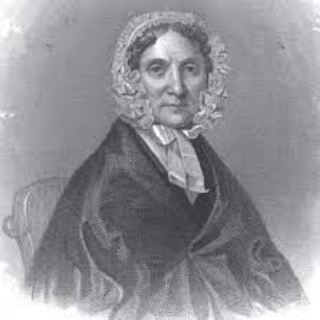 Godly people speak long after their deaths. This is no exception with Mary Winslow. The biography of this godly woman is heart-warming to read. It is filled with lessons for Christians today on how to walk with Christ even when things are hard in your life.
Sitting at Jesus’ Feet with Mary Winslow
At the heart of godliness is a living bond with the Lord Jesus. That bond evidences itself in “sitting at Jesus’ feet,” as Mary did (Luke 10:39). But what does that involve? A beautiful example of that is another Mary – Mary Winslow, a woman whose devotional writings continue to be printed today. Her writings breathe of tender, humble, and delightful communion with Christ.
The Emptiness of Entertainment
Mary was born on February 28, 1774 in Bermuda, a beautiful island in the middle of the North Atlantic Ocean. As an only child of well-to-do parents, she received a good education, but little religious instruction. When she was “nearly eighteen ... (merry), thoughtless, (and) full of life,” she married an army Lieutenant stationed in Bermuda, Thomas Winslow. A little later, when she attended a ball where she basked in the light of popularity, she afterwards sensed the emptiness of it all.
One question began to weigh on her: How can I be righteous before God? Her attempts to obey God’s law could not satisfy her conscience. Her spiritual distress led her to turn to the Scriptures and plead with God for mercy. She was also brought under an evangelical and experimental ministry, which pointed her to the Saviour of sinners.
As she bowed before Him in her need, the Lord spoke to her soul: “I am thy salvation.” This grace led to a fundamental change in her life. Her husband and others around her only had a formal religion and did not understand her heart experience. This even led her to question whether what she experienced was true, saving grace. But in her distress, the Lord reassured her of His grace.
Having been saved, she became concerned for the spiritual welfare of those around her. She sought to support an evangelical ministry in Bermuda, which had not been present earlier. She instituted family worship in her home, in spite of the initial resistance of her husband.
Great Trials In Life
Other changes also entered her home. Through bad investments, her husband lost much of his fortune. Since they had ten children, including many sons, they decided to move to America. She left ahead with her children. Shortly after she arrived in New York, her infant daughter became sick and died. Before she could even bury her daughter, the message came that her husband had died in England. She wrote that it was “the heaviest affliction I have ever met with.”
This period was not only marked by the grief of bereavement, but also “spiritual darkness and despondency.” Yet, she confessed, “the Lord, even in this, has not chastened me according to my backslidings.” Greater yet, the Lord returned with His comfort.
Life continued. As a poor widow, she had to raise her large family. She wrote, “I thought, ‘How can I, a helpless woman, care for, and train up, these children to manhood?’ I felt I should sink beneath the overwhelming conviction of my weakness and insufficiency.” In this distress, the Lord came with His comforting promise: “I will be a Father to thy fatherless children.” This promise was her pleading ground in the ensuing years, as she wrestled in prayer for her children’s salvation.
Some years later, she witnessed a time of revival, first personally, and then in her family and surrounding churches. After a time of darkness, she wrote, God “filled my heart with unspeakable joy.” God also converted the three sons who were still at home. She continued to pray for the salvation of her older children until they also came to a saving knowledge of Christ. Several sons became ministers.
Mary often struggled with poor health. Towards the end of her life, her health declined to the point where she was confined to her bed. She remained mentally clear and longed to be with her Lord. On October 3, 1854, her desire was fulfilled. Her faint, yet distinct last words were: “I see thee! I see thee! I see thee!”
Great Comfort At Jesus’ Feet
While her afflictions were greater than those of many others, her joys were also deeper than those of many of God’s people. She was often at the feet of the Lord Jesus. She described her conversion this way: “I was brought to the feet of Jesus.” She did not mean that she simply began a routine of devotional activities, but that God led her to Christ Himself, to bow before Him, receive of His grace, and experience communion with Him.
What that communion involved is best said in her own words. “I have just been favoured with a most precious interview with the King of kings,” she wrote. “He admitted me, even me, into His royal presence-chamber, and encouraged me to open my mouth wide, telling Him all that was in my heart; and you may be sure I did presume to make large demands upon his goodness ... My heart was dissolved into love and my eyes into tears. I wept that ever I could sin against such a God, grieve that blessed Spirit by whom I am sealed unto glory.”
From a sickbed, she wrote: “I have to deal most clearly with God in Jesus now. He is all in all to me ... My soul holds converse with him, and sweet I find it to lie as a helpless infant at his Feet; yea, passive in his loving hands, knowing no will but His. Holy and distinguished is the privilege of talking with Him as a man talketh with his friend, without restraint or concealment. What a mercy, thus to unburden the whole heart – the tried and weary, the tempted and sorrowful heart – tried by sin, tried by Satan, tried by those you love. What a mercy to have a loving bosom to flee to, one truly loving heart to confide in, which responds to the faintest breathing of the Spirit! Precious Jesus, how inexpressibly dear art Thou to me at this moment! Keep sensibly near to me.”
She did not always experience the same richness of communion, but she knew, “My choicest seat is at the foot of the Cross ... When I can but view His bleeding wounds, and obtain one glance by faith of His gracious countenance, it is worth a thousand worlds to me.” Is that your confession? You may not always sit at the foot of the Cross and sensibly experience His love and your unworthiness, but if you have ever sat at His feet, you will agree that there is no better place in the world.
What Can We Learn?
Mary Winslow’s life evidences the lessons learned at Jesus’ feet. The most basic lessons involve a deepening knowledge of her sin and Christ’s love. Often she wrote things like:
I feel my vileness, my unprofitableness, my woeful shortcomings, and am thankful if I can but only creep to the foot of the Cross, and there repose my weary soul, refreshed by one look at Jesus, who, I do trust, died for my sins.” “Never, never did sin appear so hateful, and my own nothingness so great, as yesterday at the table of the Lord ... but still my hope was in the Lord.” “I have never wept so much for sin as I have done lately ... But while I have thus been led of late to mourn so much for sin, I have never felt pardon so abundantly manifested. God be praised for a free-grace gospel!
As her life drew to a close, she said: “I shall enter heaven a poor sinner saved by grace. I seem to have done nothing for the Lord, who has done so much for me.” Her life shows that greater views of Christ and greater views of sin go together and lead to humility, love, and dependence on the Lord.
Another grace received at Jesus’ feet is the desire for holiness. Often she would write things like: “How beautiful does holiness appear to me! To be holy is to be happy. May the Lord sanctify us!” “My heart longs for full sanctification. I am wearied with sin; my soul loathes it, and I abhor myself in dust and in ashes.” “Oh, I want to be more conformable to his lovely image, to be sanctified, body, soul, and spirit, and to have every power of my mind under the constant influence of the Holy Spirit.” A view of Christ’s holiness and beauty fuelled the desire to be like Him.
A desire for holiness shows itself in her heavenly-mindedness. Often she exhorted to meditate on the glory of heaven, expressed longings to walk as a pilgrim, and one day “to see Jesus, to bask in the full sunshine of His glory, and to sit forever at His feet.” Her son, Octavius, wrote: “her religion was eminently practical ... her life was singularly useful, because her mind was transcendently heavenly.” She exhorted, “My dear children, live for eternity; this world is not worth living for.”
While she longed to be with Christ, she also had Paul’s desire to be of use on earth. She showed compassion to the poor, sick, lonely, and needy. She visited, helped, and spoke to them. Her main burden was the salvation of loved ones and acquaintances. She exhorted others: “Let us who believe, pray, and exhort, and employ every opportunity to arouse, to instruct, and win all to Christ, who has life, yea, eternal life, to give to all who seek it sincerely and earnestly.” Even in her dying days she wrote: “my time now is short; I would fain be useful in encouraging others to come to Thee, thou Fountain.”
Mary Winslow’s God Lives
Mary Winslow’s words and example give us beautiful instruction. To learn more from her, read her book of letters, entitled Heaven Opened: The Correspondence of Mary Winslow, published by Reformation Heritage Books. You can read it as a daily devotional. Another excellent source is Octavius Winslow’s Life in Jesus: A Memoir of Mrs. Mary Winslow, Arranged from Her Correspondence, Diary, and Thoughts (Morgan, PA: Soli Deo Gloria, 1995). Now that Reformation Heritage Books has acquired Soli Deo Gloria Publications we hope they will soon republish this classic work.
There is one warning: her life may expose the poverty of your own spiritual life or the complete absence of communion with Christ. Christian biography has a way of doing that. Or is that warning actually a blessing? God’s purpose is not to put Mary Winslow on a pedestal and make us sink down in discouragement before her. Instead, it is to deliver us from spiritual complacency and dead presumption and stir up a longing to receive the same grace that enables us to sit at Jesus’ feet. Mary Winslow’s confession that she was a sinner was true. Everything worth learning from her is God’s grace in her. Her God still lives to give the same grace.
When we see someone with something beautiful, we might ask, “How did you get that?” When you see godliness in another, do you ask similar questions? If Mary Winslow had been asked how she came to sit at the Lord Jesus’ feet, one word would have sounded: “grace.” By sovereign grace she was “brought as a poor sinner to His feet.” At the same time, she knew the Lord uses means to lead into communion with Him and restore it again, she exclaimed, “How needful are the means of grace, if we wish to thrive.”
God’s Word
God’s Word is so important. When the Lord first uncovered Mary Winslow’s need of Him, she turned to His Word for relief. That Word then became increasingly precious to her. Though she complained of times of coldness, her private journal records how God blessed her searching of scripture. She also once wrote “while reading in the family my heart was drawn out by faith to Christ, and could not but speak of Him to my children.” That is why she counseled, “Be much searching scriptures.”
Though she occasionally wrote that what others called an excellent sermon was no blessing to her, her delight was to hear sermons. She could write, “next to communion with God, it is my greatest comfort and joy to wait upon the preaching of the word.” Preaching filled with the richness of Christ and the indispensability of the Holy spirit’s work fed her soul.
She also loved to read books expounding the truths of scripture. Some of her favourite authors are still in print today: Thomas Boston, John Newton, Samuel Rutherford, and others. Her advice is timely: “Keep to the old divines. Modern divinity is very shallow – has very little of Christ and experience. May God give you a spiritual appetite!”
Mary Winslow points us to the Word as the means God uses to work and feed godliness. Her counsel is so basic, but do we practice it? Do we not simply read, but search the scriptures, as one searching for treasure? Do we come to church with the prayer to hear His voice? Do we read edifying books? Do we meditate on what we read? Through His Word, Christ leads to His feet to teach in a way that changes hearts and lives.
Prayer
Prayer is the other essential activity at the Lord Jesus’ feet. Begin your day with prayer. Mary Winslow confessed, “My first prayer in the morning when I awake is addressed to the Holy spirit, that He would take possession of my thoughts, my imagination, my heart, my words, throughout the day, directing, controlling, and sanctifying them all.” she warns, “Never, never omit secret prayer ... Remember, the first departures from Christ begin at the closet, or rather in the heart; and then private prayer is either hurried over, becomes a mere form, or is entirely neglected.” Times in which we set everything aside to be alone in private prayer are essential. The devil always tries to keep us from our knees with work or entertainment only because he knows the importance of prayer. She also knew its importance. She exclaimed, “Oh, the mighty power of prayer! Even the best of Christians know but little what it really is.”
She exhorts, “You cannot come too often. Bring to Him your little cares as well as your great ones. If anything is a trouble to you, however small it may be, you are warranted, nay, commanded, to take it to Him.” Prayer is such a privilege: “To have Him to go to – to lay before Him all our wants, to express our fears, to plead His promises, and to expect that because He has promised He will fulfil – is worth more than all the world can give.”
Sitting at Jesus’ feet is not only for devotional times, but is a way of life. She writes that believers are to press forward in life, “looking continually to Jesus, trusting not to our own strength, but waiting in humble dependence upon Him for all our sufficiency to carry us on, and to enable us to hold out unto the end ... Oh that we may be found like his beloved handmaiden of old, sitting at His feet!” She counsels, “You need not wait until you can retire (for the night) and fall upon your knees; you can do it in a moment. The heart lifted up in silent prayer is sufficient.” Isn’t this the echo of Scripture’s call to “pray without ceasing”?
Conversation
God is also pleased to bless spiritual conversation. Often she would warn: “Beware of trifling conversation; it grieves the Spirit,” and “Avoid light, trifling professors of religion; their influence will be as poison to your souls.” More than once, after an evening filled with wearying levity and trifling conversation, she would be humbled before God.
Conversation on religious topics is not enough. “When Christians meet together, do they not too much talk about religion, preachers, and sermons? I cannot but think, that if they communed less about religion, and more of Jesus, it would give a higher tone of spirituality to their conversation, and prove more refreshing to the soul. He would then oftener draw near, and make Himself one in their midst, and talk with them by the way.” Speaking of the triune God, the Saviour, His Word, promises, discipline, and leadings may stir up desire, trust and love in those who speak and listen. What fills our conversations? That which fills the heart spills out of the mouth. Conversely, a word about Christ may be such a blessing for an empty heart. The Lord exhorts, “Wherefore comfort yourselves together, and edify one another, even as also ye do” (1 Thess. 5:11).
Grace
Her practical counsels about the means of grace is not a newly invented, five-step plan to godliness. They are as old as Scripture itself. That gives them value. The main means of thriving which God is pleased to bless are the continual seeking of Him and the ongoing and prayerful hearing of His Word.
The encouragement is that Christ Himself uses these means to bring us to His feet by His Spirit. Her letters always traced sitting at Jesus’ feet to God’s grace. That is why she wrote to an unconverted friend: “May God open your eyes to see your need of a Savior, and lead you to the feet of Jesus, the sinner’s Friend.” To a fellow-believer, she wrote: “Oh that we might both be led to sit more constantly at the feet of Jesus, looking up, like little children, into His face to catch His smile and watch His eye – to see what He would have us to do, seeking nowhere else for comfort and guidance but in Him!”
Knowing God lives to draw sinners to Christ’s feet gives hope. Knowing He uses His means of grace to do so encourages to be diligent in their use. Knowing He delights to bless those who use His means of grace enables us to plead with Him to bless them in spite of all the sin that stains our use of them.
Such a life of dependence is truly blessed. Listen to her words:
What a poor wretched exchange professors make when they barter the blessings of a close walk with God for the beggarly enjoyments of an empty, disappointing world! Ten minutes at the feet of Jesus, in a full view of His love, while confessing sins and shortcomings – sins we know already pardoned – yet sorrowing that we should ever grieve One who so tenderly loves us, is a happiness I would not exchange for millions of worlds.
Godly people speak long after their deaths. This is no exception with Mary Winslow. The biography of this godly woman is heart-warming to read. It is filled with lessons for Christians today on how to walk with Christ even when things are hard in your life.
Sitting at Jesus’ Feet with Mary Winslow
At the heart of godliness is a living bond with the Lord Jesus. That bond evidences itself in “sitting at Jesus’ feet,” as Mary did (Luke 10:39). But what does that involve? A beautiful example of that is another Mary – Mary Winslow, a woman whose devotional writings continue to be printed today. Her writings breathe of tender, humble, and delightful communion with Christ.
The Emptiness of Entertainment
Mary was born on February 28, 1774 in Bermuda, a beautiful island in the middle of the North Atlantic Ocean. As an only child of well-to-do parents, she received a good education, but little religious instruction. When she was “nearly eighteen ... (merry), thoughtless, (and) full of life,” she married an army Lieutenant stationed in Bermuda, Thomas Winslow. A little later, when she attended a ball where she basked in the light of popularity, she afterwards sensed the emptiness of it all.
One question began to weigh on her: How can I be righteous before God? Her attempts to obey God’s law could not satisfy her conscience. Her spiritual distress led her to turn to the Scriptures and plead with God for mercy. She was also brought under an evangelical and experimental ministry, which pointed her to the Saviour of sinners.
As she bowed before Him in her need, the Lord spoke to her soul: “I am thy salvation.” This grace led to a fundamental change in her life. Her husband and others around her only had a formal religion and did not understand her heart experience. This even led her to question whether what she experienced was true, saving grace. But in her distress, the Lord reassured her of His grace.
Having been saved, she became concerned for the spiritual welfare of those around her. She sought to support an evangelical ministry in Bermuda, which had not been present earlier. She instituted family worship in her home, in spite of the initial resistance of her husband.
Great Trials In Life
Other changes also entered her home. Through bad investments, her husband lost much of his fortune. Since they had ten children, including many sons, they decided to move to America. She left ahead with her children. Shortly after she arrived in New York, her infant daughter became sick and died. Before she could even bury her daughter, the message came that her husband had died in England. She wrote that it was “the heaviest affliction I have ever met with.”
This period was not only marked by the grief of bereavement, but also “spiritual darkness and despondency.” Yet, she confessed, “the Lord, even in this, has not chastened me according to my backslidings.” Greater yet, the Lord returned with His comfort.
Life continued. As a poor widow, she had to raise her large family. She wrote, “I thought, ‘How can I, a helpless woman, care for, and train up, these children to manhood?’ I felt I should sink beneath the overwhelming conviction of my weakness and insufficiency.” In this distress, the Lord came with His comforting promise: “I will be a Father to thy fatherless children.” This promise was her pleading ground in the ensuing years, as she wrestled in prayer for her children’s salvation.
Some years later, she witnessed a time of revival, first personally, and then in her family and surrounding churches. After a time of darkness, she wrote, God “filled my heart with unspeakable joy.” God also converted the three sons who were still at home. She continued to pray for the salvation of her older children until they also came to a saving knowledge of Christ. Several sons became ministers.
Mary often struggled with poor health. Towards the end of her life, her health declined to the point where she was confined to her bed. She remained mentally clear and longed to be with her Lord. On October 3, 1854, her desire was fulfilled. Her faint, yet distinct last words were: “I see thee! I see thee! I see thee!”
Great Comfort At Jesus’ Feet
While her afflictions were greater than those of many others, her joys were also deeper than those of many of God’s people. She was often at the feet of the Lord Jesus. She described her conversion this way: “I was brought to the feet of Jesus.” She did not mean that she simply began a routine of devotional activities, but that God led her to Christ Himself, to bow before Him, receive of His grace, and experience communion with Him.
What that communion involved is best said in her own words. “I have just been favoured with a most precious interview with the King of kings,” she wrote. “He admitted me, even me, into His royal presence-chamber, and encouraged me to open my mouth wide, telling Him all that was in my heart; and you may be sure I did presume to make large demands upon his goodness ... My heart was dissolved into love and my eyes into tears. I wept that ever I could sin against such a God, grieve that blessed Spirit by whom I am sealed unto glory.”
From a sickbed, she wrote: “I have to deal most clearly with God in Jesus now. He is all in all to me ... My soul holds converse with him, and sweet I find it to lie as a helpless infant at his Feet; yea, passive in his loving hands, knowing no will but His. Holy and distinguished is the privilege of talking with Him as a man talketh with his friend, without restraint or concealment. What a mercy, thus to unburden the whole heart – the tried and weary, the tempted and sorrowful heart – tried by sin, tried by Satan, tried by those you love. What a mercy to have a loving bosom to flee to, one truly loving heart to confide in, which responds to the faintest breathing of the Spirit! Precious Jesus, how inexpressibly dear art Thou to me at this moment! Keep sensibly near to me.”
She did not always experience the same richness of communion, but she knew, “My choicest seat is at the foot of the Cross ... When I can but view His bleeding wounds, and obtain one glance by faith of His gracious countenance, it is worth a thousand worlds to me.” Is that your confession? You may not always sit at the foot of the Cross and sensibly experience His love and your unworthiness, but if you have ever sat at His feet, you will agree that there is no better place in the world.
What Can We Learn?
Mary Winslow’s life evidences the lessons learned at Jesus’ feet. The most basic lessons involve a deepening knowledge of her sin and Christ’s love. Often she wrote things like:
I feel my vileness, my unprofitableness, my woeful shortcomings, and am thankful if I can but only creep to the foot of the Cross, and there repose my weary soul, refreshed by one look at Jesus, who, I do trust, died for my sins.” “Never, never did sin appear so hateful, and my own nothingness so great, as yesterday at the table of the Lord ... but still my hope was in the Lord.” “I have never wept so much for sin as I have done lately ... But while I have thus been led of late to mourn so much for sin, I have never felt pardon so abundantly manifested. God be praised for a free-grace gospel!
As her life drew to a close, she said: “I shall enter heaven a poor sinner saved by grace. I seem to have done nothing for the Lord, who has done so much for me.” Her life shows that greater views of Christ and greater views of sin go together and lead to humility, love, and dependence on the Lord.
Another grace received at Jesus’ feet is the desire for holiness. Often she would write things like: “How beautiful does holiness appear to me! To be holy is to be happy. May the Lord sanctify us!” “My heart longs for full sanctification. I am wearied with sin; my soul loathes it, and I abhor myself in dust and in ashes.” “Oh, I want to be more conformable to his lovely image, to be sanctified, body, soul, and spirit, and to have every power of my mind under the constant influence of the Holy Spirit.” A view of Christ’s holiness and beauty fuelled the desire to be like Him.
A desire for holiness shows itself in her heavenly-mindedness. Often she exhorted to meditate on the glory of heaven, expressed longings to walk as a pilgrim, and one day “to see Jesus, to bask in the full sunshine of His glory, and to sit forever at His feet.” Her son, Octavius, wrote: “her religion was eminently practical ... her life was singularly useful, because her mind was transcendently heavenly.” She exhorted, “My dear children, live for eternity; this world is not worth living for.”
While she longed to be with Christ, she also had Paul’s desire to be of use on earth. She showed compassion to the poor, sick, lonely, and needy. She visited, helped, and spoke to them. Her main burden was the salvation of loved ones and acquaintances. She exhorted others: “Let us who believe, pray, and exhort, and employ every opportunity to arouse, to instruct, and win all to Christ, who has life, yea, eternal life, to give to all who seek it sincerely and earnestly.” Even in her dying days she wrote: “my time now is short; I would fain be useful in encouraging others to come to Thee, thou Fountain.”
Mary Winslow’s God Lives
Mary Winslow’s words and example give us beautiful instruction. To learn more from her, read her book of letters, entitled Heaven Opened: The Correspondence of Mary Winslow, published by Reformation Heritage Books. You can read it as a daily devotional. Another excellent source is Octavius Winslow’s Life in Jesus: A Memoir of Mrs. Mary Winslow, Arranged from Her Correspondence, Diary, and Thoughts (Morgan, PA: Soli Deo Gloria, 1995). Now that Reformation Heritage Books has acquired Soli Deo Gloria Publications we hope they will soon republish this classic work.
There is one warning: her life may expose the poverty of your own spiritual life or the complete absence of communion with Christ. Christian biography has a way of doing that. Or is that warning actually a blessing? God’s purpose is not to put Mary Winslow on a pedestal and make us sink down in discouragement before her. Instead, it is to deliver us from spiritual complacency and dead presumption and stir up a longing to receive the same grace that enables us to sit at Jesus’ feet. Mary Winslow’s confession that she was a sinner was true. Everything worth learning from her is God’s grace in her. Her God still lives to give the same grace.
When we see someone with something beautiful, we might ask, “How did you get that?” When you see godliness in another, do you ask similar questions? If Mary Winslow had been asked how she came to sit at the Lord Jesus’ feet, one word would have sounded: “grace.” By sovereign grace she was “brought as a poor sinner to His feet.” At the same time, she knew the Lord uses means to lead into communion with Him and restore it again, she exclaimed, “How needful are the means of grace, if we wish to thrive.”
God’s Word
God’s Word is so important. When the Lord first uncovered Mary Winslow’s need of Him, she turned to His Word for relief. That Word then became increasingly precious to her. Though she complained of times of coldness, her private journal records how God blessed her searching of scripture. She also once wrote “while reading in the family my heart was drawn out by faith to Christ, and could not but speak of Him to my children.” That is why she counseled, “Be much searching scriptures.”
Though she occasionally wrote that what others called an excellent sermon was no blessing to her, her delight was to hear sermons. She could write, “next to communion with God, it is my greatest comfort and joy to wait upon the preaching of the word.” Preaching filled with the richness of Christ and the indispensability of the Holy spirit’s work fed her soul.
She also loved to read books expounding the truths of scripture. Some of her favourite authors are still in print today: Thomas Boston, John Newton, Samuel Rutherford, and others. Her advice is timely: “Keep to the old divines. Modern divinity is very shallow – has very little of Christ and experience. May God give you a spiritual appetite!”
Mary Winslow points us to the Word as the means God uses to work and feed godliness. Her counsel is so basic, but do we practice it? Do we not simply read, but search the scriptures, as one searching for treasure? Do we come to church with the prayer to hear His voice? Do we read edifying books? Do we meditate on what we read? Through His Word, Christ leads to His feet to teach in a way that changes hearts and lives.
Prayer
Prayer is the other essential activity at the Lord Jesus’ feet. Begin your day with prayer. Mary Winslow confessed, “My first prayer in the morning when I awake is addressed to the Holy spirit, that He would take possession of my thoughts, my imagination, my heart, my words, throughout the day, directing, controlling, and sanctifying them all.” she warns, “Never, never omit secret prayer ... Remember, the first departures from Christ begin at the closet, or rather in the heart; and then private prayer is either hurried over, becomes a mere form, or is entirely neglected.” Times in which we set everything aside to be alone in private prayer are essential. The devil always tries to keep us from our knees with work or entertainment only because he knows the importance of prayer. She also knew its importance. She exclaimed, “Oh, the mighty power of prayer! Even the best of Christians know but little what it really is.”
She exhorts, “You cannot come too often. Bring to Him your little cares as well as your great ones. If anything is a trouble to you, however small it may be, you are warranted, nay, commanded, to take it to Him.” Prayer is such a privilege: “To have Him to go to – to lay before Him all our wants, to express our fears, to plead His promises, and to expect that because He has promised He will fulfil – is worth more than all the world can give.”
Sitting at Jesus’ feet is not only for devotional times, but is a way of life. She writes that believers are to press forward in life, “looking continually to Jesus, trusting not to our own strength, but waiting in humble dependence upon Him for all our sufficiency to carry us on, and to enable us to hold out unto the end ... Oh that we may be found like his beloved handmaiden of old, sitting at His feet!” She counsels, “You need not wait until you can retire (for the night) and fall upon your knees; you can do it in a moment. The heart lifted up in silent prayer is sufficient.” Isn’t this the echo of Scripture’s call to “pray without ceasing”?
Conversation
God is also pleased to bless spiritual conversation. Often she would warn: “Beware of trifling conversation; it grieves the Spirit,” and “Avoid light, trifling professors of religion; their influence will be as poison to your souls.” More than once, after an evening filled with wearying levity and trifling conversation, she would be humbled before God.
Conversation on religious topics is not enough. “When Christians meet together, do they not too much talk about religion, preachers, and sermons? I cannot but think, that if they communed less about religion, and more of Jesus, it would give a higher tone of spirituality to their conversation, and prove more refreshing to the soul. He would then oftener draw near, and make Himself one in their midst, and talk with them by the way.” Speaking of the triune God, the Saviour, His Word, promises, discipline, and leadings may stir up desire, trust and love in those who speak and listen. What fills our conversations? That which fills the heart spills out of the mouth. Conversely, a word about Christ may be such a blessing for an empty heart. The Lord exhorts, “Wherefore comfort yourselves together, and edify one another, even as also ye do” (1 Thess. 5:11).
Grace
Her practical counsels about the means of grace is not a newly invented, five-step plan to godliness. They are as old as Scripture itself. That gives them value. The main means of thriving which God is pleased to bless are the continual seeking of Him and the ongoing and prayerful hearing of His Word.
The encouragement is that Christ Himself uses these means to bring us to His feet by His Spirit. Her letters always traced sitting at Jesus’ feet to God’s grace. That is why she wrote to an unconverted friend: “May God open your eyes to see your need of a Savior, and lead you to the feet of Jesus, the sinner’s Friend.” To a fellow-believer, she wrote: “Oh that we might both be led to sit more constantly at the feet of Jesus, looking up, like little children, into His face to catch His smile and watch His eye – to see what He would have us to do, seeking nowhere else for comfort and guidance but in Him!”
Knowing God lives to draw sinners to Christ’s feet gives hope. Knowing He uses His means of grace to do so encourages to be diligent in their use. Knowing He delights to bless those who use His means of grace enables us to plead with Him to bless them in spite of all the sin that stains our use of them.
Such a life of dependence is truly blessed. Listen to her words:
What a poor wretched exchange professors make when they barter the blessings of a close walk with God for the beggarly enjoyments of an empty, disappointing world! Ten minutes at the feet of Jesus, in a full view of His love, while confessing sins and shortcomings – sins we know already pardoned – yet sorrowing that we should ever grieve One who so tenderly loves us, is a happiness I would not exchange for millions of worlds.