
Others like the ragamuffin gospel Features >>
The Logic Of Penal Substitution

Favor - The Road To Success
The Promises Of God

Breaking The Curses Of Life

Gods Greatest Gifts - His Word, His Name, His Blood

God Will Use This For Good
Christian Baptsm And Kingdom Consecration

The Applause Of Heaven
In My Place Condemned He Stood

Love - The Way To Victory
About the Book
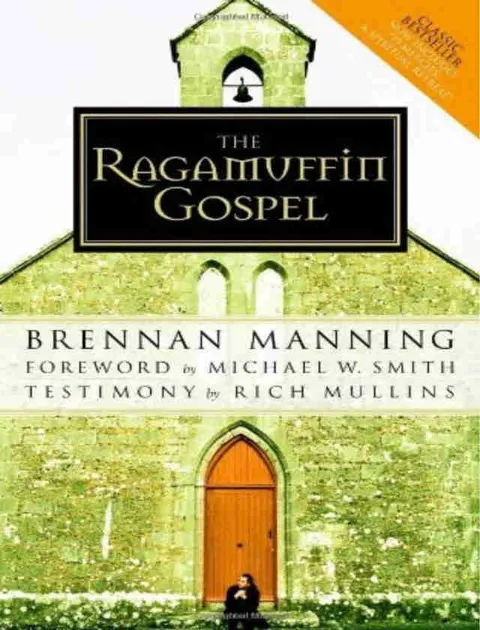
"The Ragamuffin Gospel" by Brennan Manning explores the grace of God and the unconditional love that He offers to all individuals, regardless of their past mistakes or shortcomings. The book emphasizes the importance of embracing one's true identity as a beloved child of God and living in freedom from the burden of perfectionism and legalism. Manning encourages readers to accept God's grace and love with humility and gratitude, leading to a deeper relationship with Him.
Helen Roseveare
“If Christ be God and died for me, then no sacrifice can be too great for me to make for him.” That was her mission’s motto. In 1953, Helen sailed for the Congo with hopes of serve Christ as a medical missionary with WEC (Worldwide Evangelization Crusade). For so many years she’d dreamed of being a missionary. As a young girl, she’d hear stories of her aunt and uncle’s experiences on the mission field, and now she was eager to have her own stories to tell.
In 1925, Helen Roseveare was born in England. Because education was a high priority for her father, Helen was sent to a prestigious all girls school when she was 12. After that, she went to Cambridge. It was during her time in college that she became a Christian, truly understanding the gospel for the first time. She left her Anglo-Catholic background and became an evangelical. Her focus was to finish her medical degree and prepare herself for the mission field.
After she became a doctor, Helen sailed to minister in the Congo. She was highly intelligent and efficient, but her role as a woman created struggles with her fellow missionaries and nationals. In that time period, single missionaries were seen as second-class citizens of the mission station. In the Congo, the medical needs were overwhelming. She couldn’t just stand by and watch all the suffering around her. She was determined to make a difference. She dreamed of establishing a training center where nurses would be taught the Bible and basic medicine and then sent back to their villages to handle routine cases, teach preventive medicine, and serve as lay evangelists. She didn’t have approval from her colleagues, who believed that medical training for nationals was not a valid use of time, evangelism and discipleship were more important.
Despite the conflict with them, after only two years after arriving in the Congo, she had build a combination hospital/ training center in Ibambi, and her first four students had passed their government medical exams. Her colleagues weren’t as excited about her progress as she was. They felt that she was wasting time, so they decided that she would better serve the Congo by relocating in Nebobongo, living in an old leprosy camp that had become overgrown by the jungle. Helen argued that she must stay and continue the nursing training in Ibambi, but they insisted that she move. It was a major setback, but she went. Starting from scratch again, she built another hospital there and continued training African nurses. Still, she was strong-willed and seemed to be a threat to many of her male colleagues. In 1957, they decided to relocate John Harris, a young British doctor, and his wife to Nebobongo to make him Helen’s superior. Dr. Harris even took charge of leading the Bible class that she’d taught. She was devastated. She’d been her own boss for too long, and although she tried to let go of control, she just couldn’t. Everything that had been hers was now his. This resulted in tension between them, of course. Her independence was her greatest strength, but also a definite weakness. She did not know how to submit to imperfect leadership. In 1958, after over a year of struggling with who was in control in Nebobongo, Helen left for England for a furlough. She was disillusioned with missionary work and felt like she might not ever go back to the Congo.
Back in England, she really struggled with why she had all these issues between herself and the male leaders in the Congo. She began to convince herself that her problem was her singleness. What she needed was a doctor-husband to work with her and be on her side during the power struggles! She didn’t think that was too much to ask. So, she asked God for a husband, and told Him that she wouldn’t go back as a missionary until she was married. She met a young doctor and decided he would be the one. (She wasn’t very patient in waiting on the Lord’s timing.) She bought new clothes, permed her hair, and resigned from the mission, all to try and win his love. He did care for her, but not enough to marry her. Helen was heartbroken, mostly because she’d wasted so much time and money trying to force her plan into reality - without God.
Still single, Helen returned to the mission and left for Congo in 1960. It was a tense time for that country. They had been seeking independence for a long time, so a huge civil war was on the verge of beginning. Many missionaries left because the risk was so high. Helen had no plans of going home. She believed that God had truly called her back to Congo and that He would protect her if she stayed. She was joined by a few other single women, who made it difficult for the men, they didn’t want to look like sissies. She was given charge of the medical base in Nebobongo because John Harris and his wife left on furlough. She had so many opportunities to minister in the midst of the turmoil. She was sure that God had her right where He wanted her to be. She continued to learn to see God in the details of her life, to trust him more fully. She had been coming closer to total trust in God all of her life, between bouts of depression, sometimes feeling that she was not really a Christian because she was capable of spells of anger and bitterness and other sins. “I was unable to reach the standard I myself had set, let alone God’s. Try as I would, I met only frustration in this longing to achieve, to be worthy.” She came to recognize that hatred of sin is a gift of the Holy Spirit.
Rebels were gaining strength, and there were reports of missionaries being attacked. Helen endured a burglary and an attempted poisoning, but always in her mind the situation was improving. She felt that she had to stay, because there was so much need and so many people depending on her. On August 15, the rebels took control of Nebobongo, and Helen was in captivity for the next 5 months. On the night of October 29, Helen was overpowered by rebel soldiers in her little bungalow. She tried to escape, but they found her and dragged her to her feet, struck her over the head and shoulders, flung her to the ground, kicked her, struck her over and over again. She was pushed back into her house and raped brutally without mercy. Helen suffered more sexual brutality before her release. God used this in her life to minister to other single women missionaries who feared that they’d lost their purity due to a rape and thus their salvation. Helen knew that her relationship with God had not been damaged. She had not failed God in any way because of the rapes. Finally, on December 31, 1964 she was rescued. Helen had a sense of joy and relief, but also a sense of deep sorrow as she heard of many of her friends’ martyrdom.
Helen returned to Africa for the third time in March of 1966. She served for 7 more years, but it was full of turmoil and disappointment. The Congo had changed since the war. There was a new spirit of independence and nationalism. They no longer respected the doctor who’d sacrificed so much for them. Helen left Africa in 1973 with a broken spirit. Her 20 years of service in Africa ended in defeat and discouragement.
When she got home, she went through a very, very lonely period in her life. She turned to God. He was all she had. Instead of bitterness there was a new spirit of humility and a new appreciation for what Jesus had done for her on the cross. God was molding her for her next ministry. She became an internationally acclaimed spokes-woman for Christian missions. Her candid honesty was refreshing in a profession known as one of super sainthood. Helen mobilized people by showing them that God used imperfect people with real struggles to be his ambassadors to the unreached world.
By Rebecca HIckman
SOURCES
Roseveare, Helen: Give Me This Mountain (1966)
Roseveare, Helen: He Gave Us a Valley (1976)
Tucker, Ruth A.: From Jerusalem to Irian Jaya
god's estimate of the lost
At no point is faith more tested than in receiving the divine estimate of the present estate and destiny of all who are not saved; yet the record stands on the sacred page and is as much a part of God's revelation of truth as is the more winsome disclosure concerning the saved and heaven. In vain does man struggle to deliver himself from the dread and shadow of the former while still attempting to retain the comfort and light of the latter. Even a blinded, unregenerate mind must be convinced of the unreasonableness of selecting only desirable elements out of the unitive whole of divine revelation. If man can dispose of the dark picture which describes the estate of the lost, he has, by that process, surrendered all claim to authority and all ground of assurance in those Scriptures which describe the estate of the saved. Man is prone to disregard the plain boundary lines of distinction between the saved and the unsaved as indicated in the Bible. He is naturally occupied with the temporal things that are seen, and is by nature blind to the eternal things (1 Cor. 2:14; 2 Cor. 4:3-4; John 3:3) which are not seen. He is inclined to conceive of salvation as resulting from a manner of daily life, both moral and religious, rather than a state wrought by the creative power of God. An appeal for a reformed manner of life is to him "practical" and "reasonable," and he sees little value in the Biblical appeal for personal faith in the saving power and grace of God. A saved person, by his new life from God, may live on a higher plane, and certainly will; but to attempt to live on a higher plain will not, and cannot, impart the new life, or save a lost soul. The unsaved, according to the Bible, include all who have not been accepted by God through a personal trust in the crucified and risen Saviour. All moral and religious people are not, therefore, according to the divine conditions, to be counted among the saved. Paul prayed for Israel "that they might be saved" (Rom. 10:1,2), and those for whom he prayed, it should be remembered, were the very ones of whom he wrote in this same passage that they had "a zeal for God" and went about "to establish their own righteousness." We know, also, that they fasted, and prayed, and gave a tithe of all they possessed; yet, in spite of all this, the faithful, inspired Apostle prays that they might be saved. To be saved was evidently, in the Apostle's mind, more than the diligent effort along the lines of moral and religious practices. The Bible sharply distinguishes between the saved and the unsaved, and in its classification, of necessity, wholly ignores what may seem reasonable or unreasonable in the sphere of human life. It bases its distinctions on the eternal necessities and provisions within the larger sphere of the kingdom of God. Here the important issues of conduct and service are not first to be considered. The deeper reality of an entire new nature is rather the primary objective, and no good works can take its place. It is as terrible for a church member, or minister, to be lost as for any one else. Certainly there is nothing in the fact of church membership, ordinances, or the preaching profession that can take the place of the Biblical requirement for salvation, or mitigate the final doom that is assured to those who reject the Saviour. The five virgins who possessed every outward appearance and profession were, nevertheless, without the oil which is the symbol of the divine life. In spite of all their religious externals they heard it said, "I know you not." "Not every one that saith unto me, Lord, Lord, shall enter into the kingdom of heaven; but he that doeth the will of my Father which is in heaven. Many will say to me in that day, Lord, Lord, have we not prophesied in thy name? and in thy name have cast out devils? and in thy name done many wonderful works? And then will I profess unto them, I never knew you: depart from me, ye that work iniquity" (Matt. 7:21-23). "Jesus answered and said unto them, This is the work of God, that ye believe on him whom he hath sent" (John 6:29). The estate of the unsaved is described in the Bible by positive terms: "For the Son of man is come to seek and to save that which was lost" (Luke 19:10). "For God so loved the world, that he gave his only begotten Son, that whosoever believeth in him should not perish, but have everlasting life"; "He that believeth on him is not condemned: but he that believeth not is condemned already, because he hath not believed in the name of the only begotten Son of God. And this is the condemnation, that light is come into the world, and men loved darkness rather than light, because their deeds were evil. For every one that doeth evil hateth the light, neither cometh to the light, lest his deeds should be reproved" (John 3:16; John 18-20). "He that believeth on the Son hath everlasting life: and he that believeth not the Son shall not see life; but the wrath of God abideth on him" (John 3:36). "Ye are of your father the devil, and the lusts of your father ye will do. He was a murderer from the beginning, and abode not in the truth, because there is no truth in him. When he speaketh a lie, he speaketh of his own: for he is a liar, and the father of it" (John 8:44). "Wherein in time past ye walked according to the course of this world, according to the prince of the power of the air, the spirit that now worketh in the children of disobedience" (Eph. 2:2). "For from within, out of the heart of men, proceed evil thoughts, adulteries, fornications, murders, Thefts, covetousness, wickedness, deceit, lasciviousness, an evil eye, blasphemy, pride, foolishness: All these evil things come from within, and defile the man" (Mk. 7:21-23). In Eph. 2:1-2 the contrast between the saved and the unsaved is first drawn at the point of possessing or not possessing the divine life: "And you hath he quickened, who were dead in trespasses and sins; Wherein in time past ye walked according to the course of this world, according to the prince of the power of the air, the spirit that now worketh in the children of disobedience." This death is not physical, for the dead ones are said to be walking according to the course of this world, the aspirations of which walk are centered in the things of the world system. They are also said to be walking "according to the prince of the power of the air [Satan], the spirit that now worketh in [energizeth] the children of disobedience." This classification, "the children of disobedience," includes all who have not been "made alive" by the power of God. Disobedience here is a state of being and is federal rather than personal. "By one man's disobedience [Adam] many were made sinners." So, also, "by the obedience of one [Christ] shall many be made righteous." Thus the acceptableness of the saved one is also a state and is federal rather than personal. He being in Christ is a child of obedience; the unsaved one being in Adam is a child of disobedience. In Adam disobedient and lost; in Christ obedient, righteous and acceptable to God (Rom. 5:19; Eph. 1:6). He "became obedient unto death, even the death of the cross." Before the infinite holiness of God no person, saved or unsaved, can rightfully claim, within his own merit, to be obedient and righteous in the sight of God; yet the weakest person who stands in Christ is, by virtue of that position, a child of obedience in the sight of God. In all the children of disobedience, regardless of professions or conduct, Satan is here said to be the energizing power. The energy of this mighty being may inspire refinement, education, culture, and the externals of religion, for it is not against these external virtues that Satan is opposed. His enmity is intelligently directed against the saving grace of God, which is a widely differing issue from that which the problems of personal conduct present. Satan is said to be energizing the unsaved within all the spheres of their present activity. In like manner, the saved are said to be energized by God: "For it is God which worketh in you both to will and to do of his good pleasure" (Phil. 2:13). The testimony of these two passages is to the effect that there is now no such thing as an independent human life. Men are either energized by God or by Satan, and accordingly as they are saved or unsaved. The estate of the unsaved is revealed again in Col. 1:13: "Who hath delivered us from the power of darkness, and hath translated us into the kingdom of his dear Son." Until this divine transformation is wrought, man must be considered as yet in the powers of darkness. This revelation is given in other passages: "Jesus answered and said unto him, Verily, verily, I say unto thee, Except a man be born again, he cannot see the kingdom of God" (John 3:3). "But the natural man receiveth not the things of the Spirit of God: for they are foolishness unto him: neither can he know them, because they are spiritually discerned" (1 Cor. 2:14). "But if our gospel be hid, it is hid to them that are lost: In whom the god of this world hath blinded the minds of them which believe not, lest the light of the glorious gospel of Christ, who is the image of God, should shine unto them" (2 Cor. 4:3-4). "We know that we are of God, and the whole world lieth in wickedness" (1 John 5:19). "That at that time ye were without Christ, being aliens from the commonwealth of Israel, and strangers from the covenants of promise, having no hope, and without God in the world" (Eph. 2:12). "Being filled with all unrighteousness, fornication, wickedness, covetousness, maliciousness; full of envy, murder, debate, deceit, malignity; whisperers, Backbiters, haters of God, despiteful, proud, boasters, inventors of evil things, disobedient to parents, Without understanding, covenant breakers, without natural affection, implacable, unmerciful: Who knowing the judgment of God, that they which commit such things are worthy of death, not only do the same, but have pleasure in them that do them" (Rom. 1:29-32). "As it is written, There is none righteous, no, not one: There is none that understandeth, there is none that seeketh after God. They are all gone out of the way, they are together become unprofitable; there is none that doeth good, no, not one. Their throat is an open sepulchre; with their tongues they have used deceit; the poison of asps is under their lips: Whose mouth is full of cursing and bitterness: Their feet are swift to shed blood: Destruction and misery are in their ways: And the way of peace have they not known: There is no fear of God before their eyes" (Rom. 3:10-18). "Now the works of the flesh are manifest, which are these; Adultery, fornication, uncleanness, lasciviousness, Idolatry, witchcraft, hatred, variance, emulations, wrath, strife, seditions, heresies, Envyings, murders, drunkenness, revellings, and such like..." (Gal. 5:19-21). "God saw that the wickedness of man was great in the earth, and that every imagination of the thoughts of his heart was only evil continually" (Gen. 6:5). "Behold, I was shapen in iniquity; and in sin did my mother conceive me" (Psa. 51:5). "The heart is deceitful above all things, and desperately wicked: who can know it?" (Jer. 17:9). "From within, out of the heart of men, proceed evil thoughts, adulteries, fornications, murders, Thefts, covetousness, wickedness, deceit, lasciviousness, an evil eye, blasphemy, pride, foolishness" (Mk. 7:21,22). "That which is born of the flesh is flesh..." (John 3:6). "Because the carnal mind is enmity against God: for it is not subject to the law of God, neither indeed can be" (Rom. 8:7). "And you hath he quickened who were dead in trespasses and sins ... and were by nature the children of wrath even as others" (Eph. 2:1,3). "There is not a just man upon earth, that doeth good, and sinneth not" (Ec. 7:20). "We are all as an unclean thing, and all our righteousnesses are as filthy rags..." (Isa. 64:6). After this manner the Bible reveals the present estate of the unsaved, and upon the above lines of distinction which are outside the sphere of this world. Every condition presented in these passages demands a superhuman power for its cure. Men are not said to be lost in the eyes of their fellow-men, or as measured by the standards of the institutions of the world. They are lost in the sight of a Holy God, with Whom they finally have to do, and under the conditions that exist and are effective in a larger sphere. In like manner, men are not saved by an adjustment to the estimates and conclusions of the limited world of fallen humanity, or by what may seem to them to be reasonable or unreasonable. Salvation is not a human undertaking. It did not originate in this sin-cursed world. It is of God and unto God, and hence moves along lines and under conditions and necessities which are of a higher realm. To be saved one must see himself as God sees him, and adapt himself to the divine principles of another world, which principles have been faithfully revealed in the written Word. A man of faith is one who thus adapts himself to the revelation of God; one who is instructed by and acts on the unfolding of facts revealed by God which would otherwise be unknown through human understanding. It was this divine estimate of humanity, described by the words "lost," "perish," "condemned," under the wrath of God,"blind," in the powers of darkness,"dead in trespasses and sins," which brought the Saviour from heaven to earth. It was this dark picture that impelled Him to give His life a ransom for many. His saving work was a practical accomplishment. It has provided every needed cure that could be demanded by the infinite purity and holiness of God. From Salvation by Lewis Sperry Chafer. Philadelphia: Sunday School Times Company, ©1917.