
Gods Greatest Gifts - His Word, His Name, His Blood Order Printed Copy
- Author: Joyce Meyer
- Size: 1.48MB | 165 pages
- |
Others like gods greatest gifts - his word, his name, his blood Features >>


%20_Ellen%20G%20White-160.webp)


About the Book
In "God's Greatest Gifts," Joyce Meyer explores the profound impact of God's Word, His Name, and His Blood on the lives of believers. She emphasizes the power and importance of these gifts in experiencing spiritual transformation, healing, and victory in everyday life. Meyer's insights offer practical guidance for deepening one's faith and understanding of God's love and grace.
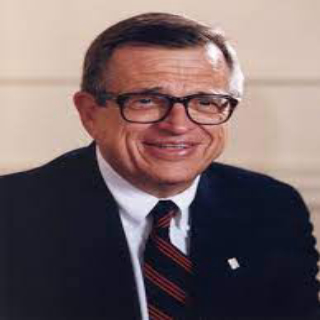
Charles Colson
Souls Are Our Reward
Run the race. Fight the good fight. Finish strong. Obtain the prize. Many of the familiar catchphrases for Christian faithfulness and perseverance come from a couple memorable verses: Do you not know that in a race all the runners run, but only one receives the prize? So run that you may obtain it. Every athlete exercises self-control in all things. They do it to receive a perishable wreath, but we an imperishable. (1 Corinthians 9:24–25) When our faith begins to falter, or our spiritual disciplines wane, or our joy fades to a dim flicker, or our love grows cold, we need to be reminded to run. Even when it hurts, even when we want to give up, even when we’d rather do anything else. Any race with Jesus will be hard (Luke 9:23). Faith, hope, love, and joy may come freely by grace, but that does not mean they are always easy. The apostle Paul, knowing the costs and rigors of following Christ, reaches for this kind of rugged and strenuous imagery again and again (Philippians 3:12–14; 2 Timothy 4:7–8). What might surprise us — even those of us who have been running with Christ for decades now — is what race Paul really had in mind, at least in 1 Corinthians 9:24. When he held out that wreath of all wreaths, he had more in mind than our clinging to faith and persisting in private prayer. Run to Win The verses above come immediately after another familiar passage, which ends, I have become all things to all people, that by all means I might save some. I do it all for the sake of the gospel, that I may share with them in its blessings. Do you not know that in a race all the runners run, but only one receives the prize? So run that you may obtain it. (1 Corinthians 9:22–24) The race Paul was running (and calling us to run) was not merely about guarding the faith in our own hearts, but about pursuing that faith and joy in others. The race may look (very) different for us than it did for an unmarried apostle, but the race is still our race. Paul was running to win the lost, despite how much effort it required and how much it cost him. He was talking about aggressive mission, not merely secret devotion. And that race — becoming all things to all people that we might save some — can be even more demanding, confusing, and discouraging than nurturing our own relationship with God. Many more give up trying to win the lost than give up going to church or reading the Bible. “Winning souls fills and waters the soul like nothing else.” Paul knew that winning the lost often feels like the back half of a marathon in the heat of August. So, he reminded the church to keep running — not to lose heart or slow down, but to press through to the end. Keep taking risks and making sacrifices to share, keep enduring the inevitable rejection and hostility, and, above all, keep praying for the lost. Keep running. Four Reasons to Run Well The apostle knew how much resistance we face in evangelism. Remember that he was hunted by murderers, stoned by crowds, beaten with rods, and almost flogged to death for trying to win people to Jesus. More than almost anyone, he knew how many incentives there were not to go and make disciples. But he also knew there were even more incentives to choose faithfulness and embrace suffering along the dangerous roads of soul-winning. He shares at least four of those incentives right here in 1 Corinthians 9. NEW JOY Perhaps nothing drove the soul-winning apostle more than the thought of one more sinner, even just one, being brought from the horrors of death and judgment to the heights of life and joy in Christ (2 Corinthians 1:24). “I have become all things to all people, that by all means I might save some” (1 Corinthians 9:22). Some. Notice how modest he (even he!) is about his goals in evangelism. And yet notice how driven he is: all things to all people by all means. The threefold all expresses the precious worth of the some, the unparalleled reward of seeing someone finally stumble upon their Treasure hidden in a field (Matthew 13:44). Winning souls fills and waters the soul like nothing else. Jesus himself says, “I tell you, there is joy before the angels of God over one sinner who repents” (Luke 15:10). If even one conversion sets heaven afire with joy, should it not thrill and motivate us? SHARED JOY The joy of seeing someone saved, however, is heightened further by the joy of enjoying Jesus with them (2 Timothy 1:4). “I do it all for the sake of the gospel,” Paul continues, “that I may share with them in its blessings” (1 Corinthians 9:23; Philippians 1:25). This incentive is wired into the heart of God himself — Father, Son, and Holy Spirit forever loving, sharing, enjoying, creating, saving together. It’s wired into the creation, which waits to share in “the freedom of the glory” waiting for us (Romans 8:21). And it’s wired into any real joy in us, because real joy is never content just to have, but must give and share. As Jesus says, “It is more blessed to give than to receive” (Acts 20:35). Has anyone modeled the ecstasy of shared joy more than the church in Macedonia? “In a severe test of affliction, their abundance of joy and their extreme poverty have overflowed in a wealth of generosity on their part” (2 Corinthians 8:2). What does abundant joy look like, even in extreme poverty? It looks like sharing. IMPERISHABLE JOY The clearest incentive to run well here, though, is the imperishable wreath waiting at the finish line. “Every athlete exercises self-control in all things. They do it to receive a perishable wreath, but we an imperishable” (1 Corinthians 9:25). So, what is this wreath? While Paul does not mention wreaths anywhere else in his letters, he does tell us more about the prize he covets. “What is our hope or joy or crown of boasting before our Lord Jesus at his coming?” he asks the Thessalonians. “Is it not you? For you are our glory and joy” (1 Thessalonians 2:19–20). And to the church at Philippi: “My brothers, whom I love and long for, my joy and crown, stand firm thus in the Lord, my beloved” (Philippians 4:1). His crown, his prize, his wreath on the last day will not be something he owns or wears; it will be the lives he saved, the joy he shared, the souls he won. And that wreath, unlike any wages or reward we might receive on earth, will live and grow and bloom long into eternity. How many of us spend our best time and effort, year after year, pursuing wreaths that perish, while failing to run for that which lasts forever? ASSURED JOY The last incentive, unlike the others, comes as a warning: “I do not run aimlessly; I do not box as one beating the air. But I discipline my body and keep it under control, lest after preaching to others I myself should be disqualified” (1 Corinthians 9:26–27). Along with the stunning rewards — new joy, shared joy, imperishable joy — fear also inspired Paul to love and pursue the lost. What will happen to me if I fail to prove faithful? He wanted the depth of assurance that comes through faithfully fulfilling his mission. The apostle knew he, even he, would be disqualified if he disobeyed what Jesus had called him to do — if he gave up running. And he knew men, even in ministry, who had been disqualified. He describes such men twice, with one sobering thread between them. He warns, People will be lovers of self, lovers of money, proud, arrogant, abusive, disobedient to their parents, ungrateful, unholy, heartless, unappeasable, slanderous, without self-control, brutal, not loving good, treacherous, reckless, swollen with conceit, lovers of pleasure rather than lovers of God, having the appearance of godliness, but denying its power. . . . These men also oppose the truth, men corrupted in mind and disqualified regarding the faith. (2 Timothy 3:2–5, 8) What’s startling (and frightening) about these men is that they were lovers of self, lovers of money, proud, arrogant, and abusive, yet they still had the appearance of godliness. They looked faithful while secretly indulging sin at the expense of others. They looked like they were running well when they were really only running from God. “Many more give up trying to win the lost than give up going to church or reading the Bible.” Paul mentions similar men elsewhere, who are “insubordinate, empty talkers, and deceivers” (Titus 1:10). “They profess to know God,” he says, “but they deny him by their works. They are detestable, disobedient, unfit” — “disqualified” — “for any good work” (Titus 1:16). The tragic thread between the two passages is that some profess to know Jesus, and even learn to act like Christians, and yet fail to ever truly run — to truly repent, believe, and treasure Jesus, and then make him known to others. And if we live like them, neglecting or ignoring what Christ demands of us, we too will be disqualified. “So,” Paul says, “I do not run aimlessly; I do not box as one beating the air. But I discipline my body and keep it under control” (1 Corinthians 9:26–27). He did everything he could to avoid their awful fate. Fear was not his sole motivation, or even his greatest motivation, but he feared the horrible cost of unfaithfulness — of skipping the race and abandoning the lost. So, he disciplined himself to run hard, and long, and well. And he called us to run with him. Article by Marshall Segal Staff writer, desiringGod.org